
Notes
Tectonic Plates
Content of the notes (1)
Page 1
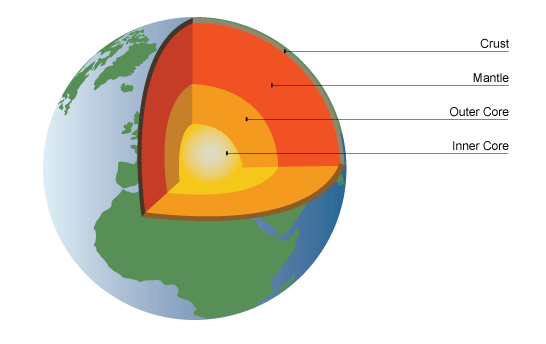
1) Centre of earth - ball of solid iron & nickel - CORE
2) Around the core is the MANTLE - semi molten rock, moves v.slowly
3) Outer layer of Earth is the CRUST - v.thin (about 20 km)
4) Crust is divided into lots of slabs called TECTONIC PLATES (they float on the mantle).
Plates are made of 2 types of crust :CONTINENTAL & OCEANIC
-CONTINENTAL crust is thicker and less dense
-OCEANIC crust is thinner and more dense.
5) The PLATES are MOVING because the rock in the mantle underneath them is MOVING.
6) The places where plates meet are calles BOUNDARIES or PLATE MARGINS
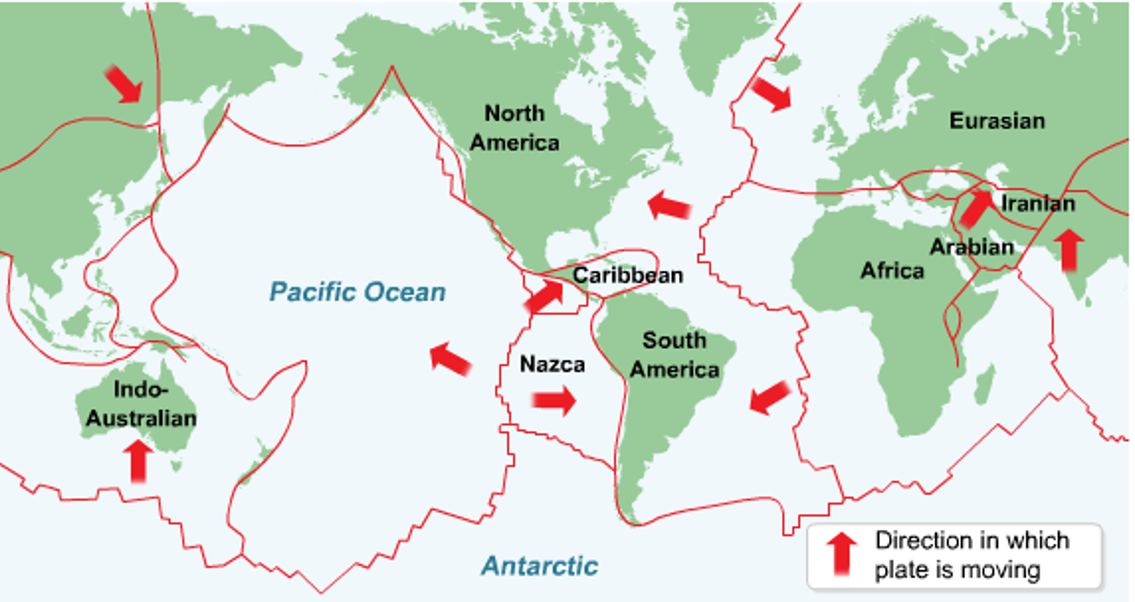
3 TYPES OF PLATE MARGIN
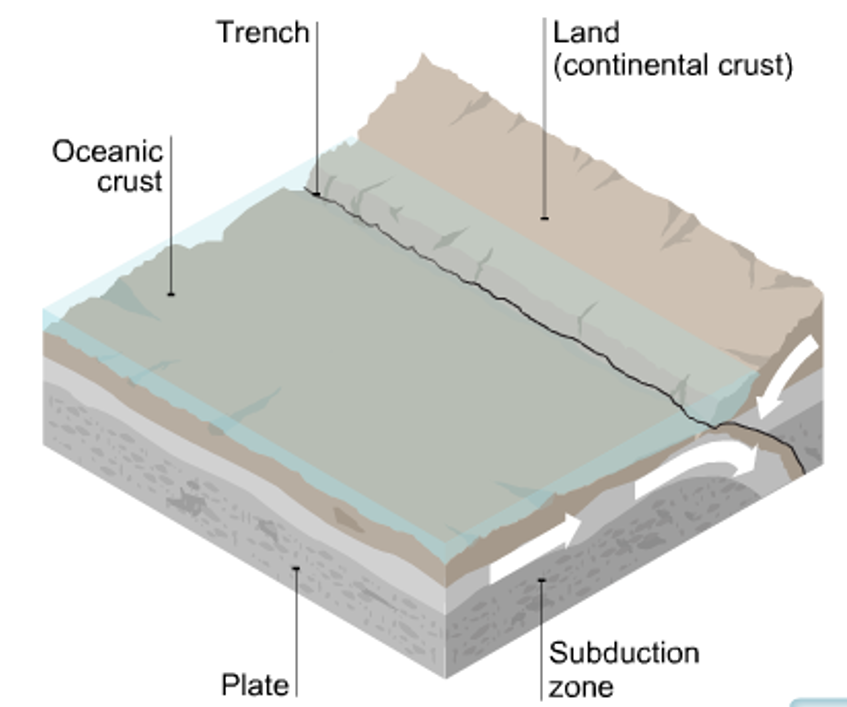
DESTRUCTIVE MARGINS are where two plates are moving towards each other e.g. along the east coast of Japan.
Where an oceanic plate meets a continental plate, the denser oceanic plate is forced down into the mantle and destroyed. This often creates volcanoes and ocean trenches (v.deep sections of the ocean floor where the oceanic plate goes down.
Where two continental plates meet, the plates smash together, but no crust is destroyed.
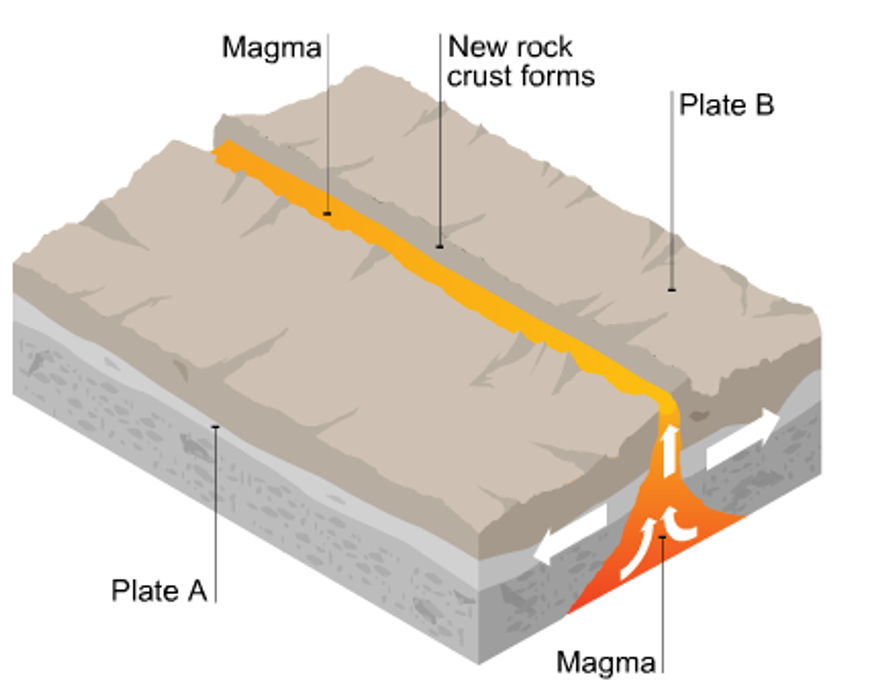
CONSTRUCTIVE MARGINS are where 2 plates are moving away from each other, e.g. at the mid-Atlantic ridge. Magma (molten rock) rises from the mantle to fill the gap and cools, creating new crust.
CONSERVATIVE MARGINS are where 2 pates are moving sideways past each other , or are moving in the same direction but at different speeds, e.g. along the west coast of USA. Crust isn't created or destroyed.
New Page