
Notes
Particles
Content of the notes (1)
Page 1
Chemical change is any change that results in the formation of new chemical substances. At the molecular level, chemical change involves making or breaking of bonds between atoms. These changes are chemical:
iron rusting (iron oxide forms)
gasoline burning (water vapor and carbon dioxide form)
eggs cooking (fluid protein molecules uncoil and crosslink to form a network)
bread rising (yeast converts carbohydrates into carbon dioxide gas)
milk souring (sour-tasting lactic acid is produced)
suntanning (vitamin D and melanin is produced)
Physical change rearranges molecules but doesn't affect their internal structures. Some examples of physical change are:
whipping egg whites (air is forced into the fluid, but no new substance is produced)
magnetizing a compass needle (there is realignment of groups ("domains") of iron atoms, but no real change within the iron atoms themselves).
boiling water (water molecules are forced away from each other when the liquid changes to vapor, but the molecules are still H2O.)
dissolving sugar in water (sugar molecules are dispersed within the water, but the individual sugar molecules are unchanged.)
dicing potatoes (cutting usually separates molecules without changing them.)
Elements:
consists of only one kind of atom,
cannot be broken down into a simpler type of matter by either physical or chemical means, and
can exist as either atoms (e.g. argon) or molecules (e.g., nitrogen).
Compounds:
consists of atoms of two or more different elements bound together,
can be broken down into a simpler type of matter (elements) by chemical means (but not by physical means),
has properties that are different from its component elements, and
always contains the same ratio of its component atoms.
Mixtures:
consists of two or more different elements and/or compounds physically intermingled,
can be separated into its components by physical means, and often retains many of the properties of its components.
when two elements join together the name of the compound ends in -ide
if the ending is -ate that means oxygen is also present in the compund
All atoms of a particular element have the same atomic number but can have different mass numbers -- number of neutrons may vary
mass number = number of neutrons + number of protons
Isotope = atoms of the same element that have different numbers of neutrons
Relative Atomic Mass (average mass of all isotopes)
impossible to weigh atoms because they are so small
instead, chemists compare masses to a standard atom = Carbon-12 atom
^ has 6 protons, electrons and neutrons
Number of atoms in one mole = 6.02 x 10^23
1g of atoms = 1 mole
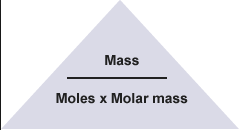
Mass/molar mass = moles
Atoms and Shells
1st shell: 2 electrons
2nd shell: 8 electrons
3rd shell: 8 electrons
Number of electrons in outer shell = group number
ATOMS
atom = smallest 'piece' of an element that retains all of the characteristics of that element. It is composed of a nucleus which contains protons and neutrons, and has electrons 'orbiting' around the nucleus at varying distances.smallest
MOLECULES
atoms bonded together (ionic or covalent)
Nucleon Number: number of neutrons
Atomic/Proton Number: number of protons
Physical and Chemical Changes
Elements, Compounds and Mixtures
Atomic Number
Atoms and Molecules
Information
- Description
- IGCSE Chemistry (C1 Particles) Note on Particles, created by ShreyaDas on 29/03/2014.
- Created by
- ShreyaDas · Mar 2014
- Updated
- Apr 6, 2018
- Views
- 570
- Tags
- Rating