
Notes
Chemistry Final Review
Content of the notes (1)
Page 1
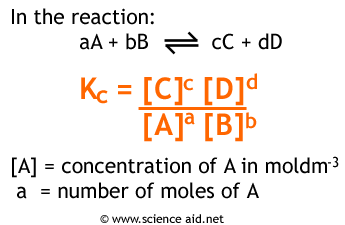
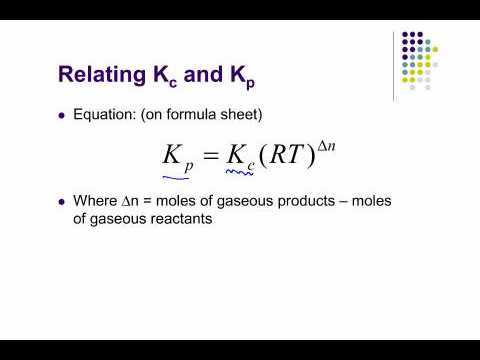
K(p)
concentrations of products over reactants
ONLY GAS!!!!!!
Partial pressures- NOT concentration
homogeneous equilibrium= everything in the equilibrium mixture is present in the same phase.( to use Kp, everything must be a gas)
Just like Kc, Kp always has the same value (provided you don't change the temperature)
EQUILIBRIUM
Le Chatelier's Principle
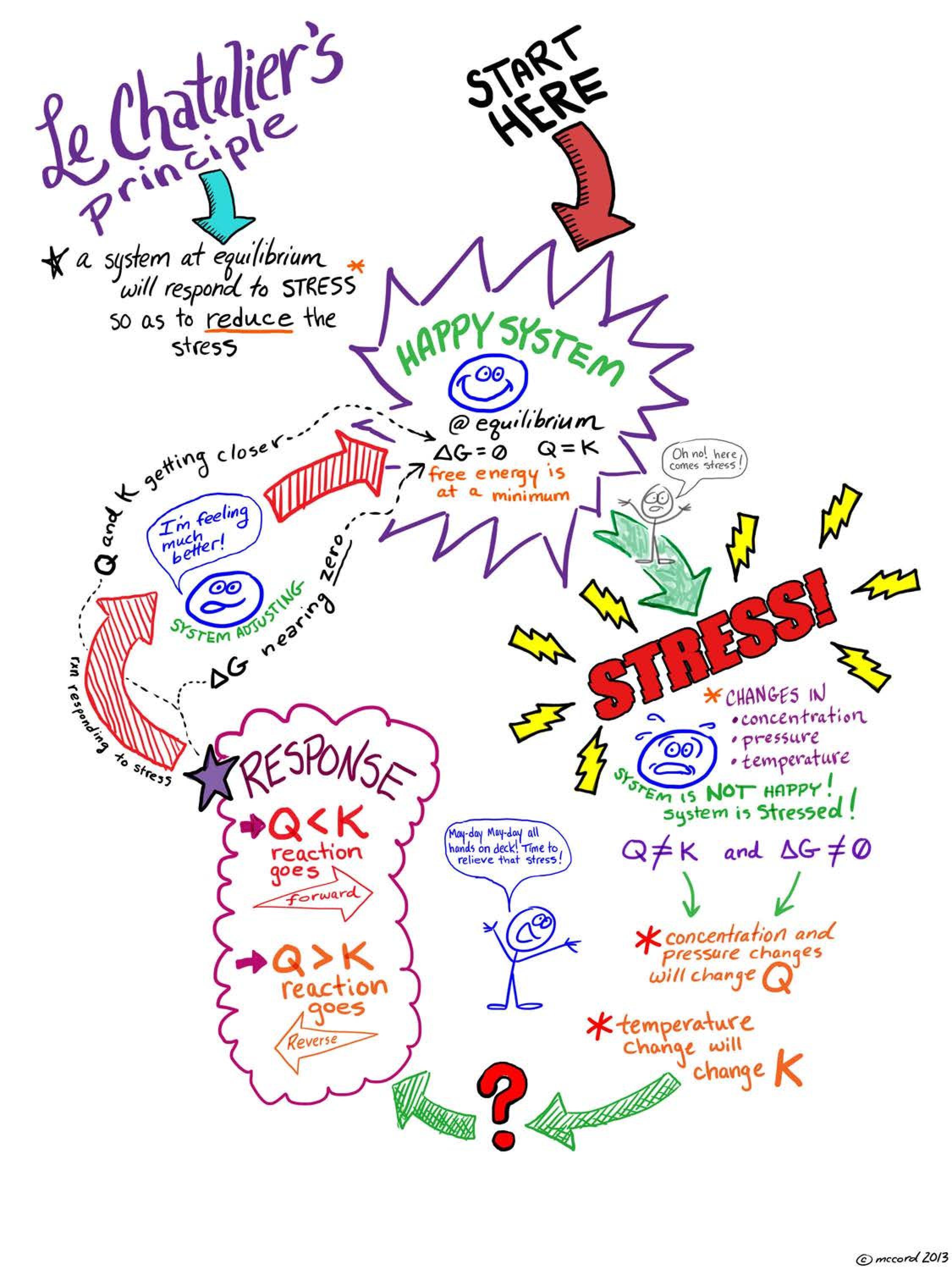
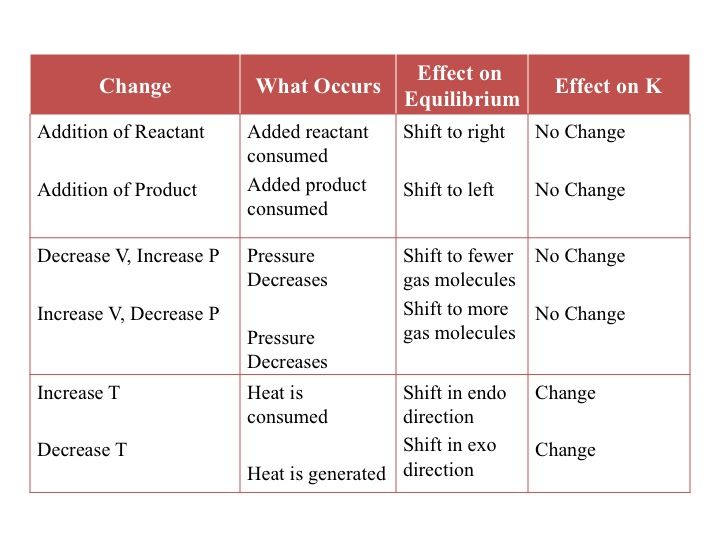

Equilibrium concentrations are only effected by temperature
***Same number of moles on both sides means no change
***
Using an ICE Table with Concentrations Example
often carried out for weak acid titrations
Find the concentration of A- for the generic acid dissociation reaction:
HA(aq)+H2O(l)⇌A−(aq)+H3O(aq)
with [HA(aq)] initial=0.150M and Ka=1.6×10⁻²
1. Fill in given concentrations:
Reaction:HAA-H3O+I0.150 M0.000 M0.000 MC???E???
2. Calculate the change concentrations by using a variable 'x'Reaction:HAA-H3O+I0.150 M0.000 M0.000 MC-x M+x M
+x M
E???
The change in concentration is unknown, so the variable x is used to denote the change. x is the same for both products and reactants because equal stoichiometric amounts of A- and H3O+ are generated when HA dissociates in water
3. Calculate the concentrations at equilibrium
Reaction:HAA-H3O+I0.150 M0.000 M0.000 MC-x M+x M+x ME0.150 - x Mx Mx M
4. Use the ICE table to calculate concentrations with KaThe expression for Ka is written by dividing the concentrations of the products by the concentrations of the reactants. Plugging in the values at equilibrium into the equation for Ka gives the following:
Ka=x20.150−x=1.6×10⁻²
To find the concentration x, rearrange this equation to its quadratic form, and then use the quadratic formula to find x:
(1.6×10⁻²)(0.150−x)x2+(1.6×10⁻²)x−(0.150)(1.6×10⁻²)==x20
solve for x and eliminate the negative version of x
K(c)
ACIDS AND BASES
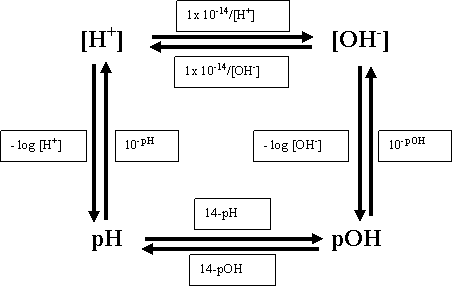
Circle of pH
(for K constant)
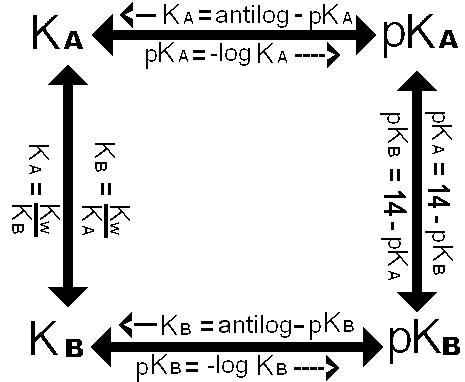
Calculating Weak Acid and Weak Base pH
Find concentrations using what is given
Find K(a) or K(b) value if pK(a) or pK(b) is given
Make ICE table with concentrations
Solve for x using K value
Use x to find concentrations
Use concentration to find value needed in question (pH, [H+], [OH-], pOH)
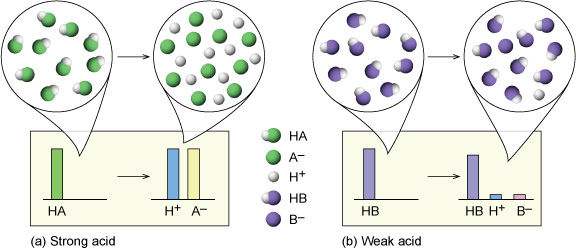
Calculate Ksp of Precipitate Example
Calculate the solubility product constant for lead(II) chloride, if 50.0 mL of a saturated solution of lead(II) chloride was found to contain 0.2207 g of lead(II) chloride dissolved in it.First, write the equation for the dissolving of lead(II) chloride and the equilibrium expression for the dissolving process.
PbCl2(s) --> Pb2+(aq) + 2 Cl-(aq)Ksp = [Pb2+][Cl-]2
Second, convert the amount of dissolved lead(II) chloride into moles per liter.
(0.2207 g PbCl2)(1/50.0 mL solution)(1000 mL/1 L)(1 mol PbCl2/278.1 g PbCl2) = 0.0159 M PbCl2 Third, create an "ICE" table.
PbCl2 (s) Pb2+(aq) Cl-(aq) Initial Concentration All solid 0 0 Change in Concentration - 0.0159 M (dissolves) + 0.0159 M + 0.0318 M Equilibrium Concentration Less solid 0.0159 M 0.0318 M Fourth, substitute the equilibrium concentrations into the equilibrium expression and solve for Ksp.
Ksp = [0.0159][0.0318]2 = 1.61 x 10⁻⁵
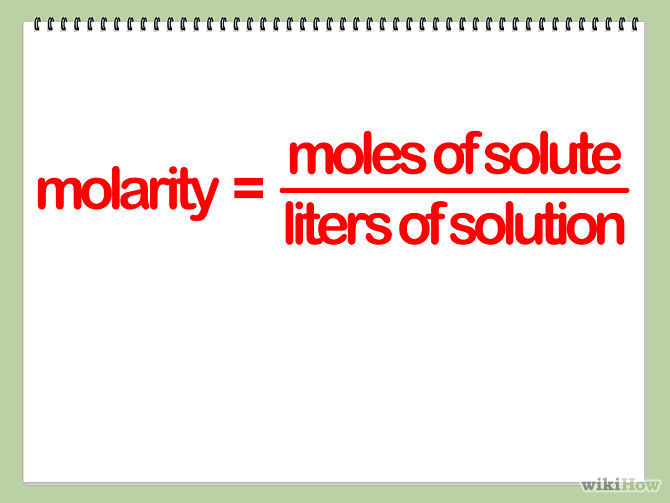
Calculating Concentration in Titration using Molarity
M(a)V(a) = M(b)V(b)
Normality
calculate moles of acid or base and convert to moles of OH or H
moles of OH or H
L
ELECTROCHEMISTRY
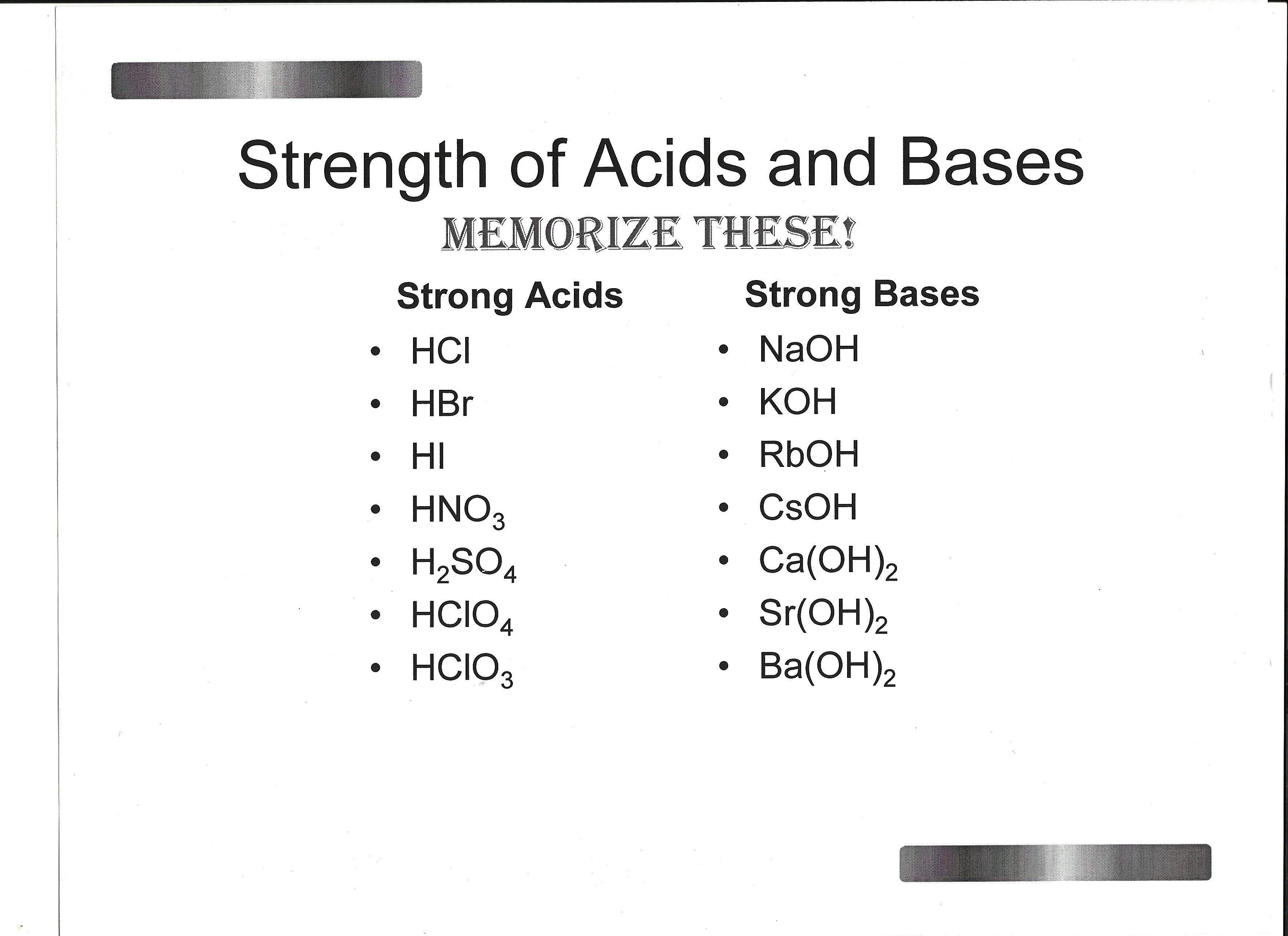
Assigning Oxidation Numbers:
Free elements = 0
Single element ions= change on ion
Alkali metals = +1
Alkaline Earth Metals = +2
Fluorine = -1
Hydrogen = +1 (unless in binary with metal, then -1)
Oxygen = -2 (unless peroxide O(2) , then its -1
Calculate remaining charges
Balance in Acidic Medium:
Write unbalanced equation for the reaction in ionic form
Make two half reactions (use oxidation reactions and separate , then balance by adding electrons)
Balance the atoms (except for O and H)
Add H2O to balance O and H atoms
Add electrons to balance
Equalize number of electrons in both half reactions by multiplying
Add two half reactions together and cancel out things as necessary
Balance in Basic Medium:
Follow all steps in acidic medium
Add OH- to both sides of equations for every H+ that appears in the final equation
For every H and OH, make H20
Reduce the number of H20 if they cancel
Balance by Half Reaction Method:
Assign oxidation numbers
Write half reactions for elements that changed oxidation numbers
Add coefficients and balance elements
Add electrons to both reactions to balance charges
Multiply electrons to ensure they cancel out when reactions are added
Add coefficients back into original equation
Check overall balanced equation
If elements are present that did not change oxidation numbers, check that they are balanced
Calculate Cell Potential (Voltage):
Write two reduction half reactions
Look up cell potentials (from chart)
The reaction with a more negative value (in the reduction chart) is oxidation, so flip this reaction and write it as oxidation
Change the sign of the cell potential for the flipped reaction
Add the cell potentials together to get the total voltage
When the cell potential is positive it is spontaneous
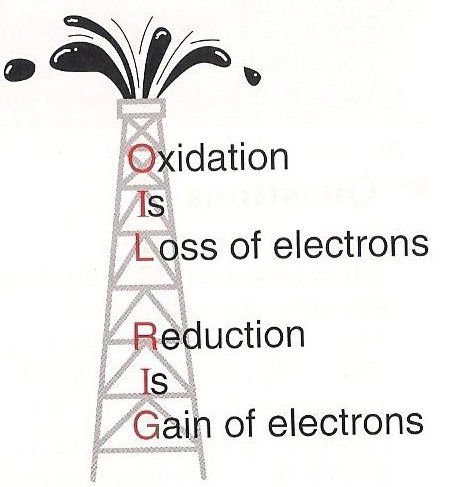
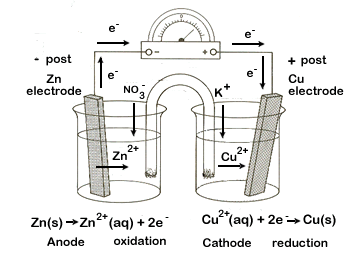
Electrochemical Cell:
increase in size
concentration decreasing
positive electrode
decrease in size
concentration increasing
negative electrode
KINETICS
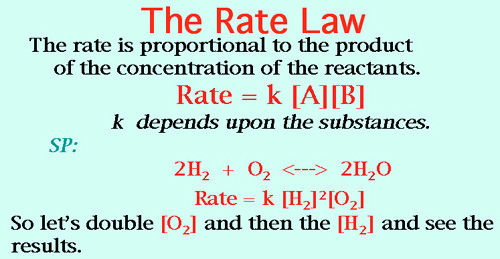
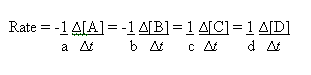
Rate Expression
reactants are negative
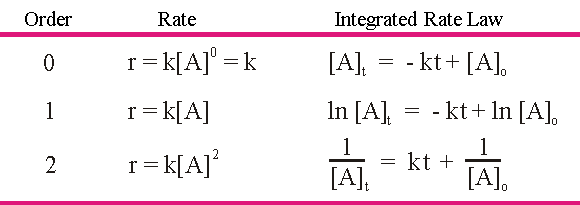
Reaction Order
units for rate constant, k
M/s
1/s
1/(M*s)
Catalyst
Increases reaction rate and rate constant by providing a lower activation energy needed
SOLUTIONS
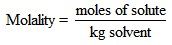
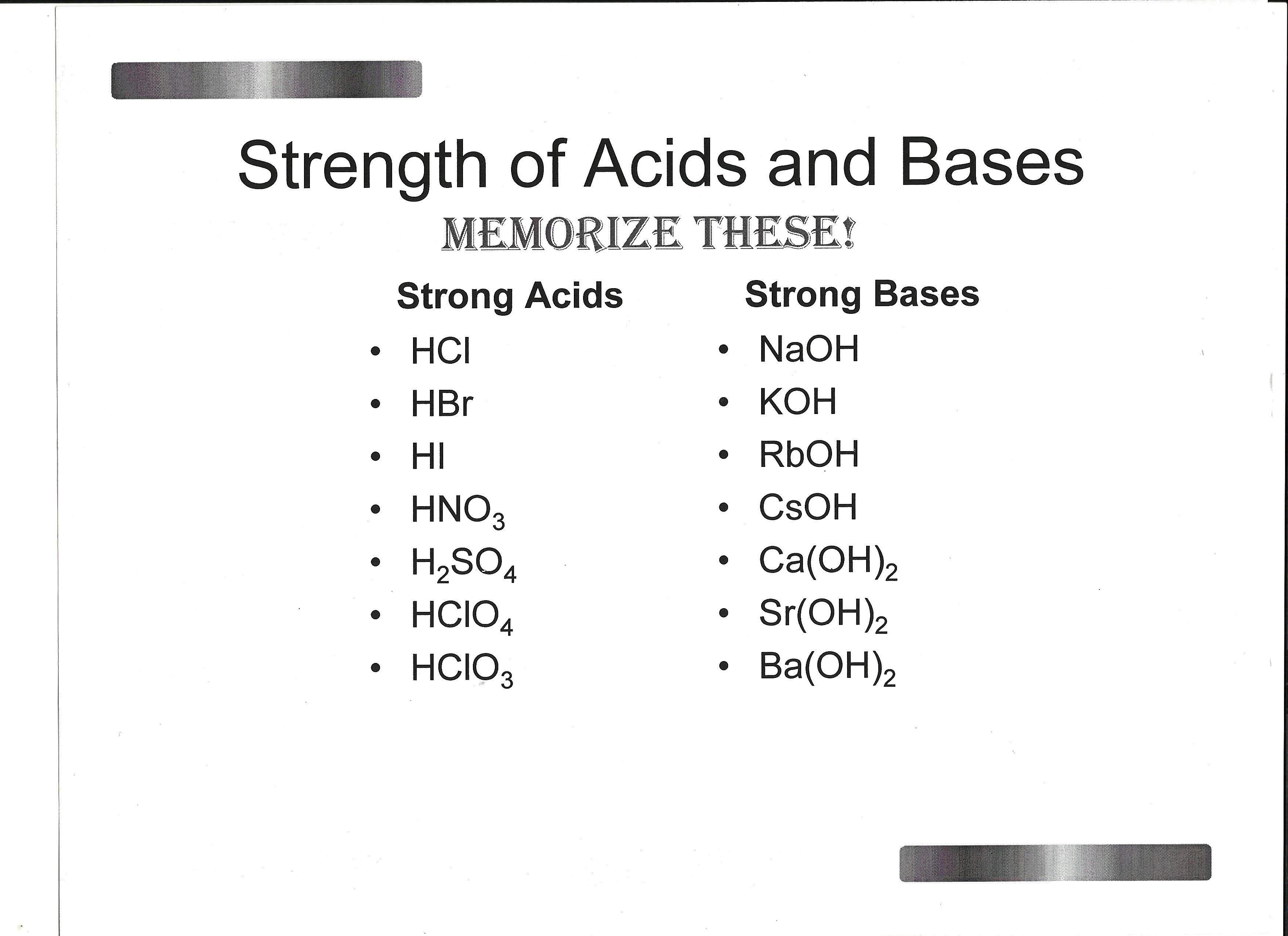
Types of Acids and Bases
Bronsted Acid - will donate a H+
Bronsted Base- will accept a H+
*** can be both!!!
Equilibrium
Acids and Bases
ElectroChemistry
Kinetics
Solutions
Information
- Description
- Note on Chemistry Final Review, created by pierox38 on 17/06/2014.
- Created by
- pierox38 · Jun 2014
- Updated
- Nov 16, 2016
- Views
- 656
- Tags
- Rating