
Notes
Animal's form and function - created from Mind Map
Content of the notes (1)
Page 1
Exchange with the environment
What makes an animal ?
Regulations
Energy acquisition
Different types of exchanges : Gas exchanges,Nutrients and waste, Heat exchanges
The amount of substances an animal needs to leave is proportional to the volume of a cell but the surface area for unit of volume ratio decrease as the cell gets bigger
Also exchanges between the cells through exchange medium
Several levels of organisation (cells, tissues, organs, system, organism)
4 types of tissues
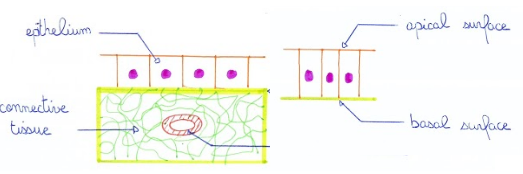
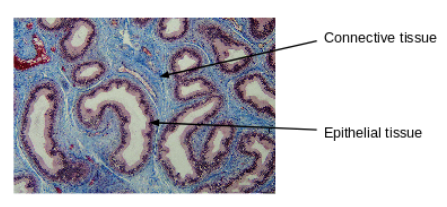
Epithelial
Connective
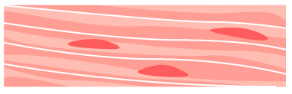
Muscles
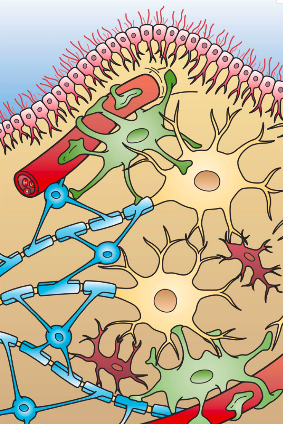
Nervous
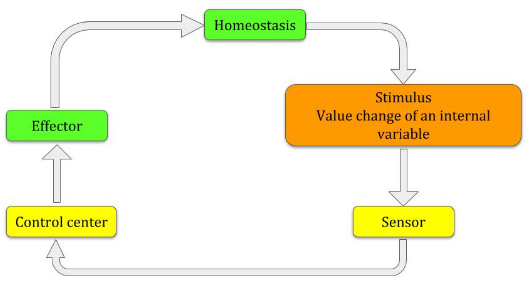
Homeostasis = dynamic state of equilibrium
Thermoregulation (=ability to keep the optimal body temperature even when the surrounding temperature is different)
Endotherm (use their metabolic heat) ≠ Endotherm (doesn't use metabolic heat)
Poikilotherm ( the body temperature varies) ≠ Homeotherm(the body temperature is constant)
5 wayŝ of adaptationwhich help animal thermoregulation
Insulation
Regulation of blood circulation
Vaporization
Behavioral reactions
Adjustment of metabolic heat production
Metabolic rate = quantity of energy used by an animal during a given time; it’s the sum of all the biochemical reactions associated to energy expense during this period
Endotherms → basal metabolic rate (BMR)
Ectotherm → standard metabolic rate (SMR)
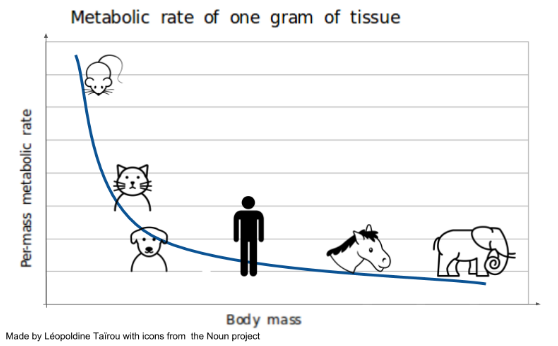
Link between energy and size, activity
Torpor = tate of really low metabolism (lower than the BMR and SMR) and decreased activity that allows animals to survive in unfavorable conditions and/or conserve energy
The smaller the organism's mass is, the higher its metabolic rate per mass of the body si
The more active an animal is, the more energy must be expended to maintain that activity, and the higher its metabolic rate will be
Information
- Description
- Science Note on Animal's form and function - created from Mind Map, created by Léopoldine Tairou on 15/02/2019.
- Created by
- Léopoldine Tairou · Feb 2019
- Updated
- Feb 15, 2019
- Views
- 0
- History
-
- Created by Léopoldine Tairou · Feb 15, 2019
- Copied to Note by Léopoldine Tairou · Feb 15, 2019
- Rating
More on Animal Structure and Physiology