
Mind map
MPLS (Multiprotocol Label Switching)
Map content
MPLS (Multiprotocol Label Switching)
LISTA DE DISPOSITIVOS AGRUPADOS POR SUS FUNCIONES
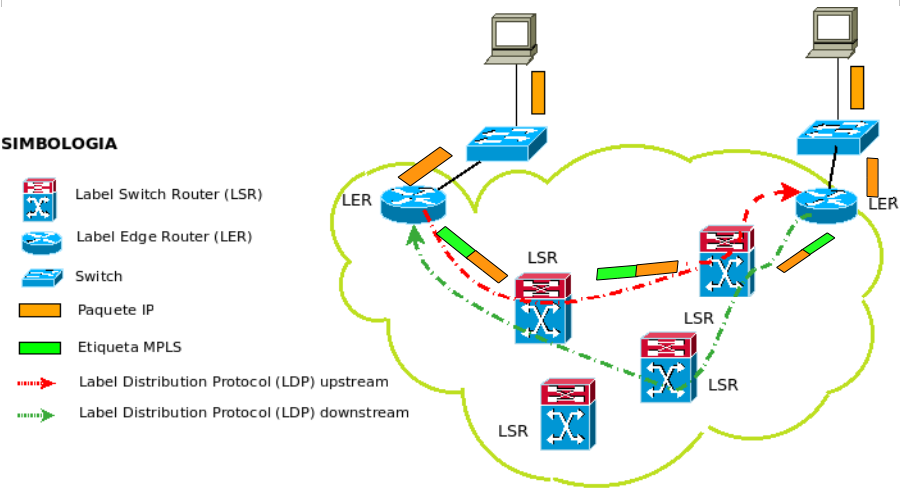
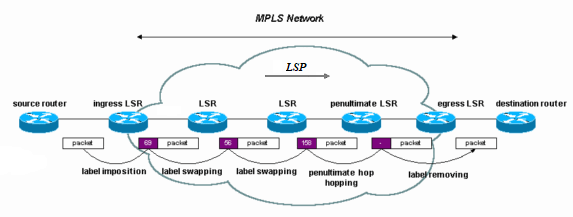
- • Label: Identificador de tamaño fijo de un grupo de redes que comparten un destino común. Normalmente tiene significado local. • Label stack: Es un conjunto de etiquetas donde cada una es independiente de las otras. • Label swap: Operación básica en envío en la red MPLS, consiste en identificar el tráfico de entrada y colocarle una etiqueta de salida. • Label-switched hop (LSH): Salto entre dos nodos MPLS en el cual el envío se hace a través de etiquetas. • Label-switched path (LSP): Camino a través de uno o más LSR según la jerarquía. • Label switching router (LSR): Es un nodo MPLS capaz de enviar paquetes etiquetados
LISTA DE COMPONENTES AGRUPADOS POR LAS SUBCAPAS DE DATA PLANE Y CONTROL PLANE
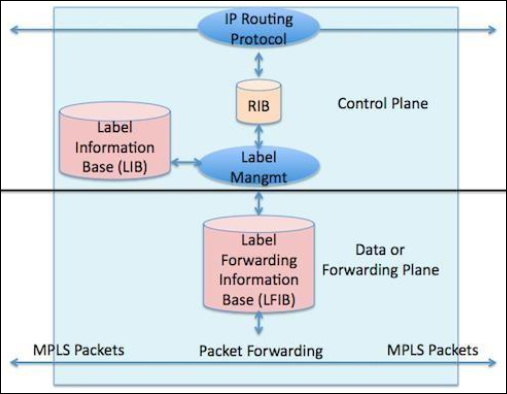
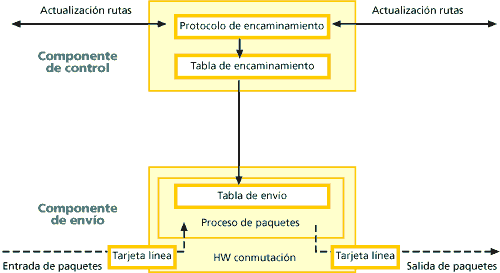
- DATA PLANE Envía tráfico basándose en direcciones destinos o etiquetas siendo conocido como plano de renvío
- PLANO CONTROL. Mantiene la tabla de enrutamiento y las etiquetas que se intercambian entre los dispositivos adyacentes. También se encarga de todo el trabajo que se debe realizar con los protocolos de enrutamiento como: OSPF, EIGRP, IS-IS, BGP y protocolo distribución de etiquetas como: TDP y LDP
PROTOCOLOS INVOLUCRADOS Y CLASIFICADOS POR SU CAPA DEL MODELO OSI
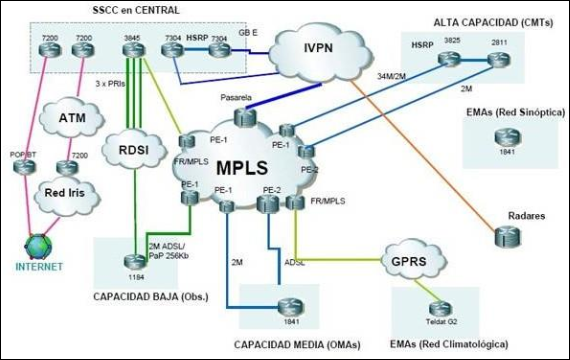
- MPLS es la conmutación de etiquetas multiprotocolo por lo que los protocolos que podemos encontrar en MPLS son: ATM = Asynchronous Transfer Mode OSPF = Open Shortest Path First RIP = Routing Information Protocol IGP = Gateway Interior Protocol EIGRP = Enhanced Interior Gateway Routing Protocol IS-IS = Intermediate System to intermediate System BGP = Border Gateway Protocol TDP = Tag Distribution Protocol LDP = Label Distrbution Protocol RSVP = Resource Reservation Protocol
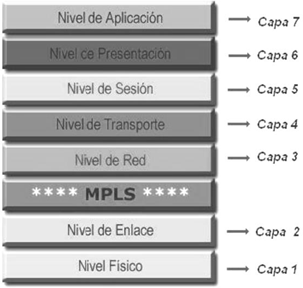
- Entre las capas 2 y 3 los MPLS surgieron para añadir la velocidad de conmutación del nivel 2 al nivel 3 del Modelo de Referencia, a través, de la conmutación por etiqueta en las redes MPLS en los equipos de los proveedores.
SERVICIOS UTILIZADOS EN LAS REDES MPLS
- MPLS ofrece estas aplicaciones beneficiosas: 1. Redes privadas virtuales (VPN) 2. Ingeniería de tráfico (TE) 3. Quality of Service (QoS) 4. Cualquier transporte por MPLS (AToM)
TOPOLOGÍA
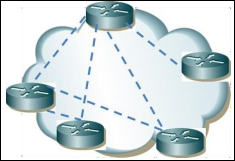
- Malla parcial: Es más costoso que el modelo anterior, pero ahora contiene redundancia sólo para algunos servicios básicos.
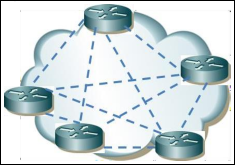
- Malla completa: Es el más conveniente, contiene redundancia de tal manera que cada sitio está conectado con todos los demás sitios. Este modelo ofrece una mínima latencia y una máxima redundancia en la red.
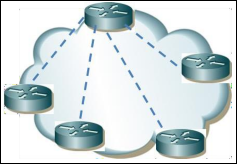
- Hub-and-spoke: Está conformado de un dispositivo central llamado Hub y a él se conectan todos los demás dispositivos llamados Spoke, el cual debe pasar por el Hub, para enviar tráfico a otro dispositivo Spoke
Images and files in the map

Information
- Description
- PLR_U3_A2_ABCR
- Created by
- ABEL C · Nov 2020
- Updated
- Nov 22, 2020
- Views
- 371
- Tags
- Rating