
Passive voice
Slides in this set (11)
-
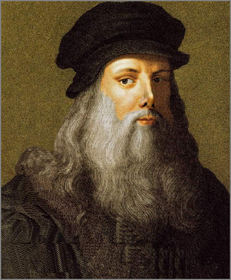
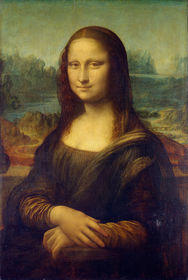
- Caption: Leonardo Da Vinci painted the Mona Lisa.
- Caption: The Mona Lisa was painted by Leonardo Da Vinci.
-
- when changing focus from subject to object
- example:
- Leonardo Da Vinci paints the Mona Lisa.
- -> The focus is on Leonardo Da Vinci.
- = active sentence
-
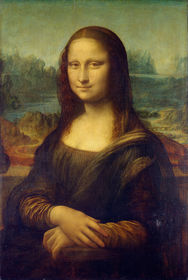
- example:
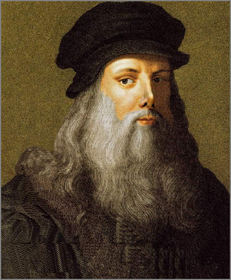
- The Mona Lisa is painted by Leonardo Da Vinci
- -> The focus is on the Mona Lisa.
- = passive sentence
-
- active:
- Leonardo Da Vinci paints the Mona Lisa.
- subject + verb + object
- passive:
- The Mona Lisa is painted by Leonardo Da Vinci.
- subject + form of to be + past participle verb + by + object
- ! object active sentence becomes subject passive sentence
-
- USE:
- The thing recieving the action (object) is more important than the thing doing the action (subject).
- When the thing that is doing the action is not known or should not be mentioned.
- e.g. My bike has been stolen -> I don't know who stole my bike.
-
- Mind that 'to be' in the passive sentence is conjugated in the same tense as the verb in the active sentence.
- He eats a biscuit. -> A biscuit is eaten by him. -> Simple Present
- They danced the cha-cha-cha. -> The cha-cha-cha was danced by them.
- -> Simple Past
-
- Passive voice
- exercise:
- Turn given active sentences into passive sentences.
-
- Transative verbs
- action verbs: express a doable activity
- must have a direct object
- -> Sylvia kicked the ball.
- Intransitive verbs
- action verbs: express a doable activity
- does not have a direct object
- -> Carl sneezes very hard.
-
- Personal passive
- When the object of the active sentence becomes the subject of the passive sentence.
- When the sentence contains a transative verb.
- The children eat candy.
- -> Candy is eaten by the children.
- Impersonal passive
- When there is no object in the sentence.
- When the sentence contains an intransitive verb.
- only possible with verbs of perception. (hear, feel, listen, ...)
- He says. -> It is said.
-
- exercise:
- Are following sentences Personal or Impersonal Passives?
- Personal - Impersonal Passive
-
- Complete the following exercises on Socrative.
- click on the link and enter:
- 644995
- https://b.socrative.com/login/student/
Information
- Description
- A lesson on the Passive Voice.
- Created by
- 11301083 · Nov 2015
- Updated
- Jan 15, 2017
- Views
- 276
- Tags
- Rating