
TItrations (how to do the experiment) (concentrations)
Slides in this set (2)
-
Titrations (how to do the experiment)
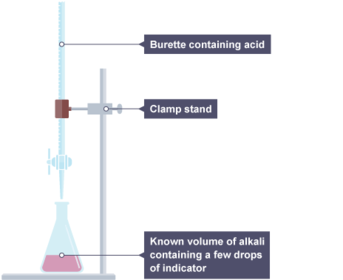
- What are titrations?
- Titrations allow you to find out exactly how much acid is needed to netralise a quantity of alkali (or vice versa)
-
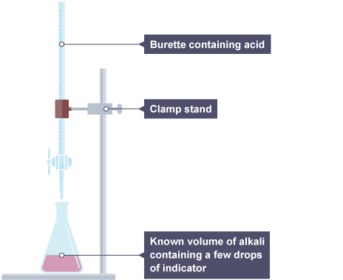
- 1. put some alkali in a flask
- 2. add some indicator - phenolphthalein or methyl orange (not universal indicator as it changes colour too gradually)Add the
- 3. acid to a burette and slowly pour the acid into the alkali and swirling the flask regularly.
- 4. As soon as you think that the alkali is close to being neutralised, begin adding the acid more slowly (one drop at a time)
- 5. the indicator changes colour when all the alkalis have been neutralised - phenolphthalein is pink in alkalis but colourless in acids , and methyl orange is yellow in alkalis but red in acids.
Information
- Description
- explaining the method of how to complete an titration experiment to find out concentrations
- Created by
- janey.efen · Feb 2016
- Updated
- Feb 13, 2019
- Views
- 380
- Tags
- Rating