
Notes
THE RELATIONSHIP BETWEEN THEORY AND METHODS.
Content of the notes (1)
Page 1
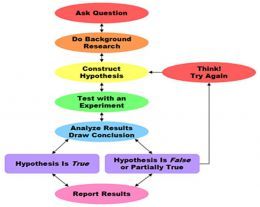
The hypothetico-deductive method:
Positivists believe this to be the most scientific method of finding accurate information, otherwise known as 'scientific knowledge'.
1.) Background reading
& personal experience-study & everyday obsv. (Areas of interest)
2.) Formation (hypothesis)-sociologist
formulates casual link (two events)
3.) Appropriate
form of study (isolate variables): questionnaire, interview & observation
4.) Collecting
(data): strict rules (Qs and Int.s carried out®validity
and reliability)
5.) Analysing
the data: Statistical models- ‘tests of confidence’ accuracy
6.) Confirming,
modifying or rejecting hypothesis: WEAKNESSES
7.) Theory
formation/confirmation: best explanation reliance until others improve on it
Theoretical
approaches linked to positivism and quantitative research methods:
Society largely determines how we think and
act-puppets of society (Marxist basis of
theory) – link to the influence of the mass media and class as a dominant
factor of influence
Society only exists (beliefs and
activities-individuals interacting) – creative actors making society (Link to Guffman (1959) and his dramaturgical
model)
Positivists; some form (structure); structural
model : MAIN STRUCTURAL THEORIES:
Structural functionalism:
Parsons (1951): social facts-objective ‘facts’.
Classic study-Suicide: A Study In
Sociology- statistics on suicide; clear patterns (uncovered)
Marxism
‘Dialectical materialism’: economic and social
laws (govern human behaviour); laws (dominant)
Positivist ideas: modern Marxist (quantitative
and qualitative ideas)
Criticism:
Positivism largely linked: structural model
(heavy focus towards to economic influence, failure to ‘think outside the box’ )
Counter-argument:
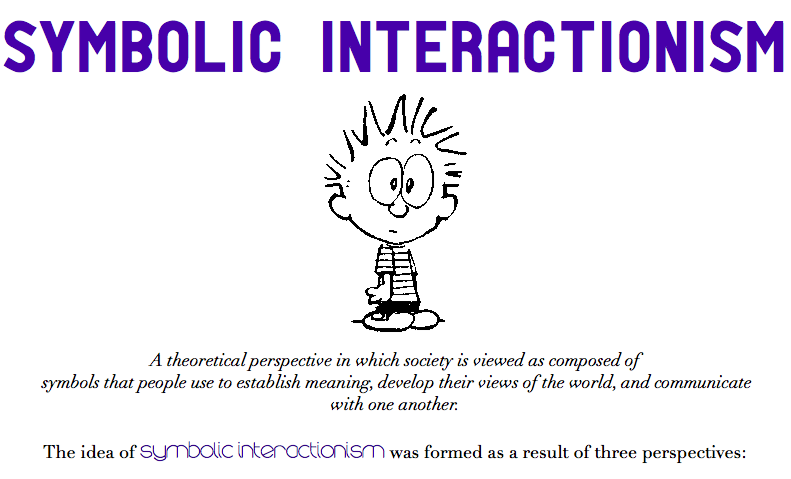
Social constructionist perspective: symbolic
interactionism
Blumer (1962): closely linked (labelling theory)
Individuals work: society created by activities
people and rules guide people
Positivism: deductive framework, social
constructionists (inductive one); observations (general statements vs. strong
evidence within theories)
Quantitative research: the favored method
of positivists:
Surveys, questionnaires and case studies
Surveys:
Cross-sectional surveys: ‘snapshot’; gather
information @ one particular time.
Useful:
finding out info. (part. Topic); quick and results collated and analysed
(generalizable)
HOWEVER:
1.)
Indicators/questions: measure attitude (accurate) ®research not be valid
2.)
Not provide information (period of time)
Longitudinal surveys:
Quantitative sociologists (interested in change);
longitudinal survey
Clear, ongoing image changes (attitudes and
actions)
Focus on research:
Parker et al. (1998) – A longitudinal
survey:
North-West
Longitudinal Study; 700 young people for five years, aged 14-18. Assess how
‘ordinary’ young people 1990s, developed attitudes and behaviour (relation to
availability: illegal drugs, alongside alcohol and tobacco).
Self-report
questionnaire: administered
personally (researchers). Start (research)-sample representative: gender, class and ethnicity). Attrition
disproportionate.
KEY WORDS:
Cross-sectional
survey: Survey conducted (one time), no attempt follow up (people surveyed)
Epistemological:
Theories (knowledge)
Hypothetico-deductive
model: Research process (assoc. Physical sciences used by positivists)
Indicator:
Measurable social phenomenon; immeasurable concept, e.g. church attendance to
measure religious beliefs
Inductive:
Way of reasoning, starts from particular and works towards the general. Social research-identifying patterns and
trends; developing hypotheses and theories based on them.
Longitudinal
survey: Survey carried out over considerable number of years (same group of
people
Reliability:
Research; strictly comparable
Social
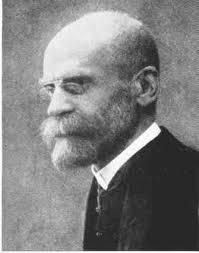
fact: Used by Durkheim; certain objective ‘facts’ exist in society; not
influenced by individuals
Survey:
Large-scale piece (quantitative research) ; general statements (particular
population)
Validity:
Show what research sets out.
Theory and interpretive research (Weber and verstehen):
Durkheim’s attitude; society (explored similar
way-physical sciences)
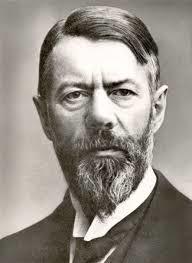
Weber: society constituted thinking, (variety –
influences).
Weber: defined sociology as a ‘science which
attempts the interpretive understanding of social action in order to arrive at
causal explanations.’
Symbolic interactionalism and labelling
theory:
Symbolic
interactionism
Bulmer (1962): social objects, events and
situations, all interpreted by people (various socially learned ways); people
respond (learned meanings)
Structuration theory:
Giddens: Structuration theory (1984)
Research (Giddens): must understand motivations
and actions (indv.) before see how structures can ‘exist’
Good example: (difference) between objective
facts and perception of facts. Foster’s (1995) ethnographic study (housing
estate)-blocks of flats (East London). Objectively, estate had a high crime
rate (official stats.). Residents-not perceive threatening, existence of
‘informal social control’, PEOPLE EXPECTED CERTAIN LEVEL OF CRIME RATE.
KEY WORDS:
Ethnography:
Describe work anthropologists (study simple, small-scale societies), living
with people and observing their daily lives. Used by sociologists (describe
modern-day observation studies)
Meaning:
Word used by Blumer to describe the sense people make of a particular situation
Phenomenological
approaches (i.e. interactionism): stress how people would perceive and
interact with one another.
Verstehen:
Term first used by Weber in sociology, role of sociology understand partly by
seeing through the eyes of those who are being studied.
Postmodernist research:
Postmodernism: positive
force (three main ways-research
relevant):
1.) Introduced
new methods and approaches to research
2.) Introduced
different topics (study)
3.) Encouraged
people-speak for themselves, allowing their narratives to stand without
necessarily interpreting them.
Deconstruction: a new method:
Baudrillard (1998): ‘narratives’ affect how we act/interact
with other people. Uncover the linkages and possible patterns-underline narratives.
Foucault: process
of deconstruction like activities of an archaeologist (soc. carefully digs down
layer after layer) ®explore
construction of narratives.
Postmodernist researcher concerned look @ how
particular narratives emerge at different times.
EXAMPLES
OF POSTMODERN RESEARCH:
Reanalysing sociological concepts (Youth
culture):
Redhead (1993): youth culture has ‘no meaning’.
Y.C. is a complex and ever-changing mixture of influences
Redhead uses secondary data in his work, also
uses writing of young sociology students (drawing upon current experiences of
clubbing).
FEMINISM
AND METHODS:
Current
fragmentation of sociology, intellectual critiques
1970s: Firestone (1970) and Millett (1970): knowledge
and methods are linked to gender. Men and women have different experiences and
different starting points(construct knowledge)
Harding (1987): three key elements (feminist
methodology):
1.) Women’s
experiences: a new resource:
Most research devised and conducted by male
sociologists, resulted in concentration on issues of interest to males. Women
(different interests and perspectives, open up new areas for sociological
investigation).
2.) New purposes of social science: for women:
Purpose (feminist sociological research):
improve position of women. Committed and
open about its commitment – feminist standpoint.
3.) Locating the researcher in the same
critical plane as the subjects:
Bridge the gap between female researchers
and female subjects. Feminist researcher must examine all her ‘assumptions,
beliefs and behaviors’. ‘Class, race and gender’ (subject) stated.
Feminist researcher not appear ‘as an
invisible, anonymous voice of authority, but as a real, historical individual
with concrete, specific desires and interests.’
ABOVE IDEAS led to...in-depth
interviewing/discussion and participant observation (particularly favored in
feminist research).
‘Women are more able to understand society
than men and therefore their accounts are to be preferred.’
FOCUS
GROUPS:
Fem. Soc. Use focus groups (research).
Wilkinson (1999)-method fits ethos (feminism).
1st: F.G. research less artificial
emphasizes group interaction (normal part of social life). Women more likely to
divulge true ‘lived experiences’
2nd: F.R. minimize differences (power
and status). F.G. even out the power (group of women chance take control over
the discussion).
3rd: Madriz (2000): F.G. consisted of
‘marginalized’ women-‘lower-socioeconomic-class women of colour’, able to make
sense of their ‘experience of vulnerability and subjugation’
FEMINIST
ETHNOGRAPHY:
Reinharz (1992): most effective way study women use
ethnographic methods. Allow full documentation (women’s lives).
Allows researchers to see activities (viewpoint
of women).
Less exploitative.
Skeggs (2001):
In her ethnographic research she was seeking to ‘emphasize
the words, voices and lives of the women. ‘
QUALITATIVE
INTERVIEWING:
In-depth interview (most used tool of research)-Bryman
(2004)
Oakley (1981): two women invl. Engaged (discussion)
based on equality-interviewee (equal in power)- equal right decide on direction
of discussion.
Own research interviews (transition into motherhood).
Oakley asked questions on a range of issues by the respondents. Felt by
replying and advising the women, fulfilling criteria (fem. R.M.)
FOCUS ON
RESEARCH:
(Bev Skeggs(1997)-Formations of
class and gender):
Beverly Skeggs studies 83 White w-c young women
(period of 12 years)-ethnographic measures (participant observation and
in-depth interviews). Research BEGAN studying women-health and social course @
college in North-West of England. Skeggs followed them through their education,
employment and family lives. Skeggs (work-feminist), politically committed
providing ‘marginalized’ women to express themselves, wished to show how young
women’s perceptions of the society they encountered influenced their actual
behaviour. Skeggs argues she didn’t exploit the women (own career benefit),
that her research gave her ‘subjects’ a sense of self-worth. That she ‘provided
a mouthpiece against injustice, particularly with regard to disclosures of
violence, child abuse and sexual harassment.’
KEY
TERMS:
Deconstruction:
breaking down of a taken-for-granted subject to uncover the assumptions within
it.
Transgress:
cross accepted academic boundaries.





Positivism and quantitative research methods.
Interpretive sociology and qualitative methods.
Postmodern and feminist methodologies.
Information
- Description
- Note on THE RELATIONSHIP BETWEEN THEORY AND METHODS., created by megster_123 on 21/04/2014.
- Created by
- megster_123 · Apr 2014
- Updated
- Nov 5, 2016
- Views
- 434
- History
-
- Created by megster_123 · Apr 21, 2014
- Copied by megster_123 · Apr 21, 2014
- Rating