
Research Methods
123 resources created by 99 users
This Research Methods page on GoConqr gathers community-made mind maps, quizzes, flashcards, slide sets and notes, from questionnaires and interviews to participant observation, official statistics and the value freedom debate. It's built for school students revising a topic, university students and professional candidates filling gaps, and teachers after ready-made material. There are over 800 resources here, including more than 40 quizzes and over 500 mind maps, with A-level Sociology and GCSE Sociology both mentioned. Pick a method, try a quiz to find your gaps, then make your own revision sets.
Top Research Methods resources
-
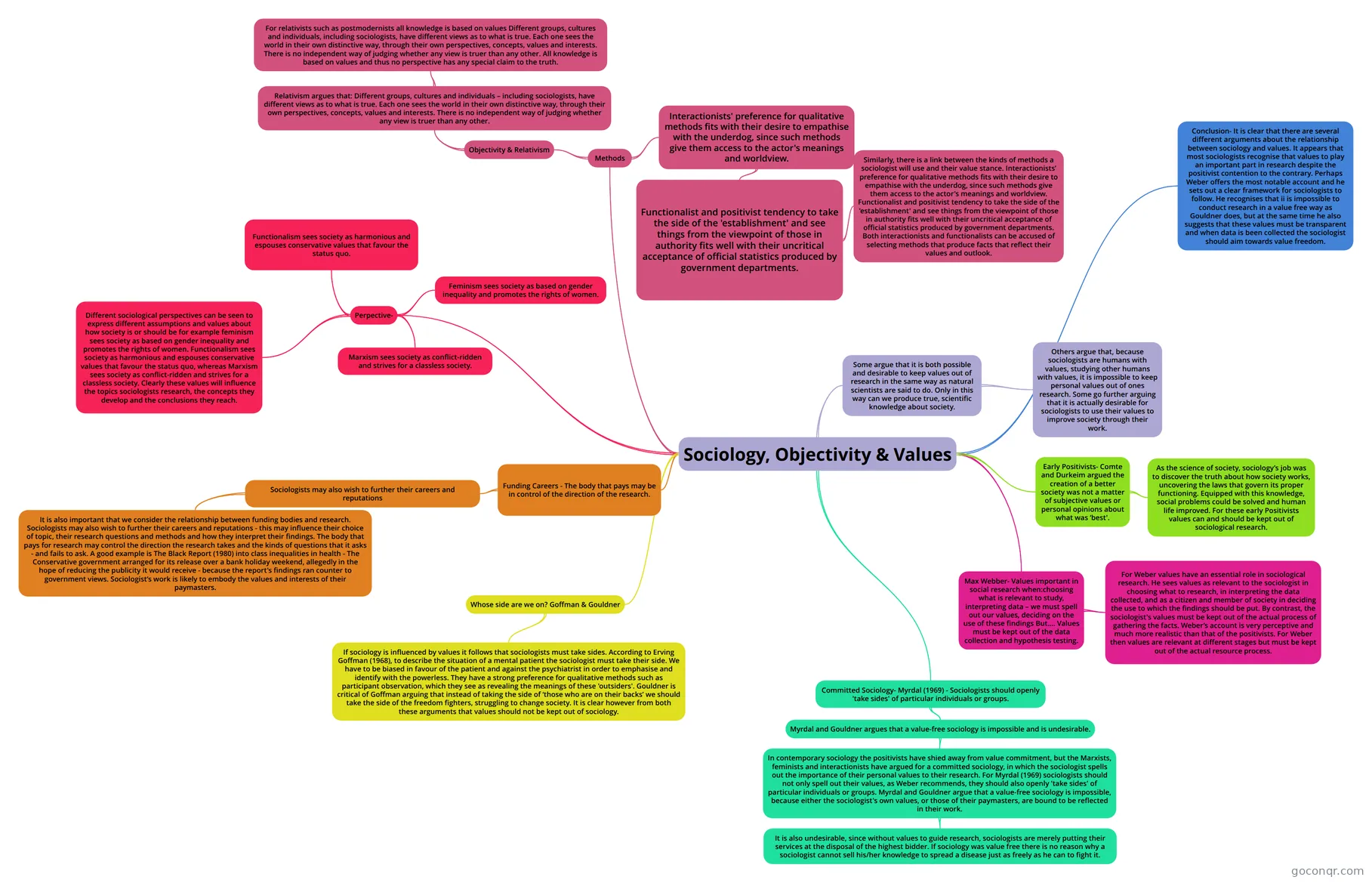 Mind map Sociology, Objectivity & Values
-
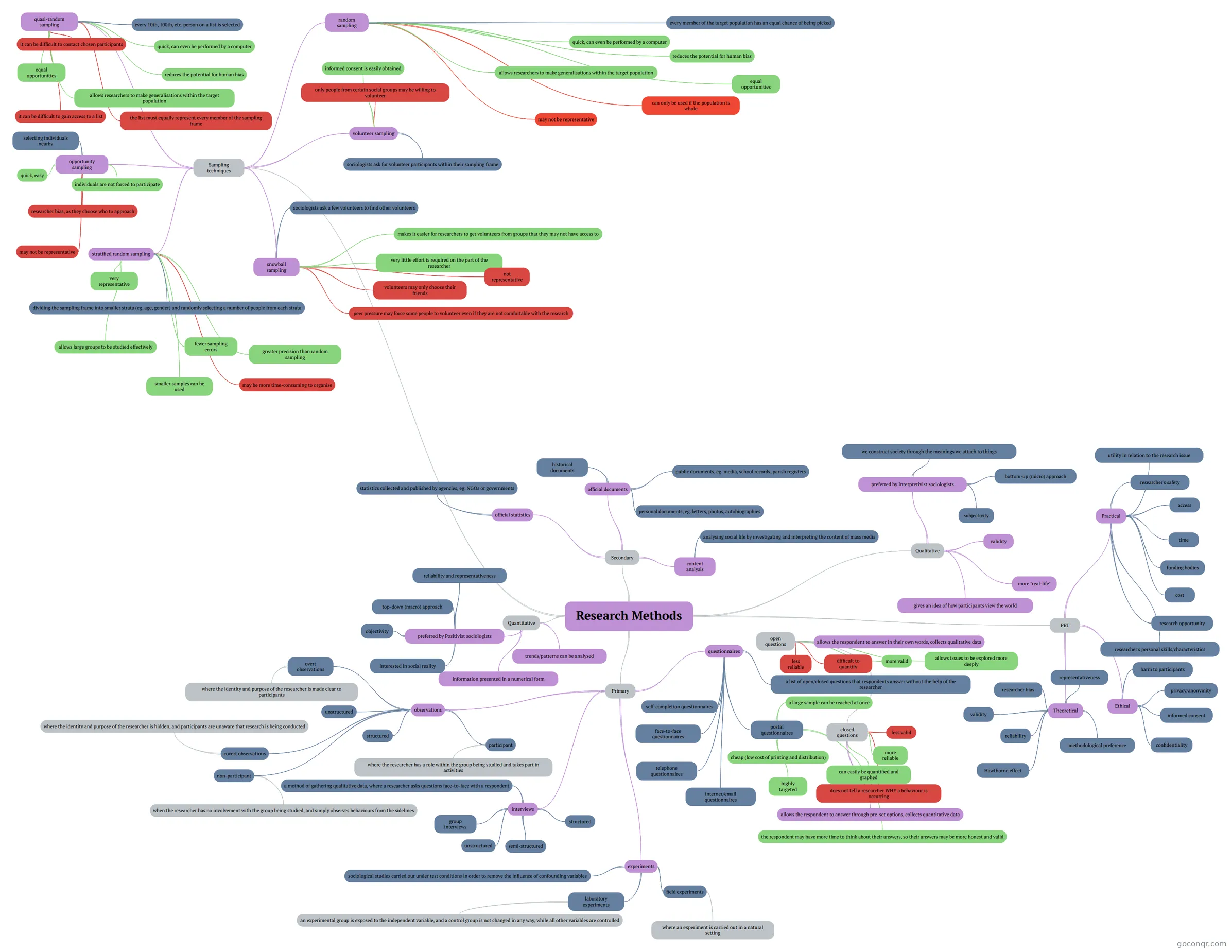 Mind map Research Methods A mindmap of the definitions, advantages and disadvantages of research methods.
-
43 cardsFlashcards on Participant Observation (3.6) There are several different types of observation. Firstly, we can distinguish between non-participant obser...
-
46 cardsFlashcards on Interviews (3.5) Sociologists use different types of interview in their research. What are the four types sociologists may c...
-
35 cardsFlashcards on Questionnaires (3.4) One way of gathering data about people is through the use of questionnaires. Questionnaires ask people to p...
-
24 questionsSociological Research Methods What are the disadvantages of a questionnaire?
-
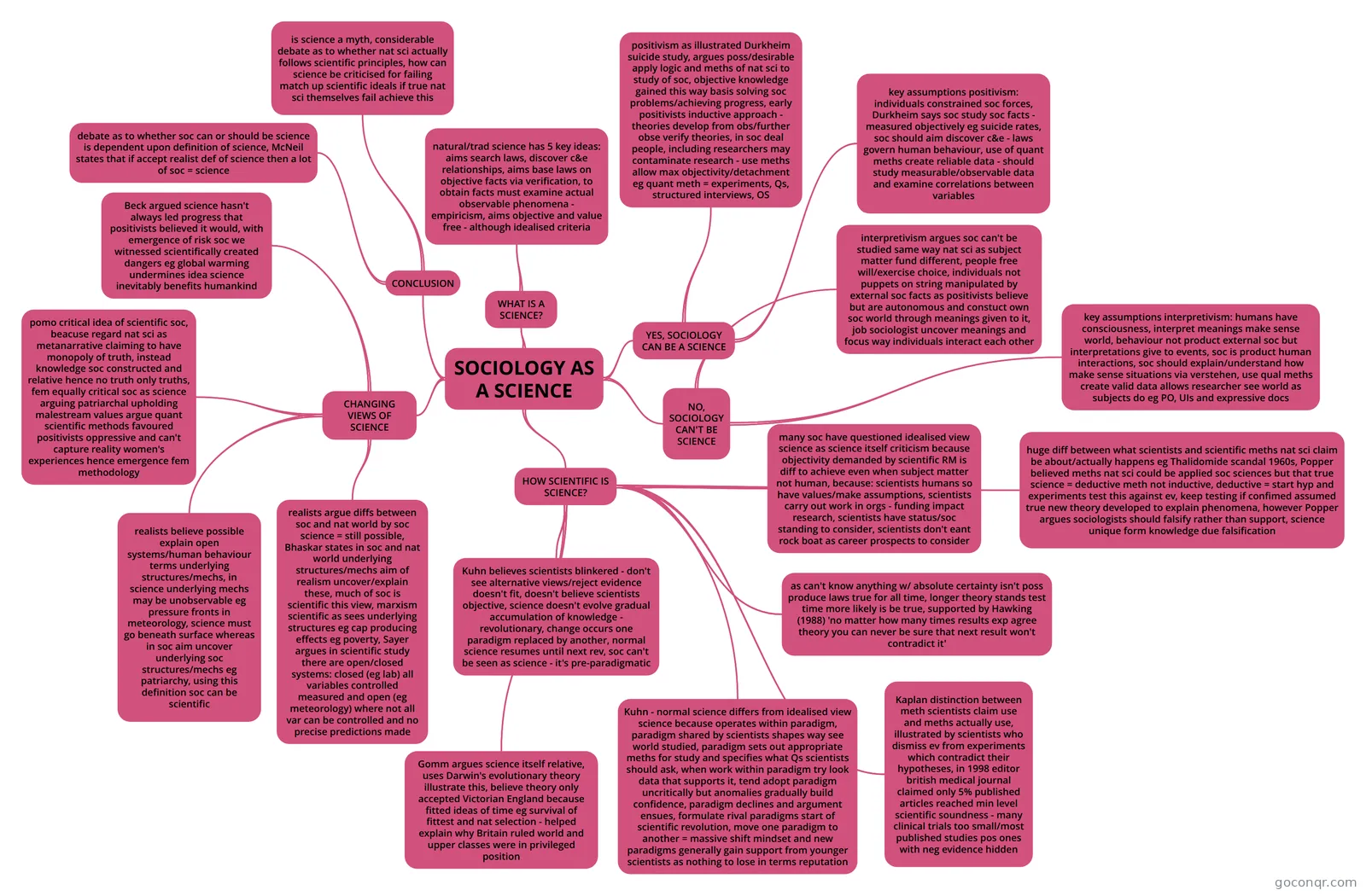 Mind map SOCIOLOGY AS A SCIENCE
-
16 questionsSCLY2 - Research Methods - Experiments (AQA AS Sociology) Once an experiment has been conducted, other scientists can then replicate it. That is, they can repeat it ...
Quizzes
See all 11 quizzes-
24 questionsSociological Research Methods What are the disadvantages of a questionnaire?
-
16 questionsSCLY2 - Research Methods - Experiments (AQA AS Sociology) Once an experiment has been conducted, other scientists can then replicate it. That is, they can repeat it ...
-
20 questionsPARTICIPANT OBSERVATION What are the types of participant observation?
-
15 questionsChoosing a research method What is a Primary source of data?
-
15 questionsResearch Methods in Sociology Which is the second step in designing a sociological experiment?
-
10 questionsFoundations Quiz According to the text, Sociology is a science because
-
10 questionsQUIZ_ Research Methods A statement of the relationship between two variables is called:
-
9 questionsPractical, Ethical and Theoretical Factors affecting choice of research method Which of these are practical factors that influence the choice of research method?
Mind maps
See all 68 mind maps-
Sociology, Objectivity & Values
-
Research Methods A mindmap of the definitions, advantages and disadvantages of research methods.
-
SOCIOLOGY AS A SCIENCE
-
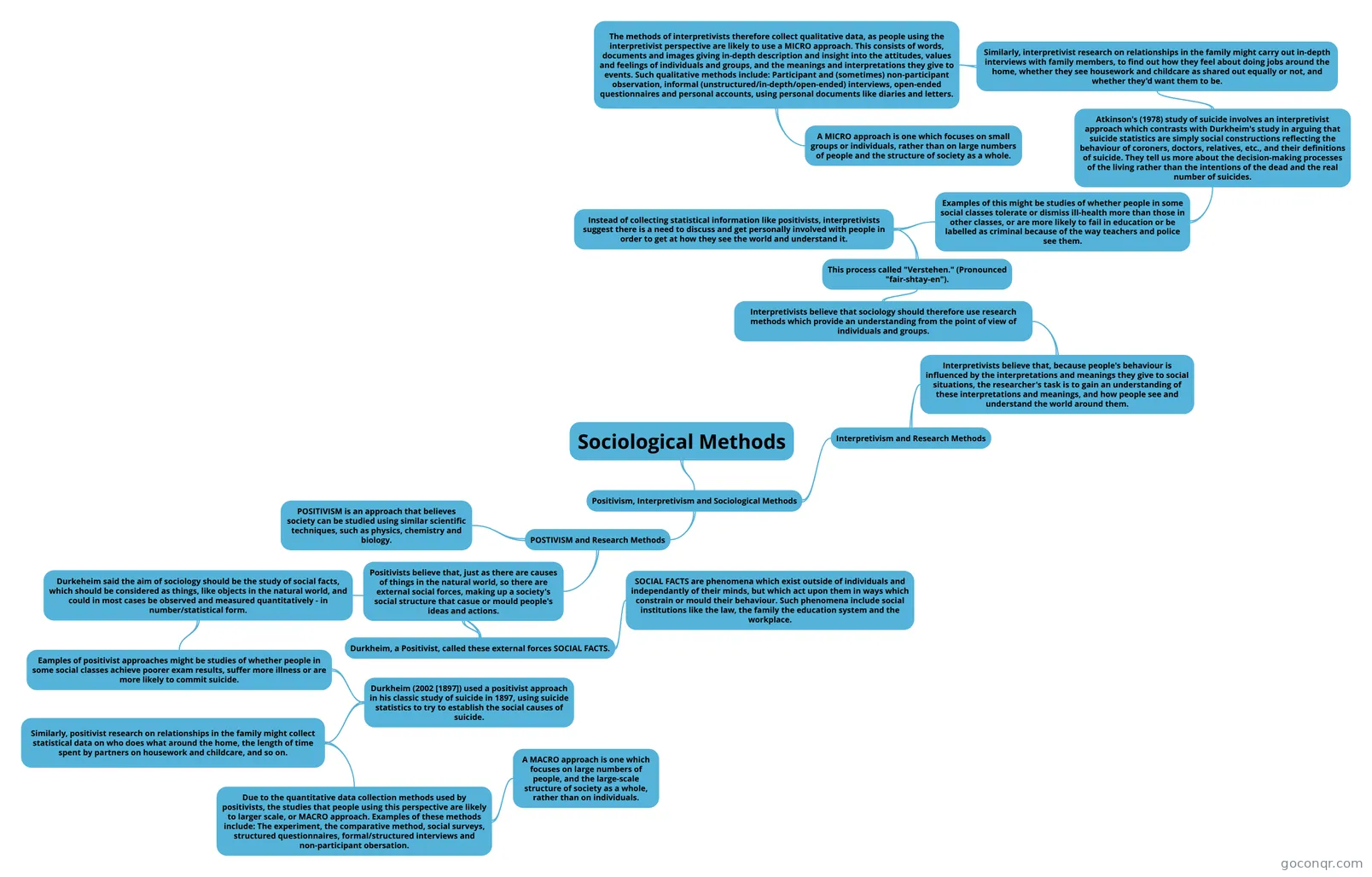 Sociological Methods
-
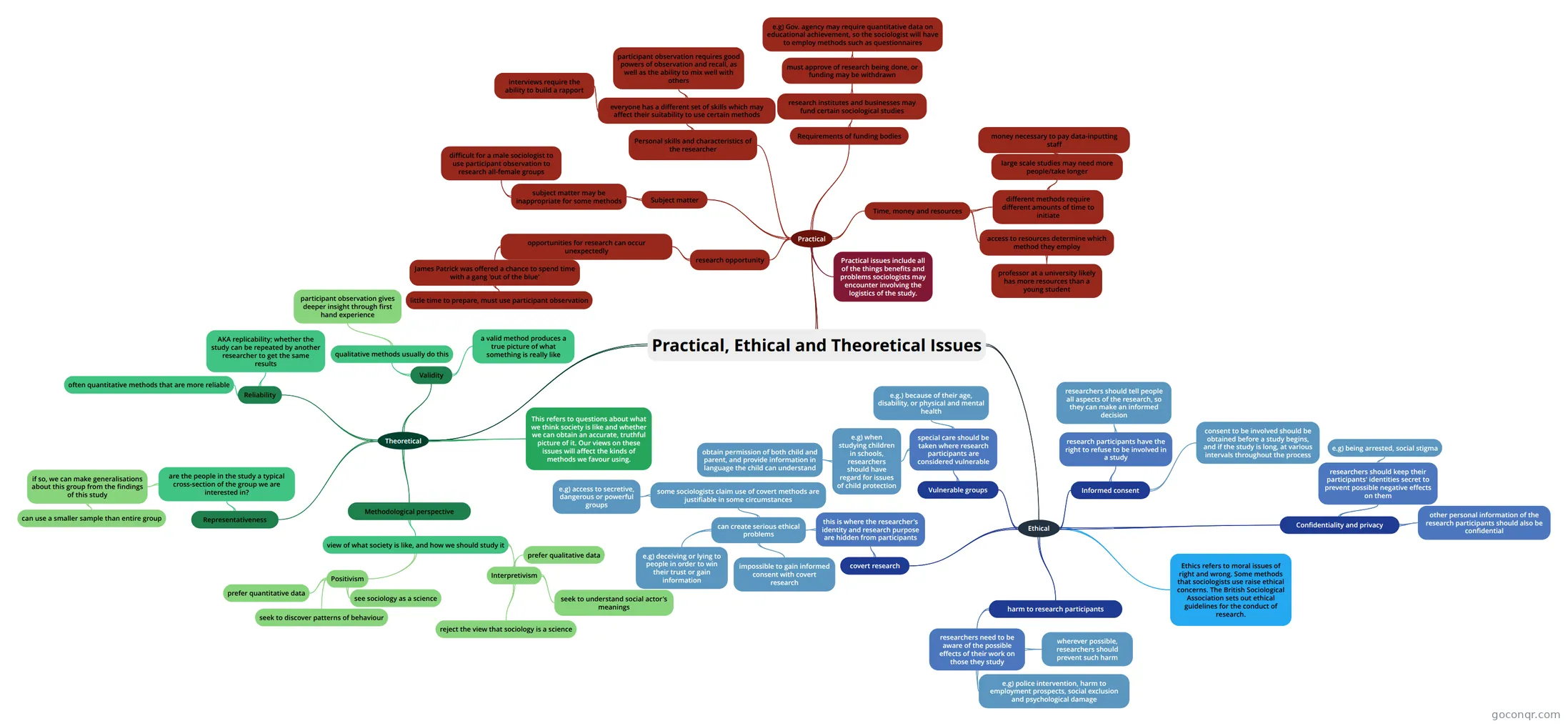 Practical, Ethical and Theoretical Issues An outline of the practical, ethical and theoretical issues that sociologists must consider when making dec...
-
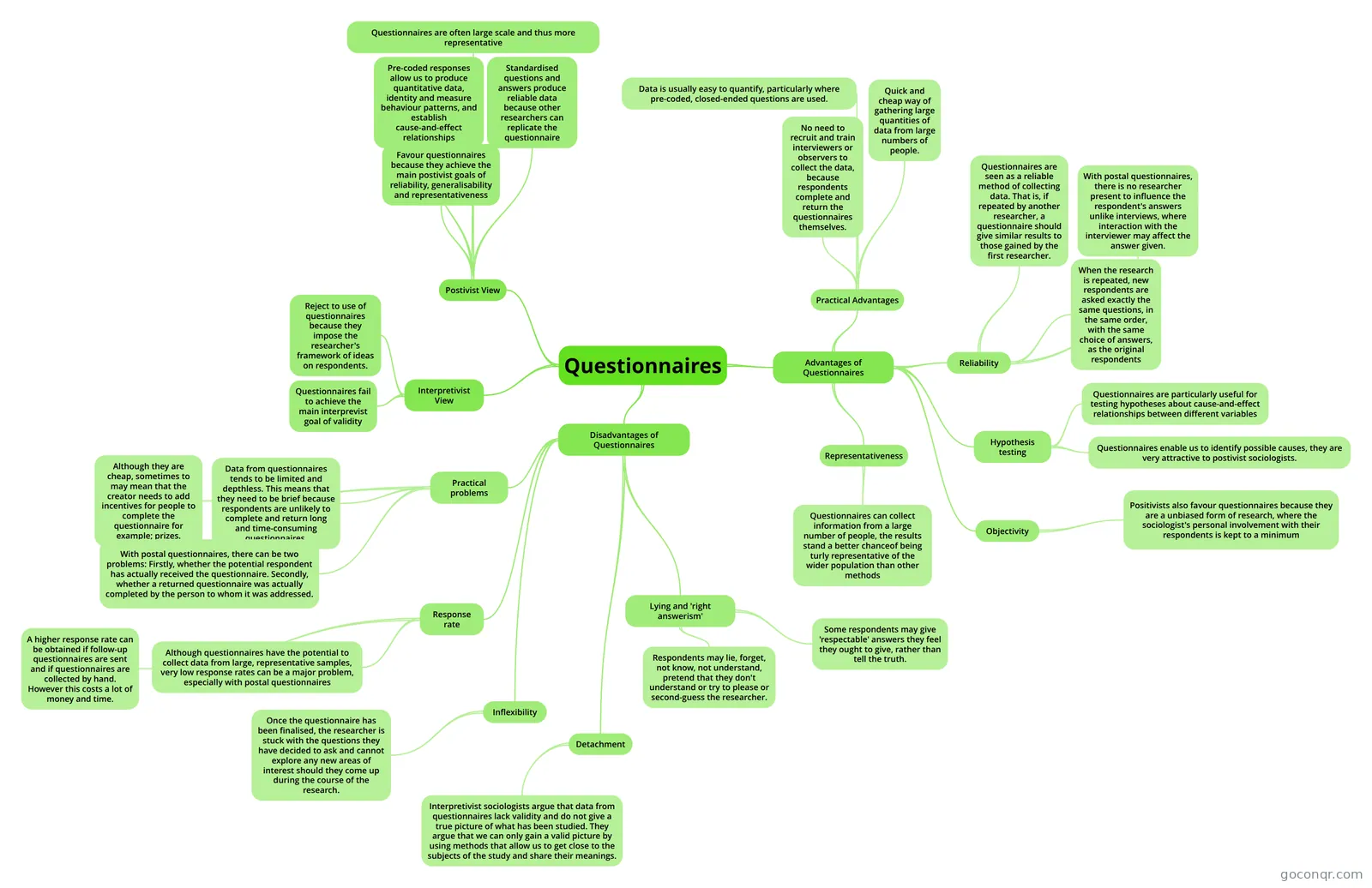 Questionnaires Sociology Mind Map on Questionnaires
-
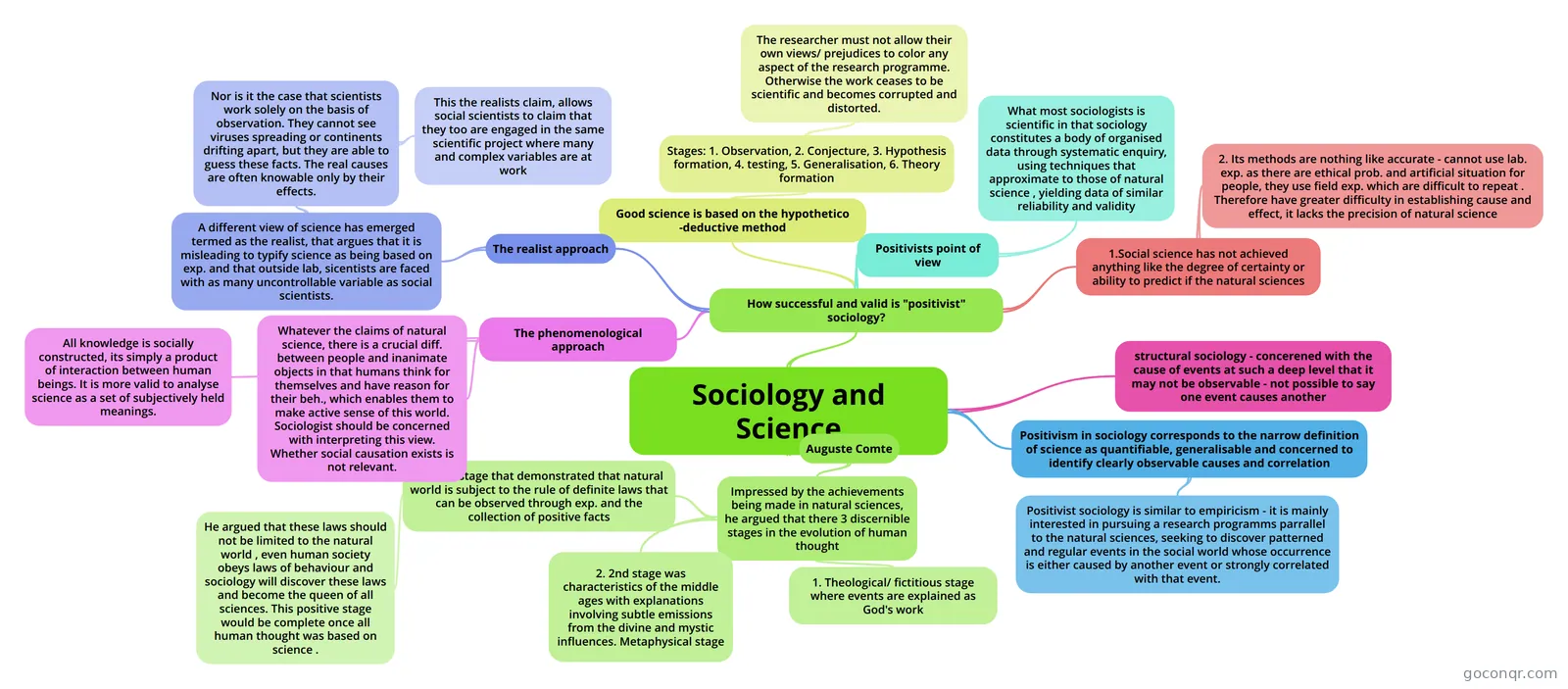 Sociology and Science
-
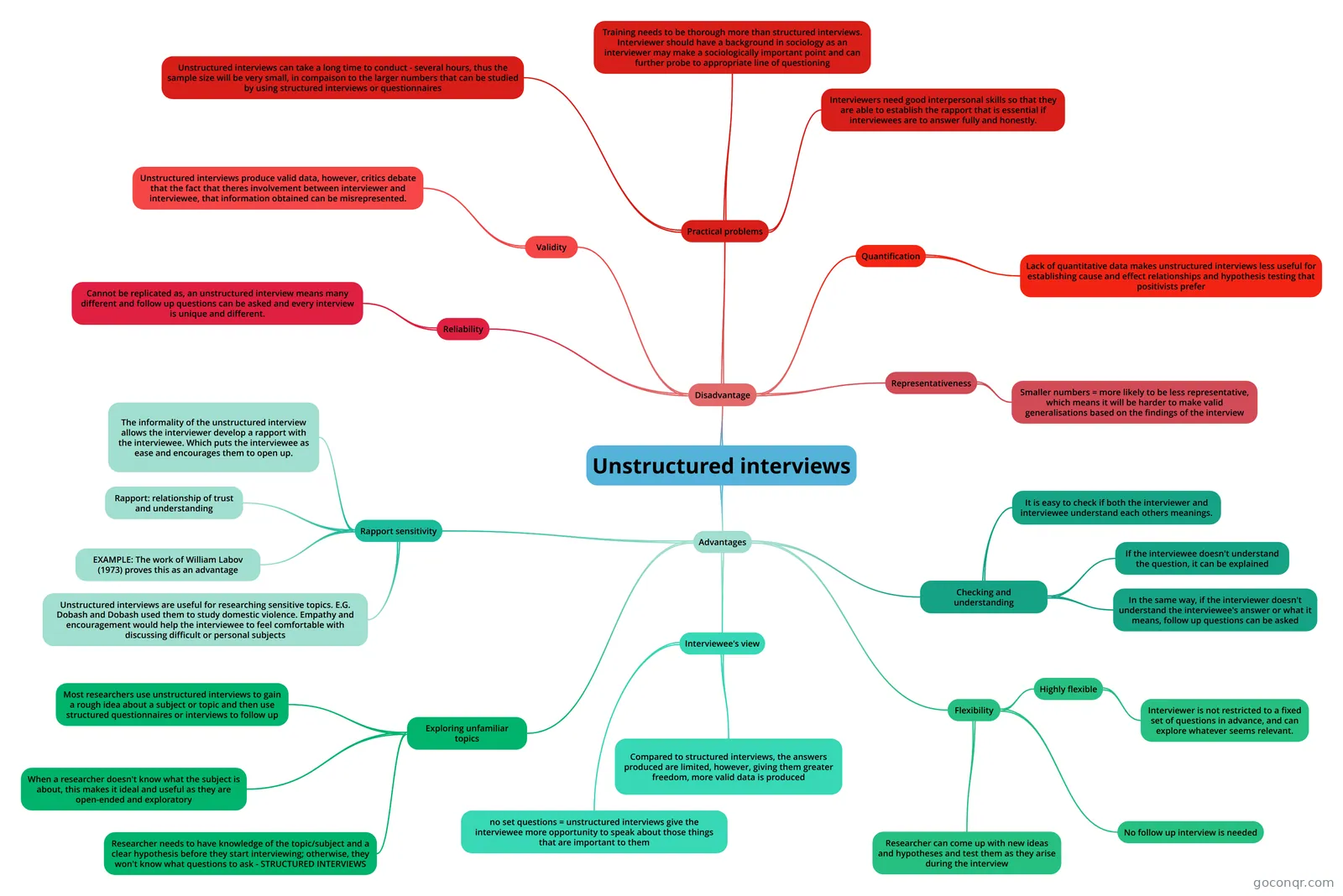 Unstructured interviews Unstructured interviews - advantages and disadvantages
Flashcards
See all 40 flashcards-
43 cardsFlashcards on Participant Observation (3.6) There are several different types of observation. Firstly, we can distinguish between non-participant obser...
-
46 cardsFlashcards on Interviews (3.5) Sociologists use different types of interview in their research. What are the four types sociologists may c...
-
35 cardsFlashcards on Questionnaires (3.4) One way of gathering data about people is through the use of questionnaires. Questionnaires ask people to p...
-
18 cardssociology research methods
-
21 cardsAdvantages + disadvantages of sociology research methods Factors influencing choice of topic
-
20 cardssocioliogy research methods
-
36 cardsResearch Methods in Sociology
-
46 cardssocoiology AQA unit 1
Notes
-
THE RELATIONSHIP BETWEEN THEORY AND METHODS. The hypothetico-deductive method:Positivists believe this to be the most scientific method of finding accurate information, otherwise known as 'scientific knowledge'. 1.) Background reading & personal experience-...
-
Sociology and Science Big part of the Enlightenment - Natural sciences produced more objective and true knowledge. New Page
Slides
More Sociology topics
About Research Methods
GoConqr OriginalWhat the page covers
This unit page brings together material on how sociologists collect and judge evidence. The mind map titled Research Methods sets out the basics: secondary and qualitative data, quantitative data in numerical form, and why Positivist sociologists prefer numbers that show trends and patterns. Other maps and flashcard decks go method by method, including questionnaires, structured and unstructured interviews, participant observation, laboratory experiments and official statistics.
Where to start
Begin with the Research Methods mind map for the overall picture. Then open the Practical, Ethical and Theoretical Issues mind map, which explains the logistics, moral questions and theory behind choosing a method. The flashcard decks on factors influencing the choice of method follow the same three headings, so they work well as a second pass.
Using quizzes and maps together
- Read a mind map on one method, such as Questionnaires.
- Take the quiz Sociological Research Methods, which asks about the advantages and disadvantages of a questionnaire.
- Check your misses against the map, then test yourself again with Choosing a research method.
For observation, pair the flashcards on participant observation with the quiz PARTICIPANT OBSERVATION and the maps comparing overt and covert approaches.
Theory and debate
Methods are tied to ideas about science. Positivism, Interpretivism and Value Freedom Debate explain why some researchers favour numbers and detachment while others favour depth and meaning. The map Sociology, Objectivity & Values covers whether values can be kept out of research. Several resources also use education as the setting, such as the flashcards titled Researching Education.
Where it sits
This unit belongs to the Sociological Theory and Methods strand of Sociology. Choose one method today, work through its map and quiz, and then add your own notes or flashcards for the gaps you find.
Frequently asked questions
Which resource should I open first?
Start with the mind map called Research Methods. It sets out the main ideas: types of data, quantitative and qualitative approaches, and Positivist preferences. After that, the Practical, Ethical and Theoretical Issues mind map shows how researchers choose between methods, and the matching flashcards help it stick.
Which quizzes suit this unit?
Try Sociological Research Methods for questionnaire advantages and disadvantages, and Choosing a research method for primary and secondary sources and practical and ethical issues. There are also quizzes on participant observation, experiments, suicide and secondary sources, so you can test one method at a time.
Which exams do these resources suit?
The listed resources mention A-level Sociology and GCSE Sociology, and most of the material is aimed at school students. A smaller share suits university students and professional candidates. Teachers can also use the maps, slide sets and flashcards as ready-made material for lessons.
What do the mind maps cover?
They cover individual methods such as questionnaires, interviews, participant observation and official statistics. Others explain Positivism, Interpretivism, sociology as a science and the value freedom debate. A few compare overt and covert observation or help you choose a research method.
Are the resources free, and who made them?
Yes. Every resource here is free to open, study and take, with no account needed. They were made by GoConqr users, not by GoConqr itself. A free account also saves your quiz scores and lets you make your own quizzes, mind maps, flashcards and notes.
What if I can't find a topic I need?
Look at the neighbouring titles first, since many methods appear in several formats, such as maps, decks and slide sets. If a gap remains, you can build your own flashcards or mind map from the notes you already have.