
Notes
Religious Language
Content of the notes (9)
Page 1
Key Words
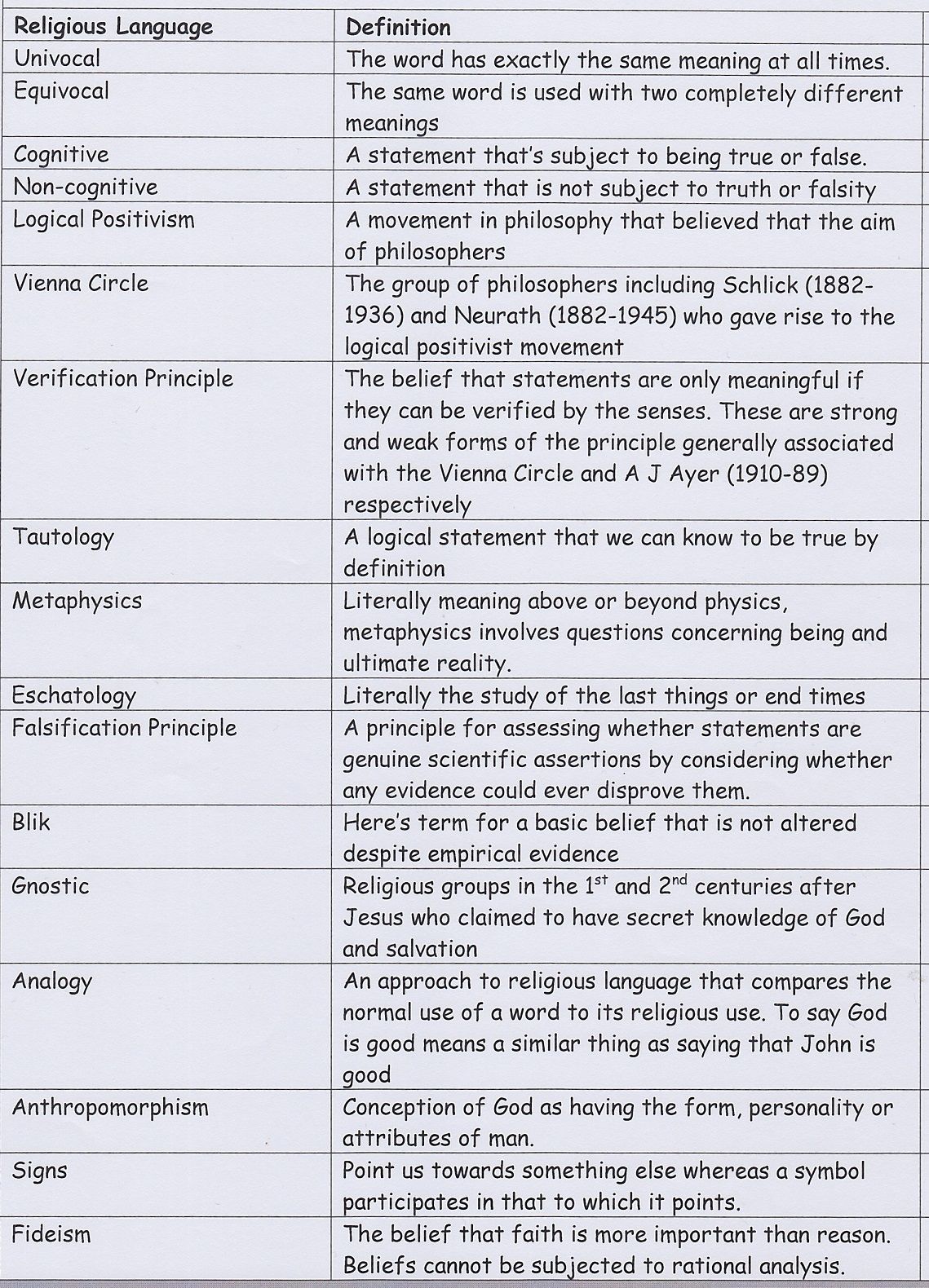
Page 2
Introduction to Religious Language
In the 20th Century, philosophers realised that language is the only way we can make ourselves understood. In the philosophy of religion, we are describing concepts that no one can see or hear, such as God.
Words can be used equivocally, where a word has more than one possible meaning. For instance, 'lead' can be a verb or a noun.
People have different interpretations of language, so it is hard to know what people mean. For example, someone might describe David Beckham as tall, whilst someone else would describe his as average height.
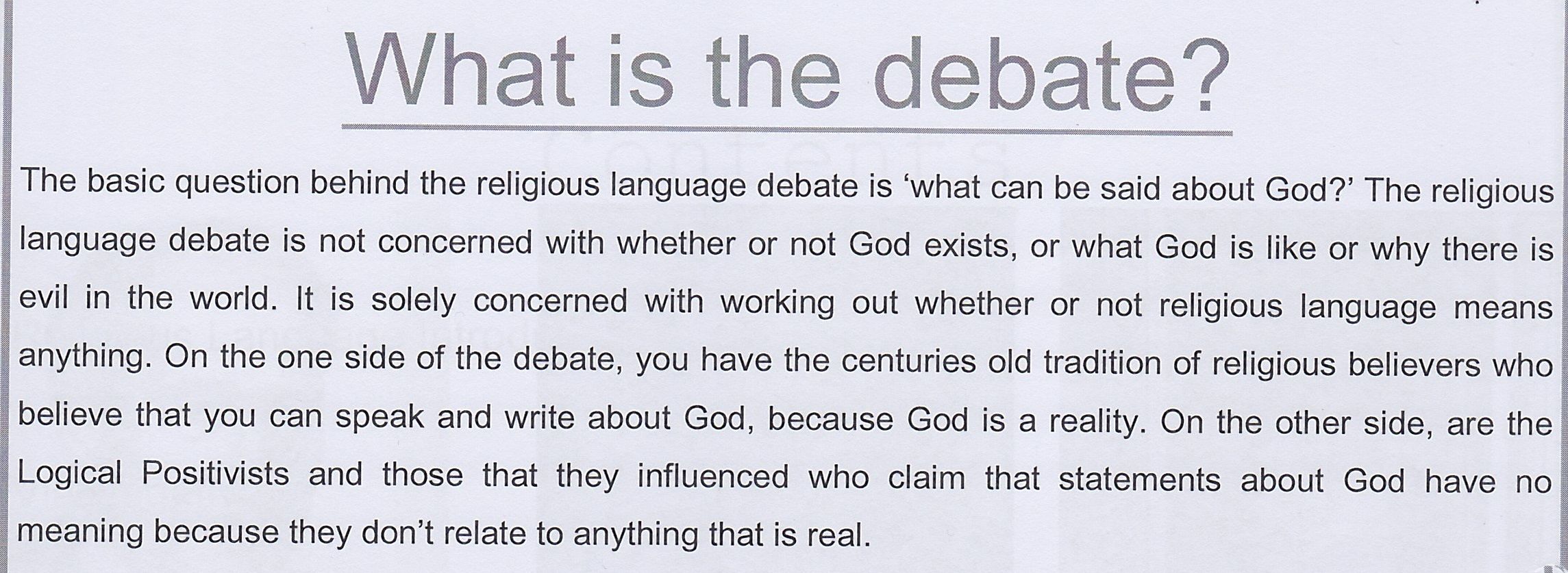
Examples from philosophy
Statement: God is powerful.
Possible problems: This could be reducing God to the human understanding of power.
If this statement cannot be proved true or false, does it have any meaning?
Statement: God is faithful.
Possible problems: This could be reducing God to the human understanding of faithfulness.
Being faithful can have many meanings, for instance, being faithful to a spouse is different to being a faithful dog. Which definition of faithful applies to God?
If this statement cannot be proved true or false, does it have any meaning?
Deuteronomy 32:3-4 describes God as 'great' and as a 'Creator.' 'Great' can mean 'Almighty' and bigger than our understanding, however I can also describe something my mum made as 'a great cake.' Equally, a 'Creator' can be responsible for making the universe, but also parents have 'procreated.'
In the field of meta-ethics, S.A. Burns identified 32 definitions of the word 'good.' This means that a 'good cake' has different qualities to a 'good dog.' It could follow that if God is the 'ultimate,' He must have all of these qualities. Therefore, it makes logical sense to suggest that God tastes like a 'good chocolate cake.'
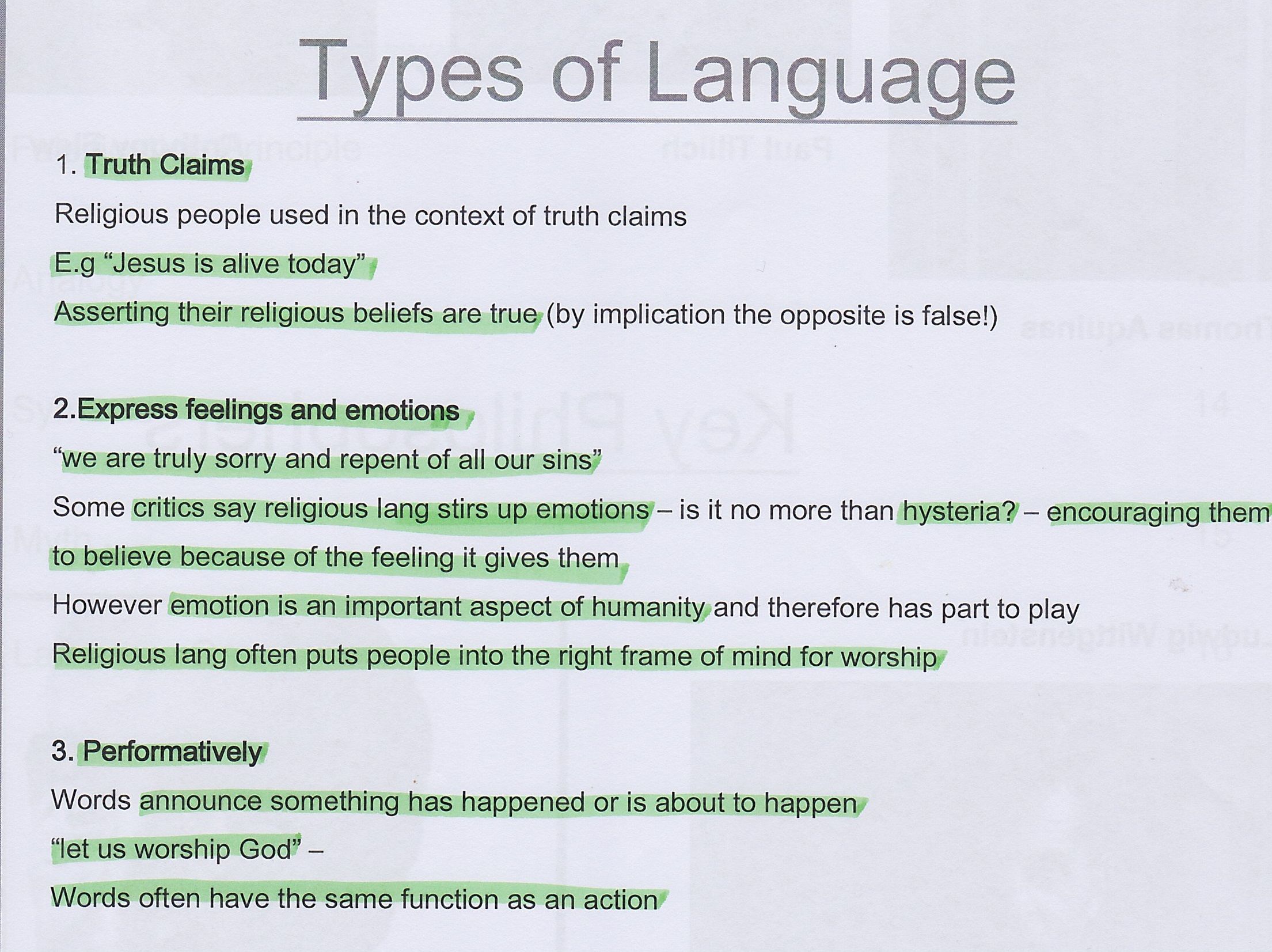
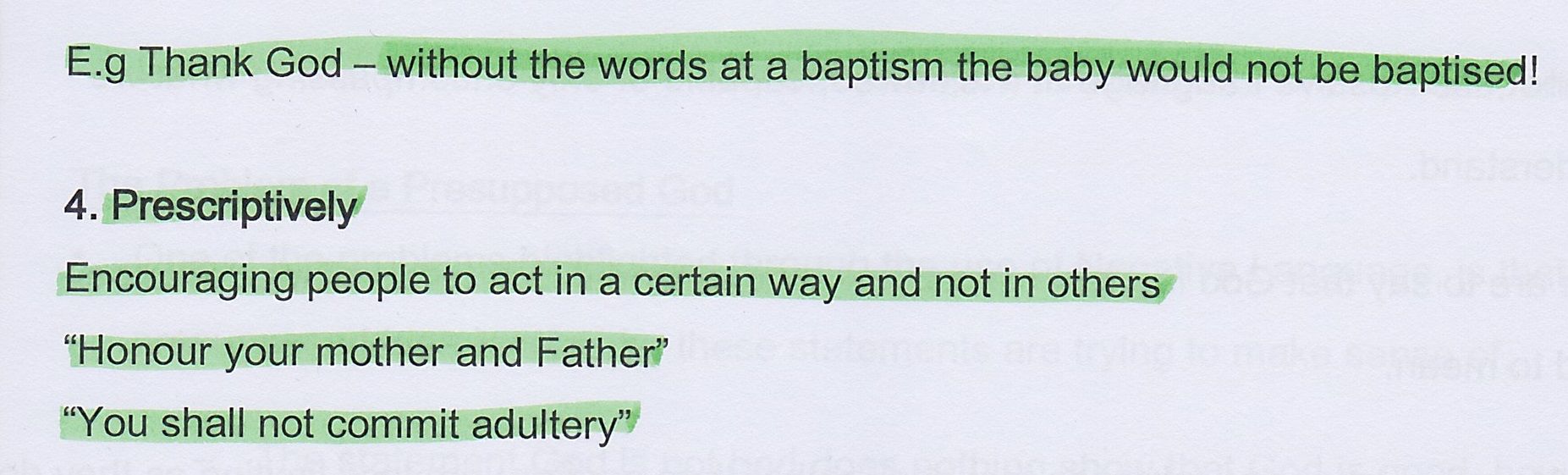
Page 3
Via Negativa (Apophatic Way)
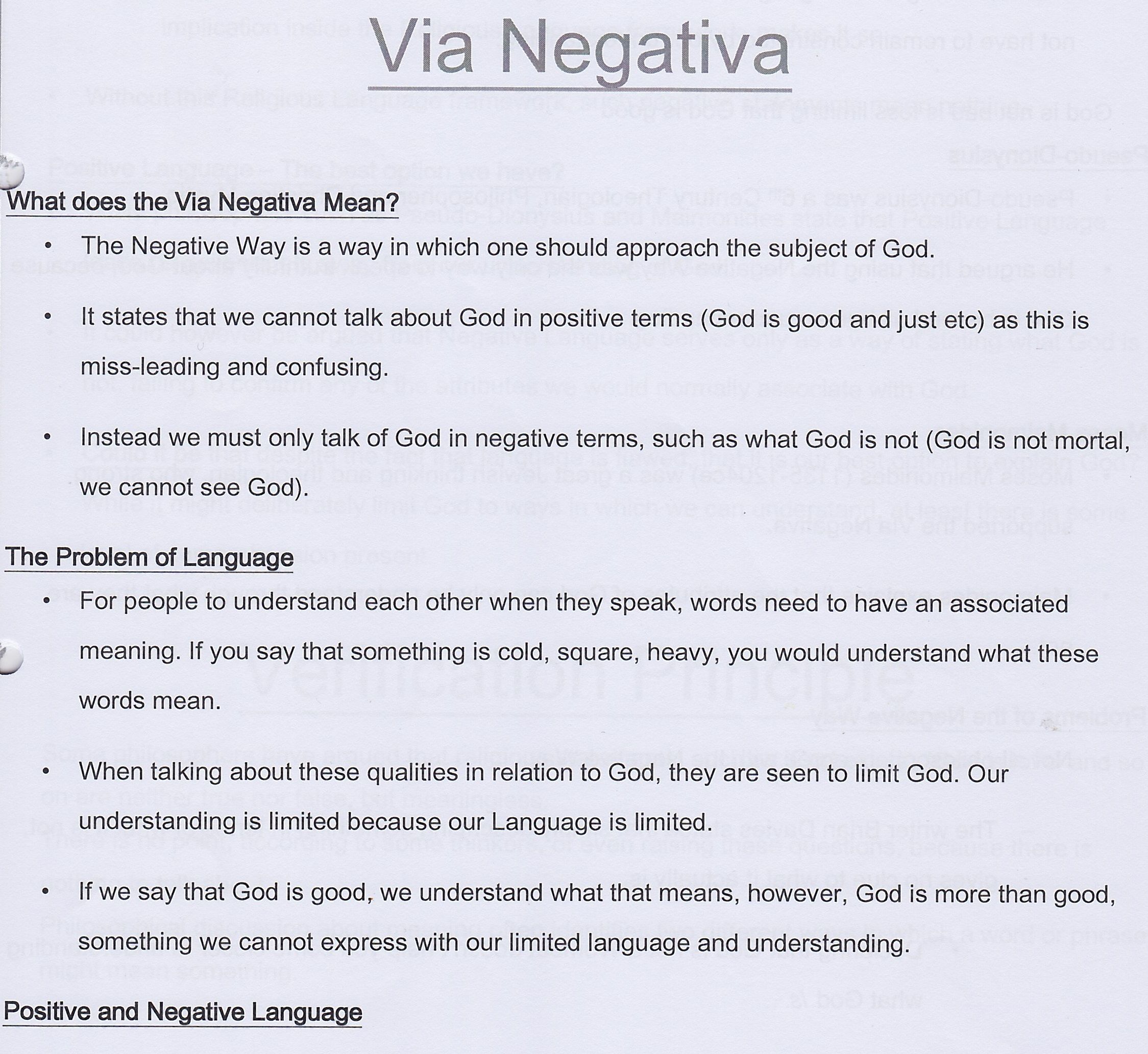
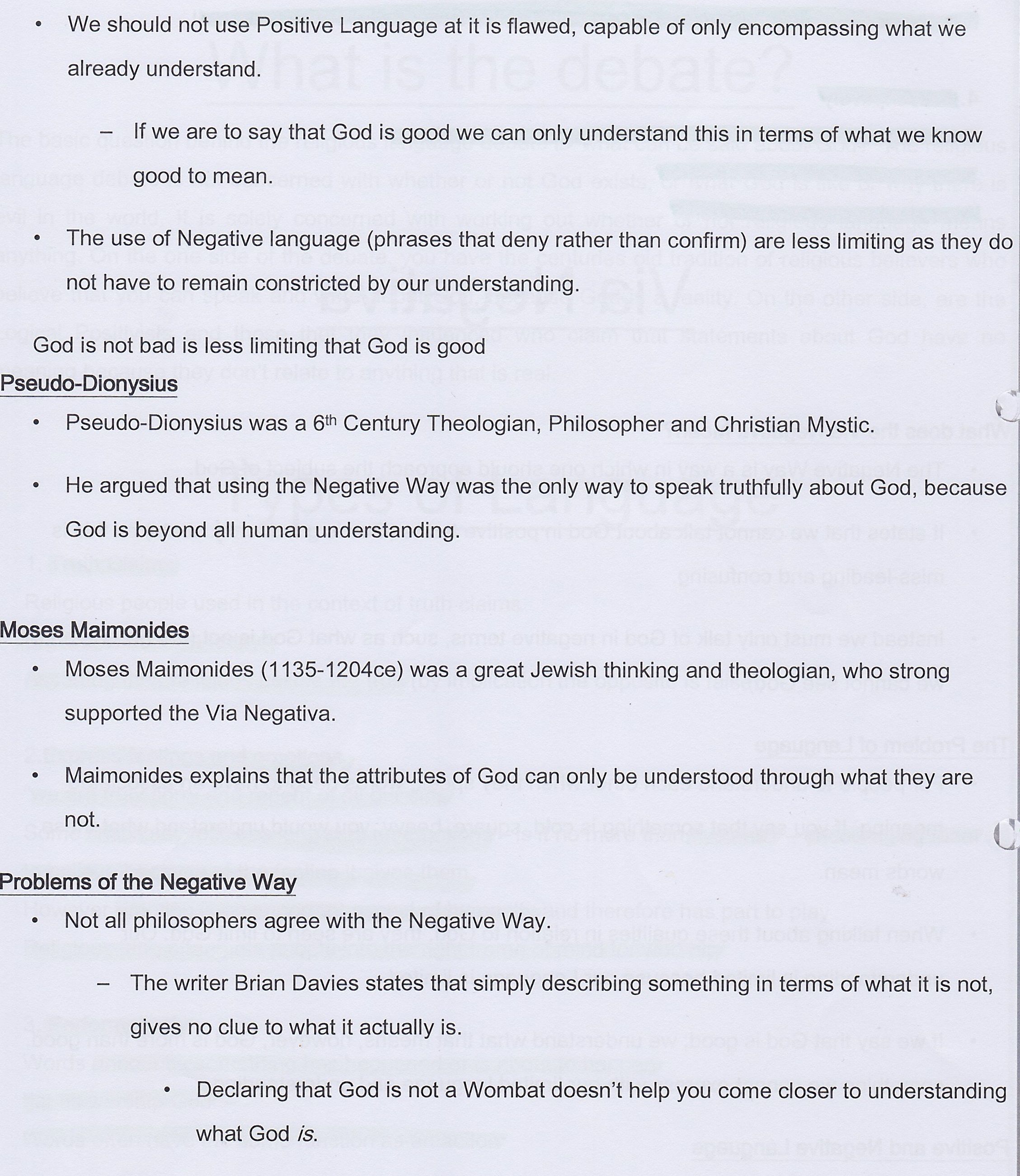
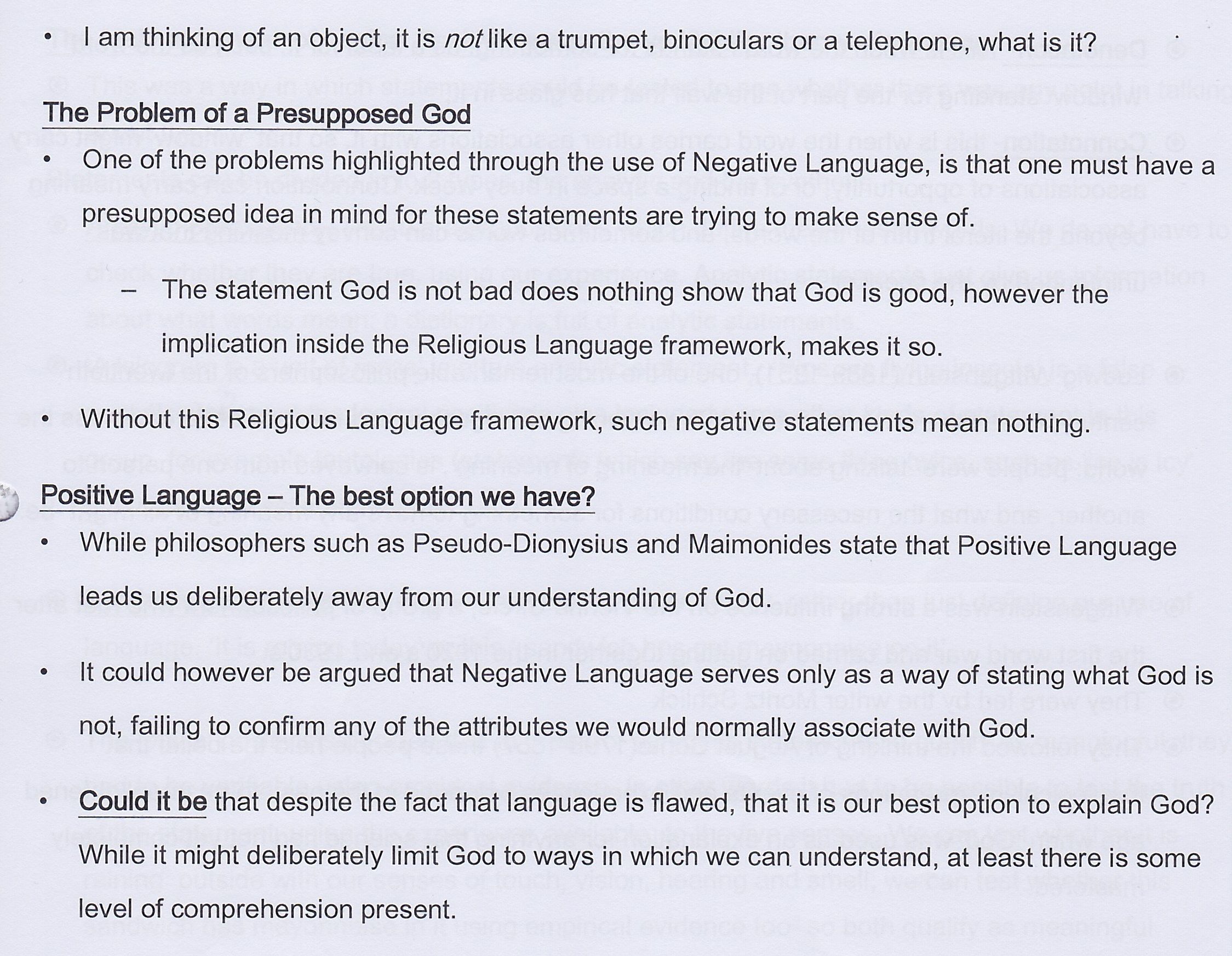
Talking About God Through Negation
Page 4
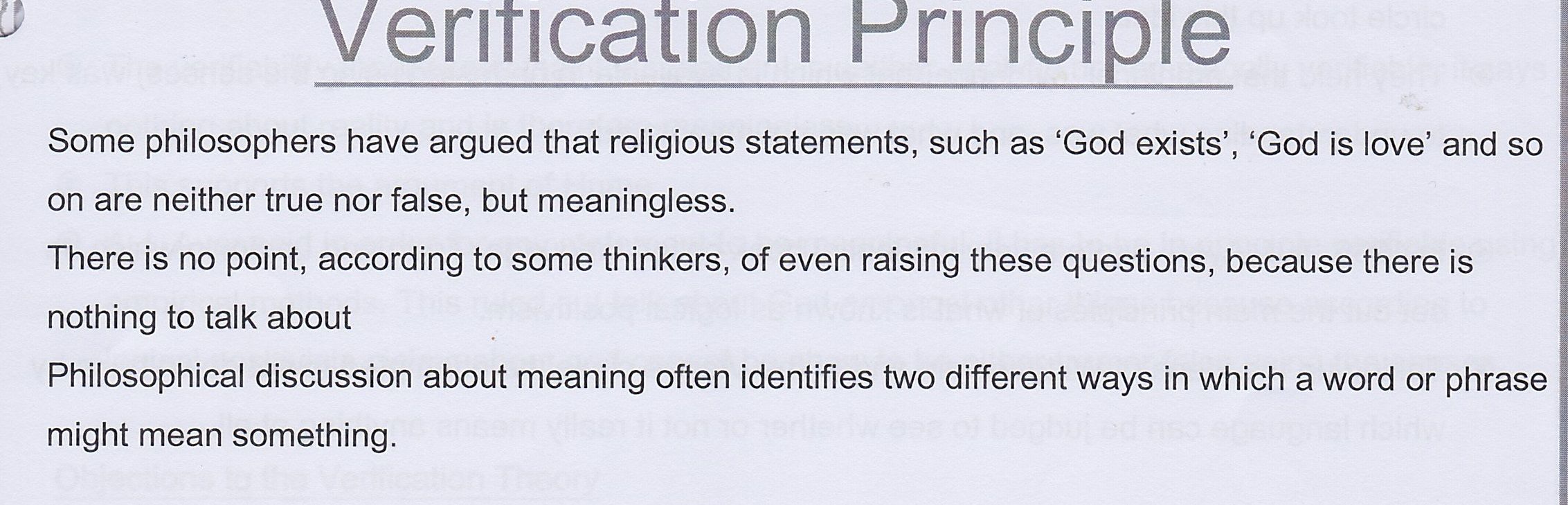
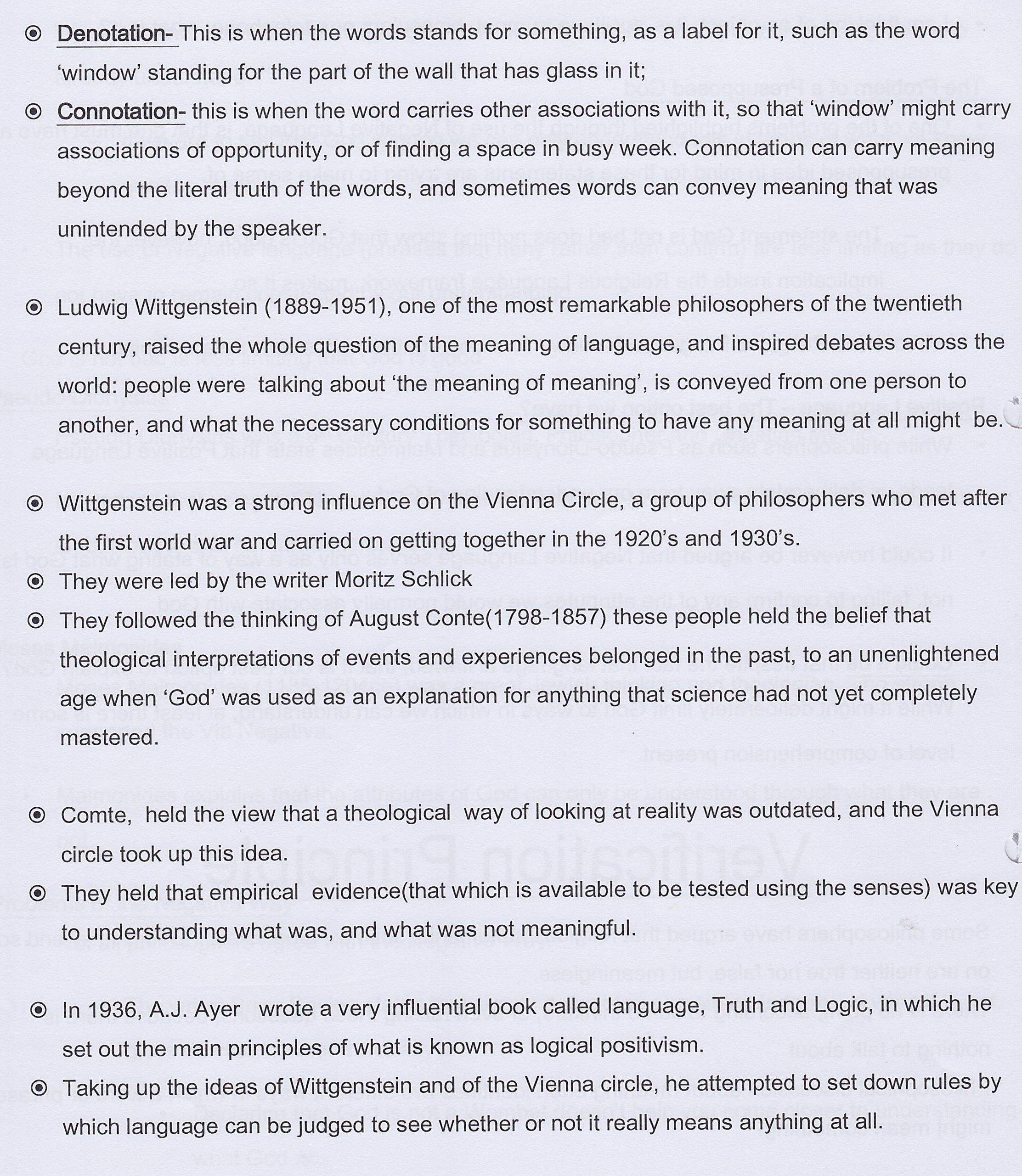
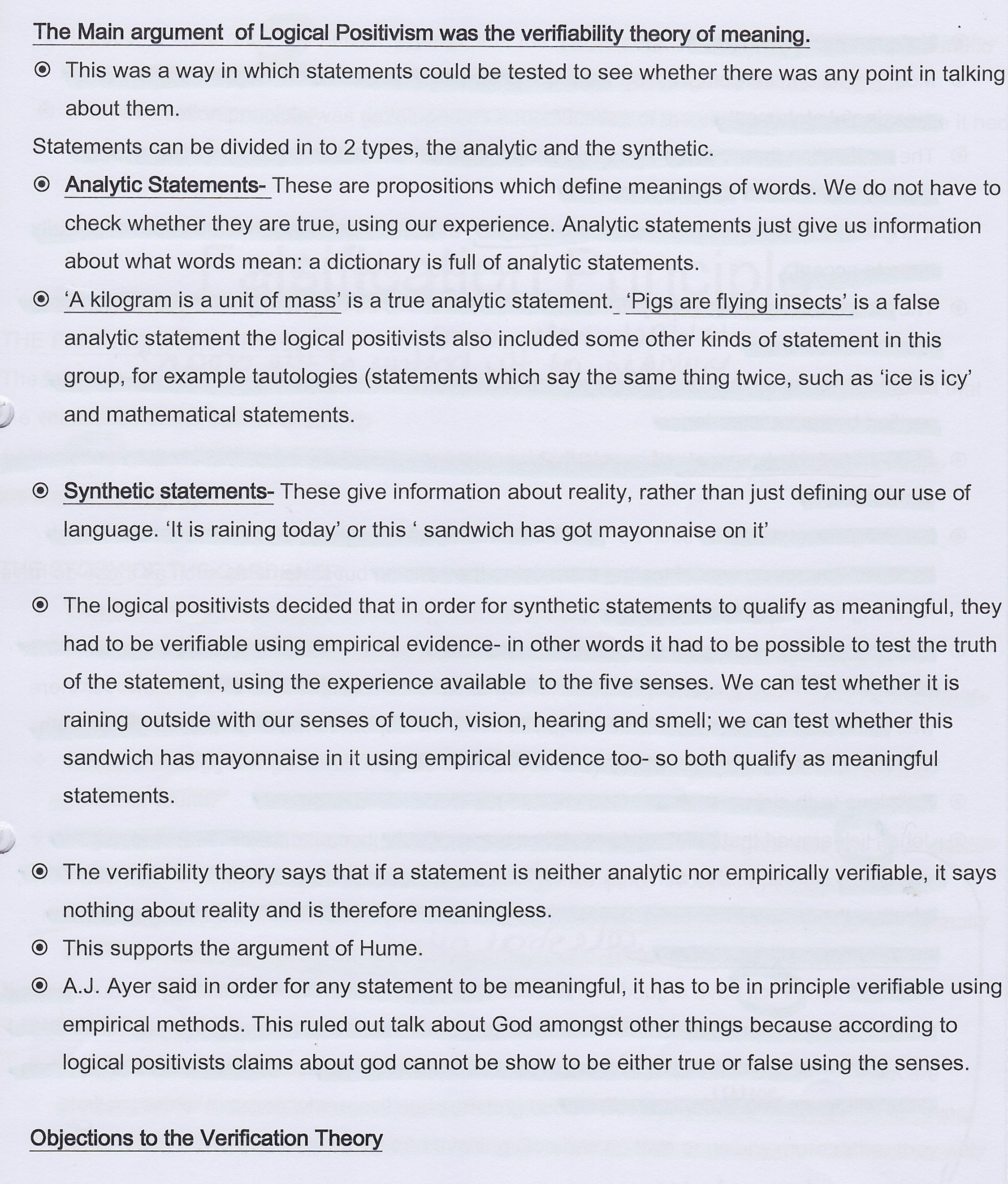
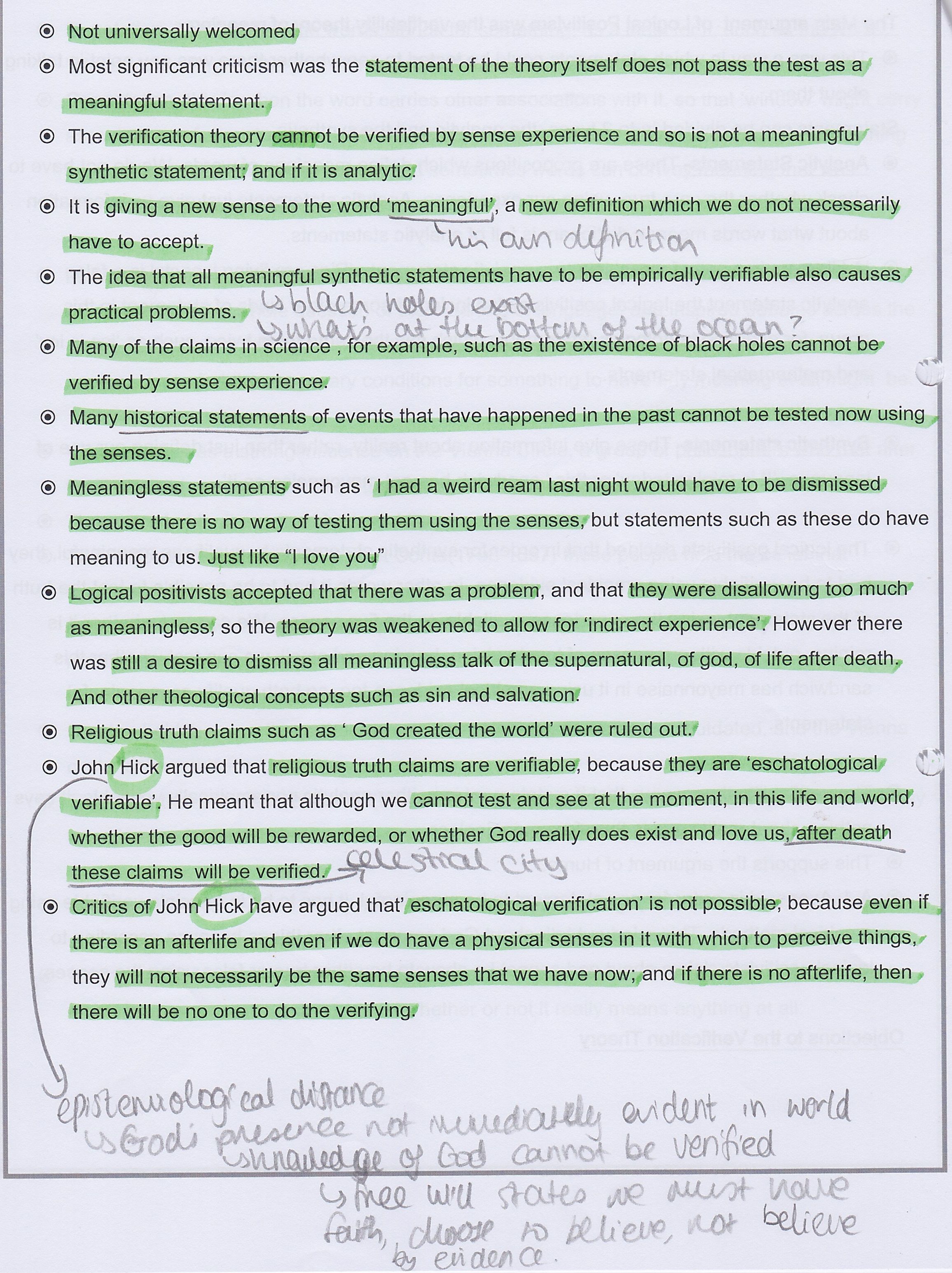
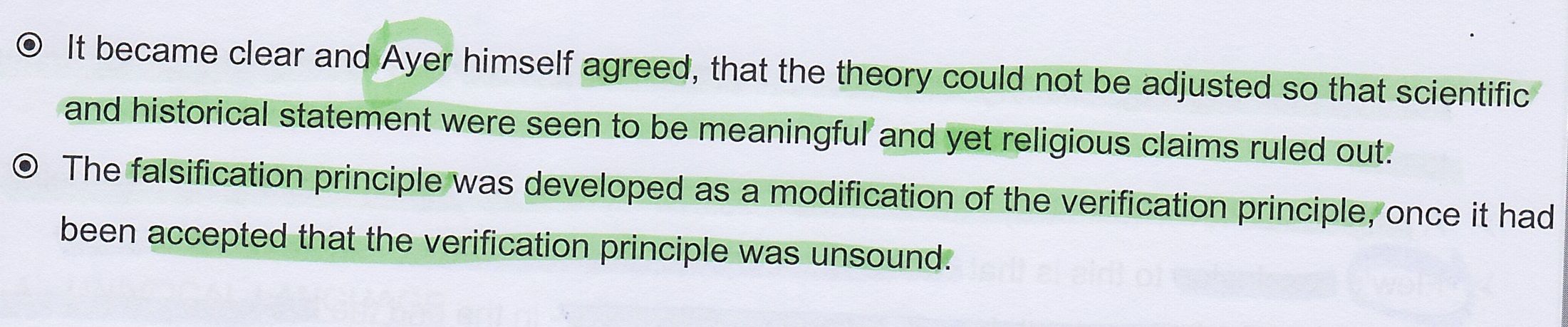
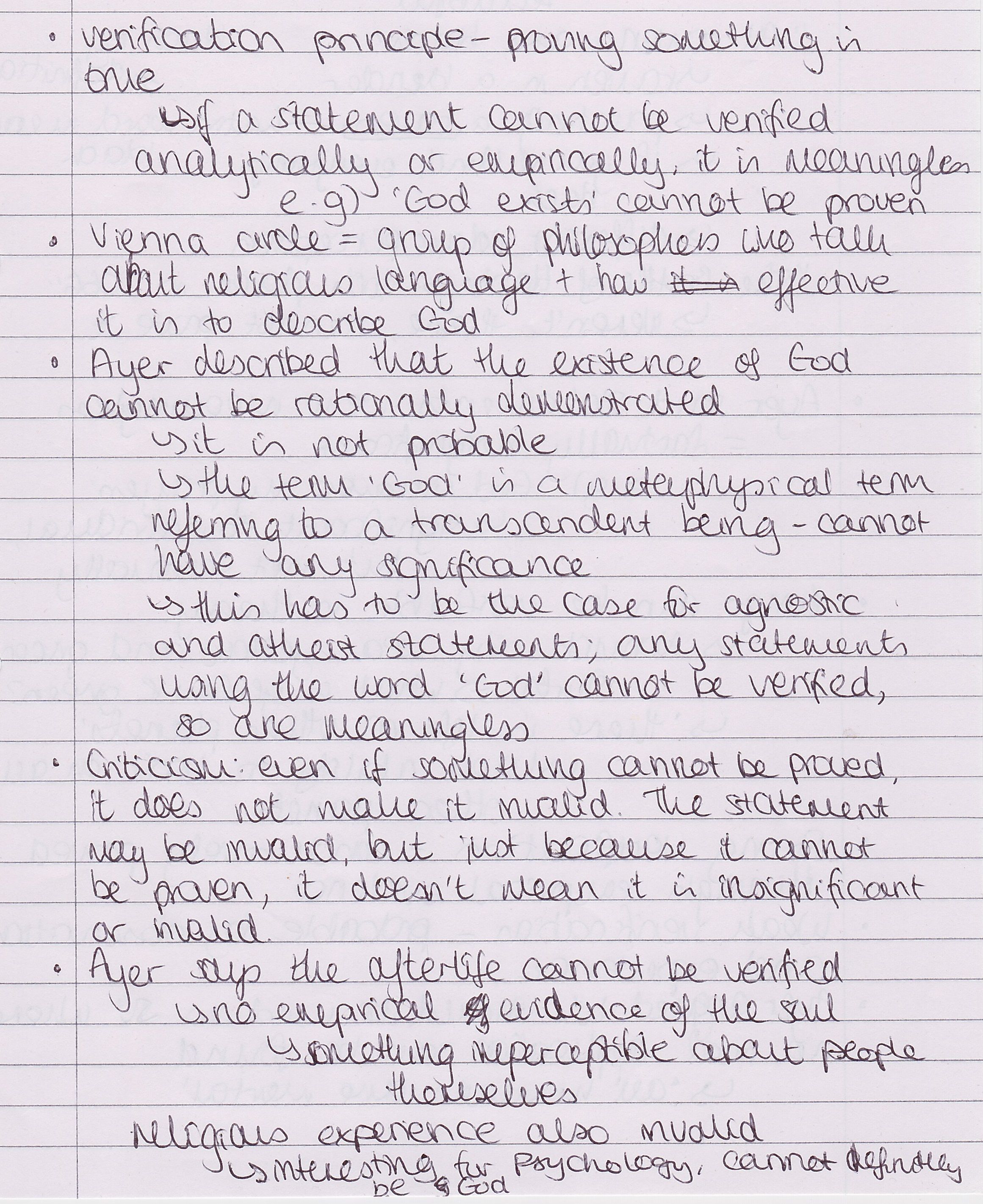
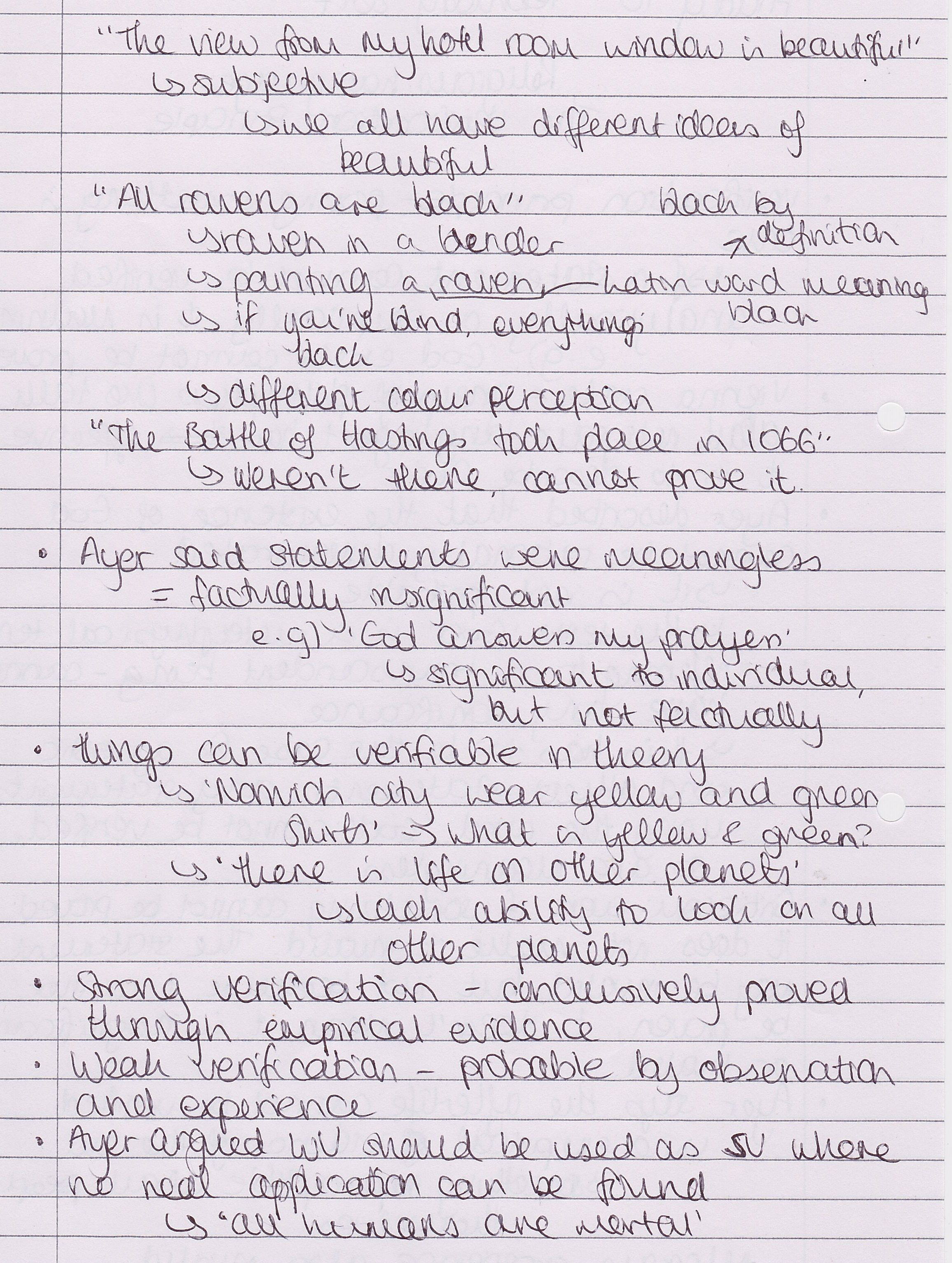
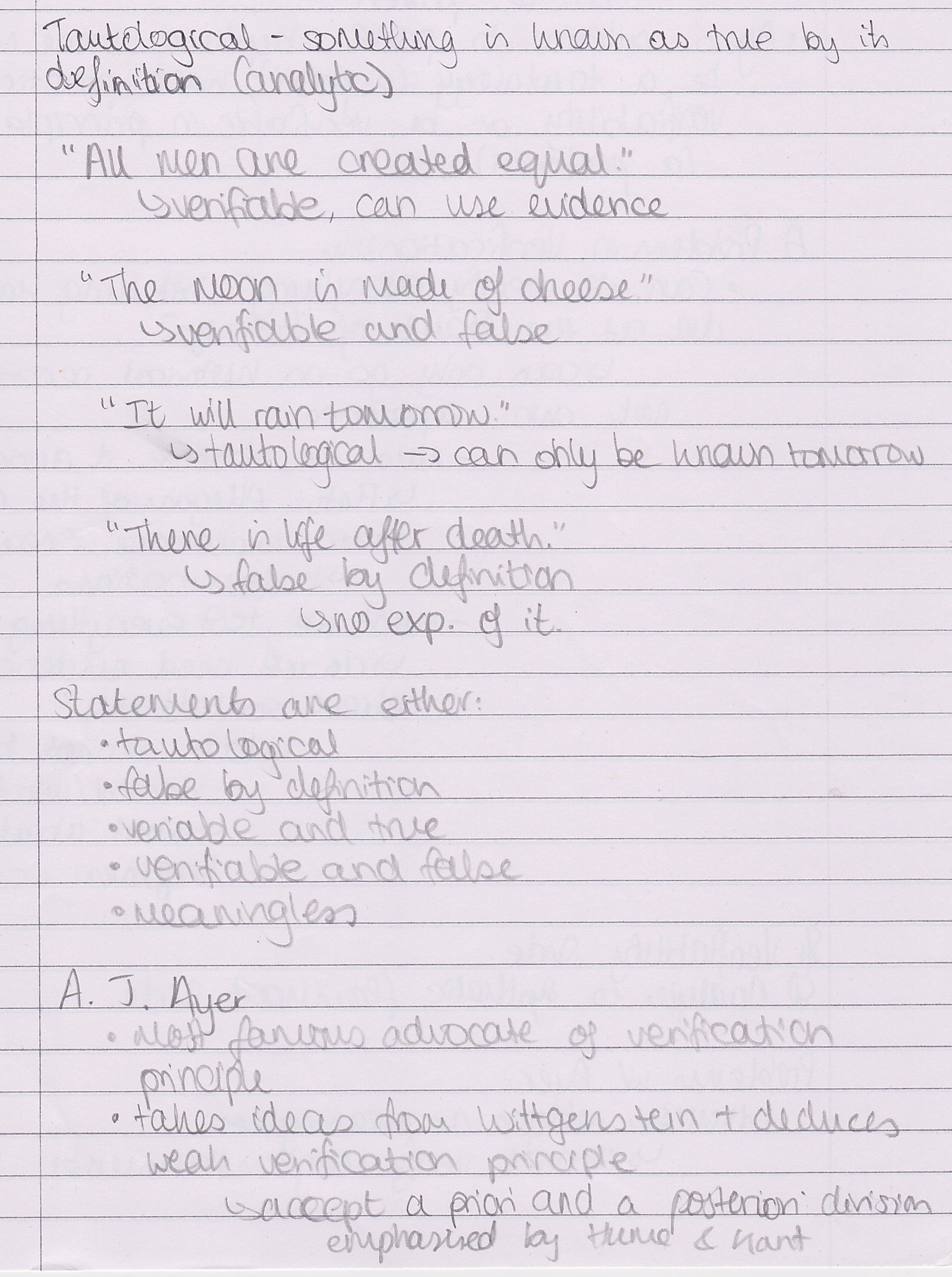
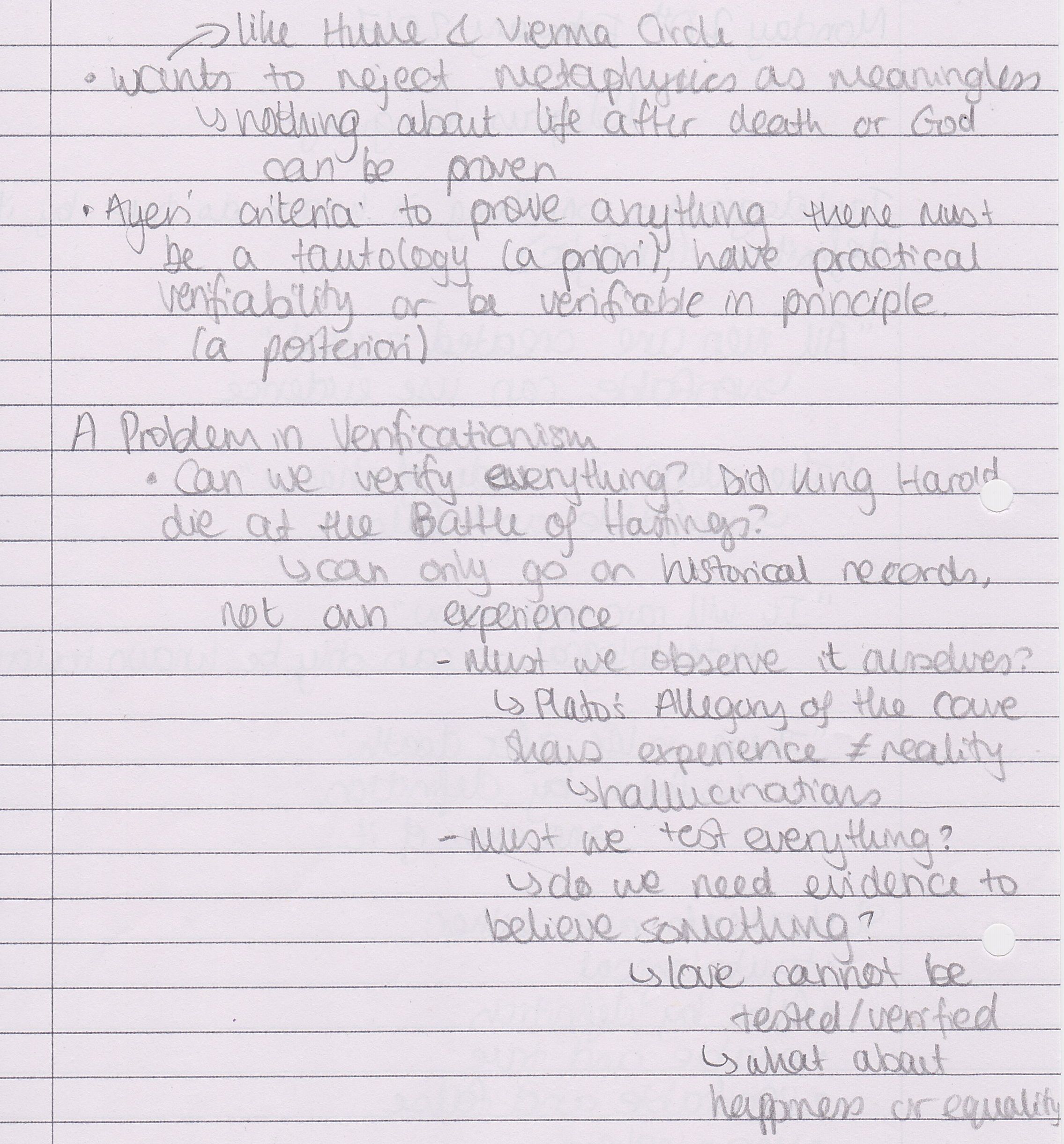
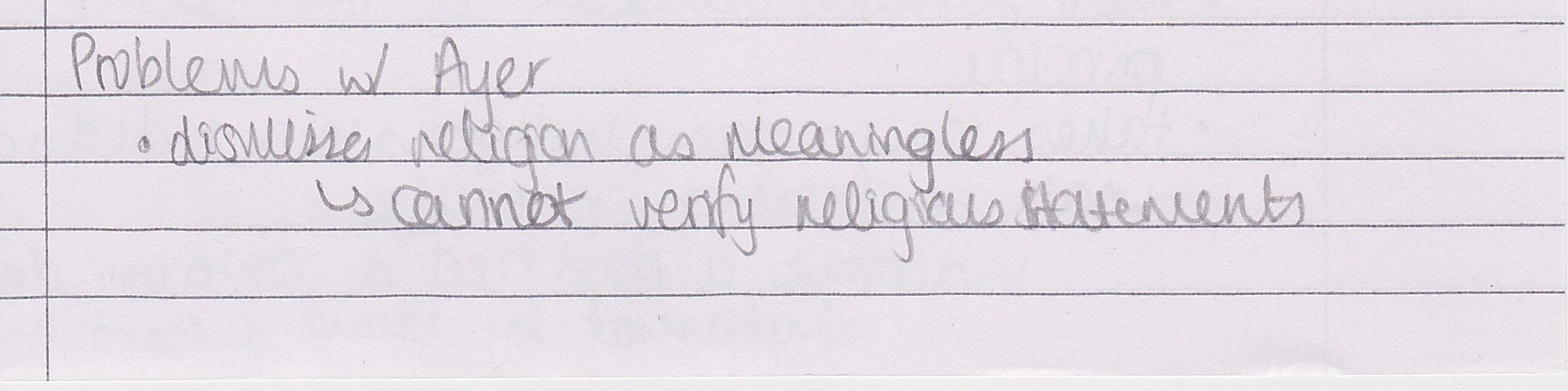
The Verification Principle

Page 5
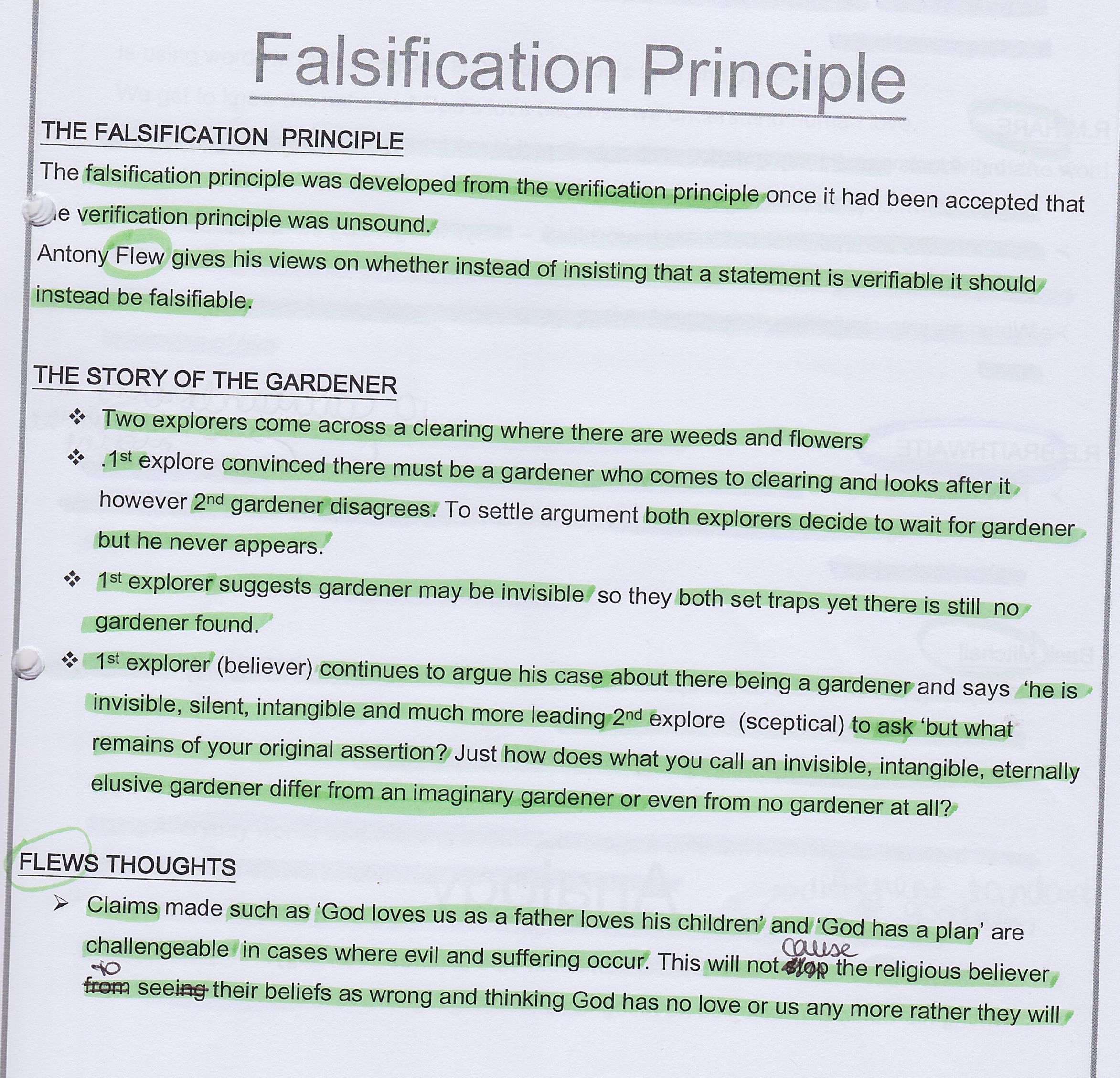
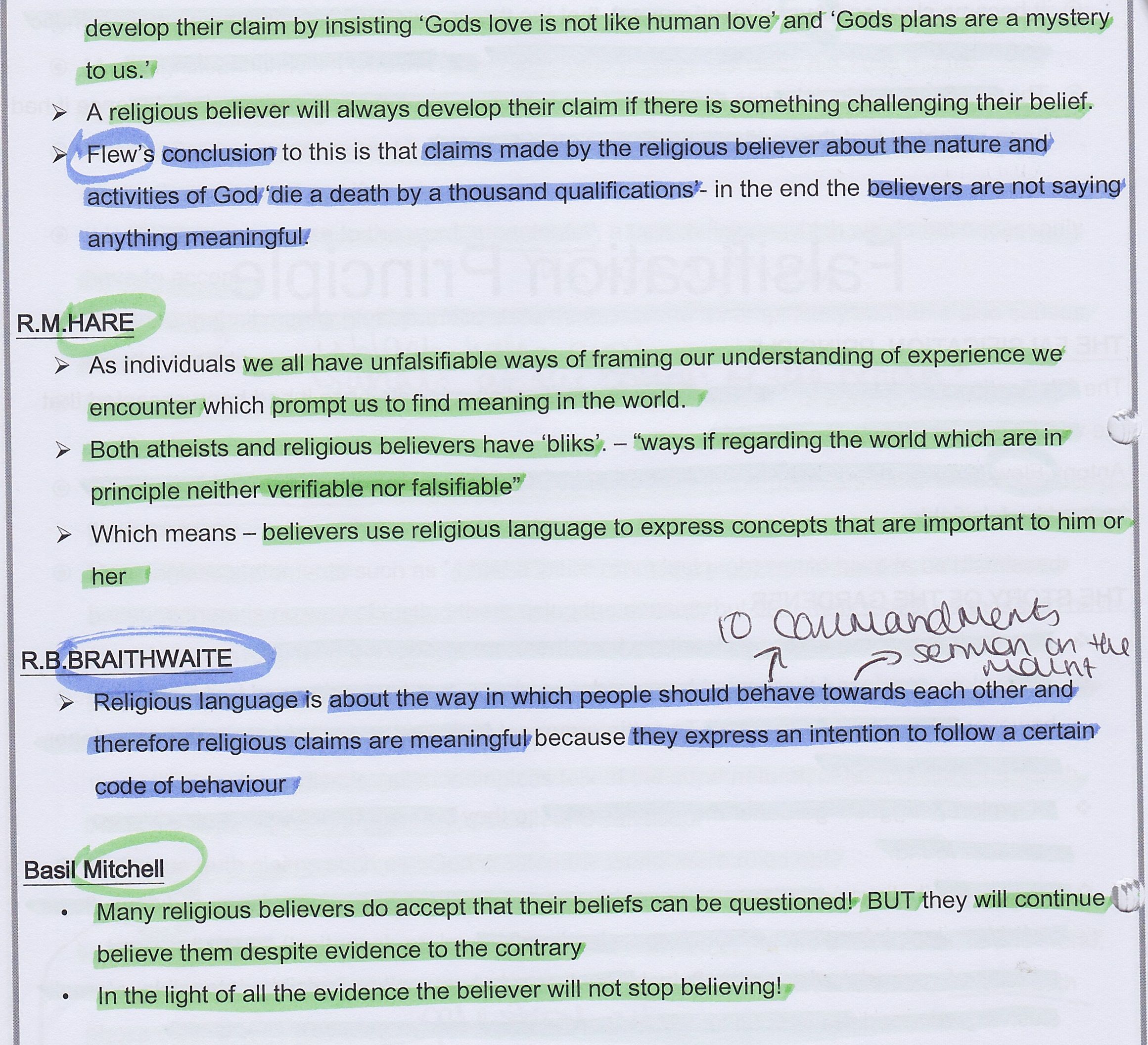
The Falsification Principle
Page 6
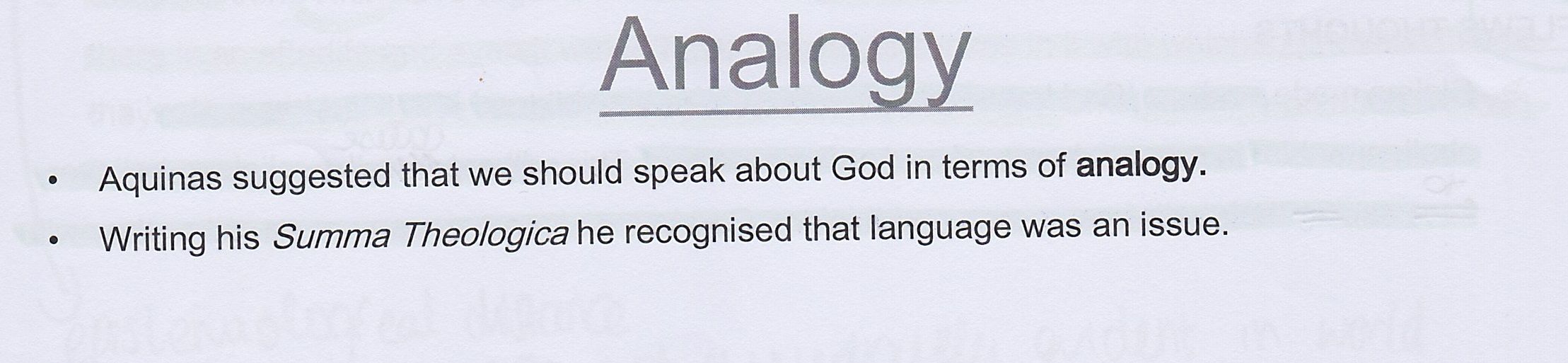
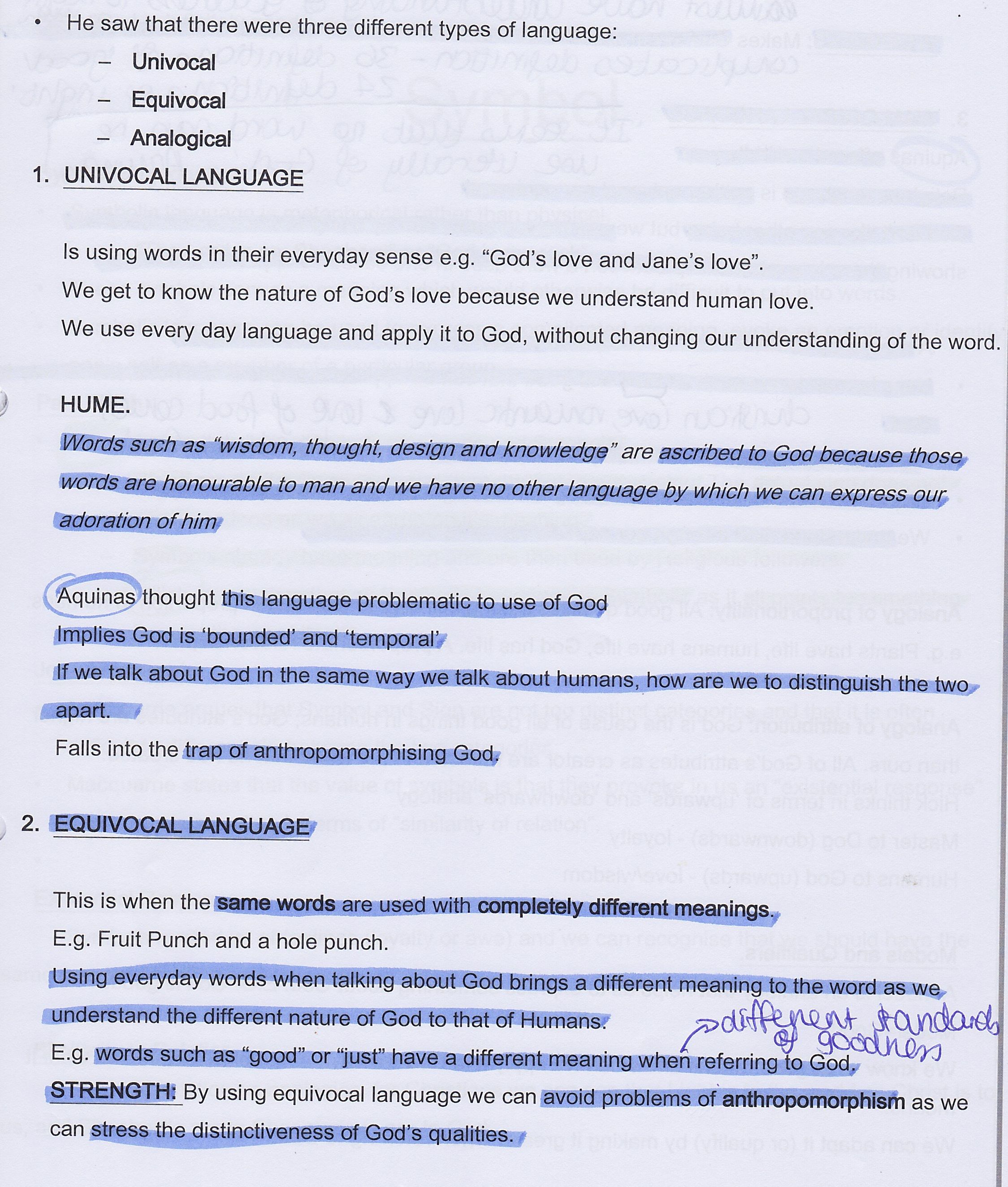
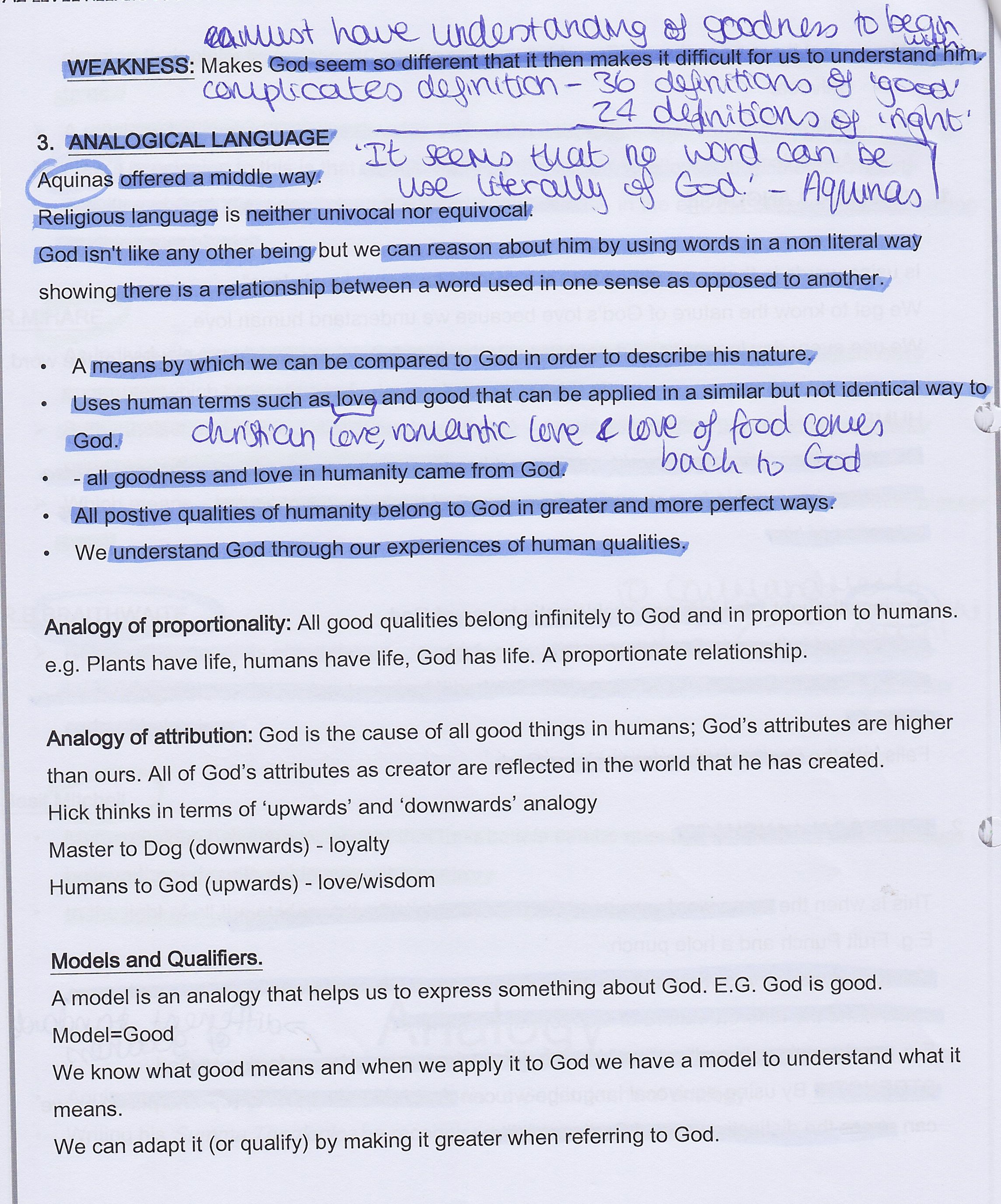
Analogy
Page 7
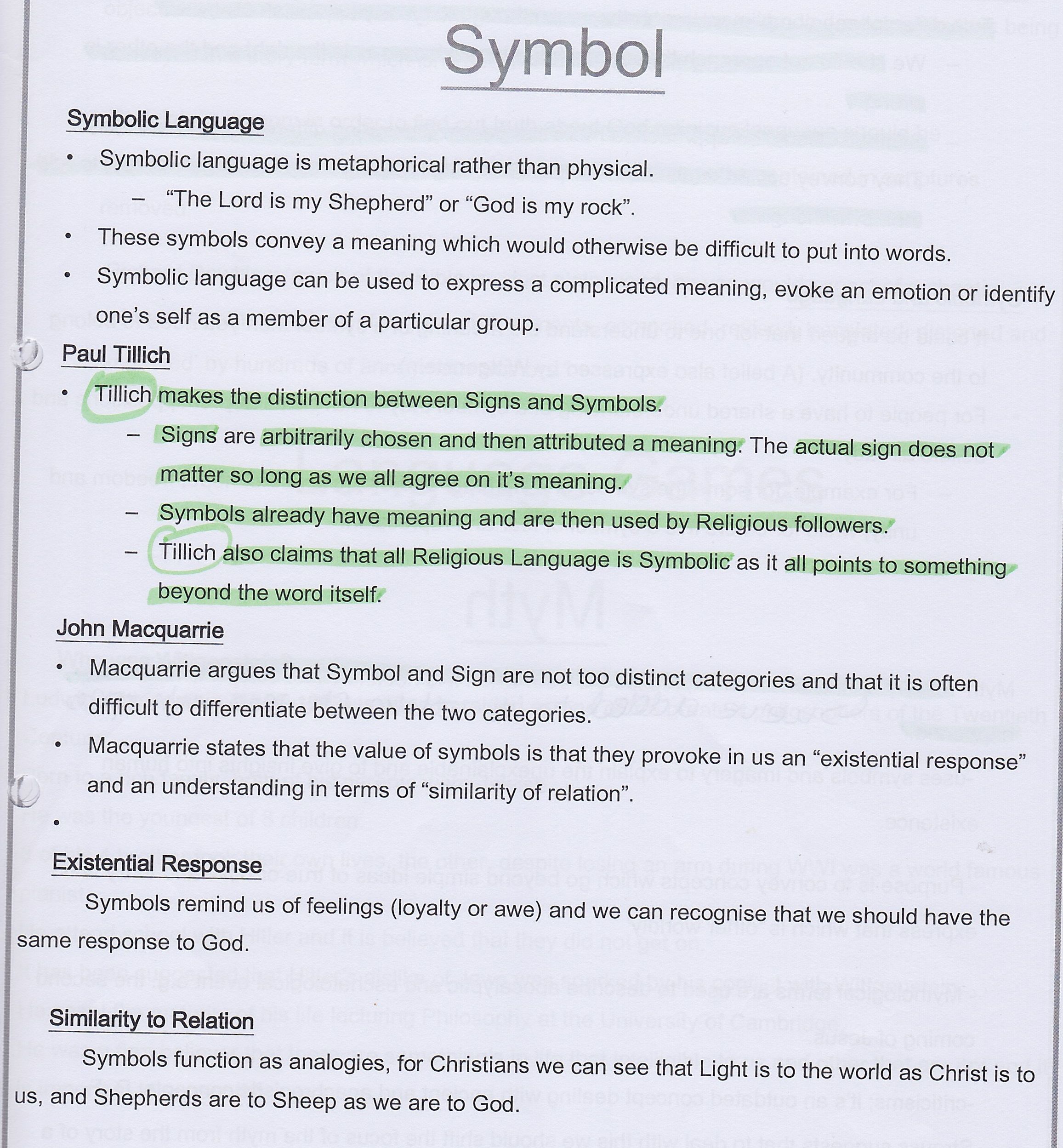
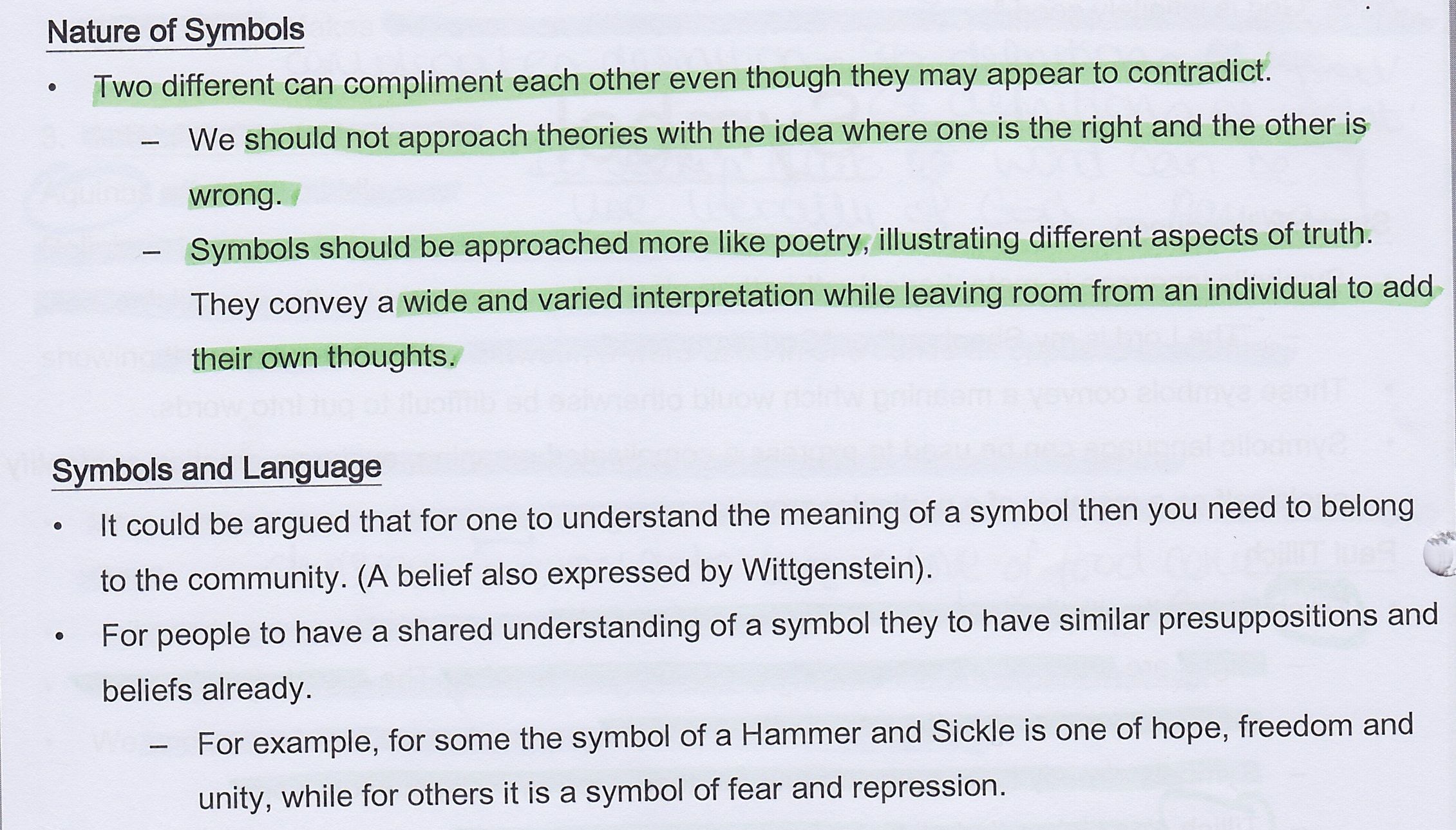
Symbol
Page 8
Myth
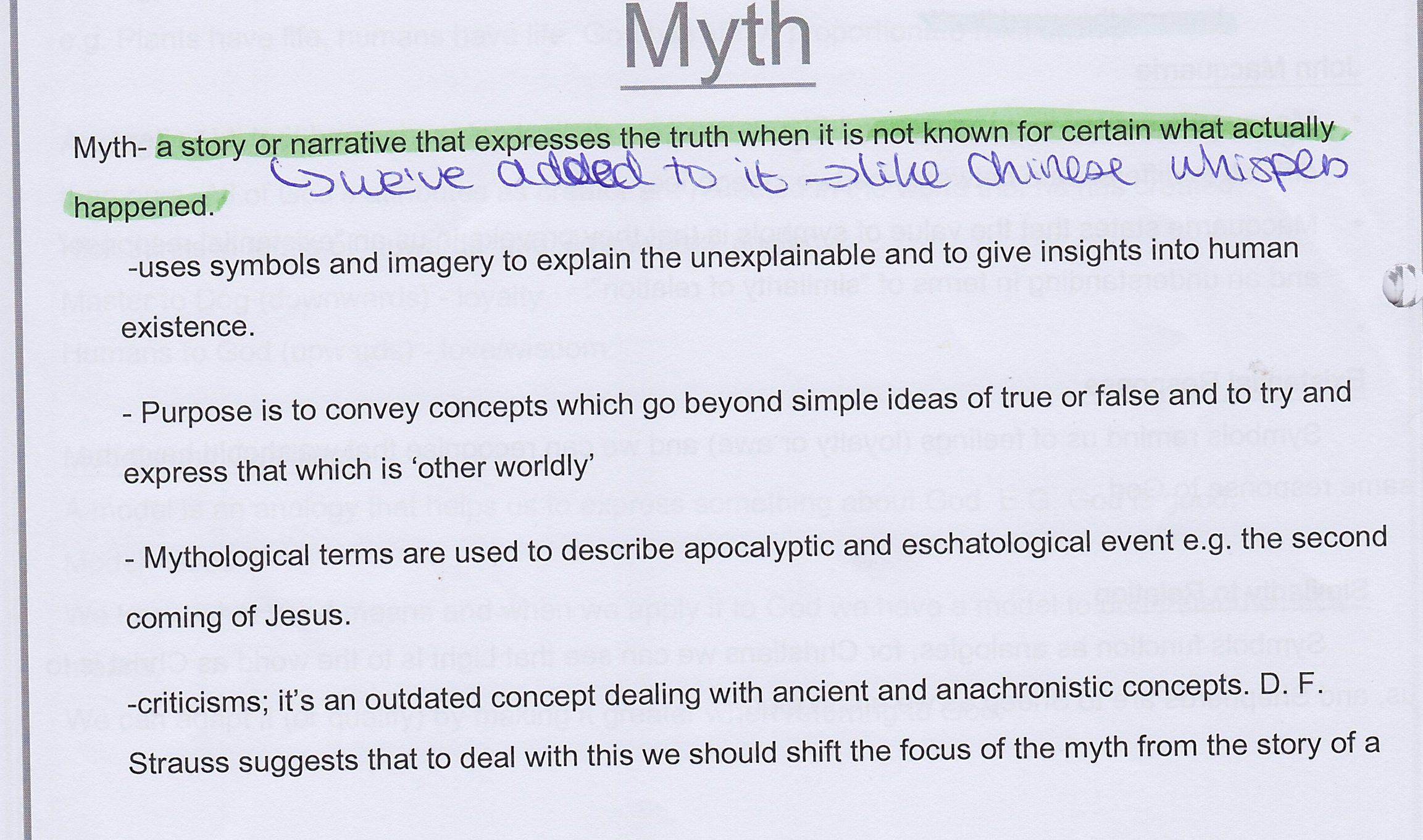
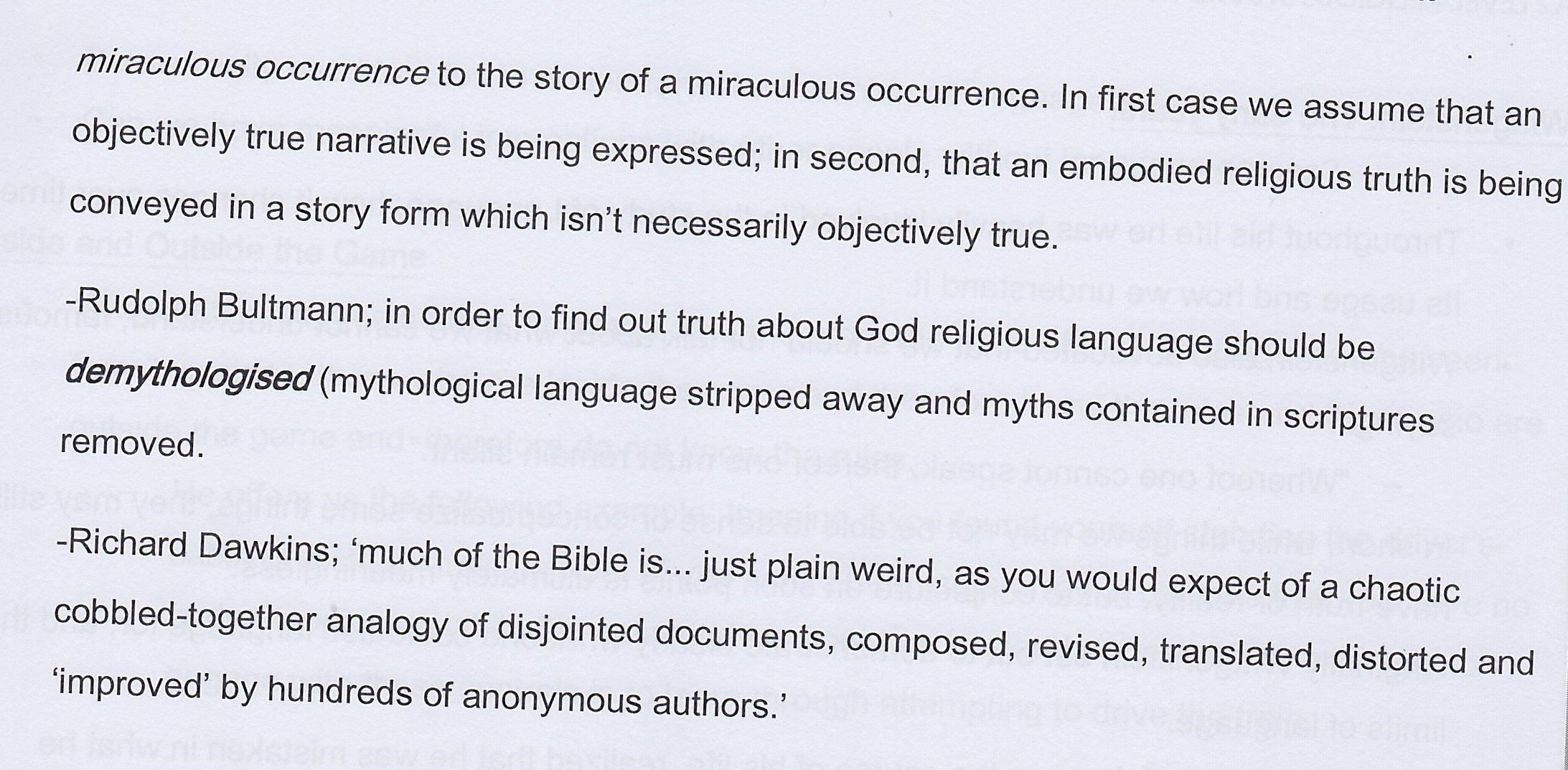
Page 9
Language Games
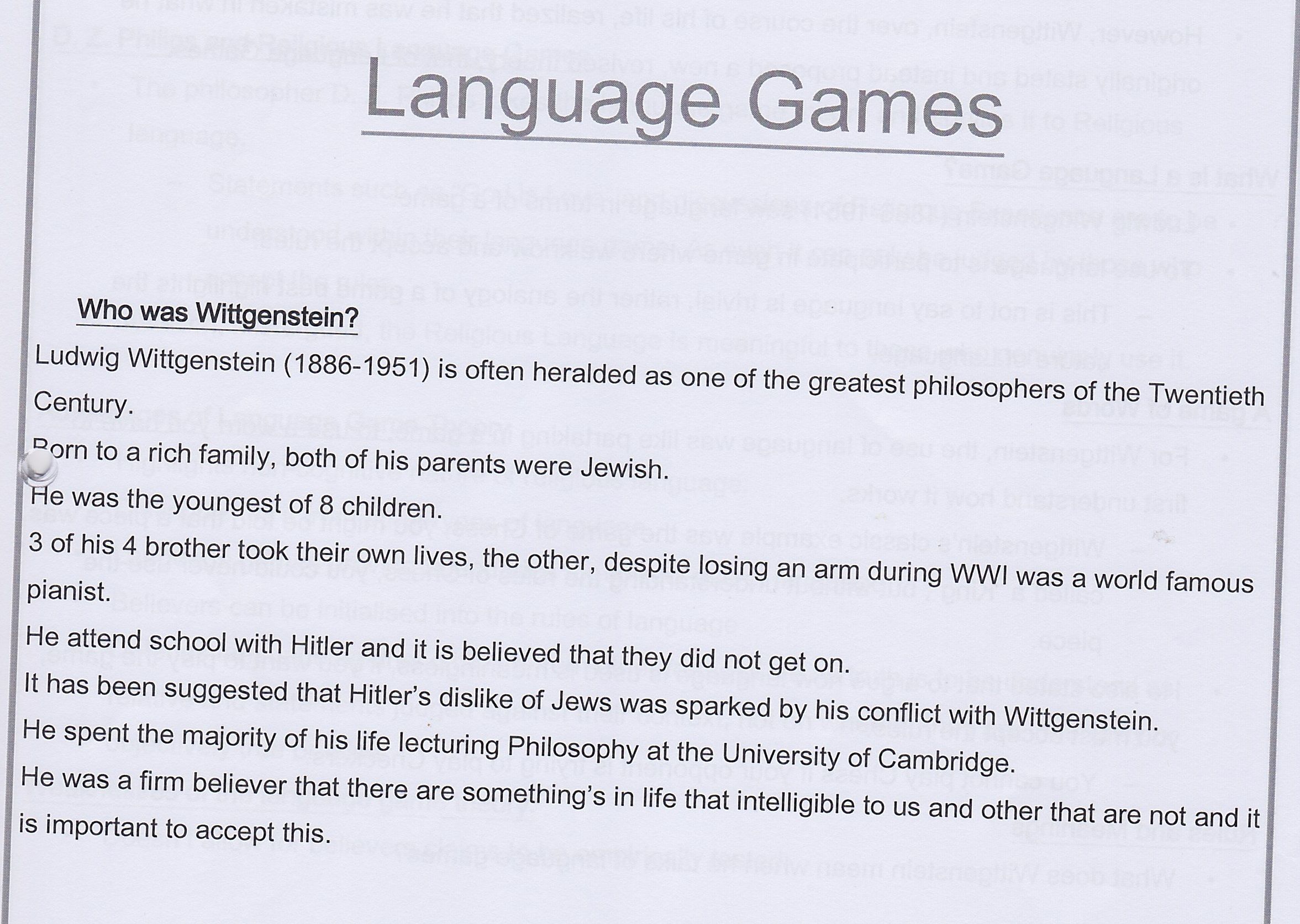
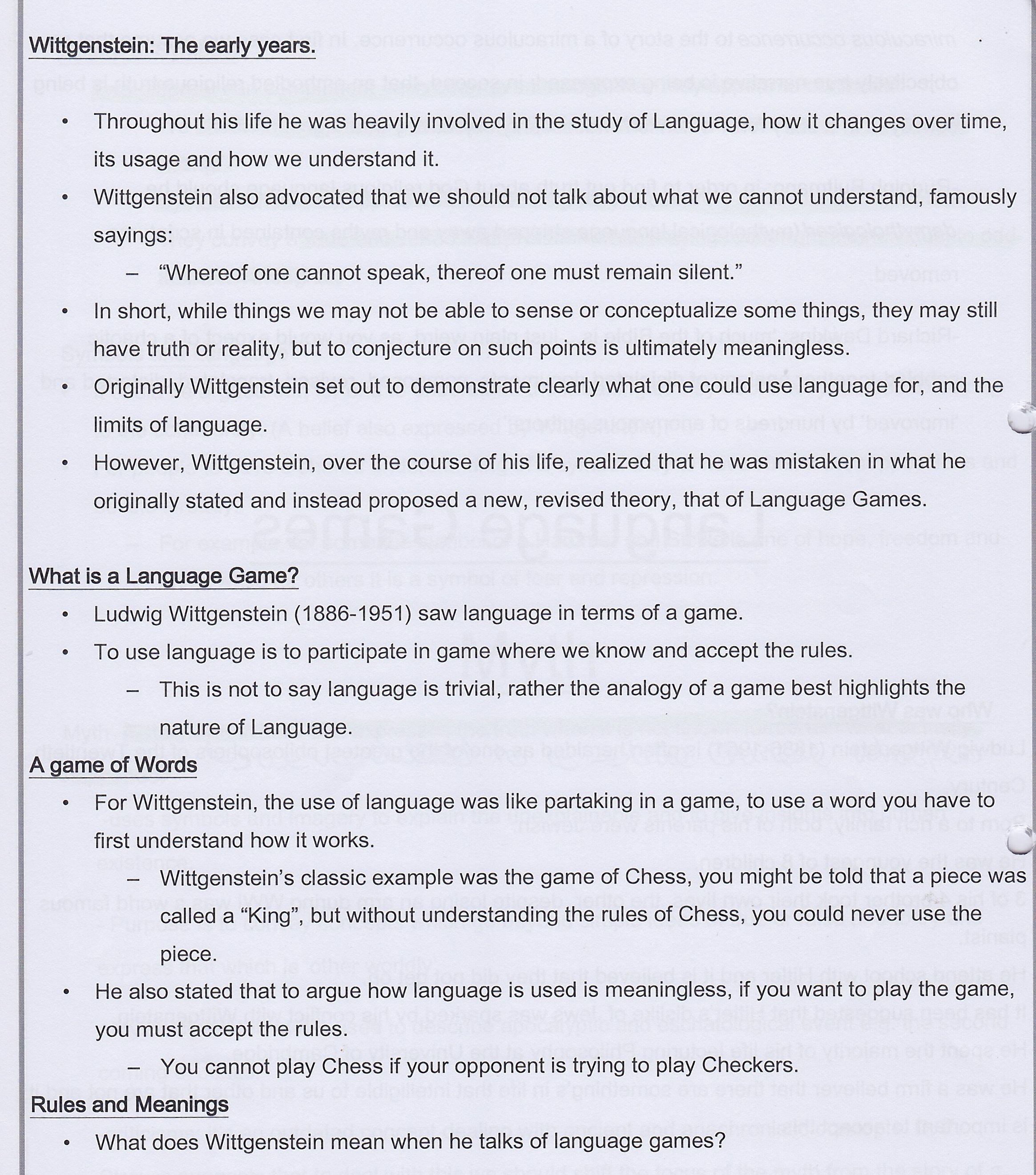
Information
- Description
- A-Level (Year 2) Philosophy (Religious Language) Note on Religious Language, created by Summer Pearce on 09/03/2017.
- Created by
- Summer Pearce · Mar 2017
- Updated
- Apr 6, 2018
- Views
- 0
- Rating