
Quiz
Cognitive vs Affective Arguments
This quiz has question types that open in the usual player.
Questions in this quiz (8)
1This diagram illustrates which theory or model of health behaviour?
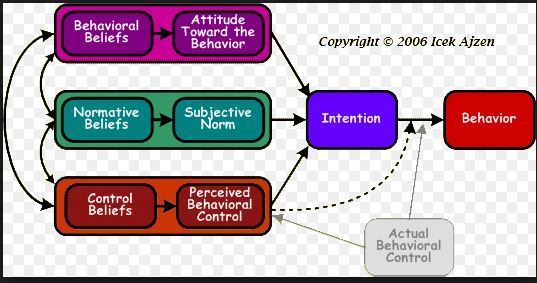
- ATheory of Planned Behaviour
- BTheory of Reasoned Action
- CProtection Motivation Theory
- DSelf-Determination Theory
- EABC Planning Model
- FHealth Belief Model
2This diagram illustrates which theory or model of health behaviour?
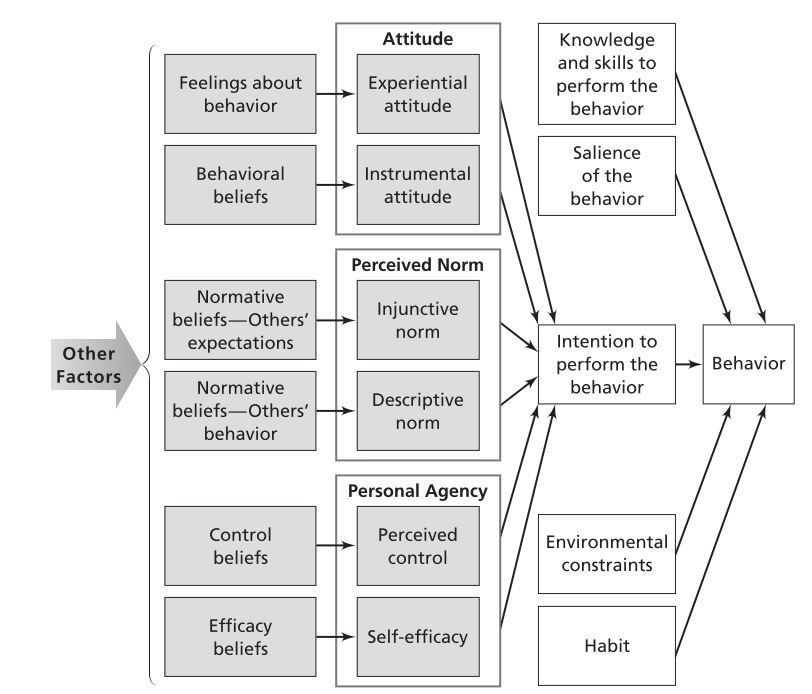
- AIntegrated Behaviour Model
- BTheory of Planned Behaviour
- CTranstheoretical Model
- DHealth Belief Model
- ETheory of Reasoned Action
- FSelf-Determination Theory
- GABC Model of Attitude
3The diagram below illustrates which model of health behaviour?
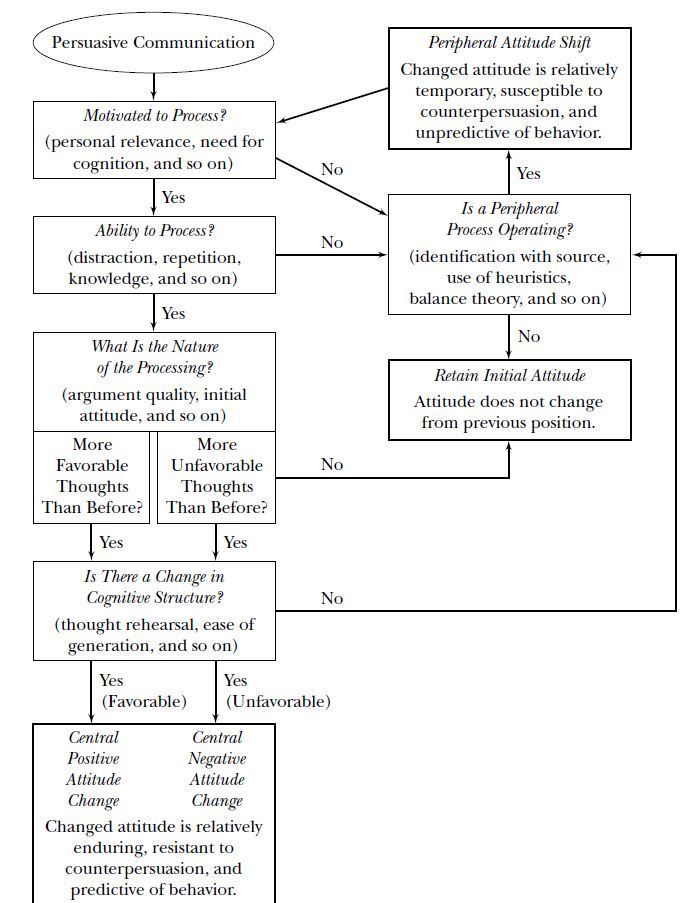
- AElaboration Likelihood Model
- BTranstheoretical Model
- CPrecede Procede Model
- DIntegrated Behaviour Model
- EHealth Belief Model
- FIntegrated Behaviour Change Model
4The Elaboration Likelihood Model proposes two routes to persuasion. The central route and the peripheral route.
The central route is more likely to involve which of the following?- Aprocessing cognitively
- Bprocessing heuristically
5Need for cognition is the tendency for an individual to [blank_start]engage in and enjoy[blank_end] effortful cognitive activity. Need for affect is the tendency for an individual to see emotions as desirable and feel a need to [blank_start]pursue them[blank_end]. It is assumed that an affect-based message is more persuasive among individuals [blank_start]high in need for affect[blank_end] and [blank_start]low in need for cognition[blank_end], whereas a cognition-based message was more persuasive among individuals [blank_start]low[blank_end] in need for affect and [blank_start]high in need[blank_end] for cognition.
- Aengage in and enjoy
- Bavoid
- Cpromote
- Dpursue them
- Eunderstand them
- Fcelebrate them
- Ghigh in need for affect
- Hlow in need for affect
- Ilow in need for cognition
- Jhigh in need for cognition
- Klow
- Lhigh
- Mhigh in need
- Nlow in need
6If I say I have a high need for cognition, then I have a high cognition...
- Ameta-base
- Bstructural base
7When designing an intervention to change attitudes, health promoters can design their messages depending on the cognitive or affective need of the audience. They might 'match' their message to the attitude meta-base or the attitude structural-base of the individual. Keer's 2013 research found that if the message was matched to an individual's attitude meta-base, they [blank_start]had a higher appreciation of the message[blank_end]. However, if the message was mismatched to the individual's attitude structural base, [blank_start]their attitude would change[blank_end].
- Ahad a higher appreciation of the message
- Bwere more likely to change their attitud
- Ctheir attitude would change
- Dthey would appreciate the message more.
8Keer's 2013 study found:
I think my attitudes are based (meta-base) on affect - I judge [blank_start]affective messages[blank_end] more positively. However, positive message judgement is no guarantee for actual persuasion.
I think my attitudes are based (meta-base) on cognition - I judge [blank_start]cognitive[blank_end] messages more positively. However, positive message judgement is no guarantee for actual persuasion.
Tests show my attitudes are based (structural base) on affect - more likely to change attitude if receiving message based on [blank_start]cognition[blank_end].
Tests show my attitudes are based (structural base) on cognition - more likely to change attitude if receiving message based [blank_start]on affect.[blank_end] Individuals with a cognitive structural base are equally accepting of arguments that challenge their beliefs as they are of those that provide a new type of information.- Aaffective messages
- Bcognitive messages
- Ccognitive
- Daffective
- Ecognition
- Faffect
- Gon affect.
- Hon cognition.
Information
- Description
- Cognitive vs. Affective arguments
- Author
- A T
- Language
- English
- Views
- 158
- Tags
- Rating
- No ratings yet Rate this quiz