
Quiz
Fundamentals of remote sensing
This quiz has question types that open in the usual player.
Questions in this quiz (31)
1Which of the following would NOT normally be considered as a form of remote sensing?
- ASonar
- BRadar
- CSeismology
- DUltrasound
- EGravimetrics
- FNone of the above. They are all forms of remote sensing.
2Electromagnetic radiation can be described completely using wavelength, wave velocity, frequency and amplitude?
- ATrue
- BFalse
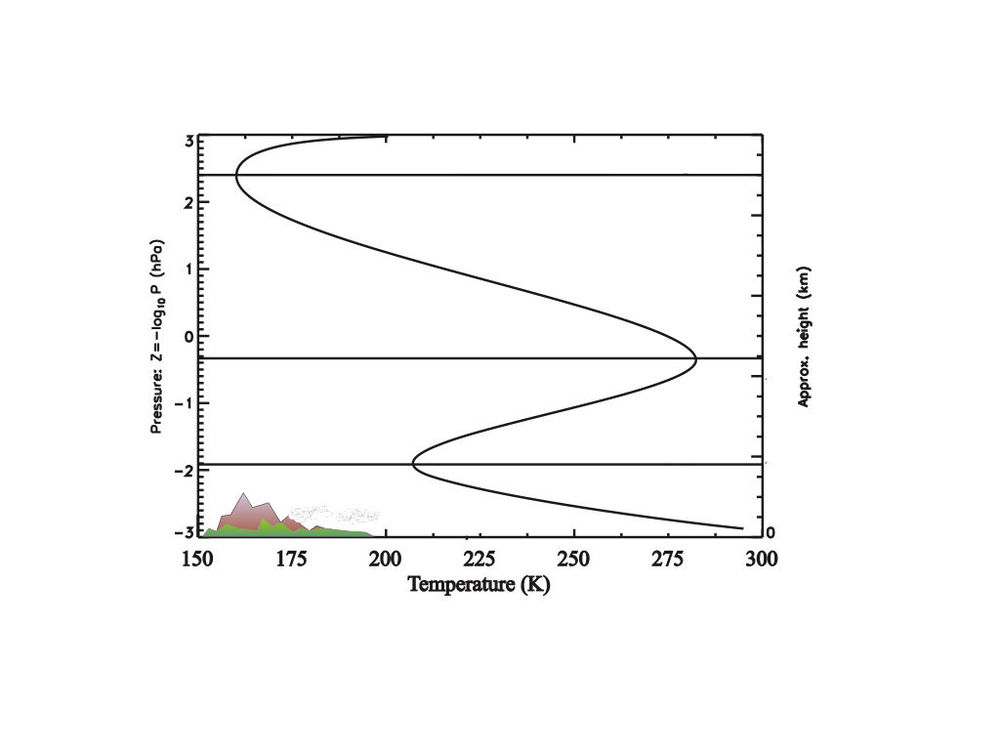
3Label all the key points in this diagram of the temperature profile through the atmosphere. You need to name the zones defined by the temperature changes, the boundaries between them and also label the altitude axis (approximately)
- ATropopause
- BHeliopause
- CThermopause
- DStratopause
- EMesopause
- FTroposphere
- GHeliosphere
- HAtmosphere
- IHydrosphere
- JStratosphere
- KMesosphere
- LThermosphere
- M20
- N10
- O25
- P40
- Q50
- R70
- S60
- T80
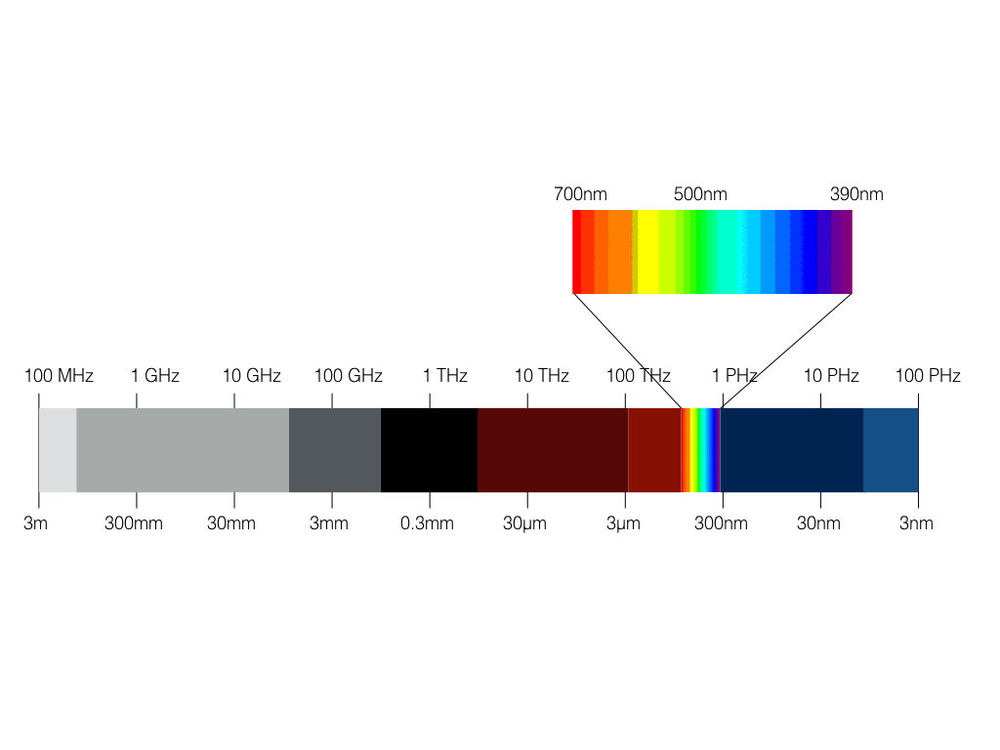
4Label the different regions of the electromagnetic spectrum.
- AVisible
- BGamma rays
- COptical
- DElectromagnetic
- ERadar
- FRadio
- GMicrowave
- HSonic
- ISeismic
- JMillimetre
- KSub-millimetre
- LThermal IR
- MNear Infra-Red
- NUltra-violet
- OX-rays
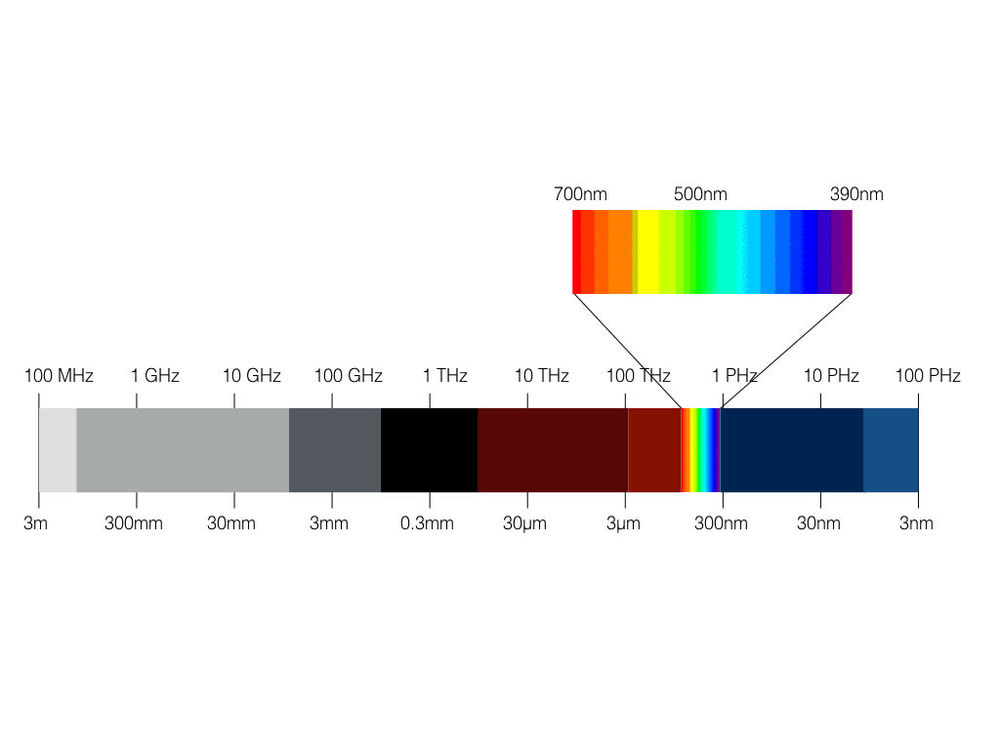
5Label this EM Spectrum with the typical processes that emits radiation of that approximate wavelength.
- AMolecular transitions (e.g. rotation)
- BHigh energy molecular transitions
- CNon-ionising electron transitions
- DIonising electron transitions
- EThermo nuclear transitions
- FNuclear transitions
6Electromagnetic radiation can be created when... (note: there may be more than one answer)
- Aan electron moves from one energy state to a lower energy state.
- Ban molecule moves from one kinetic energy state to a lower energy state (e.g. vibration or rotation states).
- Can atomic nucleus changes from one energy state to a lower energy state.
- Dan electron moves from one energy state to a higher energy state.
- Ean molecule moves from one kinetic energy state to a higher energy state (e.g. vibration or rotation states).
- Fan atomic nucleus changes from one energy state to a higher energy state.
- GNone of the other answers are correct.
7Which of the following best describes why a "blackbody" is black?
- AIt is invisible to the naked eye.
- BIt completely absorbs all wavelengths of visible light.
- CIt completely absorbs all wavelengths of EM radiation, including the ones we can't see.
- DIt absorbs all wavelengths of EM radiation equally well, including the ones we can't see.
8Which of the following statements is NOT true?
- AGeostationary satellites take 24 hours to orbit the Earth and therefore always remain above the same point on the ground.
- BGeostationary satellites are never in near-polar orbits -- they are always in equatorial orbits.
- CEarth observation satellites in a sun-synchronous orbit travel slightly East-to-West -- the opposite direction to the rotation of the Earth.
- DSome Earth observation satellites in LEO are near-equatorial, so that they only cover the tropical regions.
- ESun synchronous orbits are always arranged to have a local solar time beneath the satellite at approximately 10:00-10:30 in the morning so as to minimise the cloud cover.
9The albedo of Earth is the fraction of incident sunlight...
- Aabsorbed at Earth’s surface, and has a value of 49%
- Breflected at Earth’s surface, and has a value of 5%
- Cabsorbed by Earth’s surface and atmosphere, and has a value of 31%
- Dreflected by Earth’s surface and atmosphere, and has a value of 31%
- Eabsorbed by Earth’s surface and atmosphere, and has a value of 69%
10If a represents Earth’s albedo and P is the total power of sunlight incident on Earth, then the power radiated by Earth to space is approximately...
- AaP
- B(1-a)P
- C1-aP
- Da(1-P)
- Ea
11An object will appear red to the naked eye if...
- AIt scatters all visible wavelengths equally.
- BIt scatters only red wavelengths and absorbs all the other visible wavelengths.
- CIt absorbs only red wavelengths.
- DIt transmits only red wavelengths.
12An object will appear white to the naked eye if...
(Note: more than one answer may be correct).- Ait scatterers all visible wavelengths equally.
- Bit absorbs all visible wavelengths equally.
- Cit scatters all wavelengths equally.
- Dit transmits all wavelengths.
- Eit absorbs all wavelengths equally.
13Approximately what proportion of the mass of the Earth's atmosphere lies within the Troposphere?
- A100%
- B95%
- C90%
- D50%
- E15%
14Which of the following in NOT an advantages of satellite measurements?
- AConsistent measurements globally.
- BRapid large area coverage.
- CNear continuous measurements over many years.
- DMaking measurements above the atmosphere.
- ENone of the other answers (they are all advantages)
15Satellite observations always have to deal with [blank_start]trade-offs[blank_end]. One particular example is [blank_start]temporal[blank_end] coverage (frequency of measurements) versus level of [blank_start]detail[blank_end]. Typically, a single satellite that provides very [blank_start]frequent[blank_end] measurements will provide a [blank_start]low[blank_end] level of spatial detail.
- Atrade-offs
- Btemporal
- Cgeneral
- Ddetail
- Edata
- Ffrequent
- Ginfrequent
- Hlow
- Ihigh
16In the context of atmospheric measurements, the abbreviation "ppmv" means...
- AParts per million by volume
- BParts per mass of volume
- CPrecipitation per mass volume
- DParticles per mass by volume
17Which of the following cannot (yet) be measured from satellite?
- ABelow ground biomass.
- BAbove ground biomass.
- Cmm scale ground surface displacements.
- DAtmospheric motion (wind).
- ESea surface temperature.
- FWind direction over the oceans.
18The sky appears blue because atmospheric molecules are [blank_start]Rayleigh[blank_end] scatterers in the [blank_start]visible[blank_end] part of the spectrum. Light at the [blank_start]blue[blank_end] end of the spectrum is therefore [blank_start]scattered[blank_end] significantly more than at the [blank_start]red[blank_end] end, where the light mostly passes through atmosphere.
- ARayleigh
- BMie
- COptical
- DBlackbody
- Evisible
- Finfra-red
- Gultraviolet
- Hmicrowave
- Iblue
- Jgreen
- Kyellow
- Lscattered
- Mabsorbed
- Ntransmitted
- Ored
19Which of the following exhibit signs of "optical scattering" in the visible part of the spectrum?
(There may be more than one correct answer -- click all that apply).- APolar bear fur.
- BMilk.
- CWhite emulsion paint.
- DClouds.
- EHealthy leaves.
- FThe atmosphere.
20Why are long term (decadal) measurements from satellites difficult, and how is this problem overcome?
- ASatellites don't last more than a few years. The solution is to have a period of overlap in sequential missions to perform an inter-calibration between the sensors.
- BSatellites don't last more than a few years. The solution is to make sure sequential missions have exactly the same sensor on board.
- CSatellites typically don't last more than a few years because of fuel constraints. The solution is to increase the lifetime to tens of years by carrying more fuel.
- DThe measurement instruments degrade over time. The solution is to replace the instrument in situ (i.e. in orbit).
21Which of the following might a "passive" remote sensing system measure?
(Select all that apply).- AEmitted radiation from the Earth's surface.
- BEmitted radiation from the atmosphere.
- CSolar NIR radiation scattered off the surface of the Earth.
- DSolar radiation scattered off the atmosphere.
- EScattered microwave radiation originating from the remote sensing system.
- FScattered NIR radiation originating from the remote sensing system (e.g. a laser).
- GSolar visible radiation scattered off the surface of the Earth.
- HSolar radiation after it has passed through the atmosphere.
22The five different resolutions are: [blank_start]spatial[blank_end] (based on angular resolution of the instrument), [blank_start]range[blank_end] (based on pulse size for active instruments), [blank_start]spectral[blank_end] (ability to distinguish in wavelength), [blank_start]radiometric[blank_end] (ability to distinguish different brightness levels), [blank_start]temporal[blank_end] (ability to distinguish events in time).
- Aspatial
- Brange
- Cspectral
- Dradiometric
- Etemporal
23Which of the following best describes the general term "resolution"?
- AThe ability to distinguish (separate) two infinitely narrow signals in some measurement system.
- BThe size (on the ground) of a pixel in an image.
- CThe area (on the ground) of a pixel in an image.
- DThe ability to distinguish (separate) two point targets on the ground.
24When a blackbody warms up, it will emit radiation with [blank_start]more[blank_end] total energy and with a [blank_start]peak[blank_end] that will go from [blank_start]longer[blank_end] wavelengths to [blank_start]shorter[blank_end] wavelengths.
- Amore
- Bless
- Cequal
- Dlonger
- Eshorter
- Fpeak
- Gminimum
- Hshape
25The Earth's greenhouse effect is mostly driven by which gas?
- AWater vapour
- BCarbon dioxide
- CMethane
- DNitrogen gas
- EOxygen
261) What frequency of EM radiation corresponds to a wavelength of a) 600nm, and b) 3cm?
- A(a) 500 THz and (b) 10 GHz
- B(a) 50 THz and (b) 10 GHz
- C(a) 500 THz and (b) 1 GHz
- D(a) 500 GHz and (b) 10 GHz
- E(a) 500 THz and (b) 10 THz
27Domestic electricity supply is at a frequency of 50Hz. What wavelength of electromagnetic radiation would you expect as a result of this oscillating electric field?
- A6000km
- B3000km
- C600km
- D60km
- E6m
28Use Wein’s Law for this question (find this on the NLN tutorials or a source of your choice). If you heat an iron bar in a furnace, at what temperature would the rod be at to have a peak in its radiance curve in the middle of the visible range (about 550nm)?
- AT= 5269 K
- BT= 527 K
- CT= 527 ˚C
- DT= 5269˚C
29Use Wein’s Law for this question (find this on the NLN tutorials or a source of your choice). If you have an iron bar at the ambient room temperature (say about 20°C) what frequency and wavelength would the maximum be? In what region of the EM spectrum is this?
- A10µm or 30 THz. Thermal IR.
- B10µm or 10 THz. Thermal IR.
- C30µm or 10 THz. Thermal IR.
- D1µm or 100 THz. Near IR.
- E1µm or 30 THz. Near IR.
30If a satellite has an inclination angle of 98° it will pass the equator on the ascending pass with a bearing of [blank_start]352˚[blank_end].
At its closest pass to the poles, its bearing will be [blank_start]270˚[blank_end]?
(Note, bearings are relative to North).- A352˚
- B8˚
- C90˚
- D270˚
- E188˚
- F172˚
31An EO satellite has an inclination angle of 98° and is orbiting at an altitude of 800km.
The orbital period is [blank_start]101mins[blank_end]. If the swath width is 100km, the shortest time this satellite could conceivably provide global coverage is approximately [blank_start]28 days[blank_end]. The instrument measurements [blank_start]do not[blank_end] cover the polar regions.- A101mins
- B90 mins
- C3 hours
- D120 mins
- E28 days
- F22 days
- G28 hours
- H280 days
- Ido not
- Jdo
Information
- Description
- First class quiz for Remote Sensing of Global Change, an honours module in the School of GeoSciences, Edinburgh University.
- Author
- Iain Woodhouse
- Language
- English
- Views
- 908
- History
- Created on 4 Jan 2016 · updated on 13 Feb 2019
- Tags
- Rating
- No ratings yet Rate this quiz