
US1 Study Guide
Slides in this set (10)
-
- First two English colonies at Roanoke failed
- Sir Walter Raleigh established colony at Roanoke with his own money and brings settlers
- The first winter was too harsh, so they were brought back to England
- On Raleigh's second try, he created a joint-stock company to raise funds
- When war broke between Spain and England, they forgot about the colonists
- They were mysteriously all gone by the time Britain returned to check up on them following the Spanish Armada
-
- Establishment
- Founded by a group of wealthy London merchants, known as the Virginia Company
- Sought to make a profit and promote British interests
- After getting a charter, they formed joint-stock companies, which allowed them to share the profit or divide the loss
- Location
- Chesapeke Bay -> fertile land and navigable rivers
- Nearby swamps gave the colonists some protection from Native Americans, but also bred mosquitos that spread malaria
- Early Stages
- 10,000 colonists sent there
- At first, colonists suffered from disease and hunger
- Many colonists refused to farm and instead searched for gold and silver, as they were middle-class citizens and were not used to the conditions.
- Starving Time: the winter of 1609-1610 when 3/4 of the population died of starvation or related diseases
- Natives were willing to help, but the colonists were suspicious of them because the colonists intended to own the land
- Charter- a certificate of permission from the king to colonize and area in the Americans
- Joint-Stock Company- a group of investors in the colonizing effort who shared profits and losses of a colony (started by Sir Walter Raleigh)
-
- John Smith
- A fort was built soon after the colonists arrived and they appointed John Smith as the leader of the colony
- He wanted to work with the Natives
- Smith got shot in the leg and had to return to England for medical care; without him, more died
- Anglo-Powhatan War
- The thirty Indian tribes living in the area were under the leadership of Powhatan, who tried to contain the colonists
- War broke out in 1609 when colonists wanted Indian lands
- Pocahontas, daughter of Powhatan, was captured and married John Rolfe
- Powhatan made peace after 4 years of war
- Jamestown Thrives
- Tobacco= cash crop
- John Rolfe taught colonists how to cultivate tobacco, which was popular in Europe
- By 1640, the Chesapeake Bay was the main supplier of tobacco to Europe
- In 1609, the Virginia Company offered free land in Virginia to people in England. The population in the colony grew
- According to the headright system, anyone who paid their own or someone else's way to Virginia received 50 acres of land for free. Wealthy people amassed large plantations under this system.
-
- Virginia Company allowed colonists to form the House of Burgesses, the first representative body in colonial America
- had the power to make laws and raise taxes
- Bacon's Rebellion
- William Berkeley, royal governor of Virginia, raised taxes and refused to exterminate the Natives
- Nathaniel Bacon organized colonists and attacked the natives
- Bacon marched on to Jamestown, the seat of government, and burned it
- Rebellion collapsed when Bacon died
- New royal governor was appointed, who lowered the taxes
-
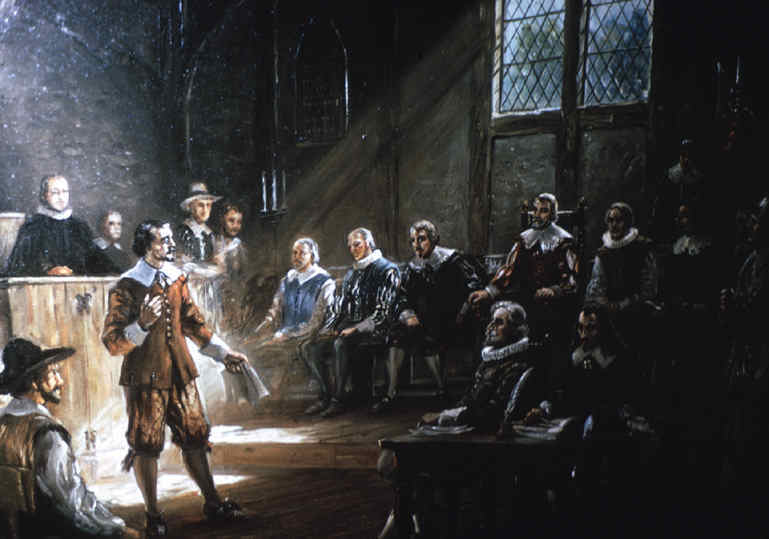
Puritans and the Mayflower Compact
- Puritans
- Beginning in 1620, English Puritans settled in present-day New England seeking religious freedom
- They challenged the hierarchy of the Anglican Church
- Separatists wanted to practice the principles of purifying the Church and predestination in their own separate churches
- "God sent you unto this world as unto a Workhouse, not a Playhouse"
- work hard, fulfill your duties, thrift, morality
- Plymouth Settlement
- Upon arriving, went too far North
- They were not allowed to be there, according to their charter
- Founded the Plymouth Colony on Massachusetts Bay in 1620
- Before landing, they signed the Mayflower Compact, an agreement to form a government and obey its laws
- The idea of self-government became strong in the English colonies
- Mayflower Compact
- In the document, the Puritans state that:
- it is God's will that they were brought there
- its what's best for the colony
- they are establishing a civil body, where everyone agrees to follow set laws
- they are loyal to English crown
-
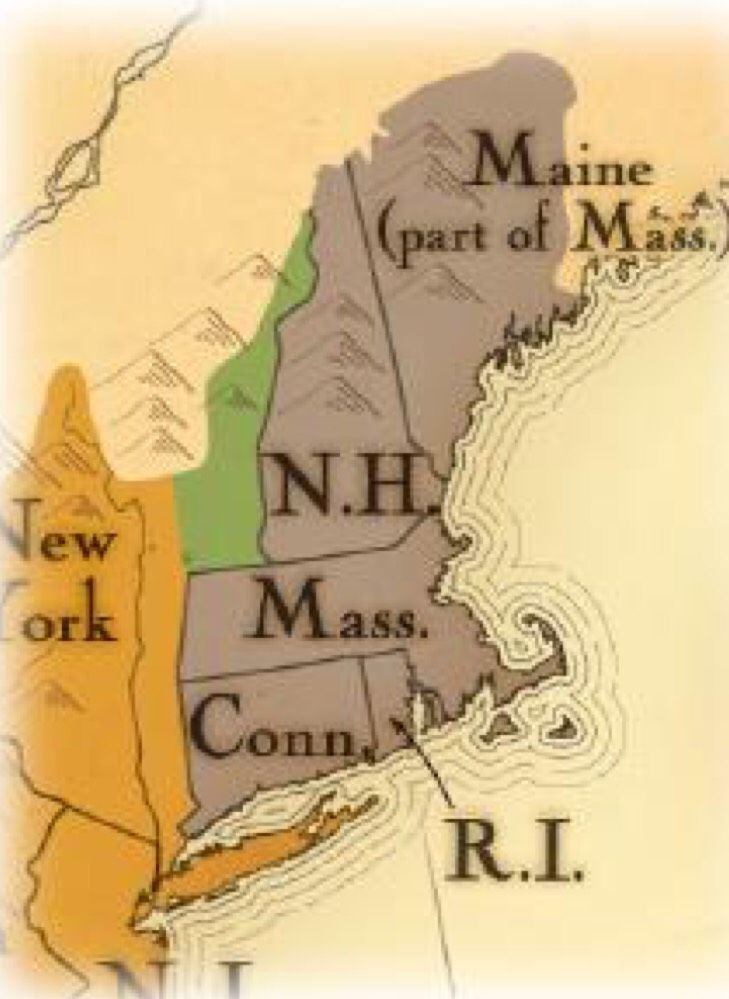
Colonization Styles (New England)
- Climate: Cold winters, short growing season, and a rugged landscape
- Geography: lent itself to fishing, lumber harvesting, and small-scale farming.
- Culture:
- There were few African Americans
- There were more families and the population grew rapidly.
- There was more economic equality.
- Towns were established that supported local schools and churches.
- To ensure that everyone could read the Bible, schools were required in all New England towns by the mid-1600s.
-
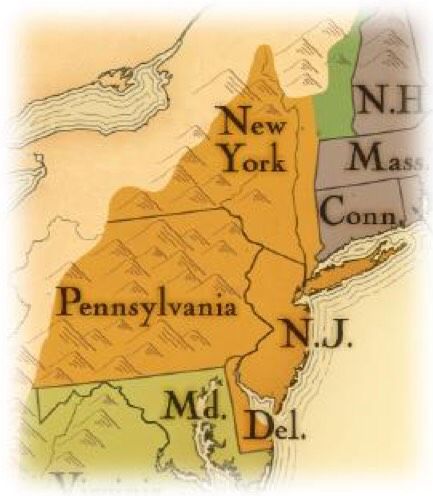
Colonization Styles (Middle Colonies)
- Climate: Temperate, longer growing season, landscape of fields and valleys
- Geography: Known as the “bread basket” of the colonies for exporting staple crops, such as wheat and grain
- Culture:
- Importance of trade/import/export
- The population was more diverse.
- There was more religious tolerance.
- There was a variety of economic opportunities.
- Staple crops- crops that are in steady demand
-
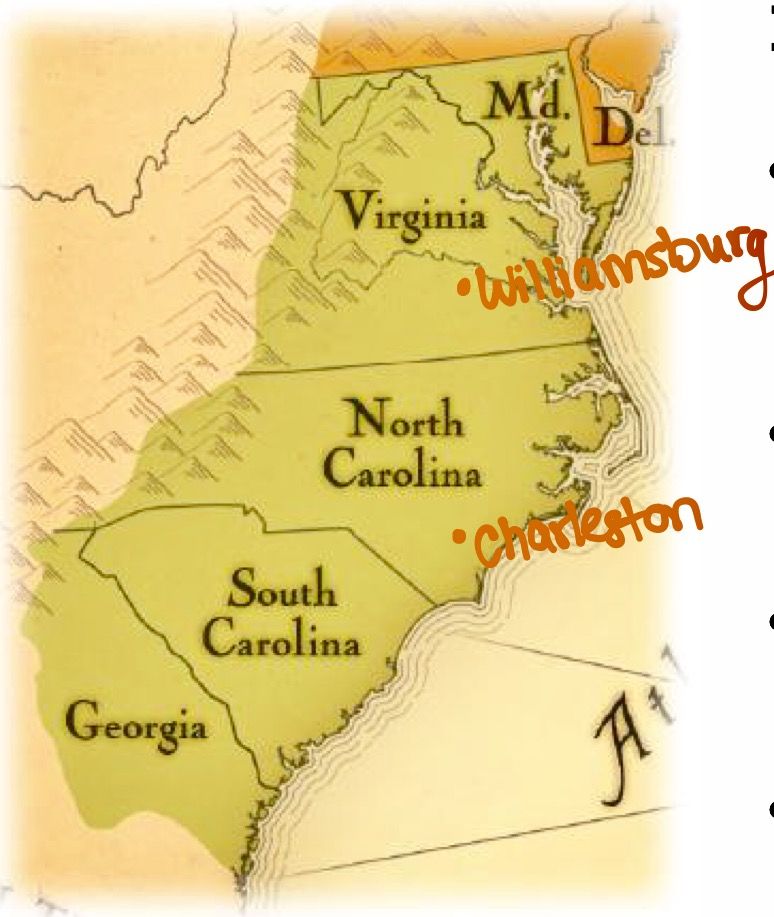
Colonization Styles (Southern Colonies)
- Climate: warm, long growing season, landscape with broad fields and valleys
- Geography: exported the labor-intensive cash crops of tobacco, rice, and indigo (cotton, eventually)
- Culture:
- Enslaved African Americans often were the majority of the population
- Population was spread over large areas
- Little economic equality
- Communities could not sustain local schools and churches (because everyone was too spread out)
- Cash crop- crop grown for sale
-
The Glorious Revolution (1688)
- James II was Catholic, but England practiced under the Church of England
- The English overthrew King James II and installed William and Mary, who granted the English Bill of Rights
- Colonists think of themselves as English subjects, so they beleive the English Bill of Rights apply to them
- Maryland was now a royal colony
- Massachusetts and Plymouth colonies now united
- Salutary Neglect encouraged: Local self rule, in return the colonies cooperated with England’s economic policies and helped with any wars with Spain and France
Information
- Description
- 10th grade US History Slide Set on US1 Study Guide, created by Lauren Harrington on 06/06/2017.
- Created by
- Lauren Harrington
- Views
- 6
- Rating