
Flashcards
Intro to Engineering Design Posttest
Cards in this deck (51)
- 1Elements of DesignPoint, Line, Color, Value, Shape, Form, Space, Texture
- 2Principles of DesignBalance, Emphasis, Contrast, Rhythm, Proportion, Unity, Economey
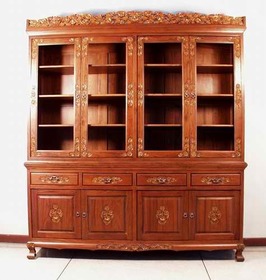
- 3—Element Line: Many vertical lines were used to give the cabinet some nobility.
Principle Balance: Formal symmetry is used to give stability. - 4—Principle Unity: All the dolls are the same shape, and color. Everything fits together
Principle Rhythm: Graduated rhythm (repetition)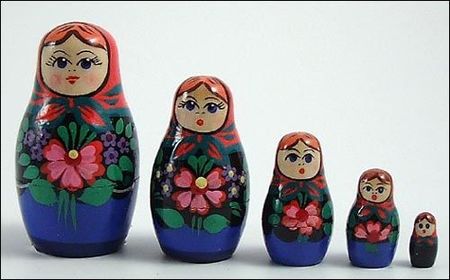
- 5—Element Shape: Mechanical shape used with curved lines to make a shape.
Principle Economey: The design is very simple, but still catches your eye.
- 6—Element Texture: The gate has a rough texture.
Principle Economey: The gate is a simple wood gate.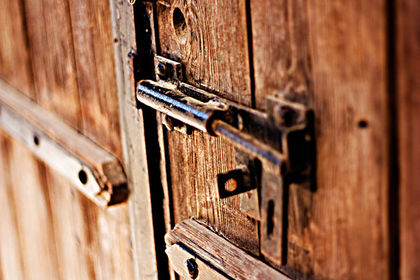
- 7—Element value: The color of the dress fades from dark pink (the bottom) to light pink to white (the top).
Principle rhythm: The decrease of bold color is visible as you move up the dress.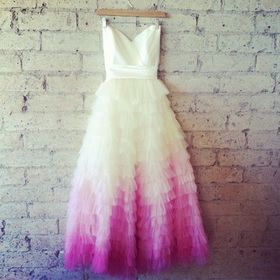
- 8—Element shape: Organic shapes used for branches; curved lines used to make these shapes.
Principle balance: Informal balance used with unidentical branches.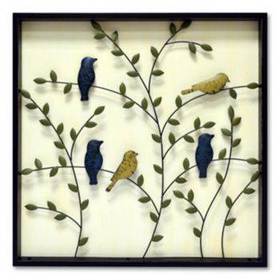
- 9—Element line: Curved and Vertical line used give building a sense of stability, nobility, and freedom.
Principle Emphasis: Focal point = curve that grabs attention.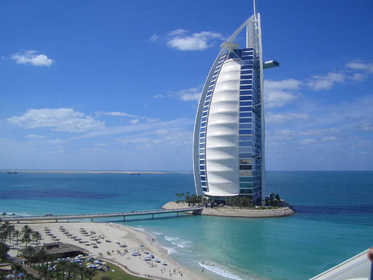
- 10—Principle Proportion: Random proportion used to attract attention.
Principle Unity: Consistent use of trees and bushes.
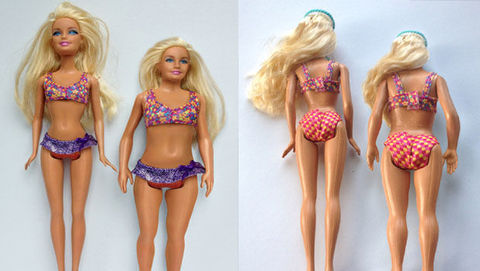
- 11—Principle Proportion: The size of a barbie is not scaled correctly, if she was actually a real human. The second doll is a different version, showing the correct scale.
- 12—Element Unity: The rocks fit good together; they have very similar size, color, and shape.
Principle Rhythm: Graduated rythm (repeated use of rocks)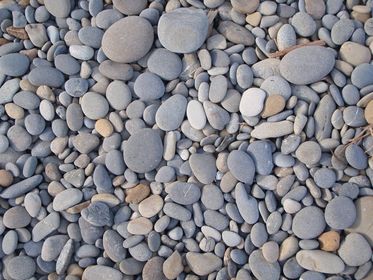
- 13—Element Space: Between stars and backround behind design (- space) and The bowls themselves (+ space); depth seen
Principle Rhythm: Gradated Rhythm (repeated use of stars in design) and Gradated Rhythm (stars closer than farther)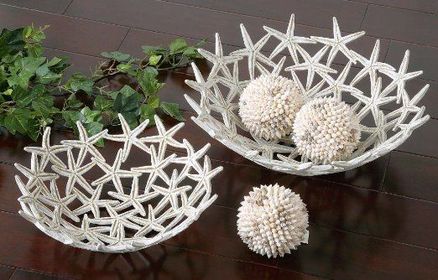
- 14—Principle Proportion: Size of face compared to forehead not scaled correctly
Principle Emphasis: Focal point = pinched, middle part of face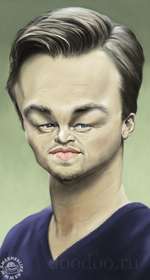
- 15—Element Space: Backround of blue faces (- space) and yellow face (+ space)
Principle Emphasis: Focal point = yellow smiley face stands out
- 16—Element Form: 3D solid
Principle Contrast: The red contrasts with the surrounding green structures.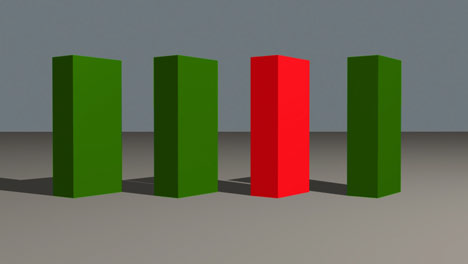
- 17Vertical LineUsed in design to characterize nobility, stability, and durability.
- 18Horazontal LineUsed in a design to characterize relaxation and peace.
- 19Diagonal LinesUsed to define a design with activity, movement, and direction.
- 20Curved LinesUsed to give an impression of freedom.
- 21Cool ColorsColors like blue, purple, and green.
- 22Warm ColorsColors like red, orange, and yellow.
- 23Value- Relative lightness or darkness of a color, object, or shape
- Allows us to see 3D shapes in 2D - 24GeometricShapes like a square, circle, triangle
- 25MechanicalSimple shapes made of straight and curved lines like gears
- 26OrganicNatural shapes simulating nature
- 27FormA 3D volume or solid
- 28Symmetrical (Formal) BalanceVisual balance with mirror images on each side of an imaginary axis
- 29Asymmetrical (Informal) BalanceA balanced design that doesn't use symmetry
- 30Radial BalanceA circle design with a center and even distribution of elements
- 31Focal PointEmphasisning one part of a design with one feature that stands out from the entire design
- 32ContrastThe degree of difference used
- 33Random RhythmThe repetition of the element is random or situated at irregular intervals
- 34Graduated RhythmRepeated element / one detail increasing or decreasing gradually with each repetition
- 35Gradated RhythmOne element that comes closer or father apart
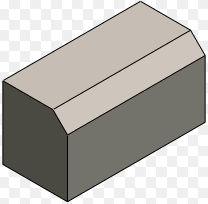
- 36What type of cut it this?Fillet - The edge of the block is cut off and is ROUNDED.
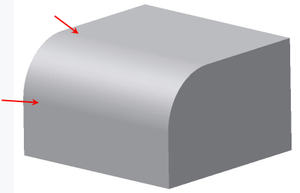
- 37What type of cut it this?Chamfer - The edge of the block is cut off and is FLAT.
- 38Degrees of FreedomThe number of directions in which independent motions can occur.
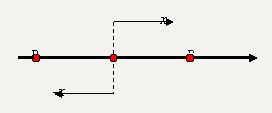
* More Constraints = less degrees of freedom - 39Translational MotionMovement by which a body shifts from one point in space to another on the X, Y, and Z axises (DEGREES OF FREEDOM).
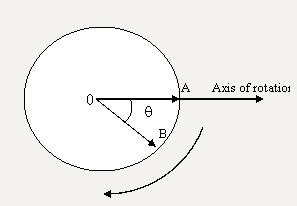
- 40Rotational MotionRotating a rigid body on an axis (DEGREES OF FREEDOM).
- 41Additive ModelingAdding additional peices to model
- 42Subractive ModelingGetting rid of peices from the model
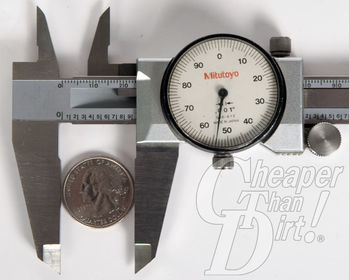
- 43—1. Measures the exterior width/length
2. Measures the interior width
3. More accurate scale
4. Locks in place
5. Adjust the movement
6. Scale: # of centimeters
7. Measures the interior depth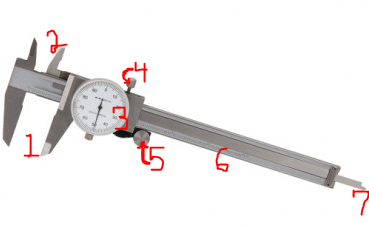
- 44—Reads 24.54
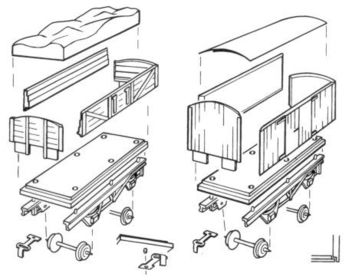
- 45—Exploded View
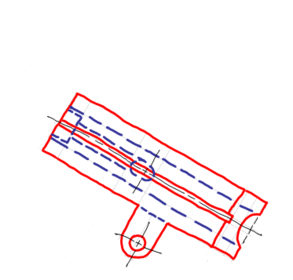
- 46—Auxiliary View (at angle)
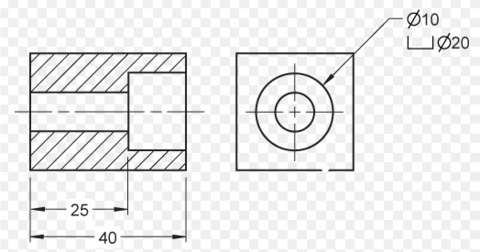
- 47—Counterbore hole
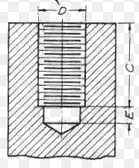
- 48—Threaded hole
- 49—Multiview sketch
left = orthographic
right = isometric)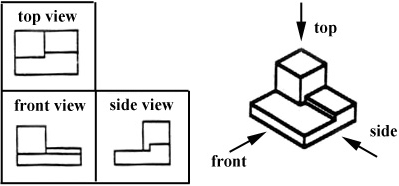
- 50—1. Avoid crossing dimensions
2. Largest dimensions must be farther than shorter dimensions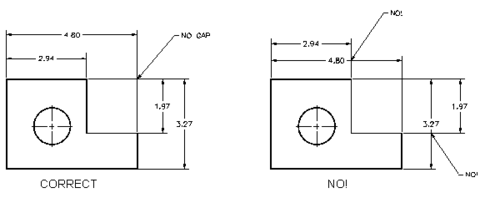
- 51—1. Do not repeat demensions
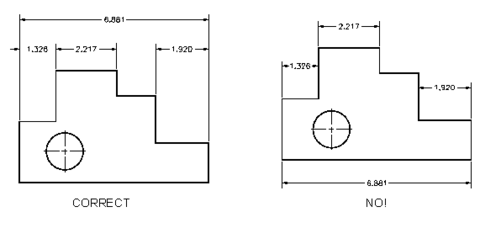
Information
- Description
- Elements and Principles of Design: Choose the element and principle that corresponds with each design. Explain how these help the design.
- Created by
- Selam H
- Views
- 186
- Tags
- Rating