
An Inspector Calls
318 resources created by 231 users
This An Inspector Calls page on GoConqr gathers community-made mind maps, flashcards, quizzes, notes and slides on J.B. Priestley's play, from character studies of Sheila Birling and Inspector Goole to context, themes and key quotations. It's built for school students revising for GCSE English Literature, and for teachers after ready-made material. There are over 2,100 resources here, including more than 1,600 mind maps, over 300 flashcards and more than 40 quizzes. Pick a character or theme, try a quiz, then make your own.
Top An Inspector Calls resources
-
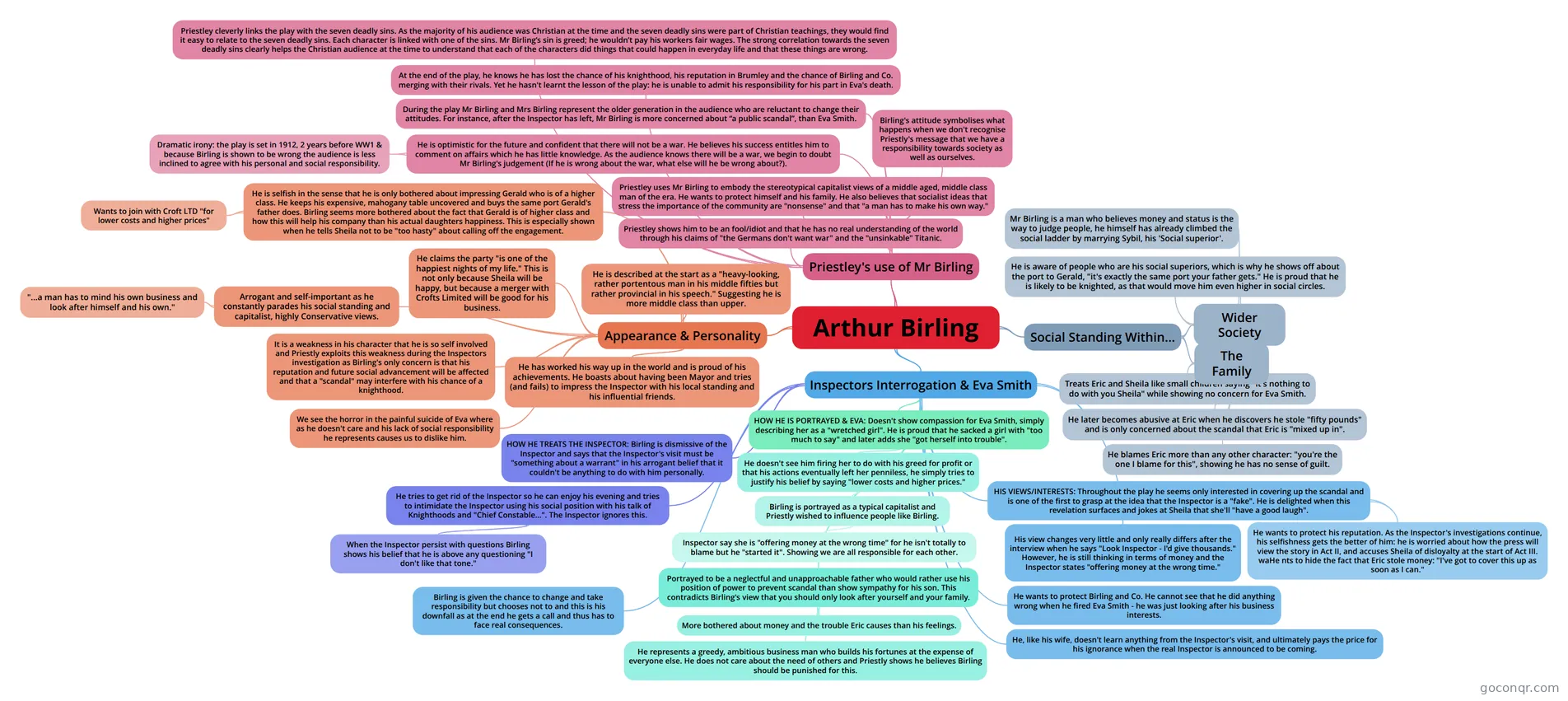 Mind map Arthur Birling
-
Mind map An Inspector Calls: Sheila Birling
-
Mind map Key Quotations - An Inspector calls
-
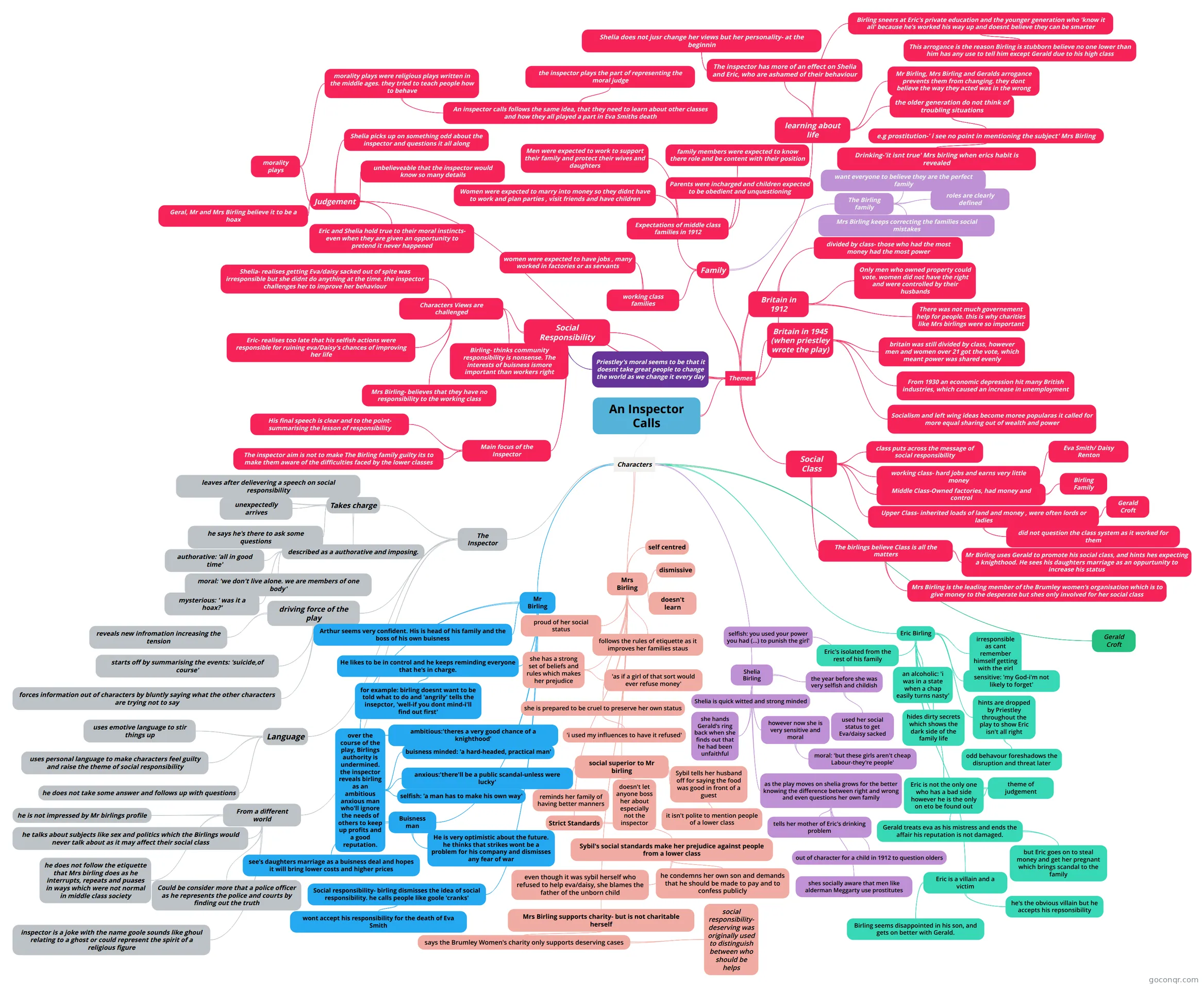 Mind map An Inspector Calls
-
18 cardsAn Inspector Calls Quotation Flashcards "The lighting should be pink and intimate until the inspector arrives, then it should be brighter and harde...
-
18 cardsinspector calls key quotes ‘A man has to mind his own business and look after his own and-’ [We hear the sharp ring of a front doorbel...
-
17 cardsAn Inspector Calls Quotations "A man has to make his own way—has to look after himself—and his family, too, of course," Mr Birling (Act 1)
-
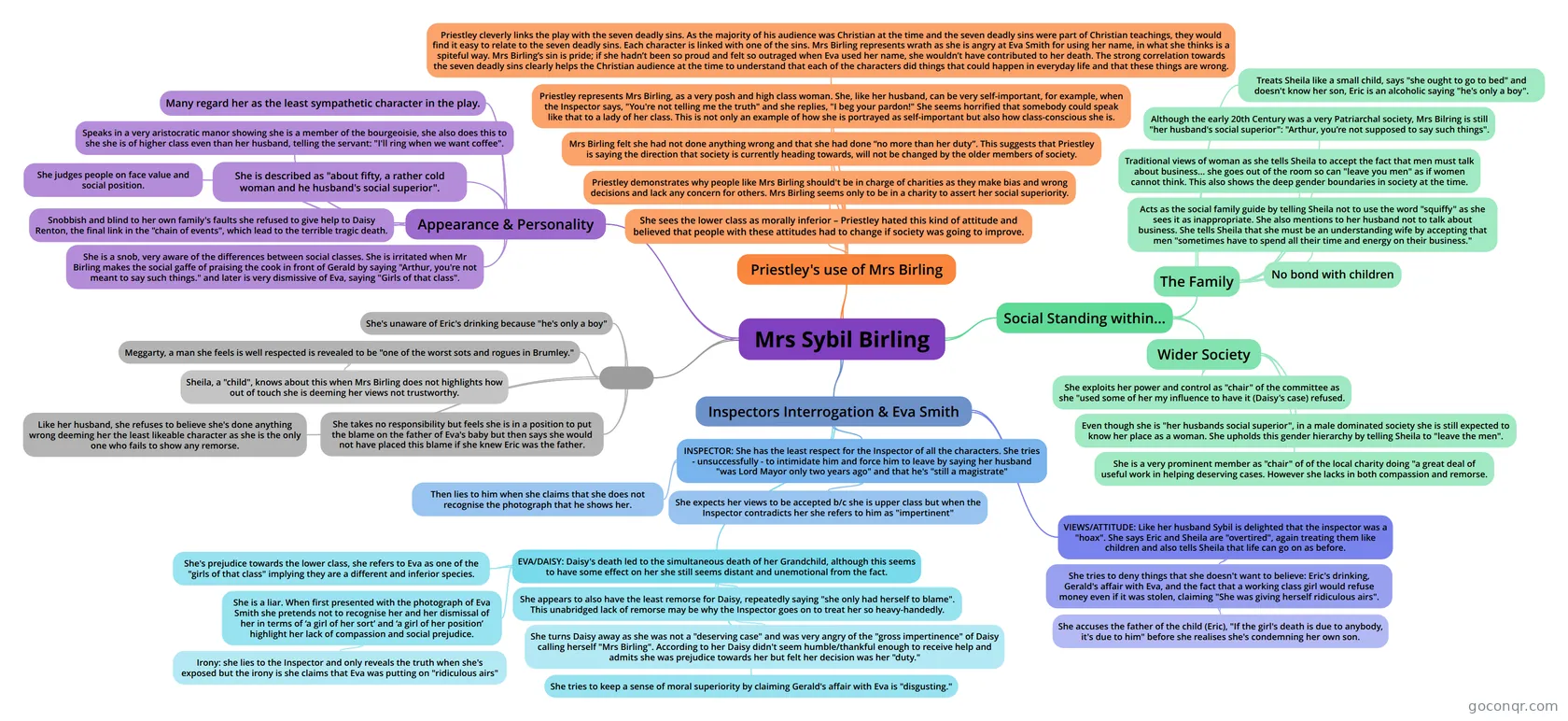 Mind map Mrs Sybil Birling
Quizzes
See all 16 quizzes-
26 questionsInspector Calls Quotes
-
13 questionsAn Inspector Calls - Quiz What is Mr Birling's general opinion on community?
-
13 questionsOpakovací test: Hardvér + klávesové skratky Medzi HARDVÉR patrí
-
5 questionsAn Inspector Calls - ACT 1 Why is Mr Birling particularly pleased to be celebrating Sheila’s and Gerald’s engagement?
-
30 questionsInspector Calls Quotes
-
2 questionsInspector calls "millions and millions of Eva smiths and john smiths still left with us" who in the inspector calls book sa...
-
6 questionsAn Inspector Calls Who are Arthur and Sybil's children?
-
4 questionsAn Inspector Calls Main themes of AIC
Mind maps
See all 214 mind maps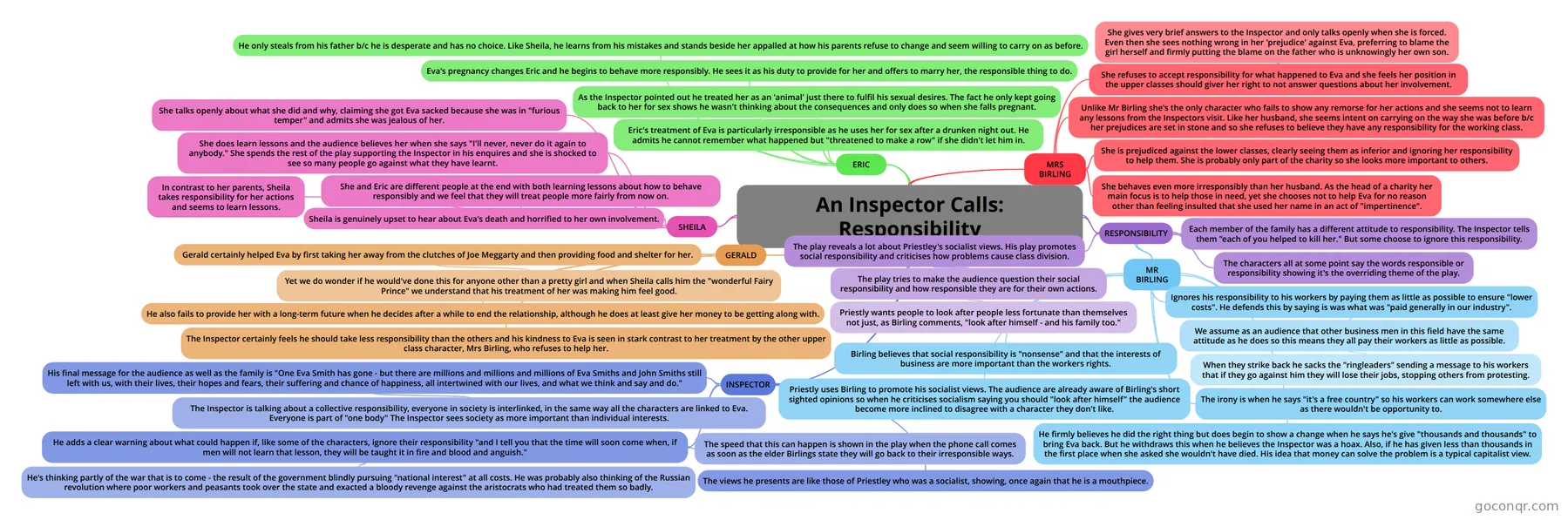
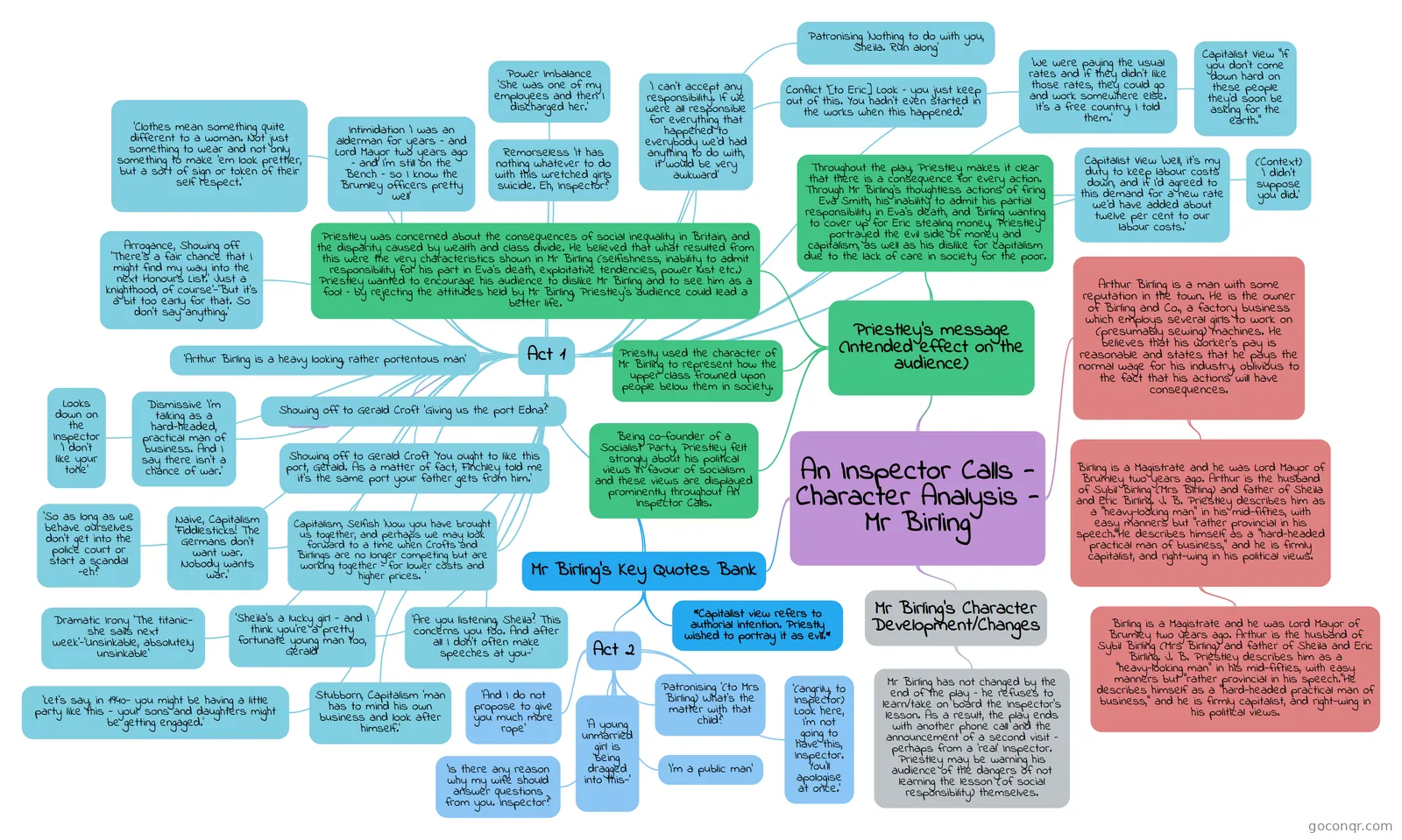
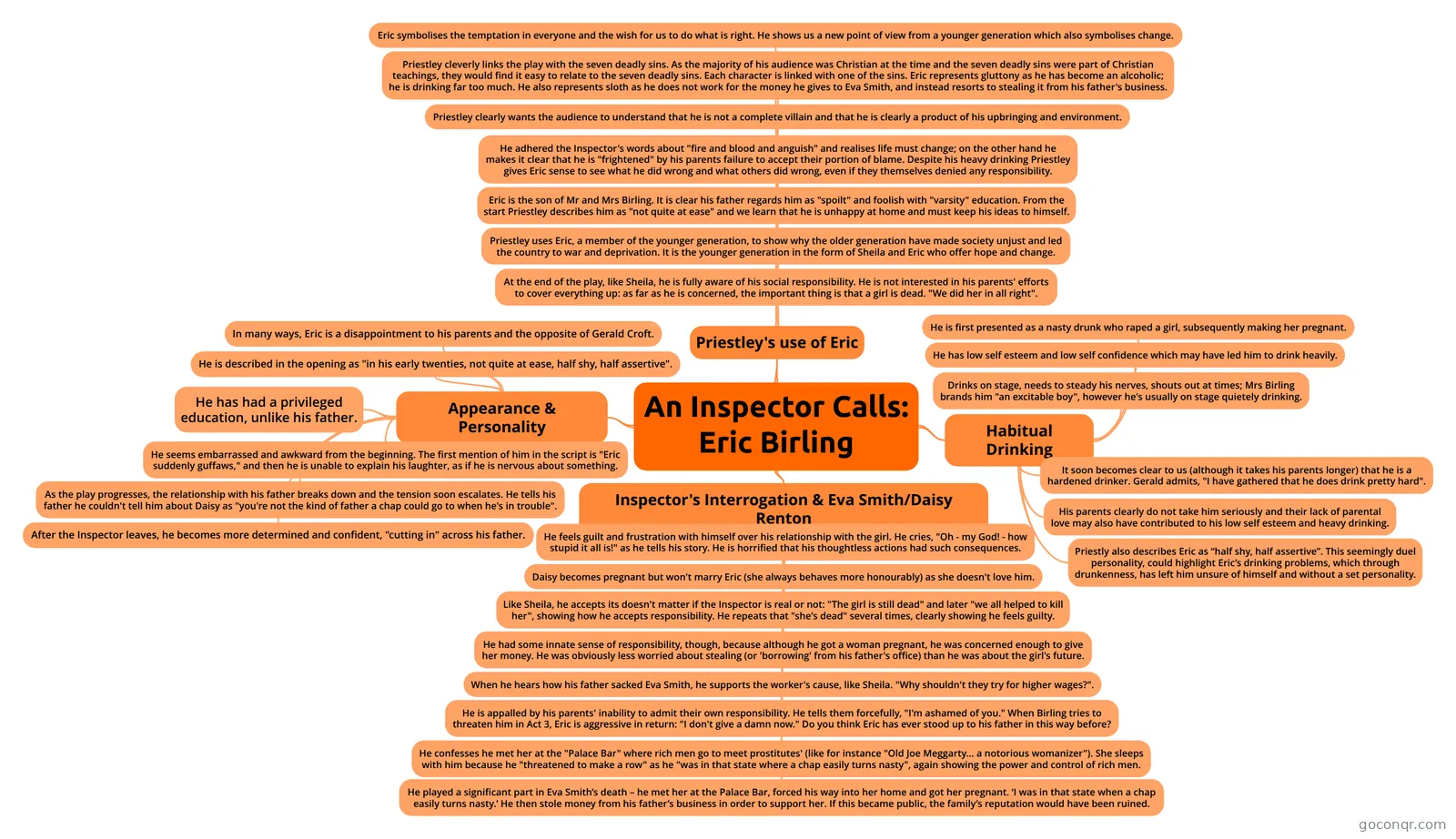
Flashcards
See all 62 flashcards-
18 cardsAn Inspector Calls Quotation Flashcards "The lighting should be pink and intimate until the inspector arrives, then it should be brighter and harde...
-
18 cardsinspector calls key quotes ‘A man has to mind his own business and look after his own and-’ [We hear the sharp ring of a front doorbel...
-
17 cardsAn Inspector Calls Quotations "A man has to make his own way—has to look after himself—and his family, too, of course," Mr Birling (Act 1)
-
38 cardsAn Inspector Calls- Quotes Clothes mean something quite different to a woman. Not just a way to make themselves look prettier, well it...
-
16 cardsMr Birling "And I say there isn’t a chance of war. The world's developing so fast that it'll make war impossible."
-
18 cardsSheila Birling Enter text here...
-
33 cardsCHARACTER QUOTES -AN INSPECTOR CALLS GERALD: At the start, he denies that he's involved
-
6 cardsThe significance of the Inspector 'Goole' + the supernatural
Notes
See all 20 notes-
Year 10 IGCSE English Lit An Inspector calls - short notes and interpretations Beginning of Act 1 SparkNotes SUMMARY and ANALYSIS Seneca course house not cosy and homelike though comfortable Mr Birling a businessman upper-middle-class... worked his way up social hierarchy and earned wealth...
-
English Lit: An Inspector Calls
-
An Inspector Calls- Question 1 - Sheila and Gerald's relationship An Inspector Calls - Questions and Answers In what ways does Priestley make the relationship between Sheila Birling and Gerald Croft such an important part of the play?P. Sheila and Gerald's relationship is an importa...
-
Theatrical Techniques in an Inspector calls Theatrical techniqueEvidence and page numberEffect on the audienceLink to another per of the text (find another quotation or expain a moment in the text that this links to)Chloe McCharthyDramatic Irony"Titanic...absol...
-
How does Priestley explore the idea of poverty and privilege in an inspector calls How does Priestley explore the idea of poverty and privilege in an inspector calls Priestley explores the idea of poverty and privilege in an inspector calls by highlighting the contrast of lifestyles between the weal...
-
An Inspector Calls Themes Responsibility: Responsibility is arguably the most important theme in the play. The words 'responsible' and 'responsibility' appear a considerable number of times in the play. At the beginning of the play, Mr. Birlin...
-
J.B Priestley - Background J.B Priestly:-John Boynton Priestly-D.O.B: 1894-D.O.D:1984Significant to the play that he lived through both WW1and WW2English playwright, novelist and broadcaster (most prolifically a novelist)Known mostly for his pl...
-
Timeline September 1910 - Eva was sacked from Birling & Co. - Mr. Birling December 1910 - Eva was employed by Millwards. Late January 1911 - Eva was sacked from Millwards. - Shelia Birling March 1911 - Eva (calling herse...
Slides
More Literature topics
About An Inspector Calls
GoConqr OriginalWhat this unit covers
The resources follow the play from several angles. The notes titled English Lit: An Inspector Calls cover language, structure and form, theme analysis, character analysis and context. They open with the idea of the play as a morality play, linked to the seven deadly sins. Other notes give short interpretations act by act, and there are notes on the plot, a timeline and an exam guide.
Characters and quotations
Most of the mind maps focus on people. You will find maps on Sheila Birling, Arthur Birling, Mrs Birling, Eric Birling, Gerald Croft, Eva Smith and Inspector Goole, some with several versions to compare. The Sheila Birling map looks at her relationship with Gerald, the Inspector's interrogation and how Priestley uses her. Flashcard decks gather quotations, including Sheila Birling Quotes and decks on the significance of the Inspector.
Themes and context
For ideas, try the mind maps on responsibility, age, and social class and gender. The context map looks at life in the 1930s and Priestley's concern about social inequality. There are also notes on poverty and privilege, theatrical techniques, and how Priestley uses structure.
A sensible order
- Skim the context map and the plot notes to get the story and setting clear.
- Work through one character map at a time, then test yourself with the matching flashcards.
- Move on to the theme maps and the notes on structure and theatrical techniques.
- Finish with a quiz, such as the Act 1 quiz, to see what you remember.
Where it fits
This unit sits in the Drama strand of Literature. Teachers can pick a map or slide set to open a lesson, while students can use quizzes to spot gaps. Choose one character today and see what you can recall.
Frequently asked questions
Where should I start with An Inspector Calls?
Begin with the context mind map and the plot notes so you know the setting and the story. Then take one character at a time, such as the Sheila Birling map, before moving to themes like responsibility. A quiz at the end of each step shows what has stuck.
What do the mind maps cover?
There are over 1,600 mind maps. Many look at individual characters, including the Birlings, Gerald Croft, Eva Smith and Inspector Goole. Others cover themes such as responsibility, age, and social class and gender, plus context, quotations and act summaries.
Are there resources for learning quotations?
Yes. Flashcard decks gather key quotations, including Sheila Birling Quotes and decks by character, theme and act. There are also quote-based quizzes and mind maps, so you can learn a line, then test whether you can use it.
Which exam are these resources for?
The listed resources mention GCSE English Literature, and the whole page is aimed at school students. Some notes are labelled for IGCSE or Year 10 work. Check what your own exam board expects, then pick the maps and notes that match your question types.
Are the resources free, and who made them?
Every resource here is free to open, study and take, with no account needed. They were made by GoConqr users, not by GoConqr itself. A free account also saves your quiz scores and lets you create your own quizzes, maps, flashcards and notes.
What if I can't find the character or theme I need?
Try the other versions of the same topic, since several characters have more than one mind map and flashcard deck. If something is still missing, you can build your own map or deck and shape it around your class's questions.