
Poetry Analysis and Techniques
459 resources created by 340 users
This Poetry Analysis and Techniques page on GoConqr gathers community-made mind maps, flashcards, quizzes, notes and slide sets, from Ozymandias and Dulce et Decorum est to Carol Ann Duffy, Edwin Morgan and Seamus Heaney. It's built for school students revising set poems and for teachers after ready-made material. There are over 2,200 resources here, including more than 80 quizzes, over 1,500 mind maps and more than 400 flashcards. Try a quiz to spot your gaps, then build your own.
Top Poetry Analysis and Techniques resources
-
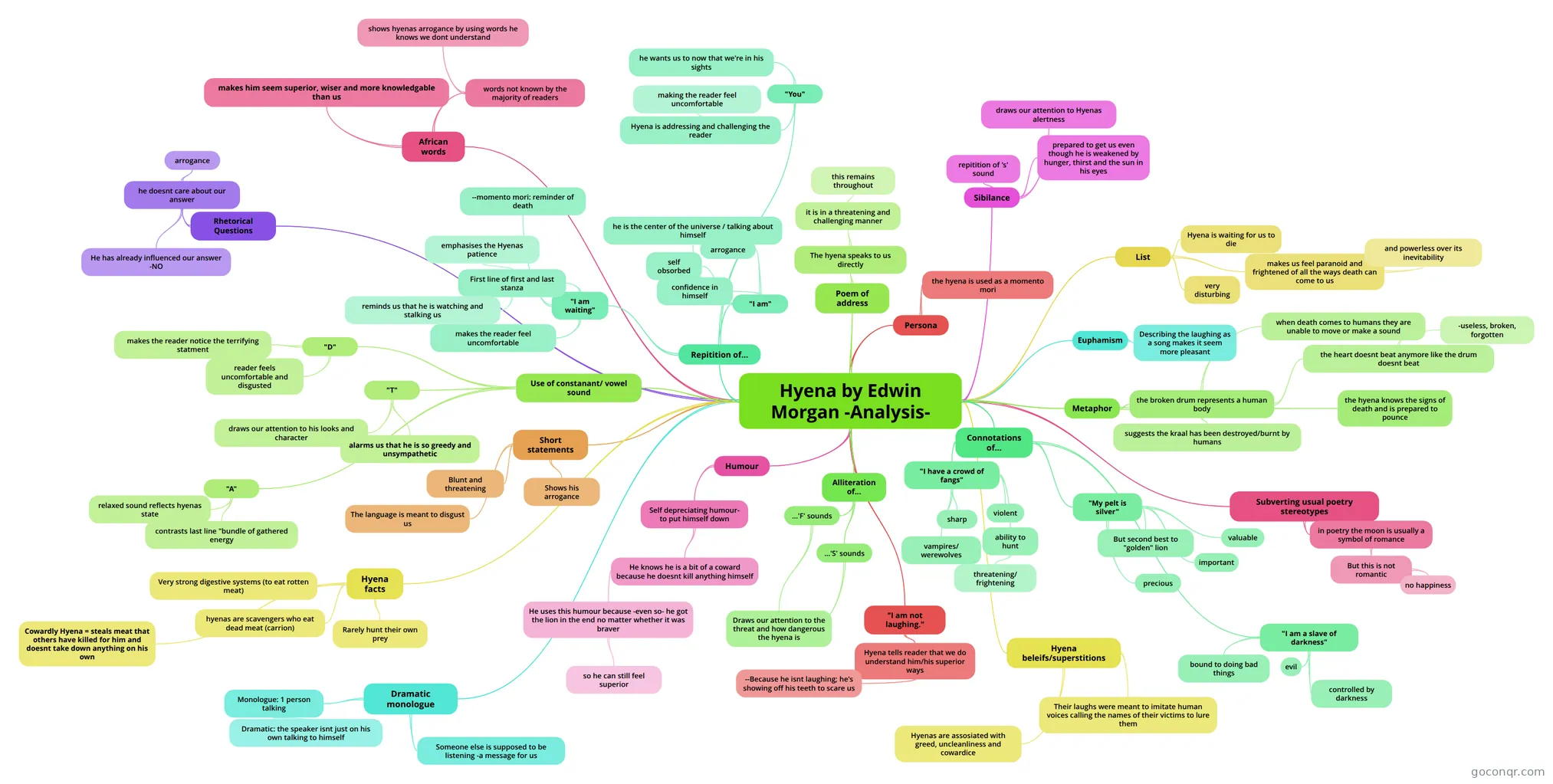 Mind map Hyena by Edwin Morgan -Analysis- quotes and definitions in grey notes
-
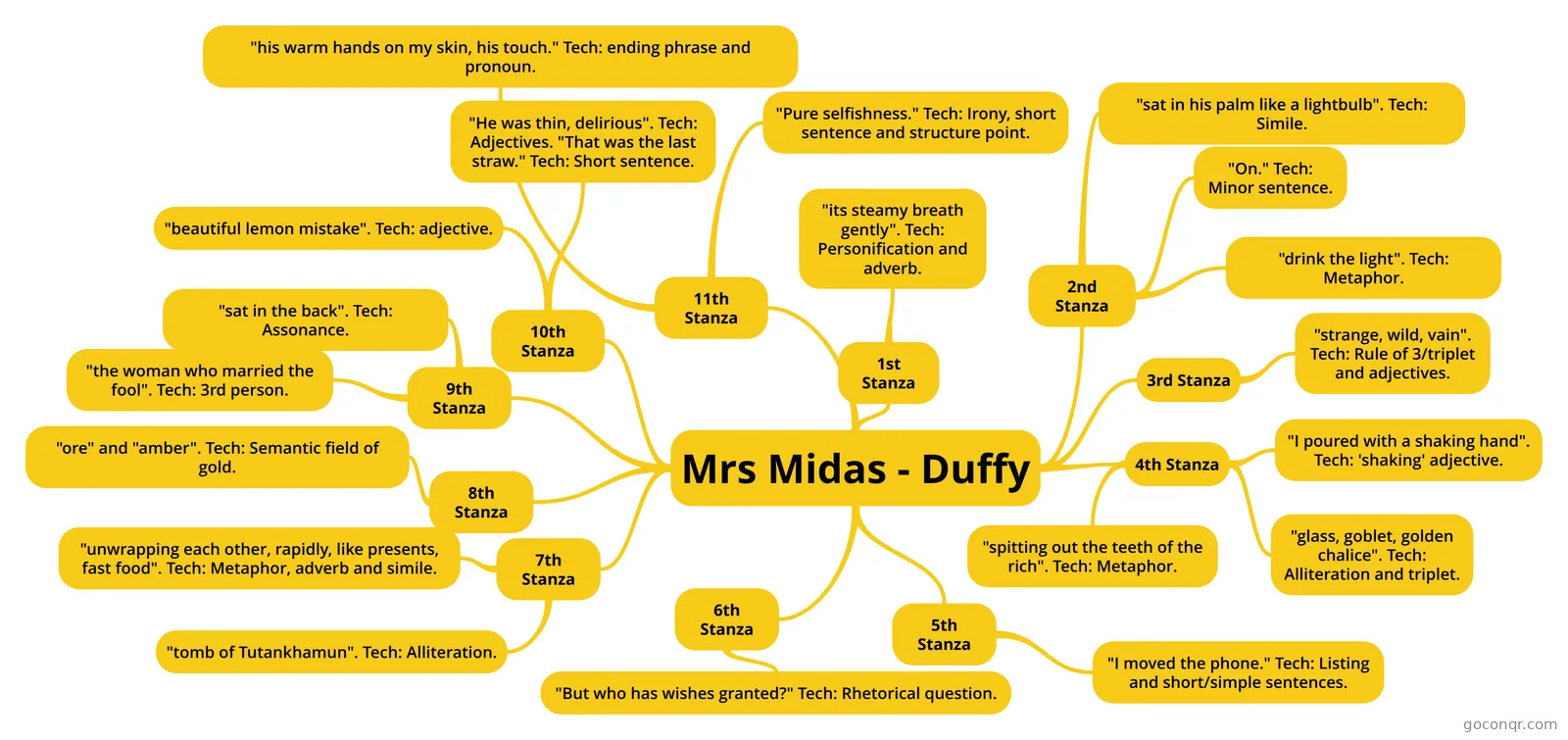 Mind map Mrs Midas - Duffy A mindmap analysing Carol Ann Duffy's poem 'Mrs Midas'.
-
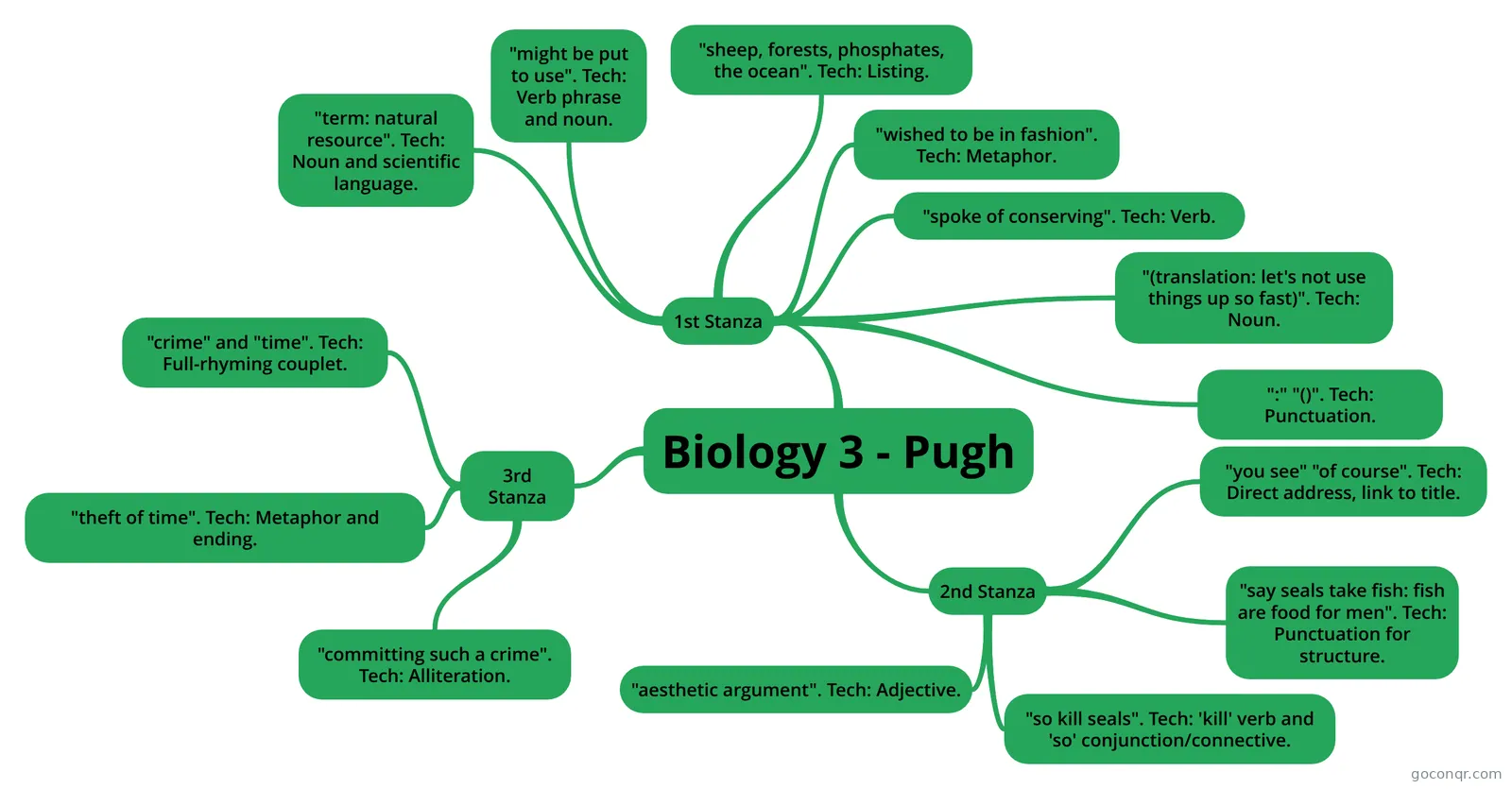 Mind map Biology 3 - Pugh A mindmap analysing Sheenagh Pugh's poem 'Biology 3'. The nodes are placed clockwise from the start of the ...
-
Mind map To My Nine-Year-Old Self - Helen Dunmore
-
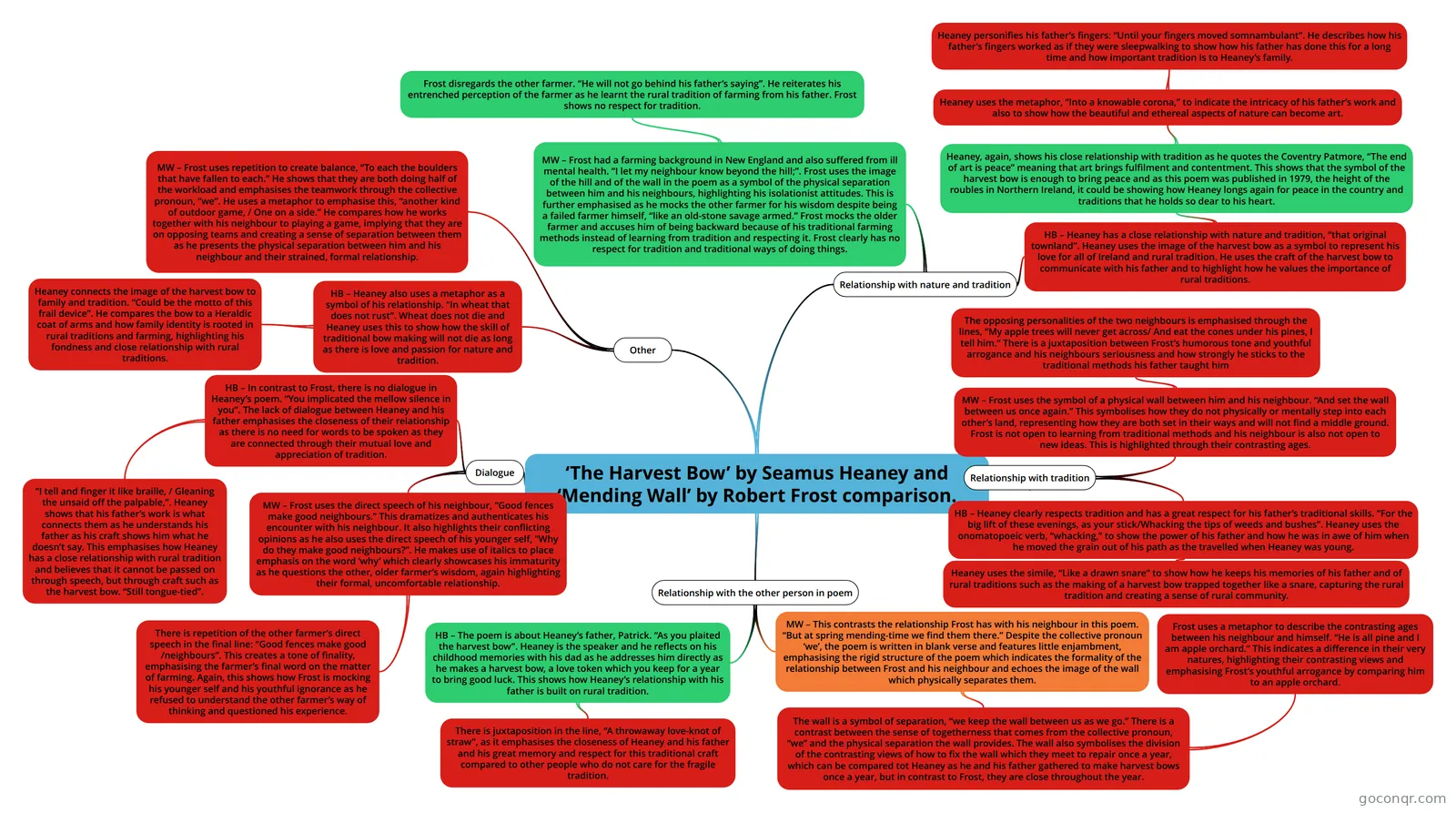 Mind map ‘The Harvest Bow’ by Seamus Heaney and ‘Mending Wall’ by Robert Frost comparison. Read again ‘The Harvest Bow’ by Seamus Heaney and ‘Mending Wall’ by Robert Frost. Compare and contrast how ...
-
Mind map In Paris With You information from class and Mr Bruff videos
-
13 cardsWho so list to hount - Sir Thomas Wyatt Context to the poem
-
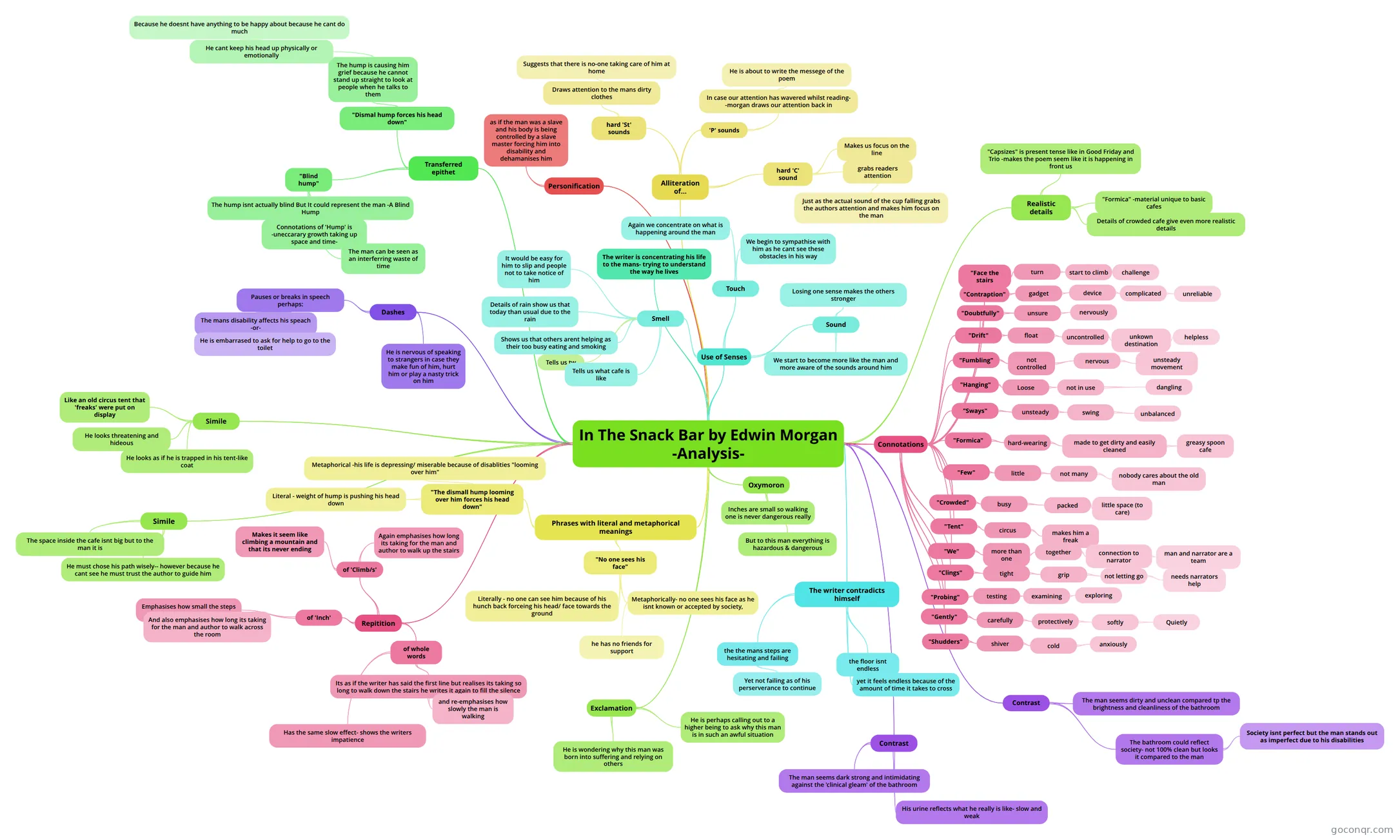 Mind map In The Snack Bar by Edwin Morgan -Analysis- quotes and definitions in grey notes
Quizzes
See all 24 quizzes-
4 questionsAnnotating Electricity Comes to Cocoa Bottom Annotate the opening of Electricity Comes to Cocoa Bottom to show how language is being used to create sett...
-
5 questionsManhunt - Simon Armitage - Quiz The verbs in the poem are used to show the hard and horrible work the husband had to do when he was in the ...
-
5 questionsMother Any Distance Mini Quiz Mother any Distance was written by who:
-
4 questionsAn Unknown Girl Moniza Alvi's birthplace is in Pakistan
-
30 questionsPoetry Definitions Honor's Literature Poetry Definitions
-
8 questionsEnglish- Ballads What is a ballad?
-
3 questionsTwo Owls Both these poems are written in which person? 1st or 3rd?
-
5 questionsSkimming for meaning The soldier in the poem is an old man
Mind maps
See all 284 mind maps-
Hyena by Edwin Morgan -Analysis- quotes and definitions in grey notes
-
Mrs Midas - Duffy A mindmap analysing Carol Ann Duffy's poem 'Mrs Midas'.
-
Biology 3 - Pugh A mindmap analysing Sheenagh Pugh's poem 'Biology 3'. The nodes are placed clockwise from the start of the ...
-
To My Nine-Year-Old Self - Helen Dunmore
-
‘The Harvest Bow’ by Seamus Heaney and ‘Mending Wall’ by Robert Frost comparison. Read again ‘The Harvest Bow’ by Seamus Heaney and ‘Mending Wall’ by Robert Frost. Compare and contrast how ...
-
In Paris With You information from class and Mr Bruff videos
-
In The Snack Bar by Edwin Morgan -Analysis- quotes and definitions in grey notes
-
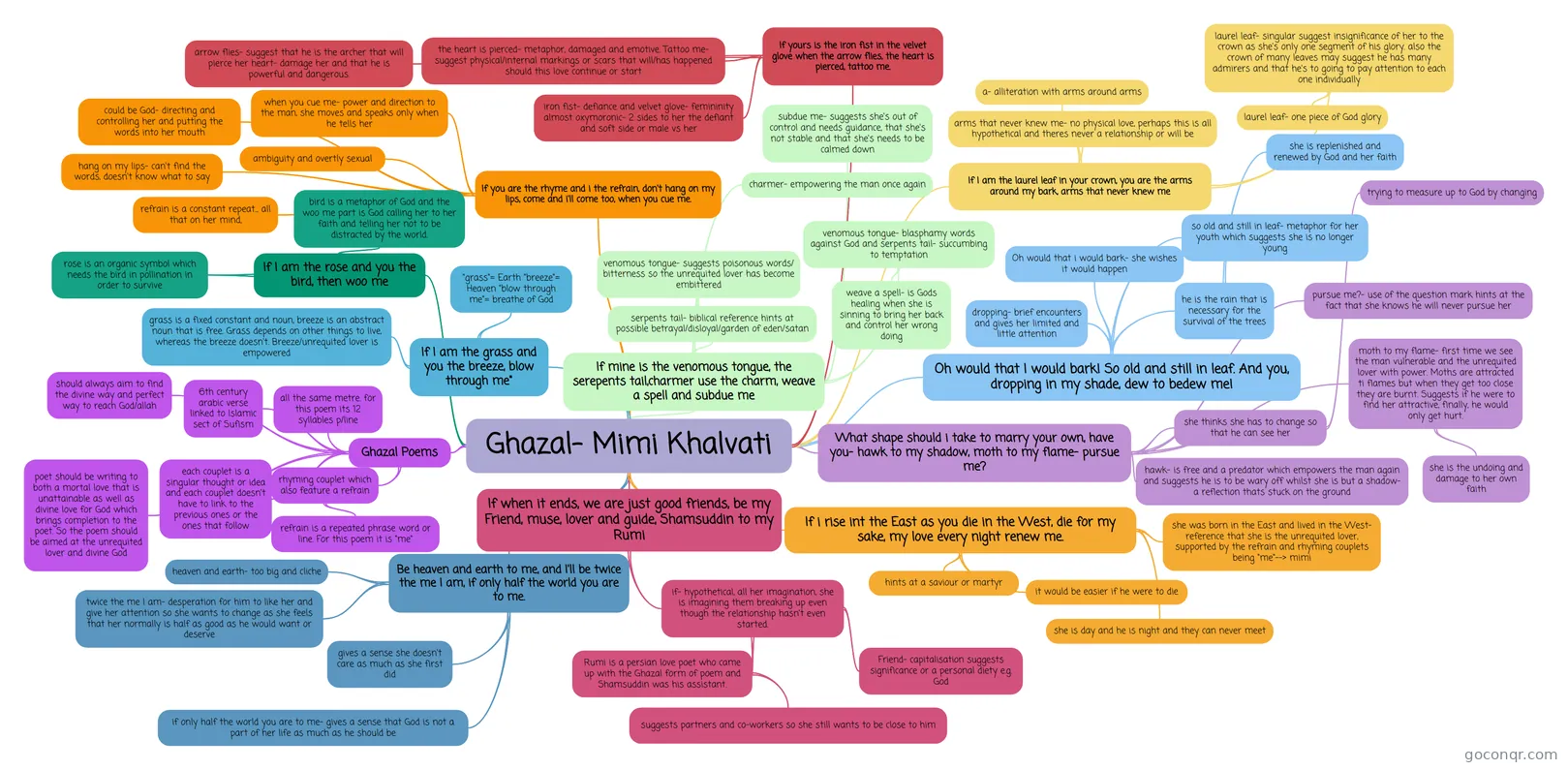 Ghazal- Mimi Khalvati
Flashcards
See all 104 flashcards-
13 cardsWho so list to hount - Sir Thomas Wyatt Context to the poem
-
16 cardsEnglish 103 - Sonnet 73, First Poem for You, and Women Bathing at Bergen-Belsen What is a Petrarchan Sonnet?
-
28 cardsTo His Coy Mistress - Andrew Marvell
-
14 cardsPorphyria's lover The name Porphyria
-
10 cardsWar Photographer "In his darkroom he is finally alone"
-
9 cardsEnglish 103 - poems "What lips my lips have kissed" and Shakespeares Sonnet 18 analysis Consider sonnets structure. Is the sonnet "What lips my lips have kiss and Where and Why" by Edna St. Vince...
-
9 cardsComaprison plan: When we two parted and Neutral Tones Point 1- One-sided love (When we two parted)
-
15 cardsThe Charge of the Light Brigade Flashcards What does the poem describe?
Flowcharts
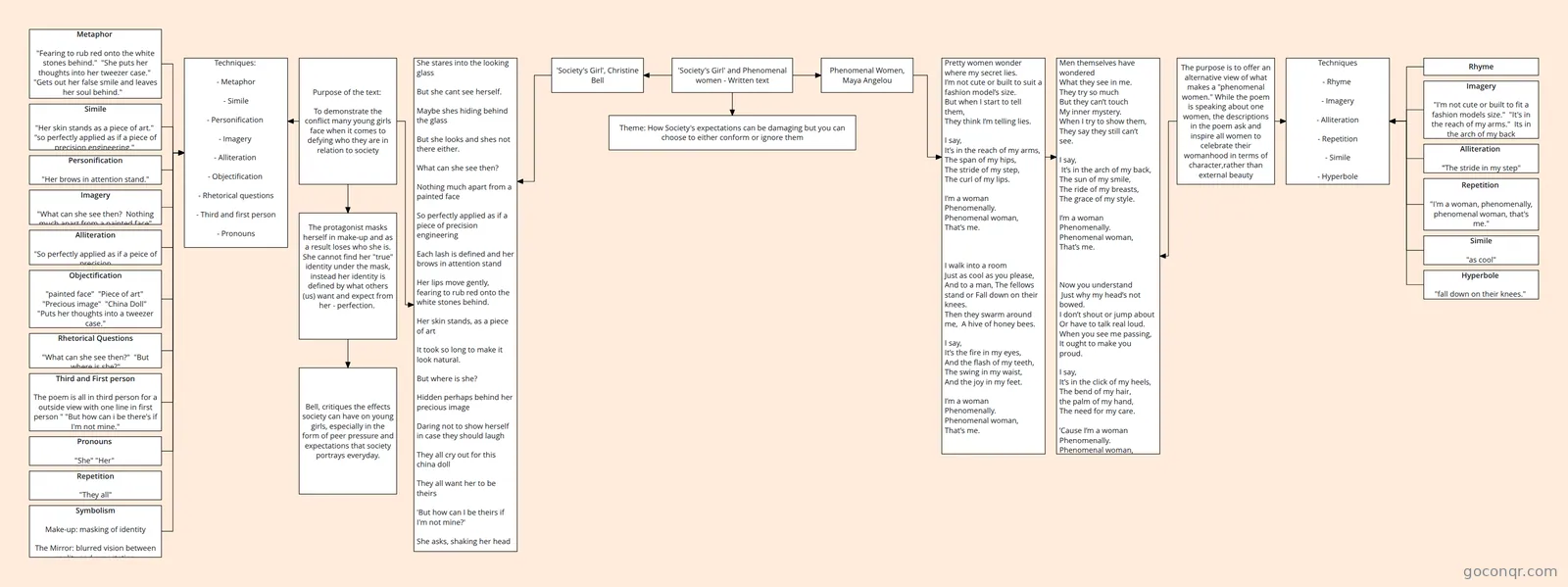
Notes
See all 38 notes-
English Literature Ozymandias - Percy Bysshe Shelley The poem starts off with a tourist meeting an explorer. The explorer tells the story of a once powerful king, Ozymandias who's kingdom has now collapsed and all that remains is his br...
-
Island Man - analysis Island Man - Grace Nichols Morningand island man wakes upto the sound of blue surfin his headthe steady breaking and wombingwild seabirdsand fishermen pushing out to seathe sun surfacing defiantlyfrom the eastof his s...
-
My Rivals House My Rival's HouseIs peopled with many surfaces,Ormolu and gilt, slipper satin,lush velvet couches,cushions so stiff you can't sink in.Table polished clear enough to see distortions in.We take our shoes off at her door,...
-
Valentine Overview The narrator is describing the nature of love. They describe love as an onion and give it to their lover as Valentine's Day gift. It is not one of the traditional things we typically associate with love, but ...
-
Havisham and Valentine comparison “Havisham” and “Valentine” are both poems by “Carol Ann Duffy”. They both explore the theme of love or rather painful love. the poet revels the link between the two poems’s through a verity of techniques which is done...
-
My Country Poem Annotation: Dorothea My Country Poem Annotation Wednesday, 25 May 2016 11:20 AM Initial Thoughts: Mackellar is describing the country that she loves "running in your veins". This represents blood and heritage. "Strong love of grey-blue di...
-
Leaving Cert Poetry 2017 Bishop, Elizabeth The Fish The Bight At the Fishhouses The Prodigal Questions of Travel The Armadillo Sestina First Death in Nova Scotia Filling Station In the Waiting Room Boland, Eavan
-
ELA 7 Literary Devices and Poetry Analysis Common Figures of Speech and Literary Devices Allusion - a reference to something or some person from literature, religious lore, or history EX: "All overgrown by cunning moss, All interspersed with we...
Slides
More Literature topics
About Poetry Analysis and Techniques
GoConqr OriginalWhat this page covers
This unit is a large collection of poem-by-poem study material made by GoConqr users. Most of it is mind maps, which break a poem into stanzas, quotations and techniques. You will also find flashcard decks, notes, quizzes and slide sets. The exams named in the listed resources include GCSE English Literature, A-level English Literature, National 5 English, IGCSE Literature, Leaving Certificate English, HSC English and SQA Higher.
Poems and poets you will meet
- Classic voices: the mind map on London by William Blake, the Ozymandias flashcards and Do not go gentle into that good night.
- Modern poets: Carol Ann Duffy, with Mrs Midas, Valentine and Mrs Darwin, plus Simon Armitage and Seamus Heaney.
- Scottish poems: the Edwin Morgan analyses of Hyena, Trio and Winter, and The Castle by Edwin Muir.
- Comparisons: the mind map comparing The Harvest Bow and Mending Wall, and the flashcards planning a comparison of When we two parted and Neutral Tones.
Where to start
If you need the technical vocabulary first, open the Poetic Devices mind map and the Poetry Terms flashcards. Then move to a single poem. The Hyena analysis shows how a mind map can pick out a poem of address and a persona. The Mrs Midas map lists techniques stanza by stanza, such as personification, next to the quotations they come from.
Using maps and quizzes together
Read a mind map slowly and note the quotation and technique pairs. Then test yourself with a quiz such as Manhunt - Simon Armitage - Quiz or the Poetry Definitions quiz. Where you slip, go back to the map or the matching flashcards. For exam practice, the notes on unseen poetry and on comparing two poems are useful next steps. Teachers can pull a map or slide set straight into a lesson.
Where it sits
This unit belongs to the Poetry strand of Literature. Pick one poem from your course, work through its map and quiz, and then make your own flashcards for the lines you find hardest.
Frequently asked questions
Which resource should I open first?
Start with the Poetic Devices mind map or the Poetry Terms flashcards if you want the vocabulary of techniques. If you already have a set poem, search the list for its title and open the mind map first. Then follow it with a quiz or flashcard deck on the same poem.
What do the mind maps cover?
Most of them take a single poem and split it into stanzas, key quotations and techniques. The Mrs Midas and Biology 3 maps pair quotes with devices such as personification and metaphor. Others, like London, list vocabulary, and some compare two poems side by side.
Are the resources free to use?
Yes. Every resource listed here is free to open, study and take, with no account needed. They were made by GoConqr users, not by GoConqr itself. A free account adds the option to save your quiz scores and make your own quizzes, mind maps, flashcards and notes.
Which exams do these resources suit?
The listed resources mention GCSE English Literature, A-level English Literature, GCSE English, National 5 English, IGCSE Literature, Leaving Certificate English, HSC English and SQA Higher. Almost all of the material is aimed at secondary school students, so check that a poem matches your own course.
Are there quizzes on specific poems?
Yes. There are quizzes on single poems, including Manhunt by Simon Armitage, In Paris With You by James Fenton, An Unknown Girl and Two Owls. There are also general quizzes, such as Poetry Definitions and one on ballads, for checking terms before you tackle an essay.
What if my poem isn't listed?
Try searching under the poet's name, since several poets such as Duffy, Morgan and Heaney have more than one poem here. You can also look at the unseen poetry notes and the How To Analyse A Poem notes, which suit any poem, or make your own map.