
Cinematography and Camera Work mind maps
48 mind maps by 42 users · Page 1 of 2
This page gathers user-made Cinematography and Camera Work mind maps on shot types, framing, camera angles and lighting. School students and university students can use them to practise camera terminology, while teachers can find material for lessons. There are over 40 mind maps for study at school and university level. Pick a map to explore.
Mind maps
-
Getting Started
-
Single Camera
-
Image
-
MIND MAP JOAN BARCENILLA D'ONGHIA
-
Book 2 Vocabulary
-
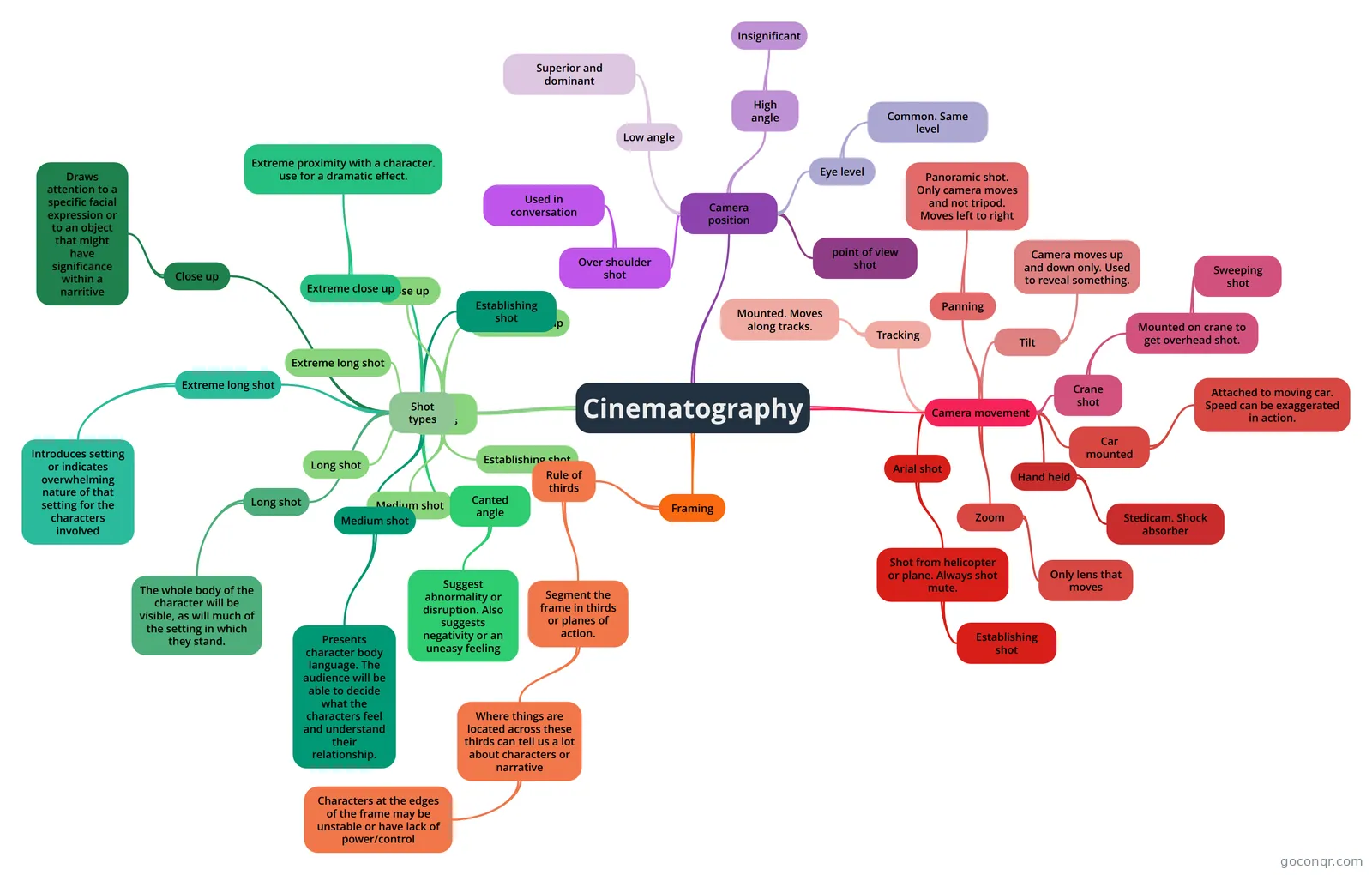 Cinematography
-
Cinematography
-
Chapter 4
-
cinematography
-
Cinematography : Distance, Angle and Depth
-
Cinematography
-
Lighting
-
CINEMATOGRAPHY
-
Cinematography
-
CINEMATOGRAPHY
-
Camera Techniques
-
What is a Camera Movement ?
-
Lighting (cinematography)
-
Staging
-
Camera Technique
-
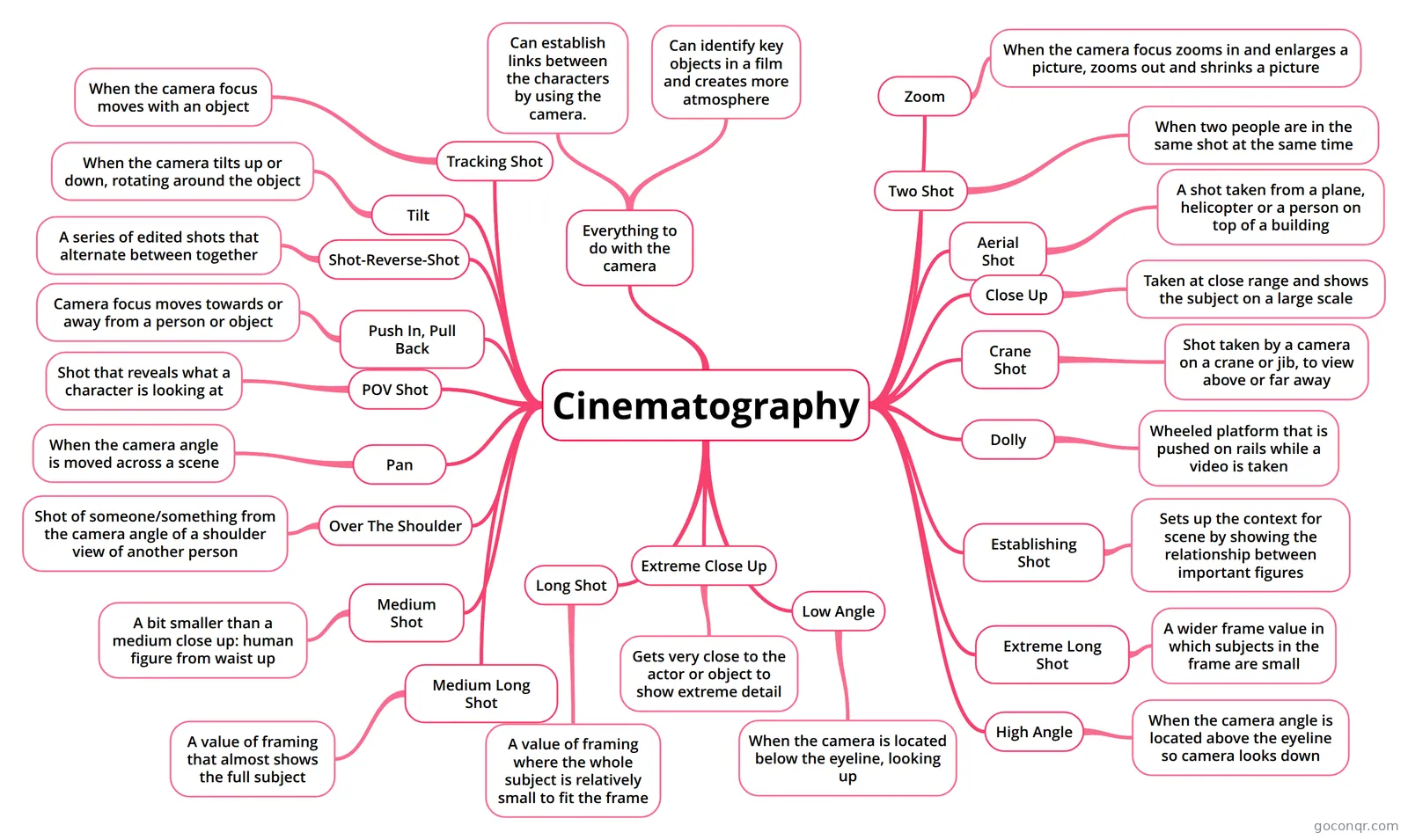 Cinematography
-
Cinematography
-
Cinematography
-
Basic Camera Moves
-
purpose of cinematography
-
CINEMATOGRAPHY
-
1_Camera Angles
-
2_Camera Angles
-
3_Camera Angles
-
4_Camera Angles
-
Camera angles
-
Camera shots
-
FILM
-
Cinematography
-
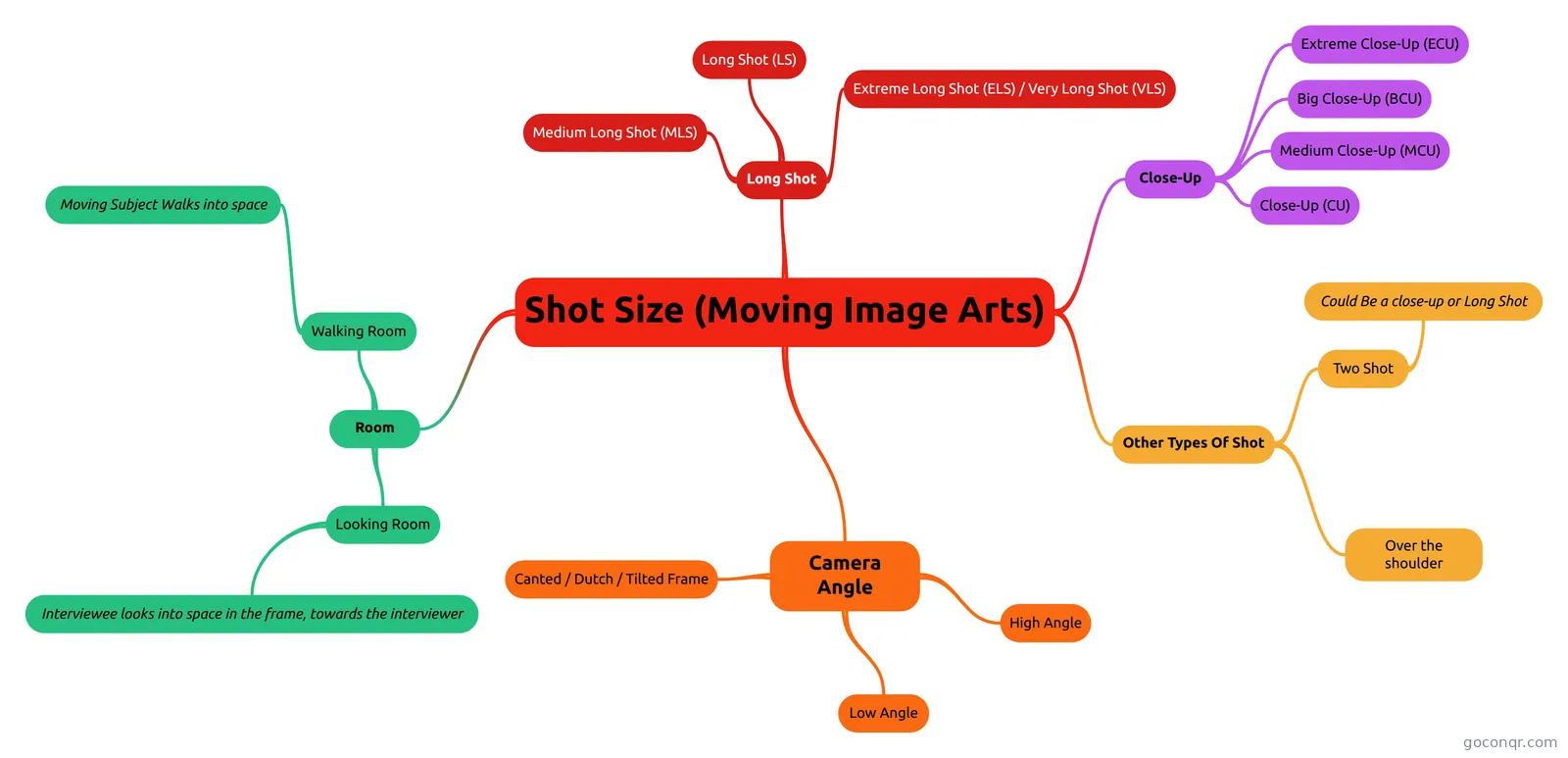 Shot Size (Moving Image Arts) Listing Shot Size / Camera Angles
-
Cinematography
-
Cinematography
-
Cinematography
-
Camera shots (body)
-
advert
More Cinematography and Camera Work resources
About cinematography and camera work mind maps
GoConqr OriginalCinematography and Camera Work mind maps
These maps organise camera terms into connected branches. Camera Technique brings shot types, camera angles and movement together, making it a useful starting point if you want to see how those areas relate. It includes positions such as bird's-eye and over the shoulder, alongside shot-size abbreviations.
For a different focus, Lighting (cinematography) maps high-key and low-key lighting alongside chiaroscuro. The map Image includes contrast, exposure and frames per second. Single Camera takes a production-planning approach, with a synopsis and production concept.
Revising with a map
Choose a branch and try explaining its terms without looking. Then return to the map to check what you remembered. If you want to test your recall in a different way, switch to a quiz on the unit page; use flashcards when you want to revisit individual terms.
Choose a map and follow the branches that match what you are studying.
Frequently asked questions
Which mind map is a useful place to start?
Camera Technique is a useful starting point because it groups shot types, camera angles and movement in one map. If you are looking for a particular area instead, Lighting (cinematography) focuses on lighting, while Image includes contrast, exposure and frames per second.
Are these mind maps free to use?
Yes. Every mind map listed here is free to open and study without an account. The maps were made by GoConqr users, not by GoConqr. A free account also lets you make your own quizzes, mind maps, flashcards and notes, and save quiz scores.
Who can use these mind maps?
The collection includes material for school and university students practising camera terminology, as well as resources teachers can use for lessons. The maps take different approaches: Camera Technique groups several camera topics, while Single Camera sets out a production concept and synopsis.