
Cinematography and Camera Work
71 resources created by 63 users
This Cinematography and Camera Work page on GoConqr gathers community-made quizzes, mind maps and flashcards on shot types, camera angles, camera movement, framing and lighting. It's built for school students revising a topic, university students filling gaps, and teachers after ready-made material. There are over 60 resources here, including more than 40 mind maps, 18 flashcards decks' worth of terms and 3 quizzes, mostly at secondary level with a solid university share. Try a quiz to find your gaps, then see which maps help.
Top Cinematography and Camera Work resources
-
9 questionsCamera Shots and Movements A close-up shot will show
-
16 questionsCamera Angles Quiz Camera Angles
-
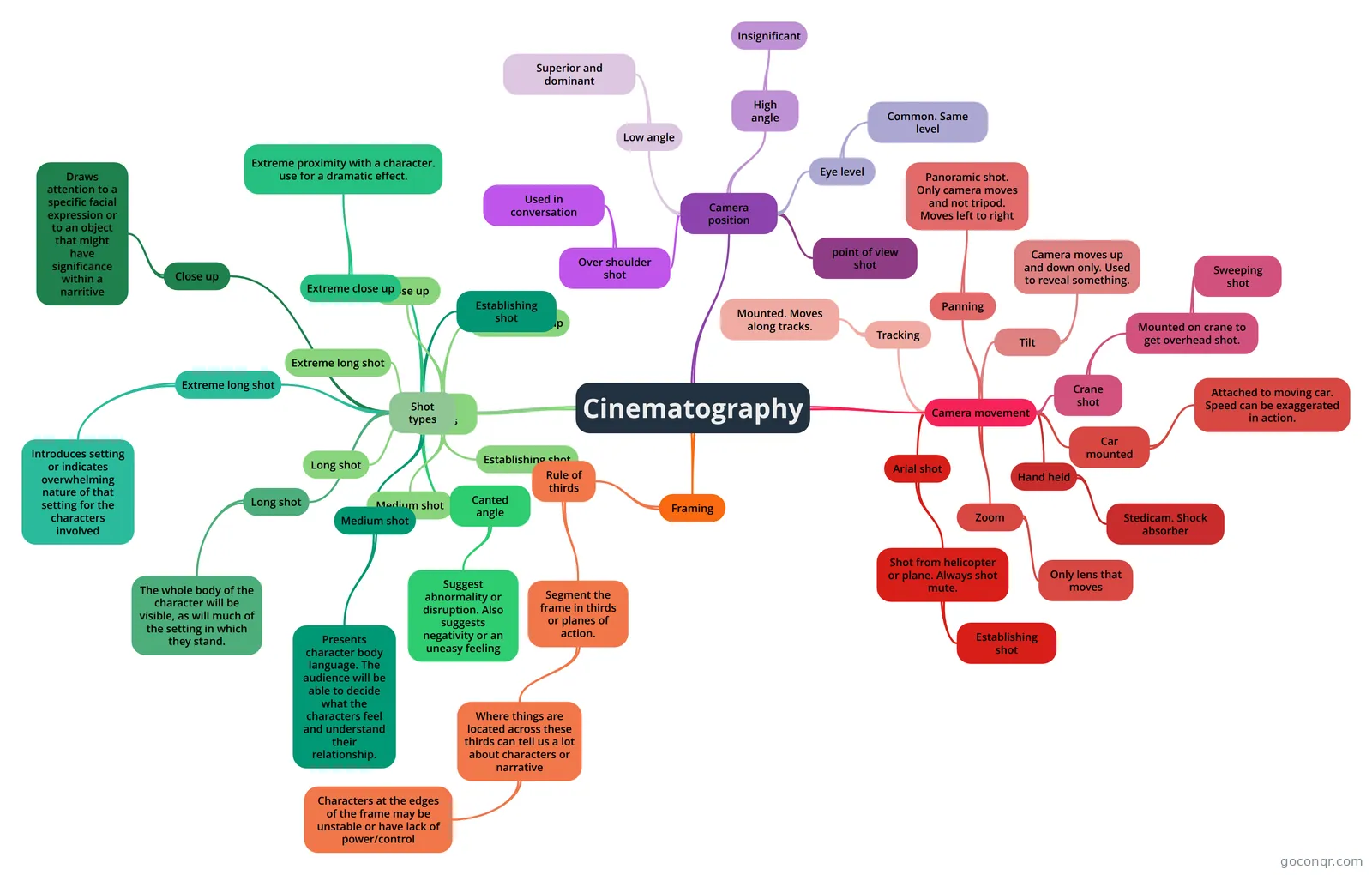 Mind map Cinematography
-
8 questionsCamera set and procedure Final test
-
17 cardsCamera Shots+Angles What is an establishing shot
-
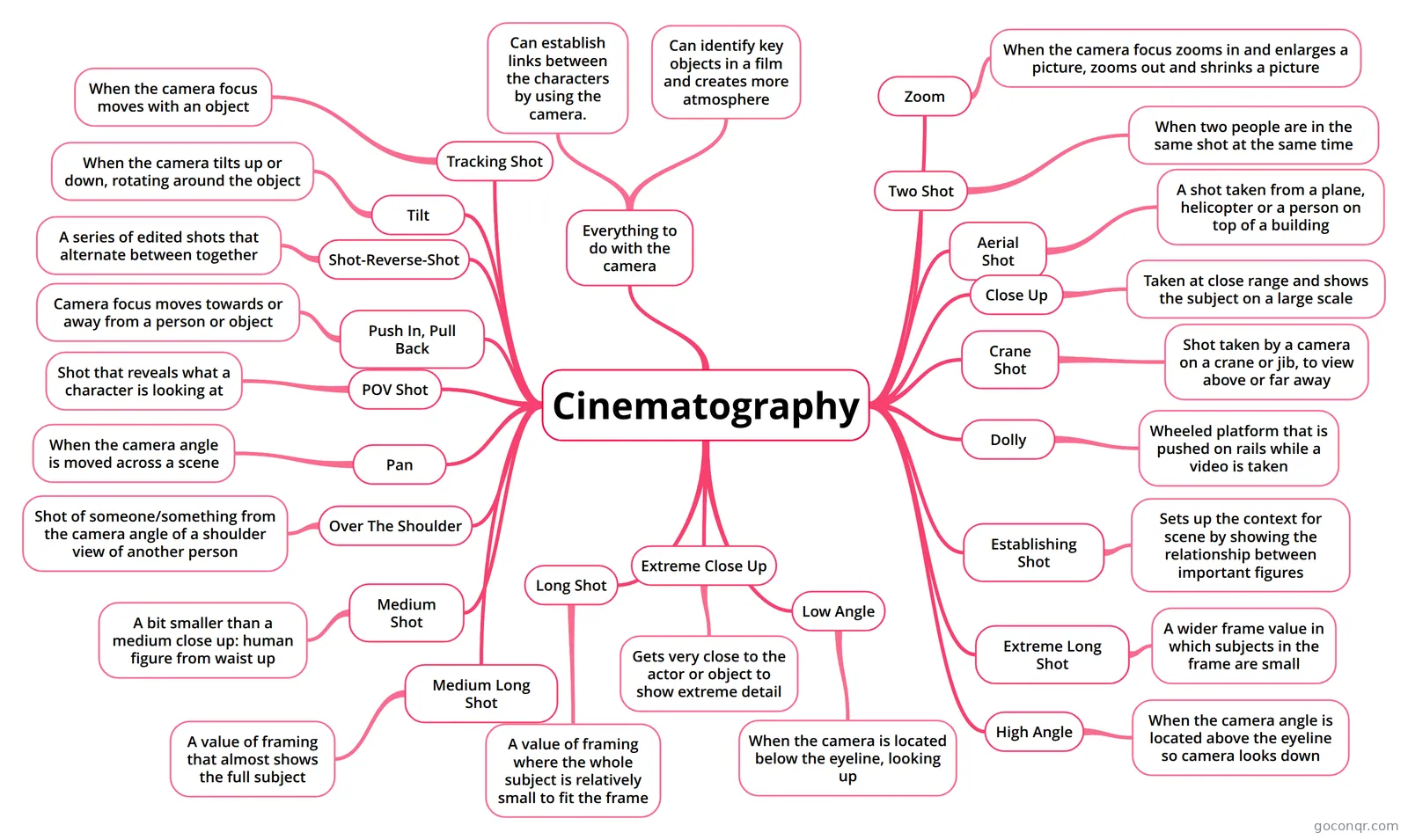 Mind map Cinematography
-
10 cardsCamera Shots
-
10 cardsCamera Angles
Quizzes
Mind maps
See all 48 mind maps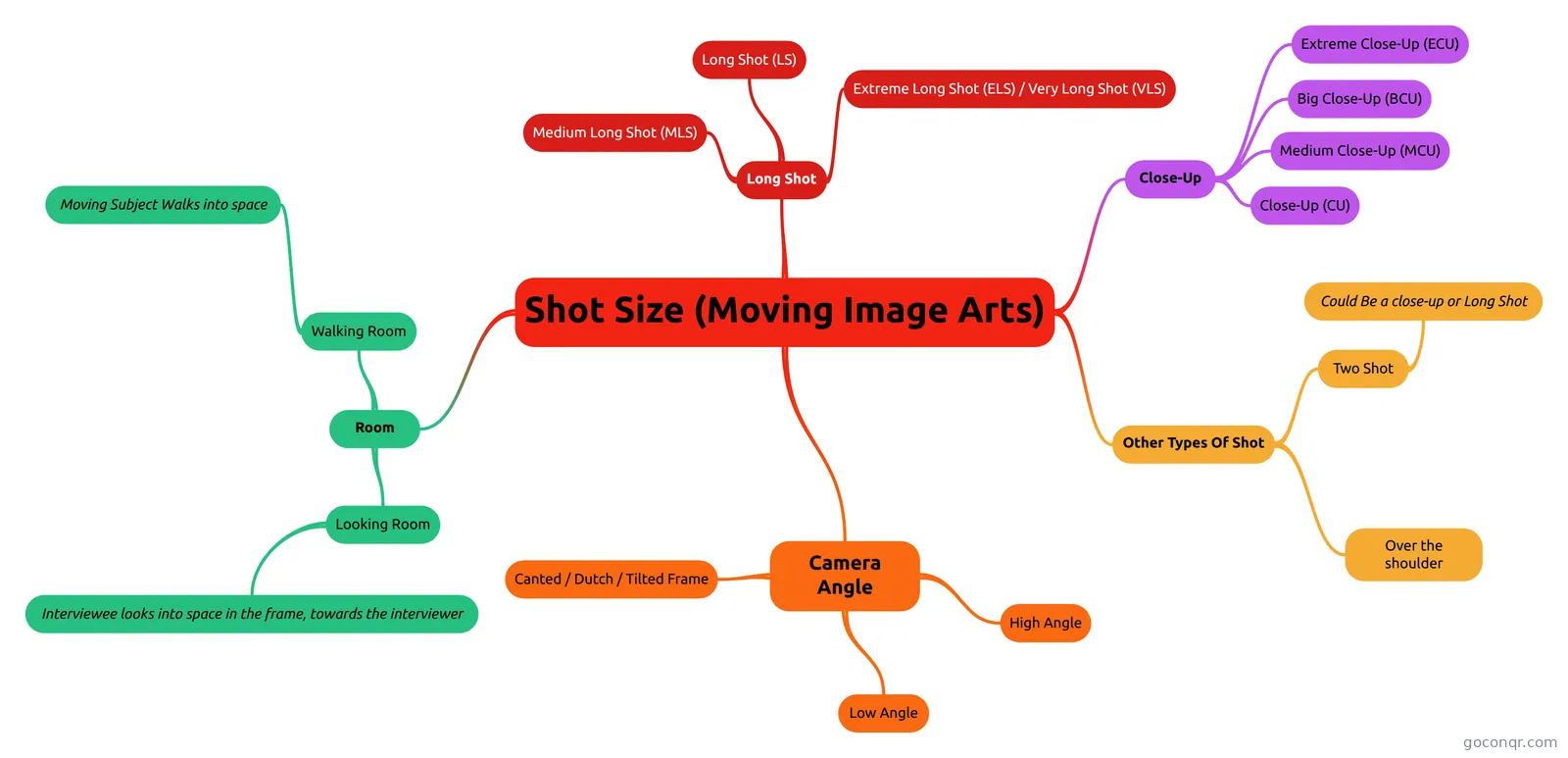
Flashcards
See all 19 flashcardsTopics in Cinematography and Camera Work
More Photography and film topics
About Cinematography and Camera Work
GoConqr OriginalWhat this unit covers
The resources here follow the main building blocks of cinematography. Shot types come first: extreme long shot, long shot, medium shot, close up, extreme close up and establishing shot. Then come camera positions such as low angle, high angle, eye level, point of view and over the shoulder. Framing, lighting and camera movement sit alongside them.
Where to start
- Open the quiz Camera Shots and Movements. It asks you to name shots, such as a long shot, and to say what a low angle shot does to the viewer.
- Read one of the mind maps titled Cinematography. They set out shot types, framing (rule of thirds, nose room, frame within a frame, tight framing), camera position and camera movement on a single page.
- Go through the flashcards Movement in Film, which cover pan, tilt, zoom, tracking or dolly shots, trucking, Steadicam and crane.
Using quizzes and maps together
Start with a map to see how the ideas connect, then take a quiz to test what stuck. If you miss a question on angles, return to the mind map on camera position, where low angle is linked to showing a character as inferior. The deck Camera Shots - What are the characteristics and uses of each? adds wide, point of view, aerial and worm's eye shots. The Camera Angles Quiz and the quiz on camera set and procedure give you more practice.
Going further
Other maps cover lighting, staging, single camera techniques and shot size. The Single Camera map is a worked production plan for a short piece called The 65th Hunger Games, with title, duration, synopsis and production concept. The deck on clamps and grips looks at practical kit.
Where this unit sits
This unit belongs to the Film and Video Production strand of Photography and film. Pick a resource that matches the point you are stuck on, and try making your own map or deck once you have worked through a few.
Frequently asked questions
Which resource should I open first?
Try the quiz Camera Shots and Movements. It tests shot names and the effect of angles such as the low angle shot, so you quickly see what you already know. Then open one of the Cinematography mind maps to fill any gaps in shot types, framing and camera position.
What do the mind maps cover?
Most of the mind maps are titled Cinematography and break the topic into shot types, framing, camera position and camera movement. Others focus on camera angles, lighting, staging, shot size and single camera techniques. Together they give a quick visual overview before you move on to quizzes.
Which flashcards help with camera movement?
The deck Movement in Film lists pan, tilt, zoom, tracking or dolly shots, trucking shots, Steadicam and crane, along with directions of movement such as left to right and toward the camera. The deck Camera Shots - What are the characteristics and uses of each? covers shot types.
Are these resources free to use?
Yes. Every resource on this page is free to open, study and take, with no account needed. They were made by GoConqr users, not by GoConqr itself. A free account also saves your quiz scores and lets you make your own quizzes, mind maps, flashcards and notes.
Who are these resources suitable for?
They suit school students revising shots and angles, university students who need to fill gaps, and teachers looking for ready-made material. Most resources are at secondary level, with a good share at university level, so you can pick the depth that fits you.
What if I can't find a topic I need?
Browse the other mind maps and flashcard decks on the page, as some cover lighting, staging or equipment such as clamps and grips. If your topic is still missing, you can build your own map or deck and use it for revision.