
Conditionals flowcharts
155 flowcharts by 112 users · Page 1 of 4
This Conditionals page on GoConqr gathers user-made flowcharts on zero, first, second and third conditionals. It offers school students ways to practise sentence patterns and gives teachers material to use in lessons. Explore over 40 flowcharts by more than 30 users and pick one to start with.
Select topic
- Zero Conditional198
- First Conditional348
- Zero and First Conditional173
- Second Conditional479
- First and Second Conditional155
- Zero, First and Second Conditional67
- Third Conditional368
- Second and Third Conditional75
- Mixed Conditionals69
- Real and Unreal Conditionals30
- Modal Verbs in Conditional Sentences11
- Conditional Conjunctions and Time Clauses9
- Inverted Conditionals5
- Wish and If Only61
Flowcharts
-
Unit 10. First and Second Conditionals .ING
-
Untitled
-
Untitled
-
SECOND CONDITIONAL
-
Conditionals.
-
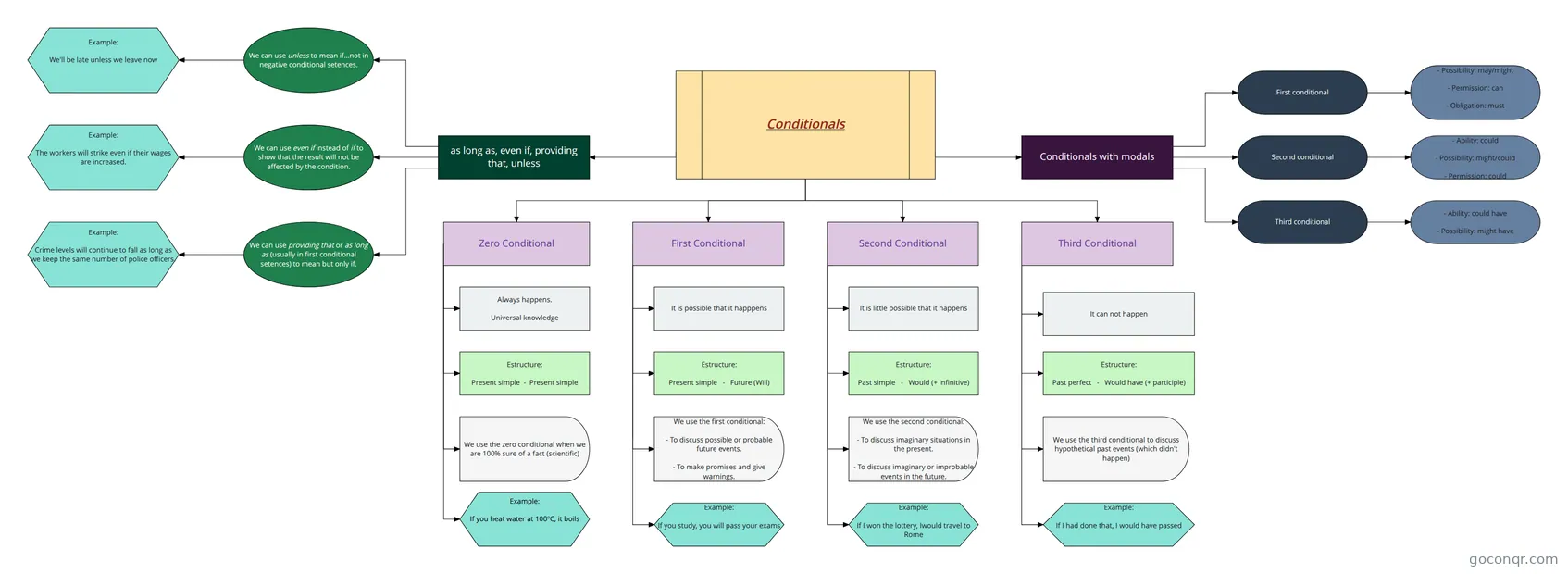 Conditionals - Jesús Valle Furtado Mapa conceptual realizado como trabajo de la 2º evaluación de inglés.
-
Untitled
-
Conditionals
-
First Conditional
-
1st conditional vs 2nd conditional
-
The 3rd Conditional. Leyda Natali Cervantes Martínez.
-
Concept Map. Conditionals
-
First and Zero Conditional
-
Untitled
-
Zero conditional
-
third conditional
-
mapa mental ( primer punto )
-
Untitled
-
ZERO CONDITIONALS
-
Untitled
-
CONDICIONALES
-
Untitled
-
Untitled
-
Untitled
-
Conditionals
-
Untitled
-
Untitled
-
Untitled
-
Untitled
-
Untitled
-
Lesson 10C
-
First or second conditionals
-
Untitled
-
3rd conditional
-
First and Second Conditional
-
Untitled
-
Untitled
-
Untitled
-
REGRETS AND PAST CONDITIONALS
-
Untitled
More Conditionals resources
About conditionals flowcharts
GoConqr OriginalUsing conditionals flowcharts
These flowcharts show different ways to organise conditional sentences. Concept Map. Conditionals introduces the four types and separates the condition clause from the result clause. It is a useful starting point if you want an overview before focusing on one type.
For a closer look, Zero conditional includes a present-tense pattern and an example about ice. First Conditional covers possible situations and their future consequences. Third Conditional sets out the clauses used for imagined past events. There are also flowcharts titled First and Second Conditional and Third and Mix conditional.
Revise with a chart
Follow the branches of a flowchart, then cover the sentence pattern and try to recall it. Return to the chart to check the clauses and examples. When you want a different way to practise, switch to a quiz or flashcards on the Conditionals unit page. Choose a flowchart and work through it at your own pace.
Frequently asked questions
Which flowchart is a good place to start?
Concept Map. Conditionals is a useful starting point because it introduces the four types and identifies the condition and result clauses. After looking at the overview, you can open a flowchart on a particular type, such as Zero conditional or Third Conditional, for a closer look.
What do the Conditionals flowcharts cover?
The collection includes flowcharts on zero, first, second and third conditionals, as well as charts that bring types together. For example, First Conditional covers possible situations and future consequences, while Third Conditional shows a pattern for imagined past events and their consequences.
Are these flowcharts free to use?
Yes. Every flowchart listed here is free to open and study without an account. The resources were made by GoConqr users, so you can explore different approaches to the same topic. A free account also lets you make your own flowcharts, quizzes, mind maps, flashcards and notes.