
Core Vocabulary
1,606 resources created by 773 users
This Core Vocabulary page on GoConqr gathers community-made quizzes, mind maps and flashcards for learners of Korean, Japanese, Mandarin and other languages, from adjectives and question words to food and jobs. It's built for school students revising word lists, with teachers in mind too, and a few university students and professional candidates will find it useful. There are over 1,500 resources here, including more than 110 quizzes and over 1,300 flashcards. Open a deck, try a quiz, then make your own.
Select topic
- Greetings and Introductions7
- Question Words9
- Numbers, Dates and Time19
- Family Vocabulary17
- Body Parts and Clothing9
- Colors7
- Nouns, Verbs and Adjectives35
- Food and Shopping Vocabulary26
- Home and Daily Activities10
- Animals6
- Weather and Natural Disasters10
- School and Occupations12
- Places, Directions and Travel16
- Korean Vocabulary in K-Pop Lyrics16
Top Core Vocabulary resources
-
10 questionsKorean Language Kpop Lyrics Quiz: EXO - Overdose Which word means "addiction" in Korean? It is pronounced (jungdog) in Korean.
-
9 questionsColors in Japanese What color is 赤 ( あか ) ?
-
12 cardsJapanese - Months Learn Kanji, kana, and roomaji for months in japanese
-
104 cardsPalestinian ALERT Week 1 This is …
-
89 cardsJapanese Vocab - week 3/4
-
98 cards100 MOST USEFUL KOREAN ADJECTIVES 100 MOST USEFUL KOREAN ADJECTIVES
-
115 cardsEPS-TOPIK Flashcard Lessons 6 - 10 Flashcards of Vocabularies
-
144 cardsGCSE Chinese Vocabulary words Unit 2 - characters and pinyin Pinyin and meaning - Edexcel GCSE Chinese Vocabulary words from Unit 2 of the Pearson edexcel textbook - Ho...
Quizzes
See all 140 quizzes-
10 questionsKorean Language Kpop Lyrics Quiz: EXO - Overdose Which word means "addiction" in Korean? It is pronounced (jungdog) in Korean.
-
9 questionsColors in Japanese What color is 赤 ( あか ) ?
-
11 questionsTaeyang (of Bigbang) -Eyes, Nose, Lips lyrics quiz 눈, 입, 코 means eyes, nose, lips.
-
9 questionsBTS - DNA lyrics quiz for Korean Learners Which one means " At first sight " in Korean?
-
20 questionsKOREAN VOCABULARY: QUIZ SET 1 Based on The book published by HRD Korea for EPS Topik aspirant worker
-
86 questionsDutch verbs - to English Type the correct English meaning for the Dutch verbs
-
48 questionsEPS-TOPIK 22 - 24 Quiz on Lessons 22 to 24
-
10 questionsGD x TAEYANG - Good boy lyrics quiz Which one means ' everyone together' in Korean?
Mind maps
See all 30 mind maps-
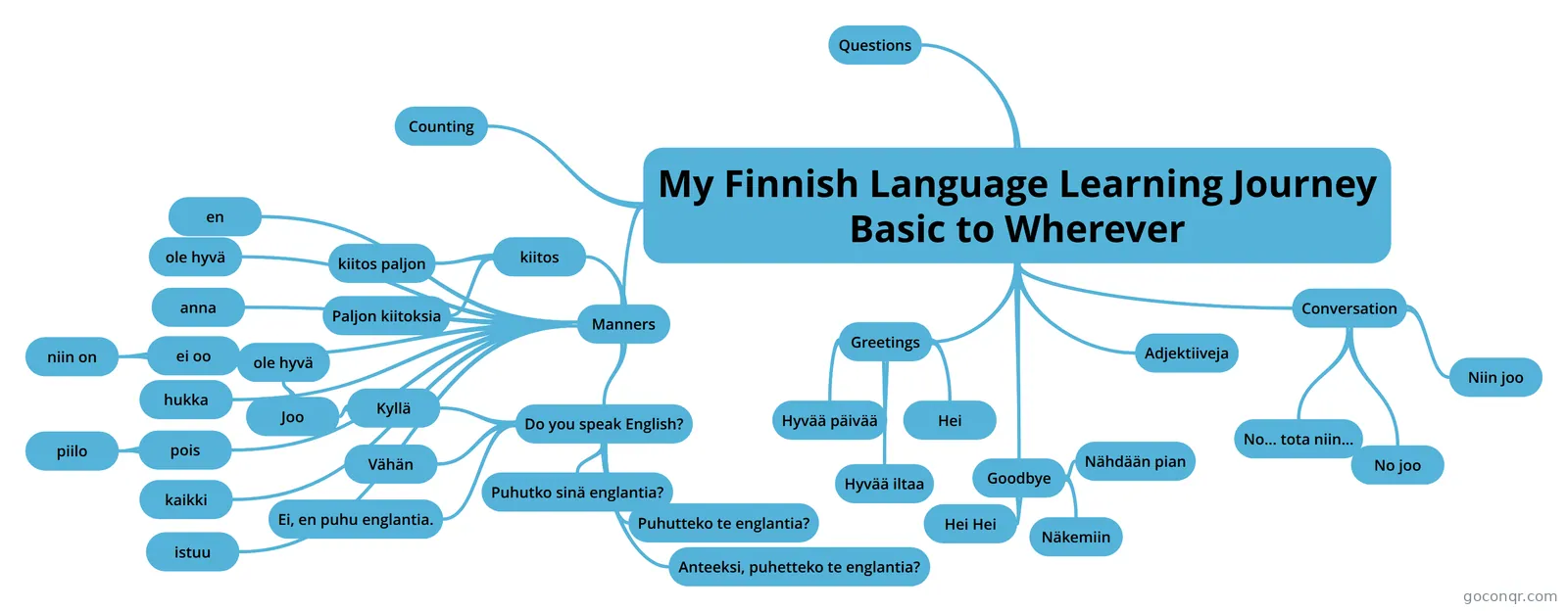 My Finnish Language Learning Journey Basic to Wherever This is my personal journey since I started studying Finnish two days ago.
-
 Chinese Vocabulary: 第一课
-
 Japanese Words
-
KRIM - LOVSYSTEM
-
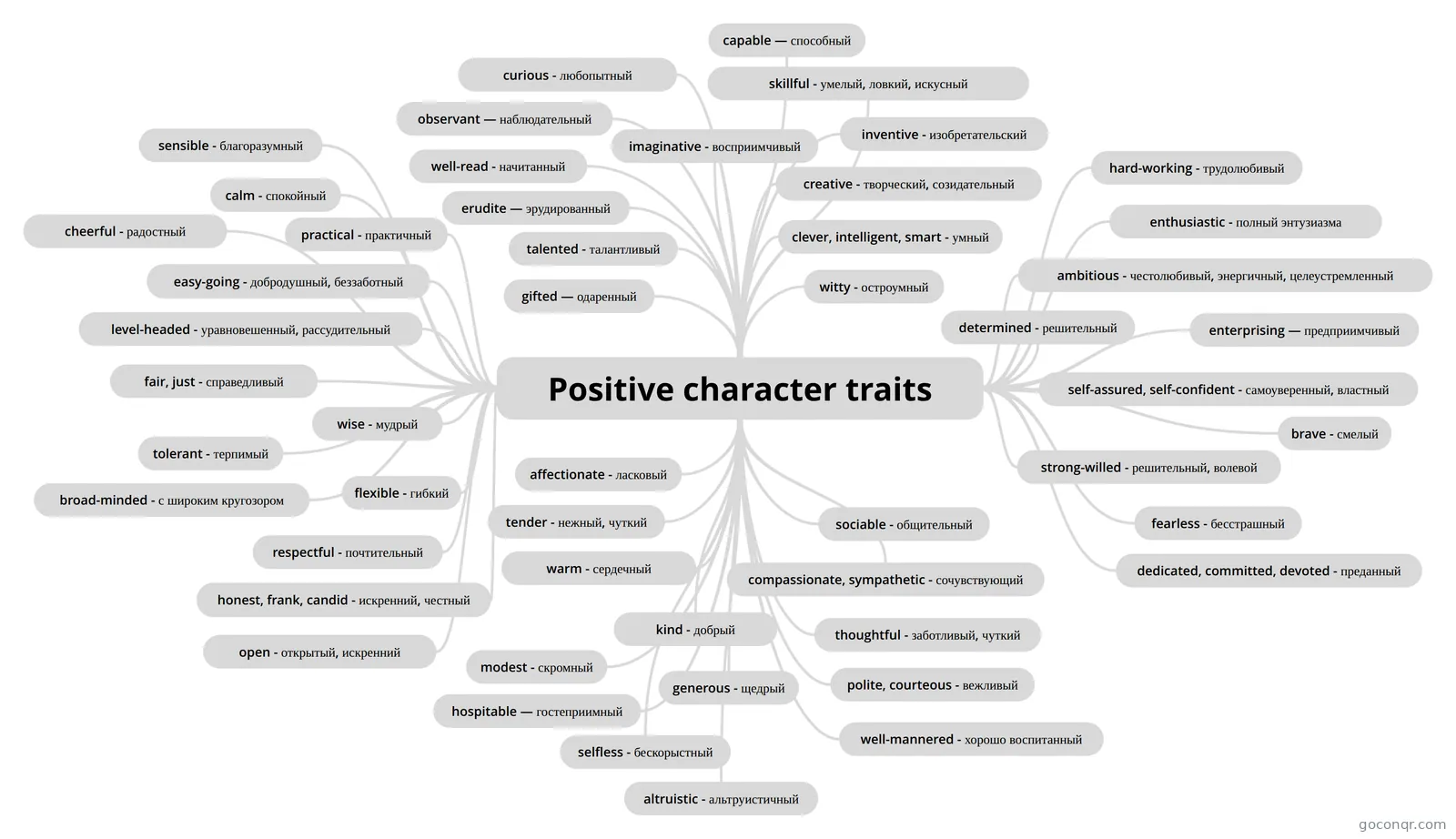 Positive character traits
-
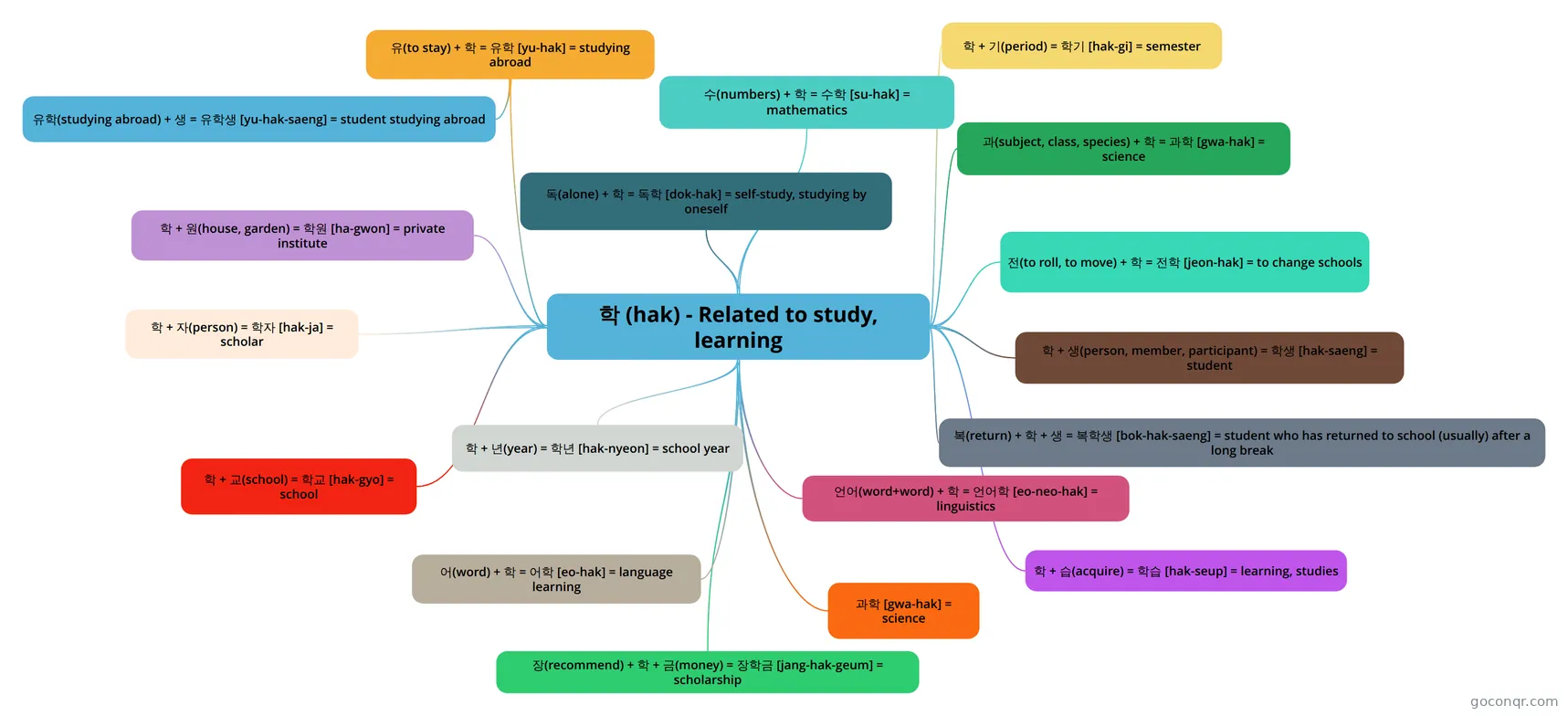 학 (hak) - Related to study, learning Korean Vocab Builder 1
-
About How Long どのぐらい/ごろ
-
가라앉다 From Yonsei vocabulary book. Only for personal study.
Flashcards
See all 1,423 flashcards-
12 cardsJapanese - Months Learn Kanji, kana, and roomaji for months in japanese
-
104 cardsPalestinian ALERT Week 1 This is …
-
89 cardsJapanese Vocab - week 3/4
-
98 cards100 MOST USEFUL KOREAN ADJECTIVES 100 MOST USEFUL KOREAN ADJECTIVES
-
115 cardsEPS-TOPIK Flashcard Lessons 6 - 10 Flashcards of Vocabularies
-
144 cardsGCSE Chinese Vocabulary words Unit 2 - characters and pinyin Pinyin and meaning - Edexcel GCSE Chinese Vocabulary words from Unit 2 of the Pearson edexcel textbook - Ho...
-
53 cardsKazakh Vocab 2 (weeks 3-4)
-
50 cardsUNIT 1 LESSON 15 - VOCAB - HOW TO STUDY KOREAN https://www.howtostudykorean.com/unit1/unit-1-lessons-9-16/lesson-15/
Notes
-
Unit 1 notes
-
Vocab Chapters 8-12 Ch. 8아침 morning/breakfast저녁 evening/dinner출석 attendance부석 I will call왜 why안 (do) not못 cannot아부서 (because) sick나우다 to be present전해주시겠어요 will you relay for me? (to relay)전해드리겠어요 I will deliver it. (to deliver)주다 to give...
-
Japanese Notes Japanese Hiragana Phone numbers Denwa - telephone Denwa desu - telephone! Denwa bangou - telephone number Denwa bangou wa? - What’s your phone number? Eeto… - umm Moshi moshi - hello (on the phone) Mou ic...
-
Crucial Vocabularies Chapter 1 hundred 百thousand 千ten thousand 万week 星期day 天today 今天year 年yesterday 昨天tomorrow 明天thanks 谢谢be born 出生happy birthday 祝你生日快乐!o'clock 点minute 分 quarter (of an hour) 刻fall short of 差now 现在morning (usually betwee...
-
Japanese Words + Usage
-
5. Basic Bootcamp - Vocab words and Grammar tips Vocab words and phrases Excuse me / I'm sorry - すみません (sumimasen) トイレわどこですか。- Where is the bathroom? (toire wa doko desu ka.) トイレ - bathroom (toire) わどこですか。- Where is...? (wa doko desu ka.) 駅 - train station (eki) ホテル...
-
Hobbies Hobbies 打球 da qiu to play ball 看 kan to look; to watch; to see 电视 dian shi TV 电影 dian ying movie 书 shu books 唱歌 chang ge to song (s...
-
KOREAN 2 NATIVE NUMBERS- use it in hours and informal age1-하나2-둘3-셋4-넷5-다섯6-여섯7-일굽8-여덟9-아홉10-열20-스물30-서른40-마흔50-쉰60-예순70-일흔80-여든90-아흔-열여덟살 이에요.-스물살 이에요.-예쁜 나이 스물 다섯살. NEGATIVE (2WAYS)
Slides
Topics in Core Vocabulary
More Other languages (Catalan, Galician, Basque, Romanian, Asian...) topics
About Core Vocabulary
GoConqr OriginalWhat you will find here
This unit sits in the Vocabulary by Topic strand of Other languages. Most of what is listed is Korean, with a lot of Japanese and Chinese beside it, plus single sets for Kazakh, Irish, Urdu, Swahili, Turkish, Dutch and more. The resources were made by GoConqr users, and all of them are free to open and study.
Where to start
If you are new to a language, begin with a flashcard deck on everyday words. Good picks are 100 MOST USEFUL KOREAN ADJECTIVES, Food Vocabulary - Mandarin and Japanese Question Words. They give you short, topic-based lists such as feelings, drinks, places in school and words like who, when and where.
- Work through one deck until the words feel familiar.
- Take a quiz on the same theme.
- Return to the words you missed.
Exam-linked sets
Some decks and quizzes name their exams. EPS-TOPIK Flashcard Lessons 6 - 10 covers jobs and places such as doctor, driver, farmer and dorm. There is also an EPS-TOPIK quiz, a JFT BASIC quiz and GCSE Chinese Vocabulary words Unit 2 - characters and pinyin, which lists school subjects and rooms with characters. Check these against your own course, as they are learner-made.
Learning through songs
The quizzes on K-pop lyrics turn songs into vocabulary practice. The BTS - DNA quiz asks what a Korean phrase means, for example 첫 눈에 for at first sight. Others use songs by EXO, TWICE, BlackPink and Lee Hi. They suit learners who remember words better with a tune.
Using quizzes and maps together
Quizzes show which words you do not yet know. Mind maps then help you group them, such as the map on positive character traits or the one on the Korean syllable 학, which relates to study. Teachers can set a deck as a starter or a quiz as a quick check.
Pick a language that interests you, open one set, and see how far a short session takes you.
Frequently asked questions
Which resource should I open first?
For Korean, try 100 MOST USEFUL KOREAN ADJECTIVES, which covers feelings, weather and descriptions. For Mandarin, Food Vocabulary - Mandarin is a gentle start, and for Japanese, Japanese Question Words. Each gives short, practical lists you can follow with a quiz once the words feel familiar.
Are the resources free to use?
Yes. Every resource on this page is free to open, study and take, with no account needed. They were made by GoConqr users rather than by GoConqr itself, so it is worth checking a set against your own course or textbook.
Which exams do these resources mention?
The listed sets mention EPS-TOPIK, TOPIK, JFT-Basic, JLPT N5, GCSE Chinese and AP Chinese. Examples include the EPS-TOPIK flashcard lessons, an EPS-TOPIK quiz, a JFT BASIC quiz and a GCSE Chinese vocabulary deck. Treat them as practice material beside your official course.
What do the mind maps cover?
The mind maps are fewer than the quizzes and flashcards, but they are varied. Examples include Japanese Words, Positive character traits, a map on the Korean syllable 학 linked to study, and one on how long in Japanese. They help you group words and see links between them.
Can I make my own set if my language is missing?
Yes. A free account lets you save quiz scores and create your own quizzes, mind maps, flashcards and notes. The page already lists sets for many languages, but you can add the word lists your class is using.