
Numbers and Counting
64 resources created by 56 users
This Numbers and Counting page on GoConqr gathers community-made quizzes, mind maps, flashcards and notes for learning to count in many languages, from Kannada, Chinese and Japanese to Korean, Arabic, Urdu and Maltese. It's built for school students practising number words and counters, and for teachers after ready-made material. There are more than 50 resources here, including 2 quizzes, 2 mind maps and over 50 flashcard decks, made by over 50 contributors. Pick a deck, try a quiz to find your gaps, then make your own.
Top Numbers and Counting resources
-
15 cardschapter 3 from Genki 1 :beginner chapter 3
-
5 questionsNumbers in Kannada Count the number of fruit in the image.
-
10 cardsNumbers 81-90
-
20 cardsArabic Numbers 1-10 + 1st-10th Egyptian Arabic Numbers
-
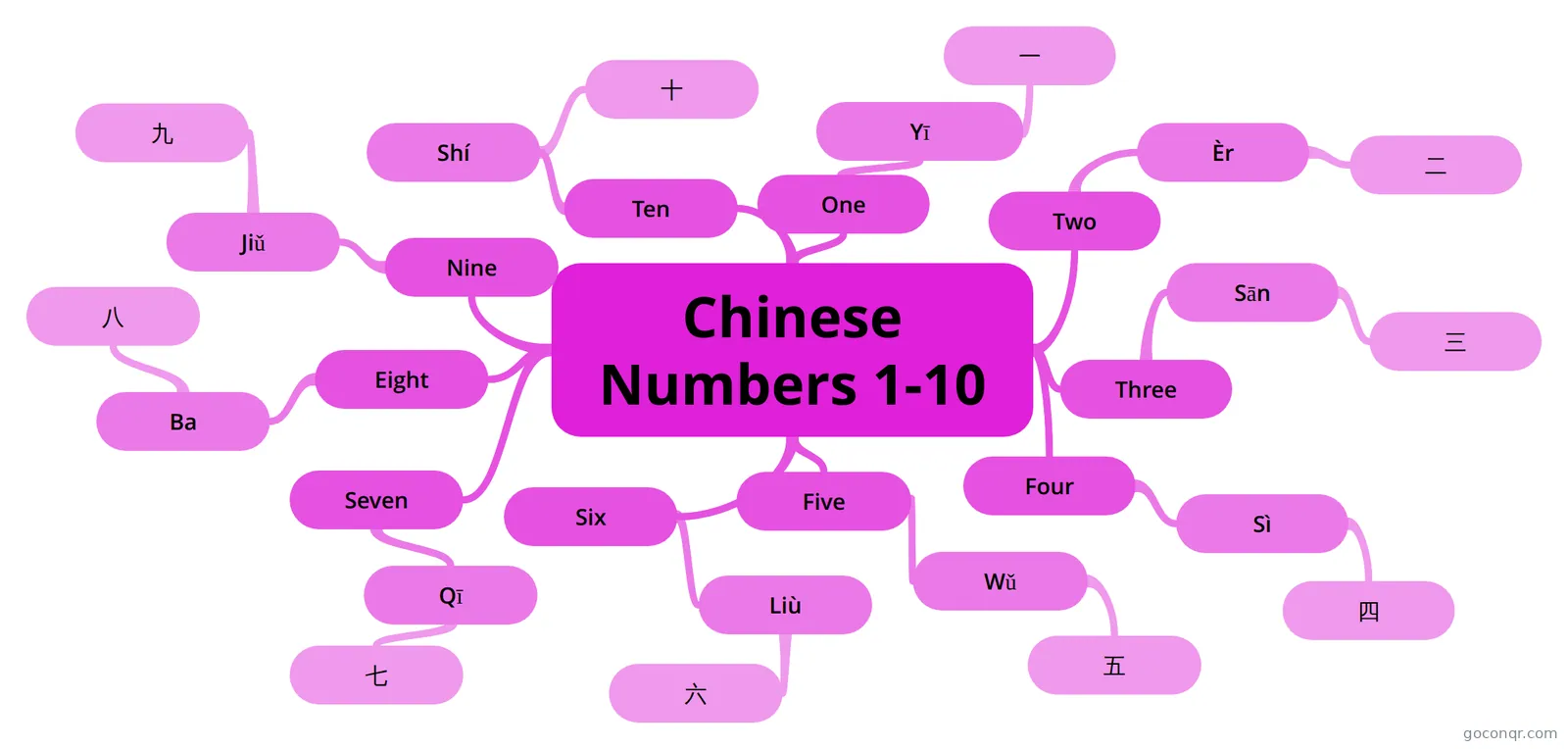 Mind map Chinese Numbers 1-10 Chinese numbers build on themselves, meaning, once you know the numbers 1-10 you would be able to count to ...
-
10 cardsKorean numbers 1-10
-
24 cardsASL Classifiers
-
34 cardsNumbers in Lebanese Arabic
Quizzes
Mind maps

Flashcards
See all 57 flashcards-
15 cardschapter 3 from Genki 1 :beginner chapter 3
-
10 cardsNumbers 81-90
-
20 cardsArabic Numbers 1-10 + 1st-10th Egyptian Arabic Numbers
-
10 cardsKorean numbers 1-10
-
24 cardsASL Classifiers
-
34 cardsNumbers in Lebanese Arabic
-
58 cardsUrdu - English 1.2 Cardinal Numbers
-
57 cardsCounting & Numbers
Notes
Slides
Topics in Numbers and Counting
More Other languages (Catalan, Galician, Basque, Romanian, Asian...) topics
About Numbers and Counting
GoConqr OriginalWhat this page covers
This page sits in the Vocabulary by Topic strand of Other languages (Catalan, Galician, Basque, Romanian, Asian...). Almost everything here is about number words, written forms and the little words that go with them. Most resources are flashcard decks, with a few quizzes, mind maps, a note and a slide set.
Where to start
Begin with the small sets. The Chinese Numbers 1-10 mind map shows each number with its pinyin and character, from Yī 一 to Shí 十. The Korean numbers 1-10 deck gives hana, dul, set and on up to yeol, with the Hangul beside each one. The Arabic Numbers 1-10 + 1st-10th deck adds ordinals, so you can learn first, second and third alongside one, two and three.
Going further
- Japanese: Japanese Words Lesson 2: Numbers runs from zero up to very large numbers, and Counters covers forms such as ~枚 for flat objects and ~冊 for books.
- Korean: Native Korean numbers and Sino Korean Numbers let you compare the two systems side by side.
- Other scripts: Numbers 81-90 pairs Bengali numerals with English, and Hungarian Numbers: 11-19 tackles the teens.
- Sign language: ASL Classifiers lists handshapes from CL: 1 to CL: S.
Using quizzes and maps together
Read a mind map first, then test yourself. The quiz Numbers in Kannada asks you to count fruit in an image and pick the right word, such as āru for 6 or ēraḍu for 2. Use the Chinese mind maps to learn the pattern, then check it by recall without looking. Teachers can set one deck as a starter task and a quiz as a quick check.
Make it your own
Choose a language, work through one deck, and then build your own flashcards for the numbers you keep missing.
Frequently asked questions
Which resource should I open first?
Try the Chinese Numbers 1-10 mind map or the Korean numbers 1-10 flashcards. Both are short, show each number in its own script with a pronunciation guide, and give you a quick win before you move on to larger numbers or counters.
Which languages are covered?
The listed resources include Kannada, Chinese, Japanese, Korean, Arabic, Urdu, Thai, Hindi, Maltese, Hungarian, Swedish and Azerbaijani, plus Bengali numerals and ASL classifiers. Some decks cover only 1 to 10, while others go into the hundreds and beyond.
What are the counter decks for?
Counters such as Japanese ~つ, ~枚 and ~冊 are the words used with numbers for different kinds of objects. The Counters, Korean Counters and Counting People decks help you practise which one goes with books, flat items or people.
Are the resources free to use?
Yes. Every resource listed here is free to open, study and take, with no account needed. They were made by GoConqr users, not by GoConqr itself. A free account also saves your quiz scores and lets you make your own quizzes, mind maps, flashcards and notes.
Who is this page for?
It suits school students learning number words in a new language and teachers looking for ready-made material. Most resources are general in level, so you can use them whatever your course, then pick the language and size of set that fits.
What if my language or number range is missing?
Look through the other decks first, as many follow the same pattern. If you still can't find what you need, you can build your own flashcards or mind map for that language and range.