
Grammar and Sentence Structure
91 resources created by 61 users
This Grammar and Sentence Structure page on GoConqr gathers community-made quizzes, mind maps, flashcards, notes and slides on how languages put words together, from Korean particles and Japanese verb conjugation to Arabic roots, Irish tenses and Afrikaans plurals. It's for university students filling gaps, school students revising a topic, and teachers after ready-made material. There are over 240 resources here, including more than 50 quizzes, 50 mind maps and 100 flashcards. Pick a language, try a quiz to spot your gaps, then open a mind map to tidy up the rules.
Top Grammar and Sentence Structure resources
-
51 cardsAfrikaans meervoude, selfstandige naamwoorde, trappe van vergelyking, byvoeglike naamwoorde, ontkennende vorm, toekomende tyd, verlede tyd How do you make a word plural in Afrikaans when: a word has a short vowel?
-
58 cardsKorean Grammar test If it is a subject in a sentence and ends in a consonant the particle is
-
10 questionsVIXX-Error lyrics quiz Which one means "emotions" in Korean?
-
10 questionsEXO- Love Me Right Lyrics Quiz Which one means ' to the end of the moon ' in Korean?
-
27 cardsKorean grammar - Beginner to low-intermediate 몆 나는 사과 몆 개를 샀어
-
44 cardsEsperanto Affixes List of Esperanto affixes
-
41 cardsEsperanto Affixes and Suffixes
-
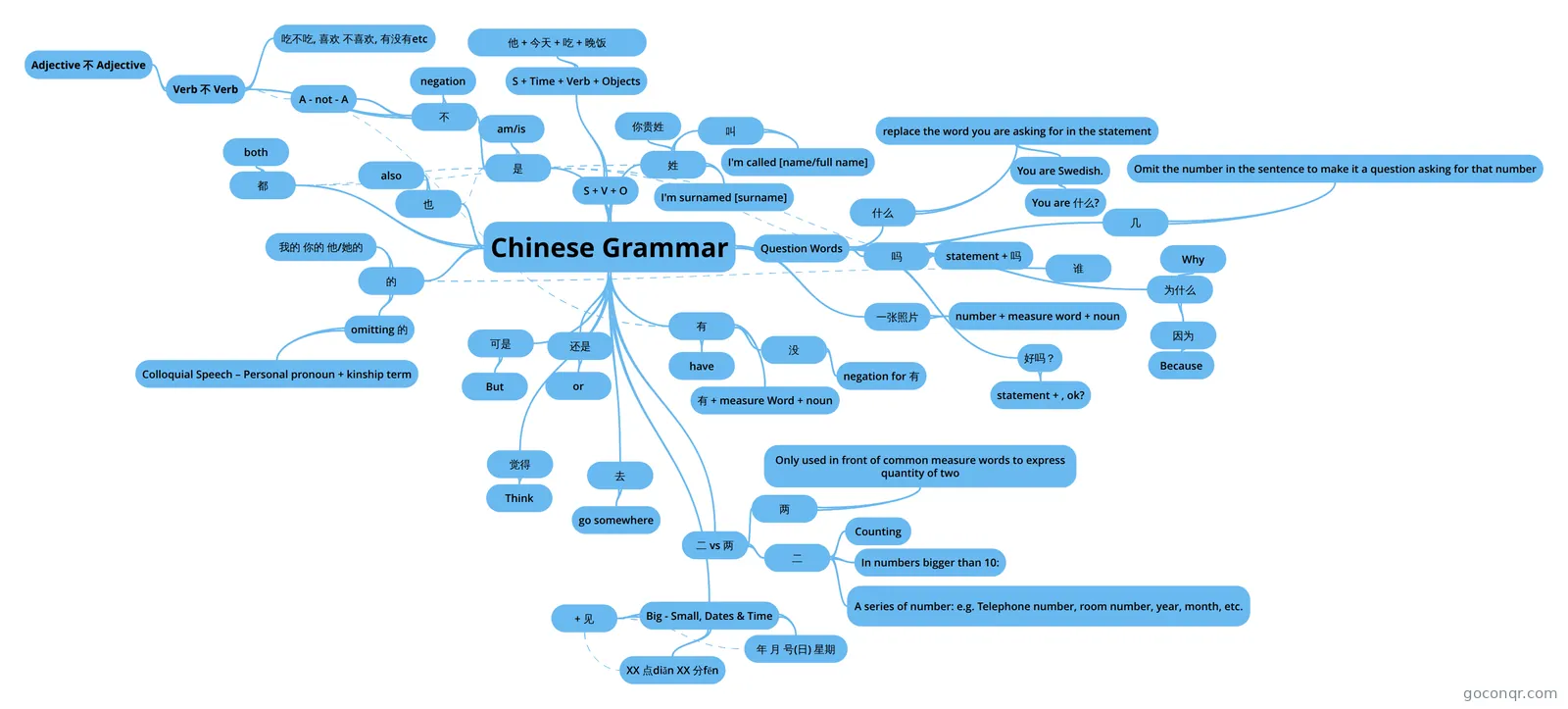 Mind map Chinese Grammar
Quizzes
See all 36 quizzes-
10 questionsVIXX-Error lyrics quiz Which one means "emotions" in Korean?
-
10 questionsEXO- Love Me Right Lyrics Quiz Which one means ' to the end of the moon ' in Korean?
-
7 questions3 Letters Root System of Arabic Words ( Fel and Ism ) He eats أَكَل , do you know which one is the عaen letter in this word. Remember that according to our root ...
-
12 questionsKorean Grammar Basics Korean sentence structure : The verb comes last.
-
28 questionsArabic grammar English exam What is harakah
-
10 questionsBTS - RUN lyrics quiz for Korean learners Which one means ' sun' in Korean?
-
9 questionsSEVENTEEN - Don't Wanna Cry lyrics quiz " 울고 싶지 않아. " means " I don't wanna cry."
-
10 questionsBigBang - We Like 2 Party lyrics quiz Which one means ' friends' in Korean?
Mind maps
See all 14 mind maps-
Chinese Grammar
-
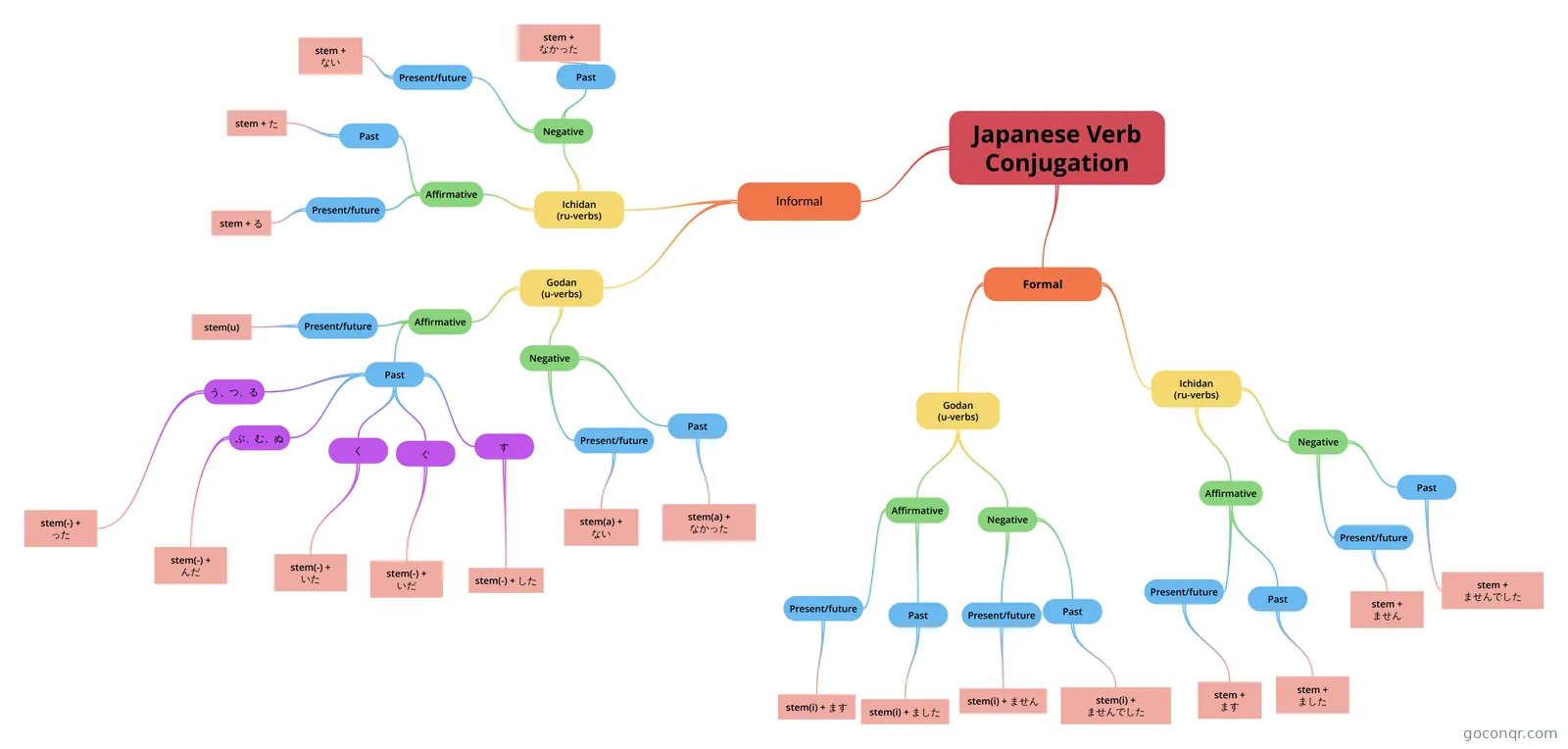 Japanese Verb Conjugation Only covers u-verbs and ru-verbs (no irregular), affirmative and negative + past and present/future (no pot...
-
Japanese Language
-
Polish cases (nouns)
-
Tagalog Map A map for learning Tagalog
-
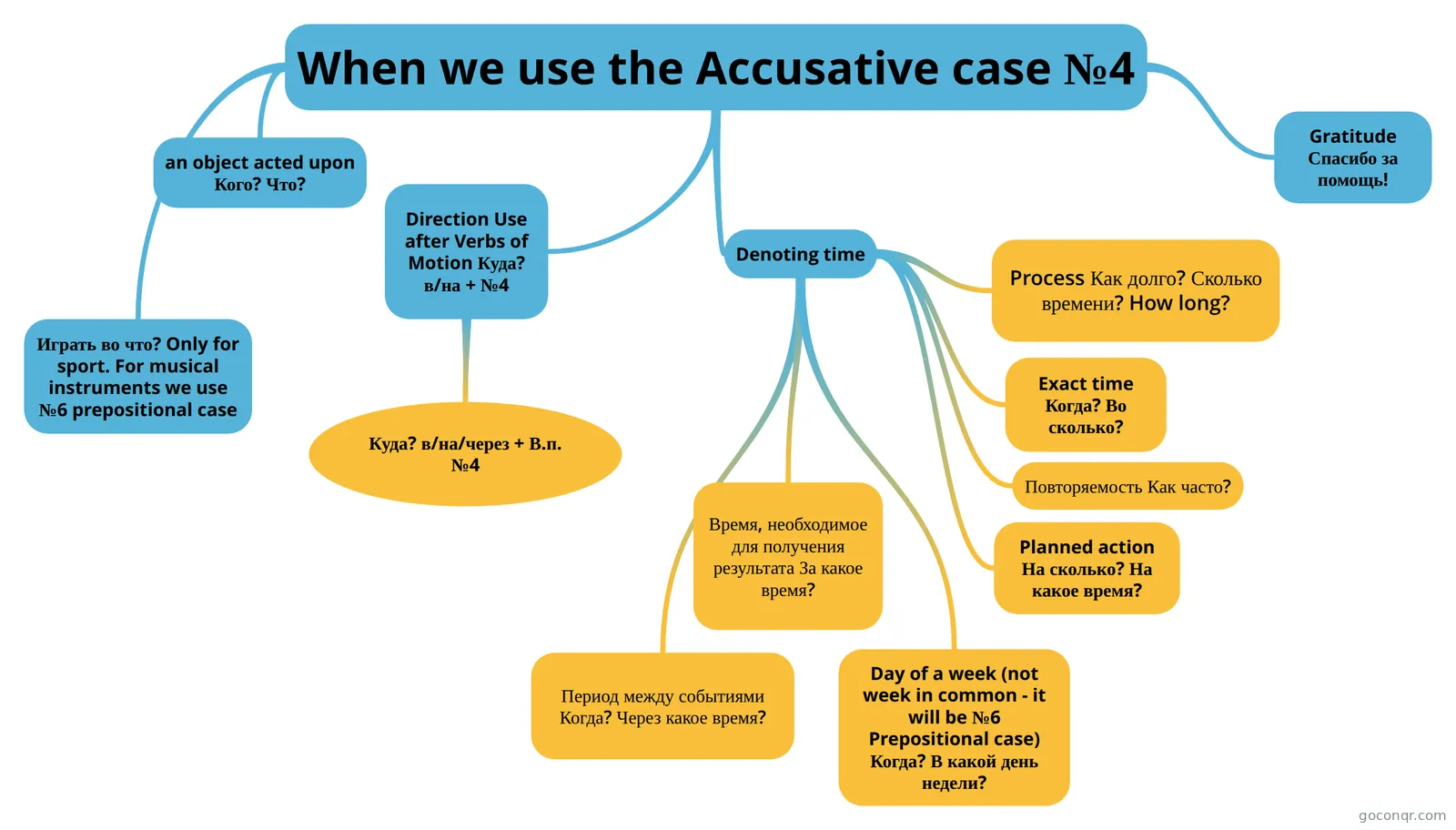 When we use the Accusative case №4 Which case we use the Accusative case? I hope to answer it at this mindmap
-
Nahw
-
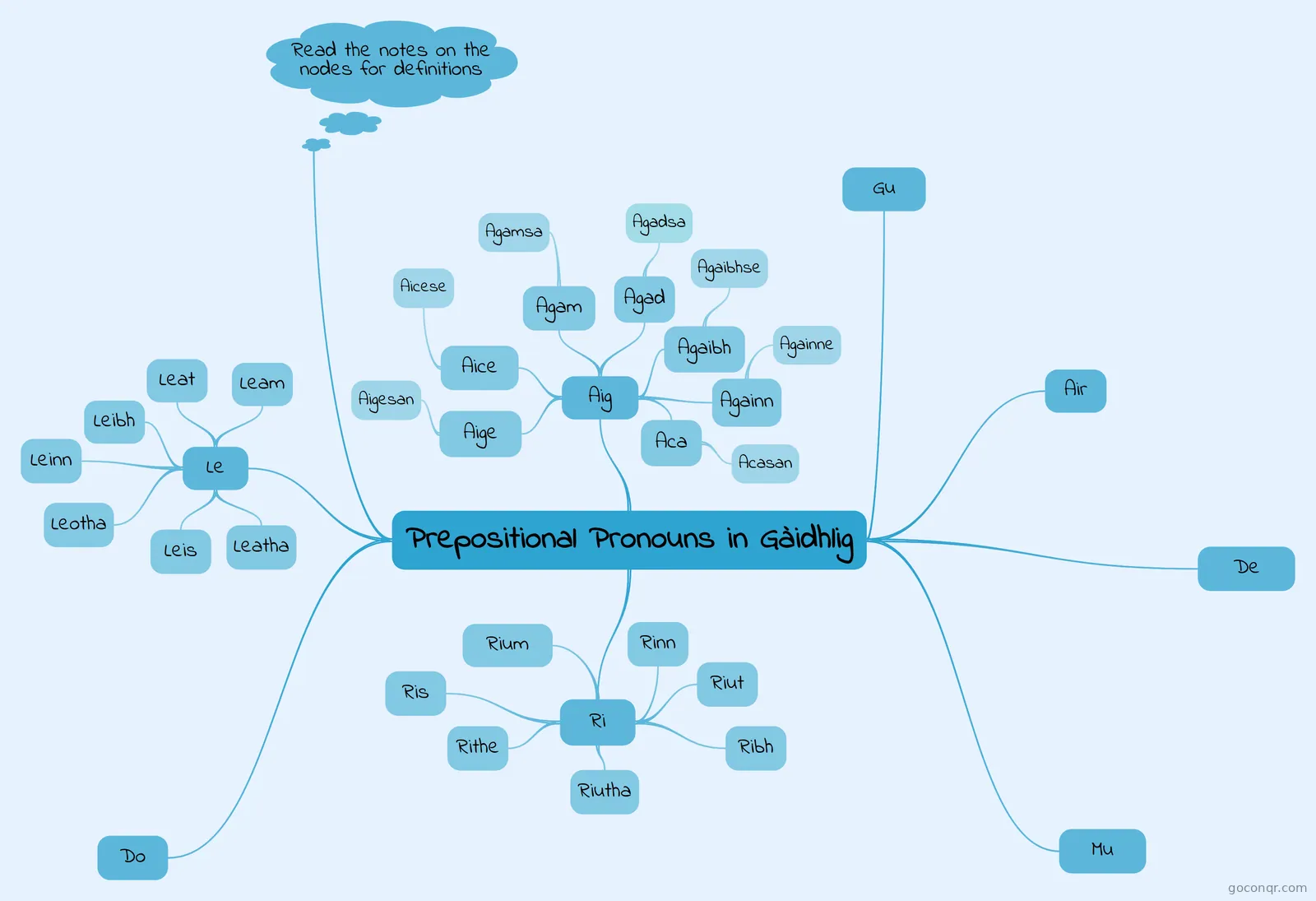 Prepositional Pronouns in Gàidhlig The preposition Aig and its pronoun forms.
Flashcards
See all 27 flashcards-
51 cardsAfrikaans meervoude, selfstandige naamwoorde, trappe van vergelyking, byvoeglike naamwoorde, ontkennende vorm, toekomende tyd, verlede tyd How do you make a word plural in Afrikaans when: a word has a short vowel?
-
58 cardsKorean Grammar test If it is a subject in a sentence and ends in a consonant the particle is
-
27 cardsKorean grammar - Beginner to low-intermediate 몆 나는 사과 몆 개를 샀어
-
44 cardsEsperanto Affixes List of Esperanto affixes
-
41 cardsEsperanto Affixes and Suffixes
-
6 cardsWord Formation in Serbian WHAT IS WORD FORMATION? Critic?
-
9 cardsArabic Grammar Object Pronouns (Suffixes) A deck of flashcards for Arabic object pronouns.
-
8 cardsJapanese Grammar
Notes
See all 11 notes-
Korean Grammar Syllabus BEGINNER■ Introduction to the Korean Language 1. Korean Sentence Structure2. Conjugation of Verbs and Adjectives3. Connecting Sentences4. Sentence Types5. Honorific Expressions■ Getting Ready01 이다 (to be)02 있다 (t...
-
Untitled_7 Maltese Adjectives Learning the Maltese Adjectives is very important because its structure is used in every day conversation. The more you practice the subject, the closer you get to mastering the Maltese language. Bu...
-
Hindi Nouns Nouns - संज्ञा (sangya) There are mainly 3 types of Nouns in hindi. Let's go on each one of them. P.S - You may read the "ADVANCED NOTES" for more on this. Proper Noun - व्यक्तिवाचक संज्ञा (vakti-vachak sangya)
-
8- Grammar Notes Grammar Notes: Detailed grammar notes أَهْلاً وَسَهْلاً. Hello هَذِهِ بِطاقَةُ هُوِيَّتِي. This is my ID card. Notes: Verb to be is not explicitly mentioned in the sentence but it’s implied in such form (subject هَذِه...
-
Place Words Place Words Words like saki, mae, usiro, mukoo, and aida are nominals which designate location. saki refers to an area up ahead, on the same...
-
Word Order Major Sentences Examining major sentences (which do not include inverted sentences, minor sentences, or fragments) reveals to following facts about word order in Japanese: Sentences end in a predicate that may or...
-
An Integrated Approach To intermediate Japanese Chapter 1 Grammar VばかりTo have just done something大学に入ったばかりだから、十八歳でしょう。あの~Both speaker and listener are familiar with the subjectVようになるIndicates a change will take place漢字を勉強しなければ、日本語の新聞が読めるようになりません。〜なあVところAbout to do ...
-
Lesson 01 Class Notes (Amanda) Lesson 01Speaking Korean ** 90% of Korean grammar is endings markers / particles verb conjugations Subject markers 은 / 는 only connect to nouns important because Korean sentences do not have to always be in the same or...
Slides
More Other languages (Catalan, Galician, Basque, Romanian, Asian...) topics
About Grammar and Sentence Structure
GoConqr OriginalWhat this page covers
The resources here are about grammar in languages beyond the big European ones. Korean is especially well represented, but you will also find Japanese, Chinese, Arabic, Irish, Hindi, Dutch, Afrikaans, Thai, Welsh and more. The material is made by GoConqr users, so the style varies from tidy summaries to quick class notes.
Where to start
If you are new to a language, begin with an overview. The Chinese Grammar mind map walks through S + V + O order, question words and negation with 不. The Japanese Verb Conjugation mind map sets out godan and ichidan verbs, with informal and formal forms, present and past. For Korean, the Korean Grammar Syllabus note lists beginner topics such as sentence structure, conjugation, connecting sentences and honorifics.
Then practise the details
- Open a map to see the pattern as a whole.
- Work through a flashcard deck on one point, such as Japanese Particles or Korean Grammar - Particles.
- Take a quiz, such as Korean Grammar Basics or Basic Japanese Grammar Quiz, and note what you miss.
- Go back to the map and fix those gaps.
The Afrikaans meervoude deck is a good example of focused drilling, with plural formation questions on words like ster and vis. The Word Formation in Serbian deck covers prefixation, suffixation and compound words.
Learning through lyrics
Several quizzes use song lyrics, such as EXO- Love Me Right Lyrics Quiz. They ask what a Korean word or phrase means and break it into parts. They suit learners who already know some vocabulary and want grammar in context.
Where this fits
This unit sits in the Grammar strand of Other languages (Catalan, Galician, Basque, Romanian, Asian...). Most resources are general or university level, with a smaller share at secondary level. Pick one language, try a quiz, then build your own maps and flashcards for the rules that trip you up.
Frequently asked questions
Where should a beginner start?
Start with a mind map for an overview. The Chinese Grammar map covers word order, question words and negation, while the Japanese Verb Conjugation map shows verb groups and tenses. Korean learners can read the Korean Grammar Syllabus note, then try the Korean Grammar Basics quiz.
Which languages are covered?
Korean and Japanese appear most often, alongside Chinese, Arabic, Irish, Hindi, Dutch, Afrikaans, Thai, Welsh, Georgian, Serbian, Polish and Esperanto. Coverage differs by language, so check the titles for the topic you need, such as particles, cases or verb tenses.
Are the resources free to use?
Yes. Every resource listed here is free to open, study and take, with no account needed. They were made by GoConqr users, not by GoConqr itself. A free account also saves your quiz scores and lets you make your own quizzes, maps, flashcards and notes.
What are the lyrics quizzes for?
They help Korean learners meet grammar and vocabulary in real phrases. Questions ask what a word or casual expression means, often with a breakdown of its parts. The quiz on BTS - RUN is one example. They work best once you know some basics.
Who are these resources for?
They suit university students filling gaps, school students revising a topic, and teachers looking for ready-made material. Students can practise particles, verb forms, word order and cases. Teachers can pick decks, quizzes or notes to share with a class.
What if my language or topic is missing?
Browse nearby titles first, as a map or note on a related point may help. If nothing fits, you can make your own quiz, mind map, flashcards or notes with a free account, and shape them around the rules you are learning.