
Hypothesis Testing mind maps
42 mind maps by 34 users · Page 1 of 2
This Hypothesis Testing page gathers community-made mind maps on chi-square, correlation and statistical tests. It is for university students practising how to choose and interpret tests, and teachers looking for ready-made material. There are over 40 mind maps from more than 30 users, mostly at university level. Choose a map to begin.
Mind maps
-
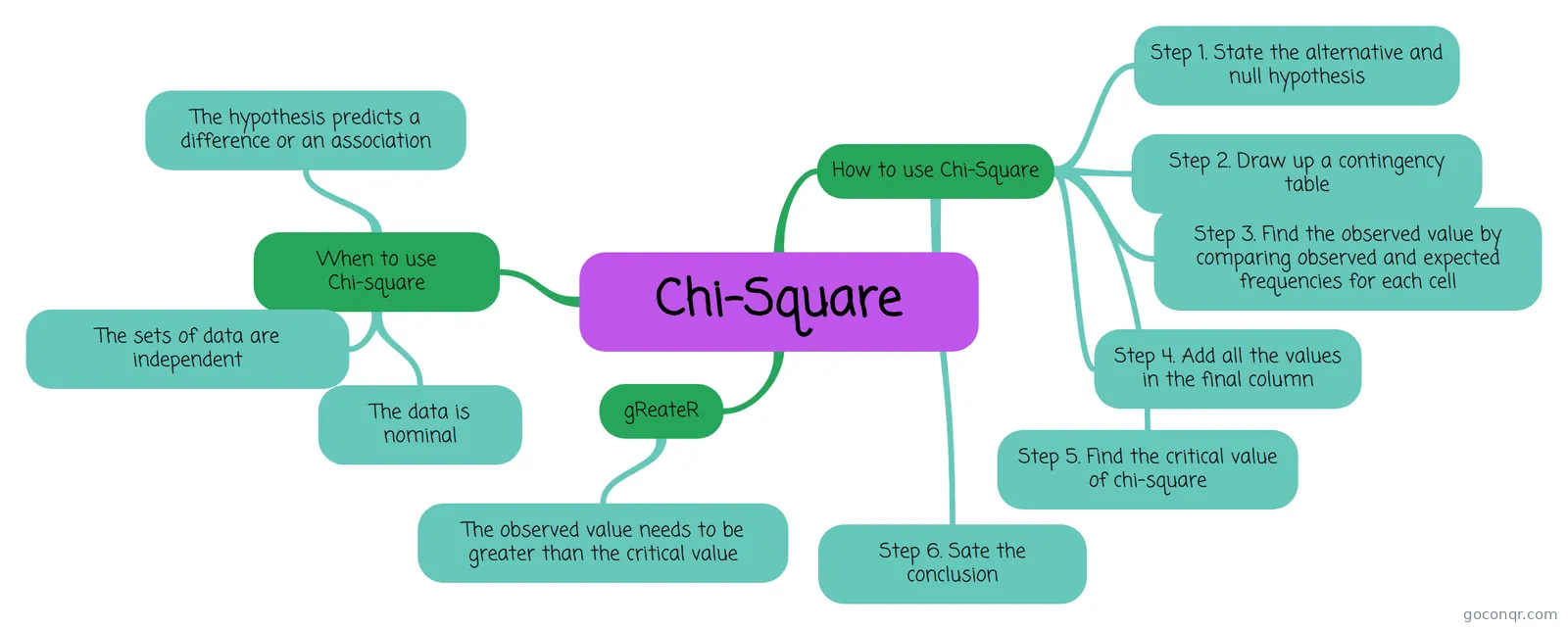 Chi-Square
-
Anova
-
Nonparametric statistics
-
Statistics
-
Types of Tests
-
Dependent (related) t-test
-
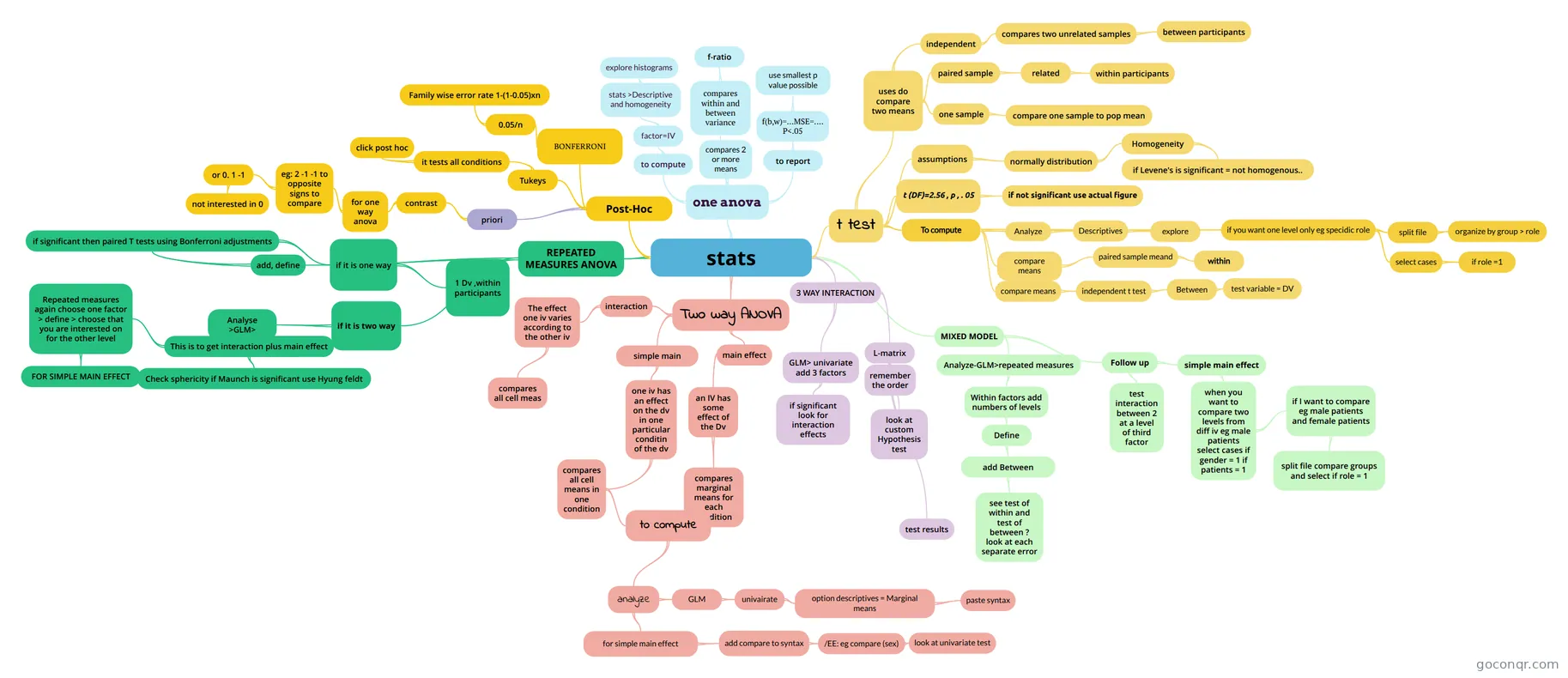 stats anova for stats
-
hypothesis testing
-
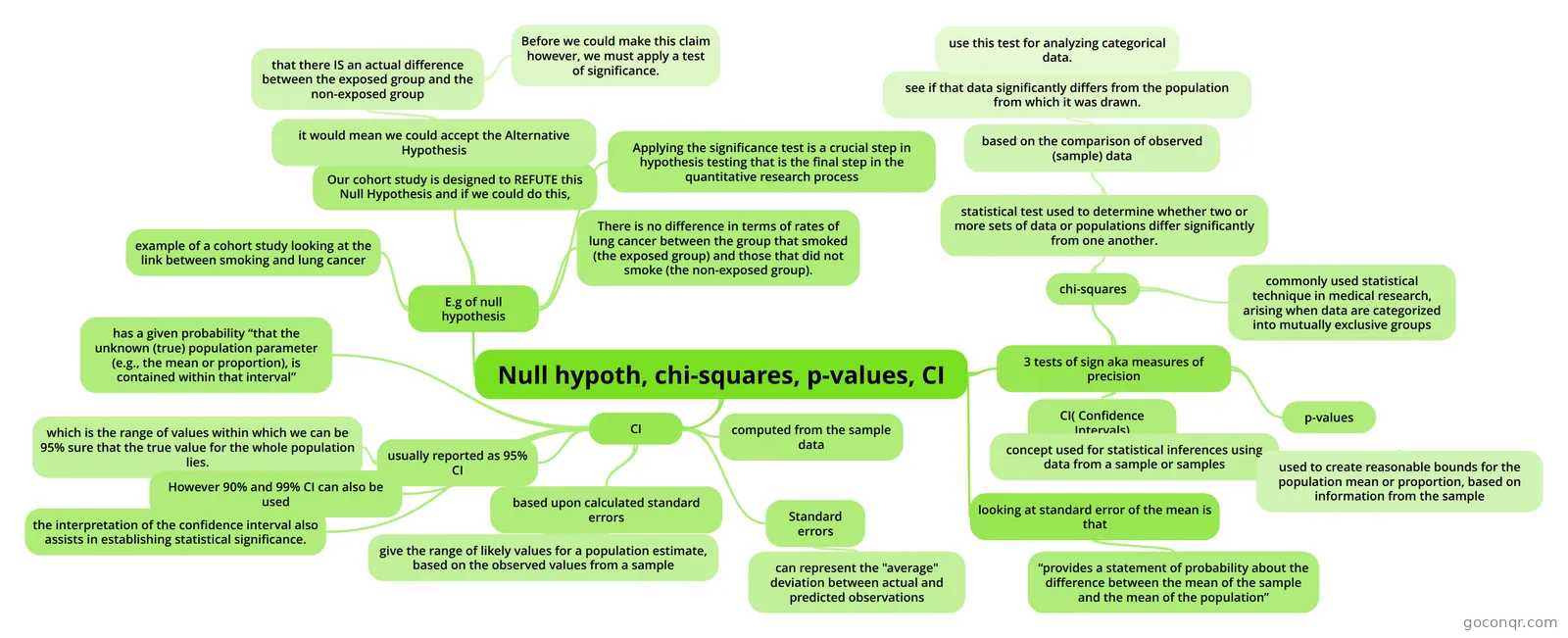 Null hypoth, chi-squares, p-values, CI
-
Statistics Tests
-
Hypothesis Testing
-
Nominal Data
-
Hypothesis Testing – One Tail and Two Tail Tests
-
The Student T-test
-
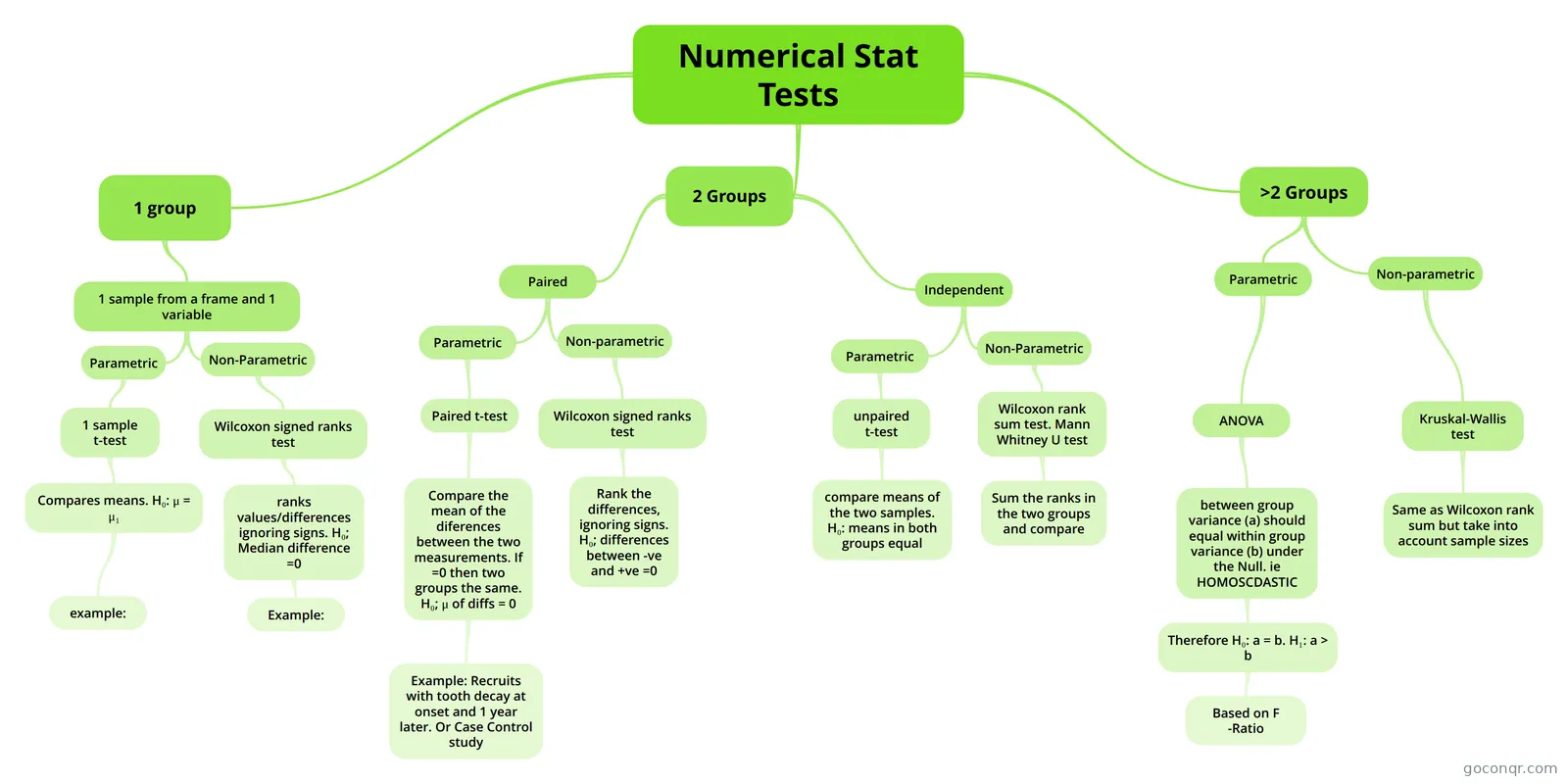 Numerical Stat Tests
-
Chapter 10 : One-Sample Tests of Hypothesis
-
Overview: Compare 2 Population Proportions
-
Statistics Week 4
-
STAT 200 - Association Between Two Categorical Variables
-
Compare 2 Population Proportions
-
Non-Parametric Tests of Difference
-
Chapter 11 : Two-sample Tests of Hypothesis
-
Independent T-test
-
Pearson Correlation
-
Null + Alternative Hypothesis
-
Hypothesis Testing
-
Null and alternative hypothesis
-
Statistics
-
Statistical Analysis
-
Single Population Proportion
-
Null hypothesis significance testing
-
Introduction to Statistical Testing
-
Statistics Week 5
-
Inferential Statstics
-
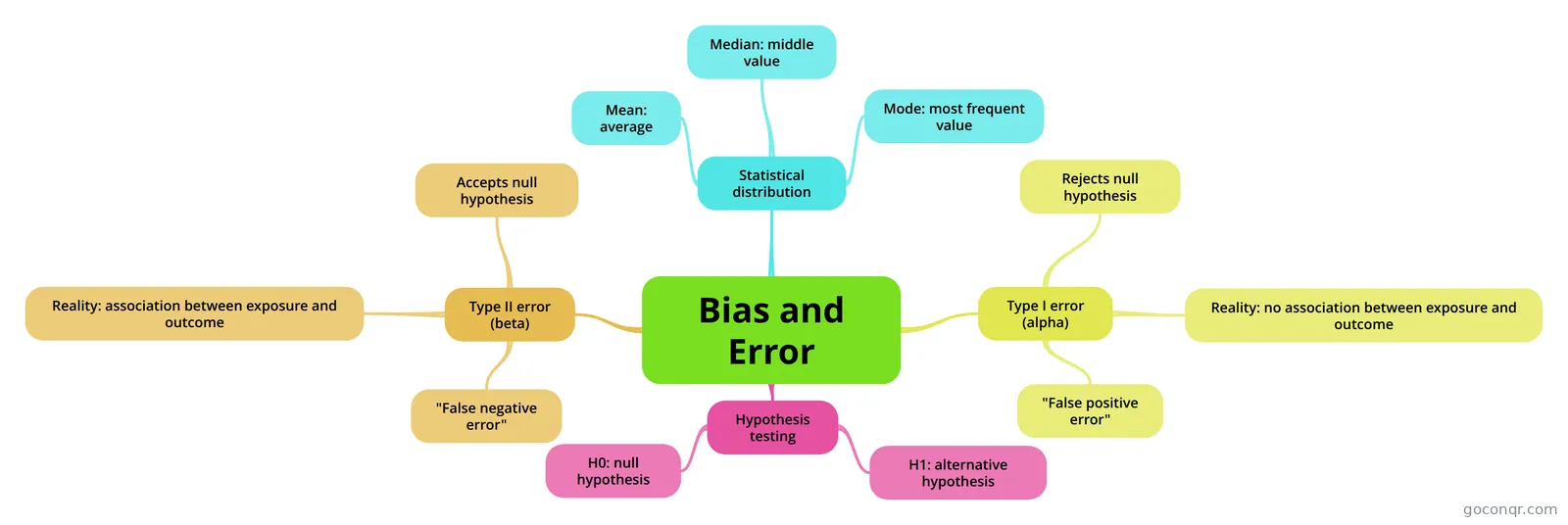 Bias and Error Notes from Doctors in Training
-
Tl Error
-
Statistics- Exam 3
-
HYPOTHESIS
-
Null Hypothesis
-
Chapter 10: One Sample Test
More Hypothesis Testing resources
About hypothesis testing mind maps
GoConqr OriginalWhat these Hypothesis Testing mind maps cover
The maps connect ideas across hypothesis testing. Chi-Square outlines when to use the test, including independent data sets and nominal data. Pearson Correlation covers hypotheses, significance values and critical values. The Student T-test looks at comparing samples, while Nonparametric statistics includes the logic of hypothesis testing.
How to study with a map
Start with Chi-Square if you want to follow a named test from its conditions to its steps. Read each branch, then cover it and explain the point in your own words. Return to any branch you cannot recall clearly.
For a broader view of test choice, Numerical Stat Tests groups tests by the number of groups and by parametric or non-parametric methods. Compare its branches with a map on a particular test. When you are ready to check your understanding, switch to a quiz on the unit page; use flashcards there when you want to revisit terms. Try a map that matches the test you are studying.
Frequently asked questions
Which mind map is a useful starting point?
Chi-Square is a useful starting point if you want to follow a particular test. It sets out when to use chi-square and begins the steps with the alternative hypothesis. For a broader view of test choice, Numerical Stat Tests groups methods by the number of groups and by whether they are parametric or non-parametric.
Are the mind maps free to use?
Yes. Every resource listed here is free to open and study without an account. The maps were made by GoConqr users. A free account also lets you make your own mind maps, flashcards, quizzes and notes, and saves your quiz scores.
Who are these mind maps for?
The collection is mostly at university level. University students can use the maps to review topics such as correlation, chi-square and test choice. Teachers can use the user-made maps as ready-made material, choosing a resource that fits the topic they want to cover.