
Renewable Energy
455 resources created by 413 users
This Renewable Energy page on GoConqr gathers community-made mind maps, quizzes, flashcards and notes on solar, wind, biomass, biofuels, tidal and hydroelectric power. It's built for school students revising a topic, and for teachers after ready-made material, with a little for university students too. There are over 400 resources here, including more than 15 quizzes and over 300 mind maps, mostly at secondary level. Pick a energy source, try a quiz to find your gaps, then build your own set.
Top Renewable Energy resources
-
Mind map NATURAL RESOURCES Ingles Energy Solar
-
20 cardsUnit 1.1 Solar heating of the Earth What does the energy from the sun heat on Earth?
-
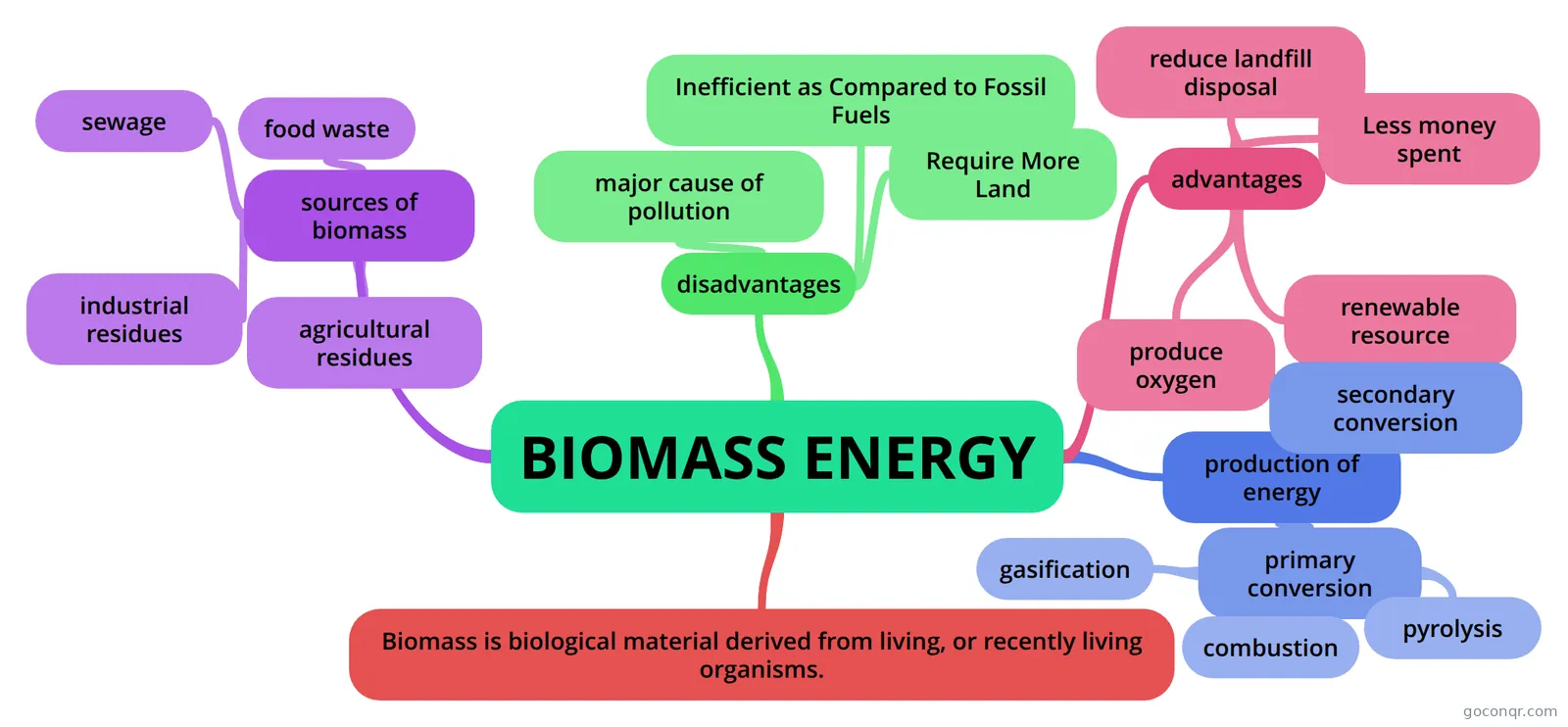 Mind map BIOMASS ENERGY
-
Mind map RENEWABLE RESOURCES
-
38 cardsRenewable energy resources Application to current uses of energy
-
Mind map A review on global solar energy policy
-
Mind map Energy
-
Mind map Untitled
Quizzes
See all 15 quizzes-
6 questionsRenewable Energy Which country has not run completely on renewable energy?
-
4 questionsRenewable Energy One of the main challenges with renewable energy is:
-
200 questionsRenewable 2 What are advantages and disadvantages of the Fresnel lense over convencional lense?
-
24 questionsCHAPTER 10 The quickest way to provide more energy is
-
26 questionsPlanning for a Sustainable Future with Wind, Water, and Sun - Module 2 How many deaths per year are caused by air pollution?
-
20 questionsSeaGen tidal case study Who wrote the paper on this case study.
-
18 questionsScience 2 Disadvantages of Solar Energy
-
13 questionsGeothermal Energy! What is geothermal energy?
Mind maps
See all 408 mind mapsFlashcards
See all 17 flashcards-
20 cardsUnit 1.1 Solar heating of the Earth What does the energy from the sun heat on Earth?
-
38 cardsRenewable energy resources Application to current uses of energy
-
36 cardsBiofuels Final
-
14 cardsUntitled
-
7 cardsRenewable Energy 03/02/2017
-
4 cardsSugarcane: Ethanol
-
7 cardsBiomass Energy
-
20 cardsSolar heating of the sun What is the sun powered by?
Notes
See all 15 notes-
Water Energy Water Energy Of all renewable energy sources, hydropower holds the largest share of Worldwide Electricity production. People all around the world have been using water to make electricity for thousands of years. It is...
-
Energy Futures 3 possible futures; - Business as usual - Embrace renewables - ConservationConservation:Combined Heat and Power (CHP); Electricity power stations waste 65% of heat they generate but CHP plants can be up to 95% efficie...
-
Green Technology - created from Mind Map Biomass example : Sources
-
Sustainability - created from Mind Map Solar energy PROS: Renewable, Abundant, Sustainable, Environmentally Friendly, Good Availability, Reduces Electricity Costs, Many Applications, Shared Solar, Silent, Financial Support from Government/State, Low Mainte...
-
NGO/MEDIA MAP Germany - created from Mind Map Bioenergieforum SOCIAL MEDIA JOURNALISTS (CHECK MEDIA MON.)
-
History and Use of Renewable Energies - creado desde un Mapa Mental By: Laura Camila Carrion Loaiza Energy Renewable energy
-
RENEWABLE ENERGY - creado desde un Mapa Mental It is obtained from virtually inexhaustible natural sources, either by the immense quantity of energy they contain, or because they are capable of regenerating by natural means. TYPES OF ENERGY RENEWABLE ADVANTAGES OF...
-
Mapa de energias renovables - creado desde un Mapa Mental defined as "the capacity to do a job Everything starts with the creation of fire energy is neither created nor destroyed
Topics in Renewable Energy
More Environmental science and ecology topics
About Renewable Energy
GoConqr OriginalWhat the page covers
This unit sits in the Natural Resources, Energy and Food strand of Environmental science and ecology. Most of what you will find is mind maps, with flashcard decks, quizzes and notes alongside them.
- Solar: the mind map on solar energy describes it as energy obtained from the Sun's electromagnetic radiation. The flashcard deck Unit 1.1 Solar heating of the Earth asks what the Sun's energy heats and how helium nuclei are produced.
- Biomass and biofuels: the BIOMASS ENERGY map lists sources such as sewage, food waste and agricultural residues. The Biofuels map separates first-generation fuels, made from sugar, starch and vegetable oil, from later generations.
- Wind, tidal and water: the Wind Power map looks at how output changes with wind speed. The Swansea Tidal scheme map covers a planned tidal lagoon.
Where to start
Begin with the broad maps, such as Renewables and RENEWABLE RESOURCES. They show the main sources side by side, with chapters on solar, hydropower, wind and sustainable development.
Then choose one source and open its map. Read the advantages and disadvantages, and note anything that surprises you.
Using maps and quizzes together
Study a map first, then take a quiz on the same source. The Geothermal Energy! quiz, the Biomass: USA and Brazil quiz and the SeaGen tidal case study quiz each focus on one topic. For a wider check, try the Renewable Energy Short Test.
When a question catches you out, go back to the map and find the branch it came from. Flashcard decks such as Biofuels Final and Wind Tirbines! are handy for quick repeat practice.
Making it your own
Teachers can set a map as a starting point for a lesson or a quiz as a short check. Students can compare two sources, such as wind and tidal power, using the maps as a guide.
Choose a source you find hardest, open its map and quiz, then make your own flashcards from what you learn.
Frequently asked questions
Which resource should I open first?
Start with the Renewables mind map or the RENEWABLE RESOURCES map. Both give an overview of the main sources, so you can see how solar, biomass, wind and water fit together before moving on to a single topic.
What do the mind maps cover?
They cover solar energy, biomass, biofuels, wind power, tidal power and hydroelectric power. Some look at advantages and disadvantages, while others cover case studies such as the Swansea Tidal scheme and the environmental impacts of hydroelectric plants.
Are there quizzes on this page?
Yes, more than 15. Topics include geothermal energy, biomass in the USA and Brazil, and the SeaGen tidal case study. There are also general quizzes on renewable energy, including a short test, so you can check what you know.
Are the resources free to use?
Yes. Every resource listed here is free to open, study and take, with no account needed. They were made by GoConqr users, not by GoConqr itself. A free account lets you save quiz scores and make your own quizzes, maps, flashcards and notes.
Who is this page for?
It suits school students revising renewable energy, and most of the resources are at secondary level. Teachers can use the maps, notes and quizzes as ready-made material. A few resources will also help university students filling gaps.
What if I can't find the topic I need?
Try a broader map such as Energy or Types of energy, which may include your topic as a branch. You can also check the notes, which were created from mind maps and give a written summary of a topic.