
Natural Resources and Mining
29 resources created by 28 users
This Natural Resources and Mining page on GoConqr gathers community-made mind maps, flashcards, quizzes and notes, from water security and quarry restoration to gold mining and mining in Colombia. It's built for school students revising a topic, and for teachers after ready-made material, with a few university students filling gaps too. There are over 350 resources here, including more than 270 mind maps and more than 40 flashcard decks, mostly at secondary level. Pick a mind map, test yourself with a quiz, then build your own.
Top Natural Resources and Mining resources
-
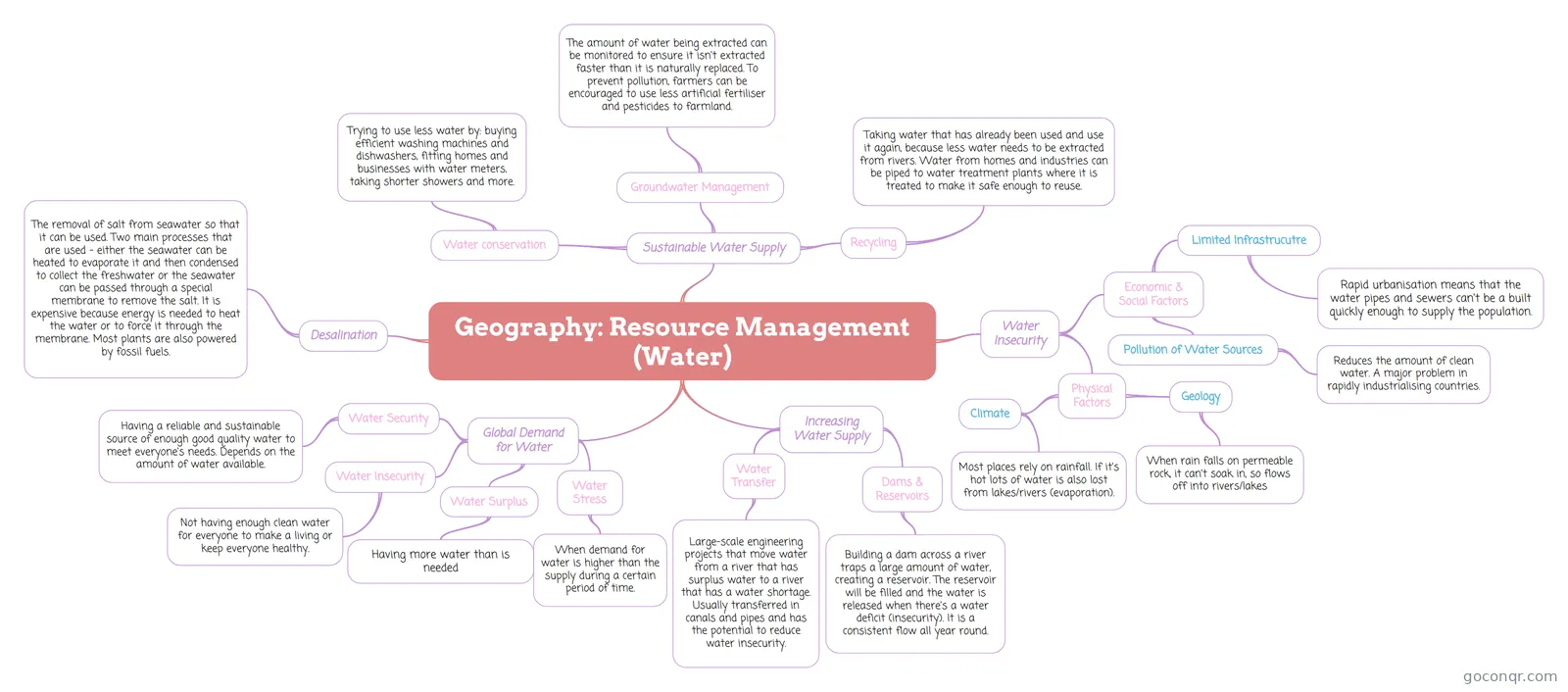 Mind map Geography: Resource Management (Water)
-
19 cardsResource Security What is a stock resource?
-
11 cardsEnvironmental impacts of mining Open cast mining - habitat damage
-
23 cardsEnvironmental Problems What is acid mine drainage?
-
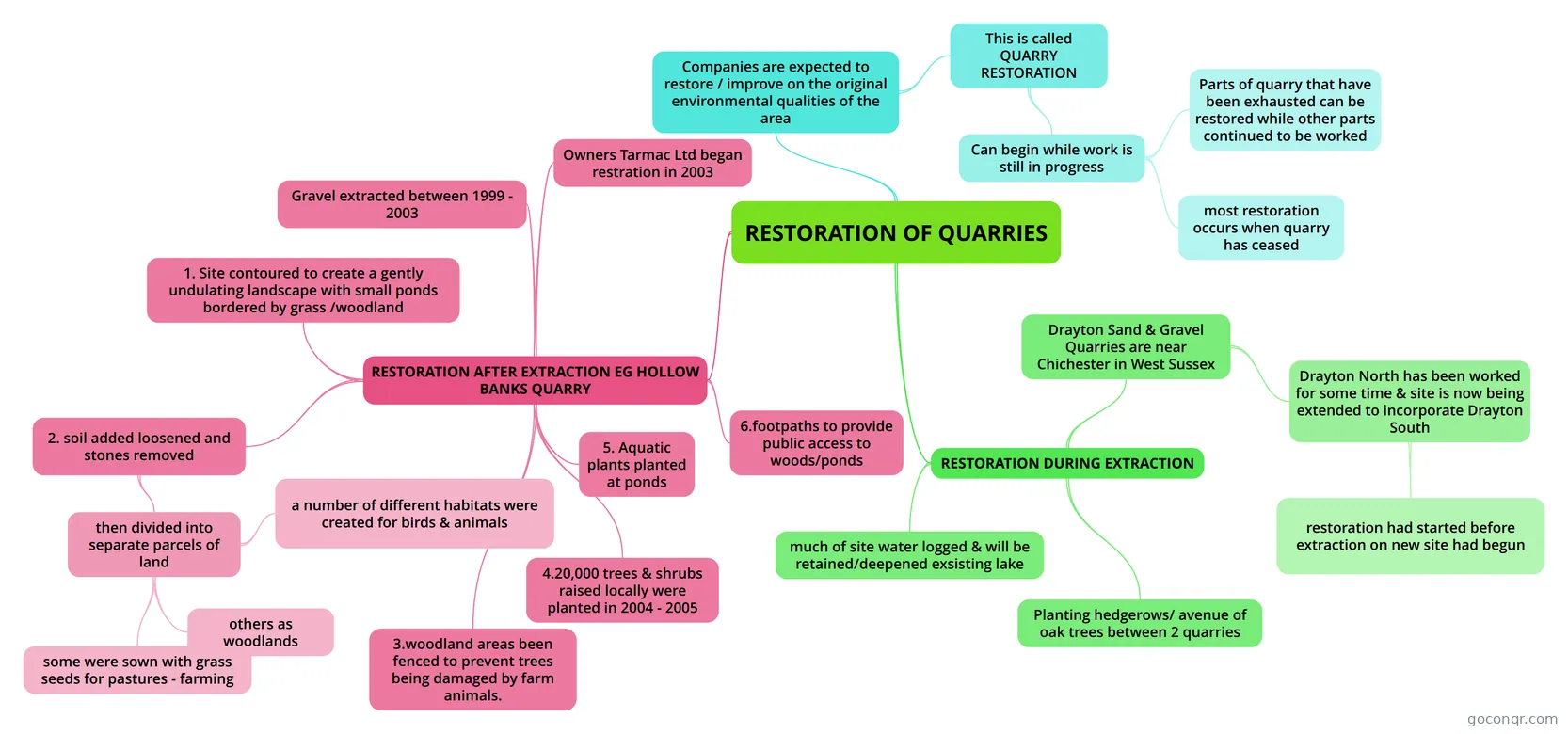 Mind map RESTORATION OF QUARRIES
-
5 cardsAPES Exam Review
-
4 questionsScience quiz
-
6 questionsResources Missus Misuse of natural resources is refers to excessive use, destructive use or achieving imbalance between reso...
Quizzes
Mind maps
See all 12 mind maps
Flashcards
-
19 cardsResource Security What is a stock resource?
-
11 cardsEnvironmental impacts of mining Open cast mining - habitat damage
-
23 cardsEnvironmental Problems What is acid mine drainage?
-
5 cardsAPES Exam Review
-
14 cardsDistribution of Natural Resources
-
4 cardsresources and development what is a resource?
-
4 cardsflash cards new chapter about resources
Flowcharts
Notes
-
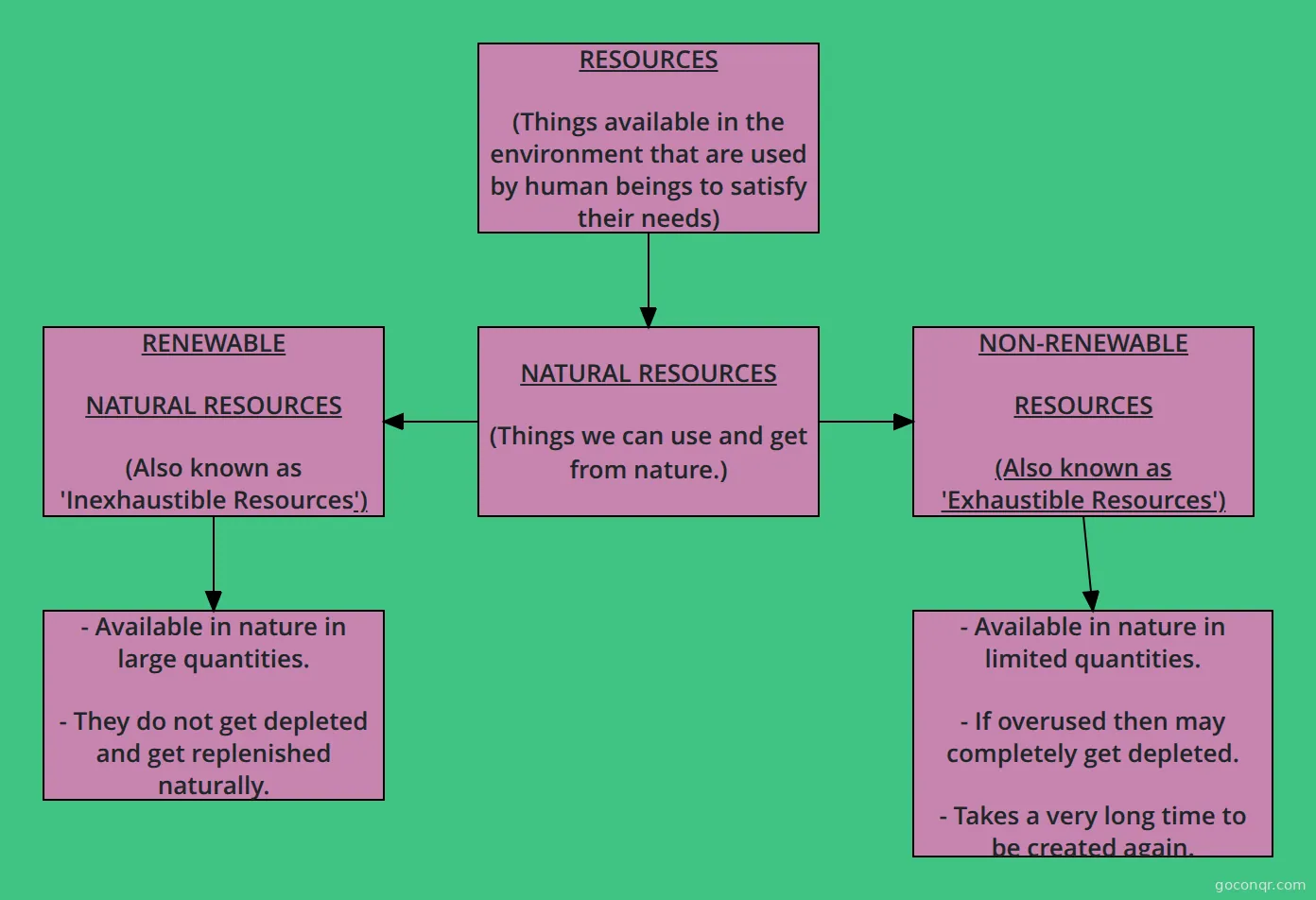
natural resources flow chart
-
resource management how enviroments are changed by expoitaion of resources: - 18 billion gallons of toxic waste dumped into rivers whilst extracting oil -madagascar loses 400 tonnes of soil per hectare every year -cameroon-biodiversity u...
-
Natural resources why conservation 1. to maintain ecological balance2.to preserve different kinds of species 3. to make resources available for present and future generations 4. to ensure survival of biodiversity Soilsoil is a renewabl...
-
Water Resources Social Studies: Water Resources What's the problem? Water is one of the important resources. We can't live without the water. However, people are polluting this valuable resource.Let's learn Which problems are existin...
-
Social Studies 'Resources' Social Studies 'Resources' In our social science class we are learning about important resources on Earth. We made brochure for each important resource. One of the resource was water. For each resource we need to rese...
-
Over-Fishing Fish are a renewable resource If used carefully fish stocks need never be depleted Can be seriously depleted if over-exploited In many parts of the world over-fishing is so great fish cannot reco...
Slides
More Environmental science and ecology topics
About Natural Resources and Mining
GoConqr OriginalWhat this unit covers
The unit brings together two linked ideas: how natural resources are classed and managed, and what mining does to land, water and people. Mind maps such as Classification of Natural Resources and Renewable and Non-renewable Resources set out the basic vocabulary. Others look at water, fisheries, energy and sustainable yields.
Where to start
Begin with the broad maps called Natural Resources, then move to Resource Consumption, which covers the Cornucopian, Neo-Malthusian and Malthusian views and historical examples such as Easter Island. After that, try Analytical Frameworks to see how resources can be studied together rather than separately.
Mining in detail
For mining, the flashcard deck Environmental Problems asks about acid mine drainage, open pit mining, placer mining and mountain top removal. The map Environmental Impact of Gold Mining looks at poisoned waterways and waste. RESTORATION OF QUARRIES explains that companies are expected to restore or improve the area, and that this can begin while work is still going on. There are also many maps on the socio-environmental implications of mining in Colombia.
Using maps and quizzes together
- Read a mind map and say each branch aloud without looking.
- Run through a flashcard deck such as Topic 3 definitions to lock in terms like natural capital and sustainable yield.
- Take a quiz, for example FANR FINAL QUIZ, and note which questions slipped.
- Go back to the matching map and fix the gaps.
Some decks are labelled for AP Environmental Science, and others for IB, GCSE Geography or GCSE Chemistry, so check the titles and excerpts for your course.
Where it fits
This unit sits in the Natural Resources, Energy and Food strand of Environmental science and ecology. Choose a resource that matches what you are revising this week, and try making a map of your own on a topic you find tricky.
Frequently asked questions
Which resource should I open first?
A broad mind map called Natural Resources is a gentle way in, because it sets out renewable resources, their types, advantages and disadvantages. Once that feels familiar, move on to Resource Consumption, then to the mining maps and the flashcard deck Environmental Problems.
What do the mining resources cover?
They cover mining methods such as open pit, subsurface, placer and mountain top removal, plus acid mine drainage, gold mining pollution, quarry restoration and the pros and cons of quarrying. Several maps also look at the socio-environmental implications of mining in Colombia.
Are the resources free to use?
Yes. Every resource listed here is free to open, study and take, with no account needed. A free account additionally saves your quiz scores and lets you make your own quizzes, mind maps, flashcards and notes.
Which levels and exams do they suit?
Most of the material is at secondary level, so it suits school students. Some resources mention AP Environmental Science, IB, GCSE Geography or GCSE Chemistry. Check each title and excerpt to see whether it matches your course before you start.
Who made these resources?
They were made by GoConqr users, not by GoConqr itself. That means styles and depth vary, so teachers can pick items that match a class and students can compare a few maps on the same topic.
What if I cannot find what I need?
Try a nearby title, such as a water, energy or fisheries map, since these topics overlap with natural resources. If a gap remains, you can build your own mind map, flashcards or notes on the missing topic.