
Microbial Cell Structure, Diversity and Classification mind maps
127 mind maps by 97 users · Page 1 of 4
This GoConqr page gathers over 120 community-made mind maps on microbial cell structure, diversity and classification, from prokaryotic structures to protists and bacterial classification. They offer university students material to practise these topics and teachers ready-made resources for university-level study. Choose a map to begin.
Select topic
- Prokaryotic and Eukaryotic Cells10
- Prokaryotic Cell Structure65
- Bacterial Morphology and Cell Division11
- Bacterial Cell Wall and Gram Staining31
- Bacterial Cell Membrane and Transport5
- Bacterial External Structures and Motility15
- Intracellular Structures of Prokaryotes28
- Bacterial Endospores5
- Microbial Diversity, Classification and Evolution19
- Bacterial Classification and Diversity28
- Archaea9
- Eukaryotic Microorganisms9
Mind maps
-
Microbiology: Systematic Bacteriology
-
Intracellular Structures of Prokaryotes
-
The Protists Mind Map Protists are grow in a wide variety of moist habitats. They are lack the level of tissue organization prese...
-
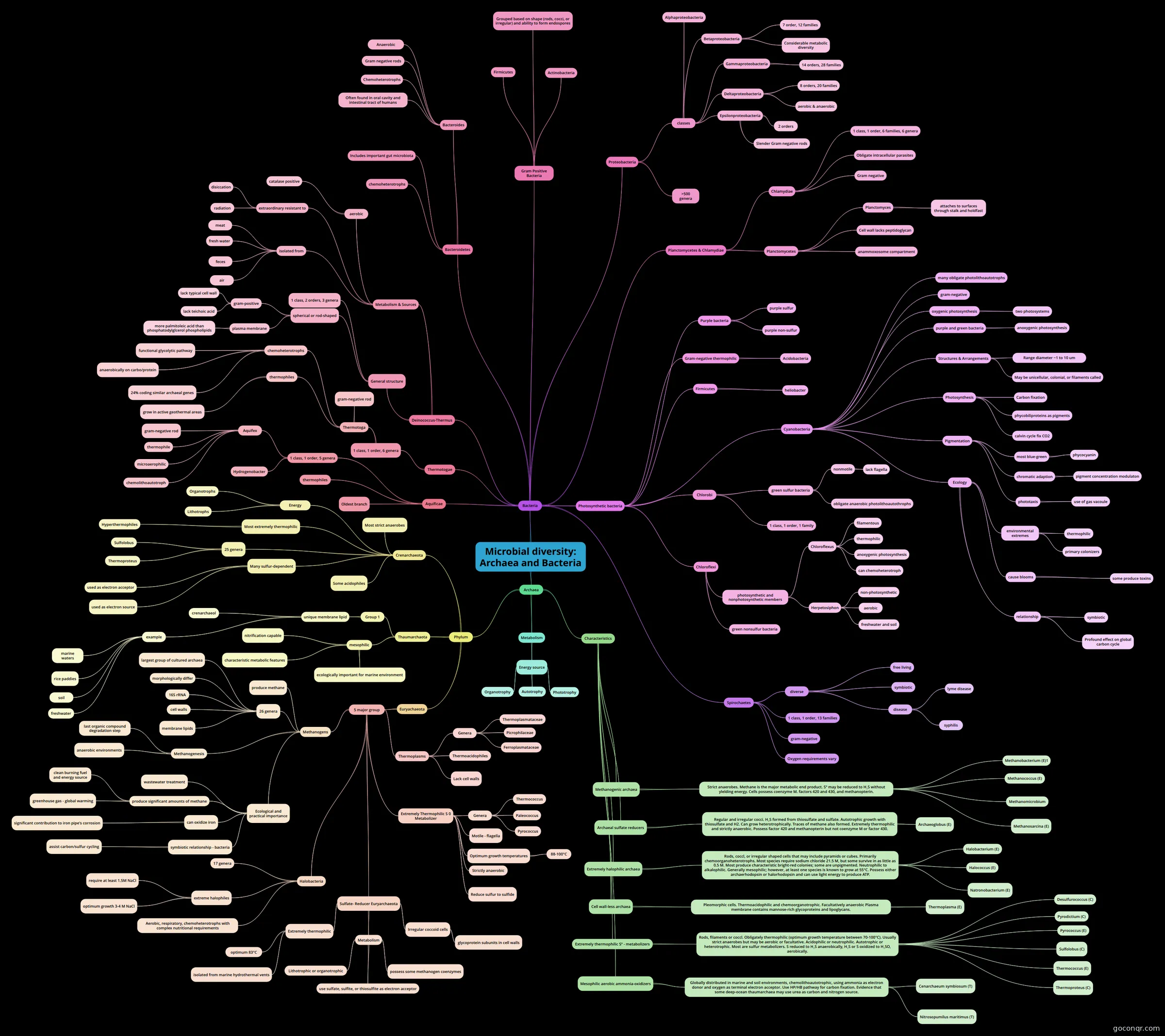 Microbial diversity: Archaea and Bacteria
-
 Intracellular structures of prokaryote A brief mind map of the internal prokaryotes cellular organelas
-
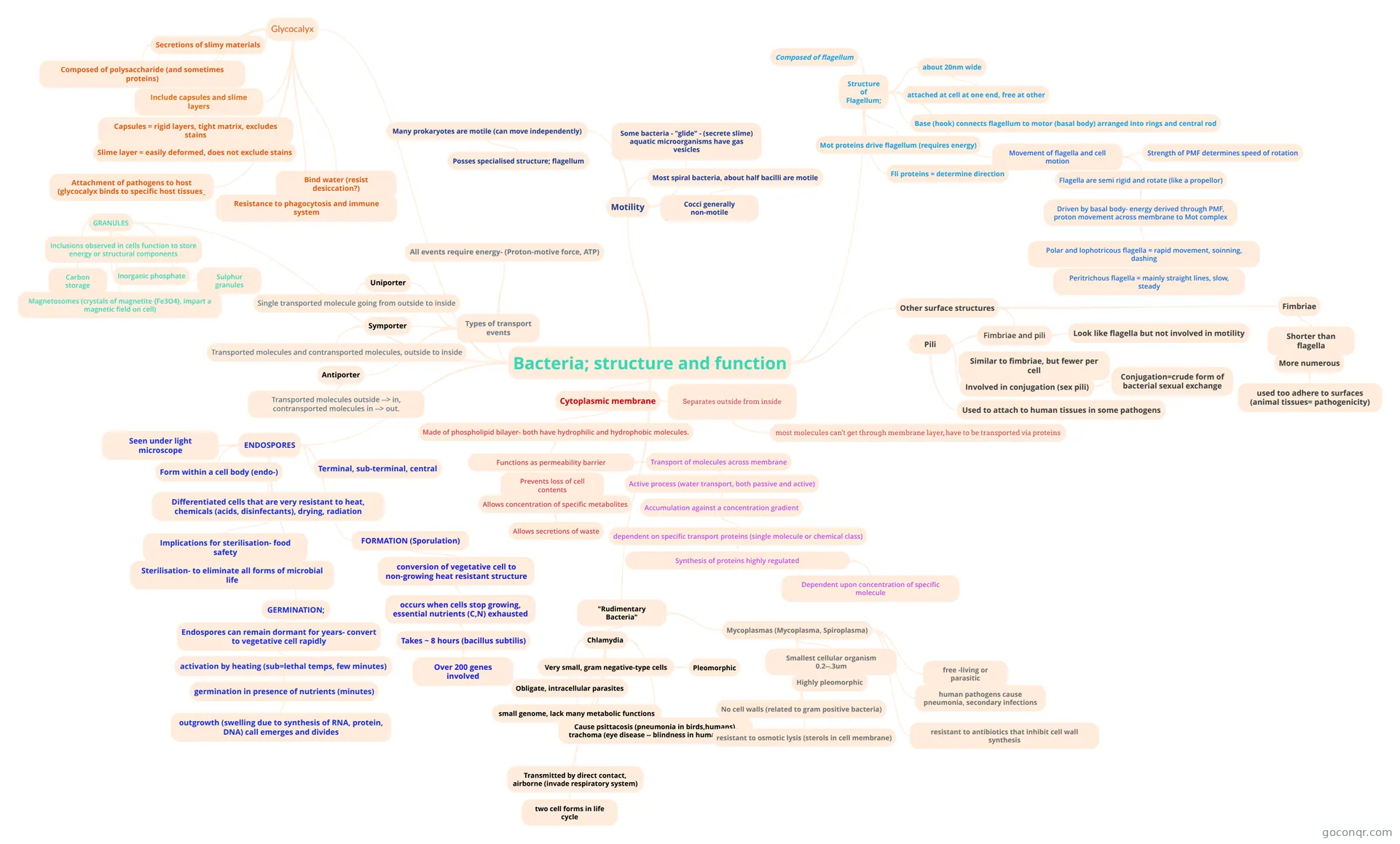 Bacteria; structure and function
-
The Cell Wall
-
Microbial diversity
-
Microbiology: Systematic Bacteriology
-
Microbiology
-
Classification of Organisms This is basically the steps of how the microbes got its name
-
Eukaryotic microogranisms_1
-
Eukaryotic microogranisms
-
Chapter 28: Prokaryotes
-
CHAP 2: MICROBIAL GROUP
-
Bacteria
-
Lecture 1 Week 7
-
Microbial diversity: Protists and Fungi
-
MICROBIOLOGY 3
-
External Structure of Bacteria
-
Eukaryotic Cell
-
classification of organisms
-
Classification of bacteria
-
Intracellular Structure of procaryotes
-
Introduction To Prokaryotes(external)
-
Micro bio Ch 4-Functional anatomy of prokaryotic and eukaryotic cells
-
Microbial Taxonomy
-
INTRACELLULAR STRUCTURES OF PROKARYOTES
-
Bacteria external structure.
-
Prokaryotes Hi.
-
Gram - negative aerobic
-
Untitled
-
External Structure of Bacteria
-
Domain Creating Mind Maps online with GoConqr's free tool.
-
INTERNAL STRUCTURE OF PROKARYOTES microbes
-
Prokaryote_1
-
Prokaryote
-
Internal structure of prokayote
-
Techniques for classification
-
ENDOSPORES
More Microbial Cell Structure, Diversity and Classification resources
About microbial cell structure, diversity and classification mind maps
GoConqr OriginalMicrobial cell structure, diversity and classification mind maps
These maps give you different routes through the unit. Bacteria categories and classification brings together bacterial groups and morphology. Prokaryotic Diversity and Classification covers morphological, biochemical and phylogenetic classification. For a wider view, The Protists Mind Map includes algae, while Microbial diversity: Archaea and Bacteria covers archaeal groups.
How to use the maps
Start with Bacteria categories and classification if you want to look at bacterial shapes and groups. Follow its branches, then try to recall the categories without looking. Compare your recall with the map before moving to another classification resource.
For cell structure, use Bacteria; structure and function to explore the cytoplasmic membrane. When you want to check your recall in a different way, switch to a quiz or flashcards on the unit page. Open a map and follow a branch that interests you.
Frequently asked questions
Which mind map could I start with?
Bacteria categories and classification is a starting point if you want to review bacterial groups and morphology. Its branches include categories such as cocci. For a broader look at approaches to classification, follow it with Prokaryotic Diversity and Classification, which covers morphological, biochemical and phylogenetic classification.
Are these mind maps free to use?
Yes. Every resource listed here is free to open and study without an account. The mind maps were made by GoConqr users, rather than by GoConqr. A free account also lets you save quiz scores and make your own quizzes, mind maps, flashcards and notes.
Who are these mind maps for?
The resources on this page are at university level. University students can use them to practise topics such as prokaryotic structures and bacterial classification. Teachers can use the maps as ready-made material, choosing between resources on cell structures, microbial diversity and approaches to classification.