
Modal Verbs mind maps
2,425 mind maps by 2,061 users · Page 1 of 61
This GoConqr page gathers mind maps on modal verbs, from ability and obligation to deduction and advice. It brings together over 2,200 maps by more than 1,900 users for school students practising English and teachers looking for classroom material. Browse the maps to find a topic to revise.
Mind maps
-
Modals & semi-modals Expressing asking for a permission , offers, making requests, suggestions , expressing ability , obligation...
-
MODAL VERBS
-
MODALS OF DEDUCTION We use modal verbs to say how sure we are about something.
-
MODALS OF DEDUCTION We use modal verbs to say how sure we are about something.
-
Must - Have to - Need Obligation - necessity - prohibition
-
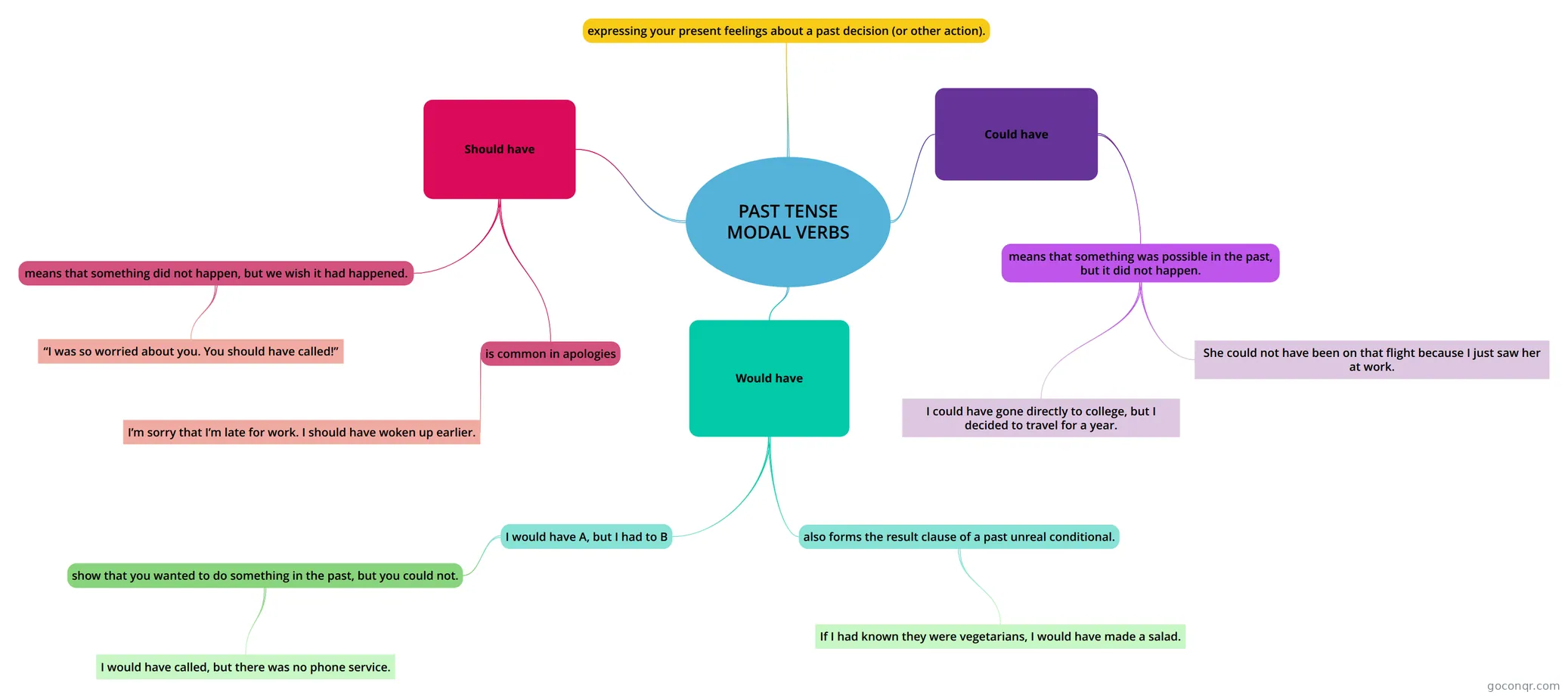 PAST TENSE MODAL VERBS
-
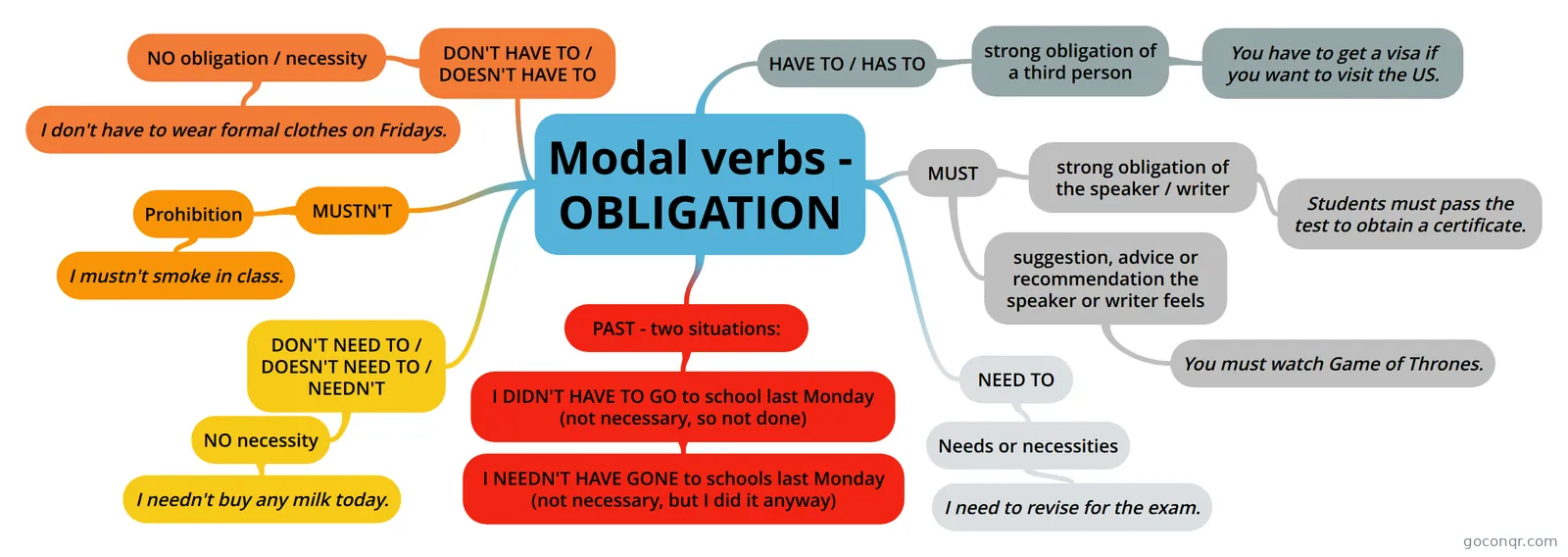 Modal verbs - OBLIGATION Unit 1 FCE Masterclass 2015
-
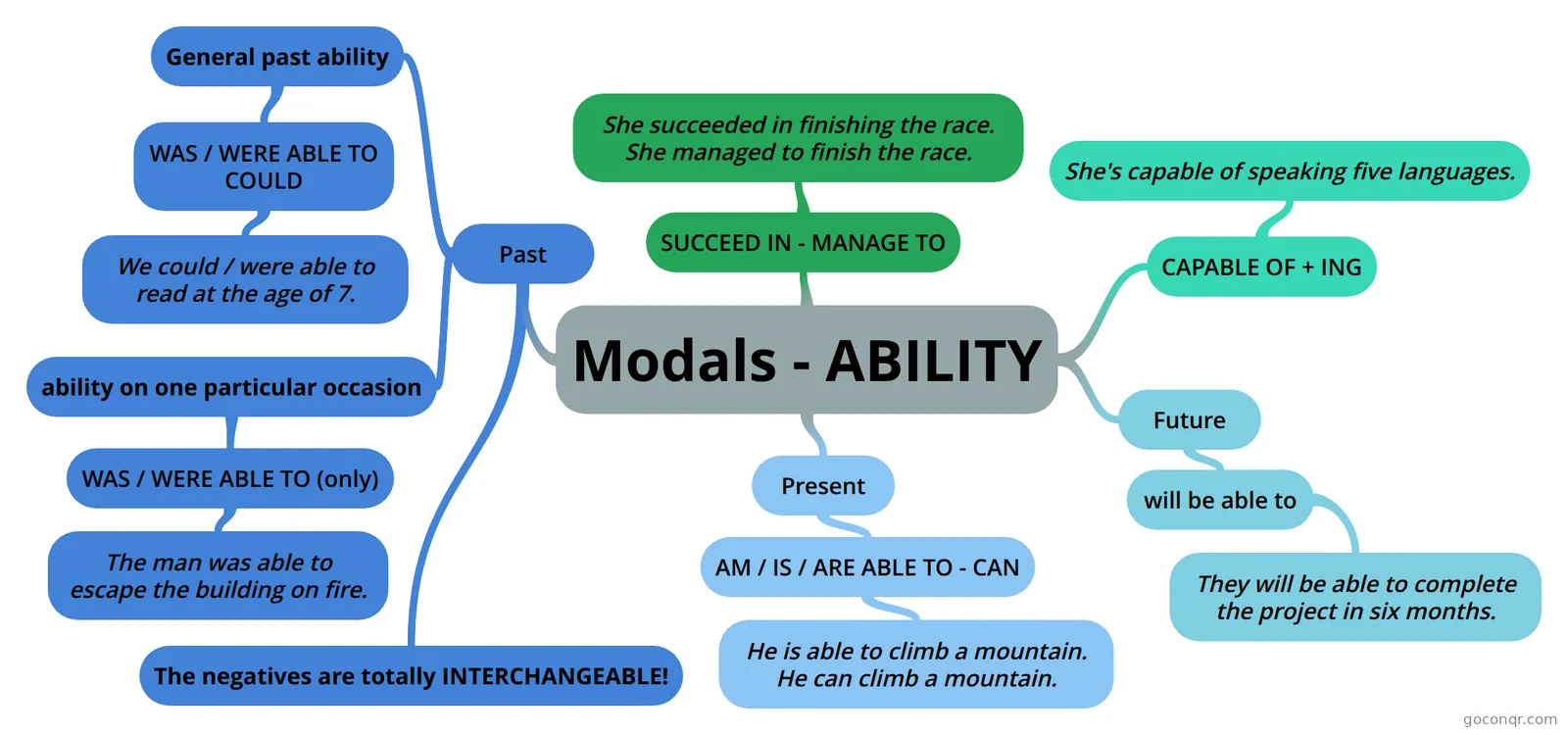 Modals - ABILITY Unit 2 FCE Masterclass 2015
-
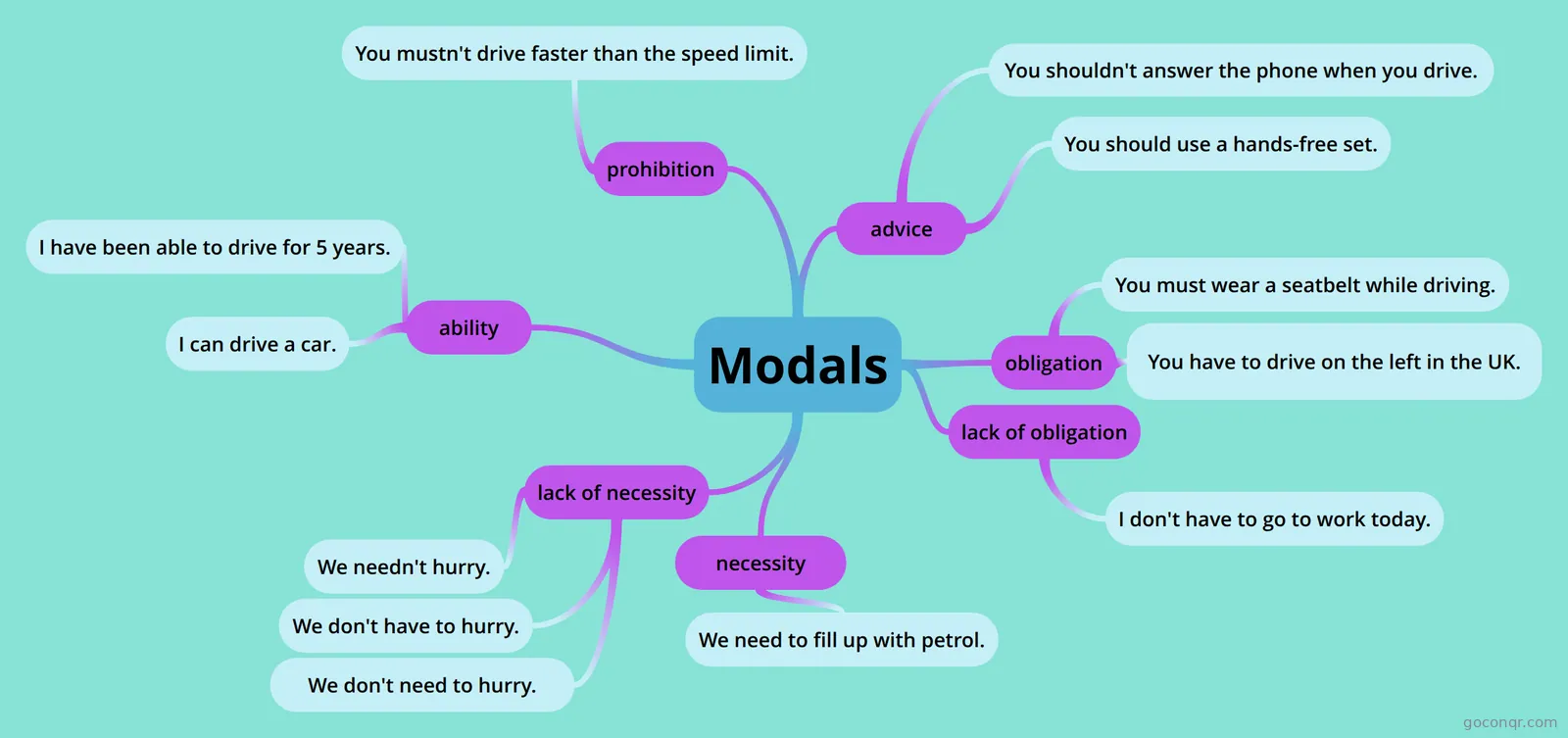 Modals Modals for ability, obligation, necessitiy
-
Modals of deduction use de modal verbs
-
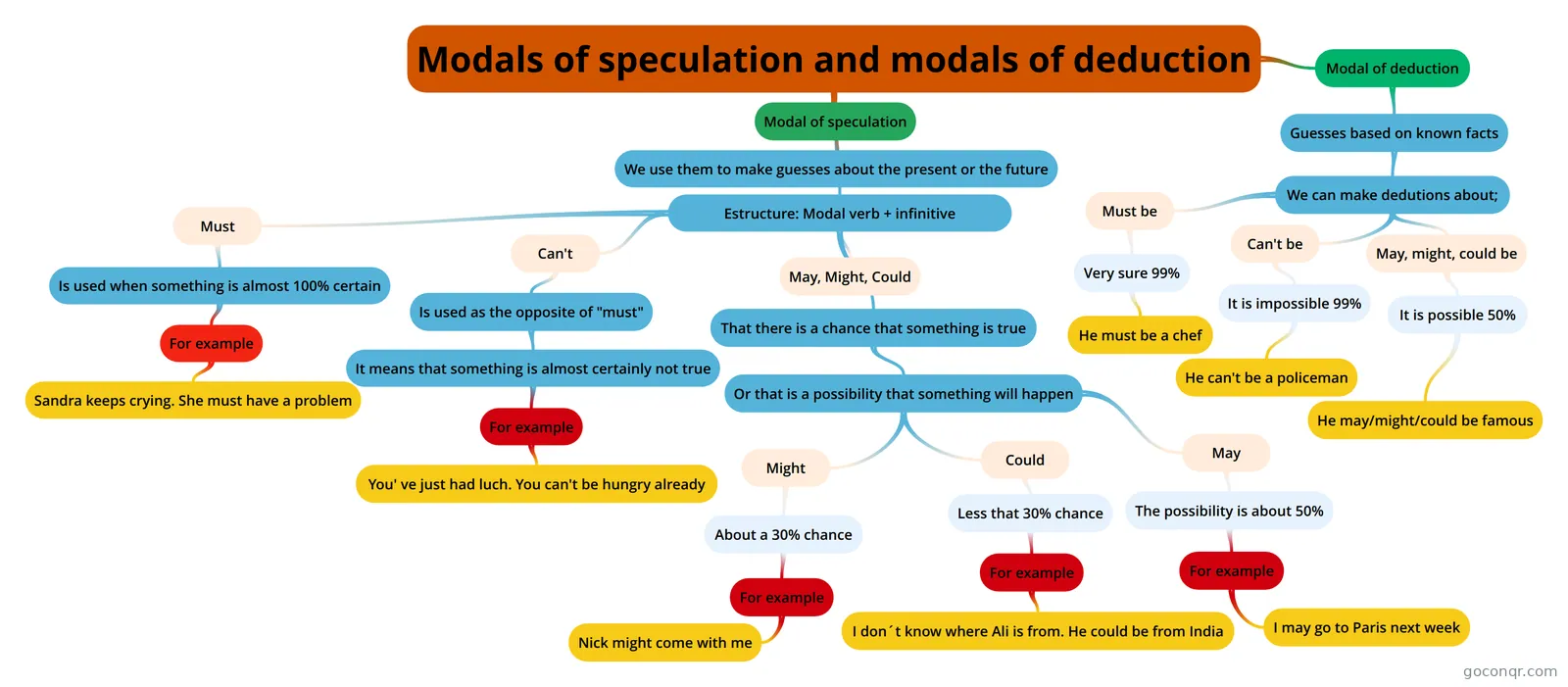 Modals of speculation and modals of deduction
-
Modals of deduction Modals of Deduction
-
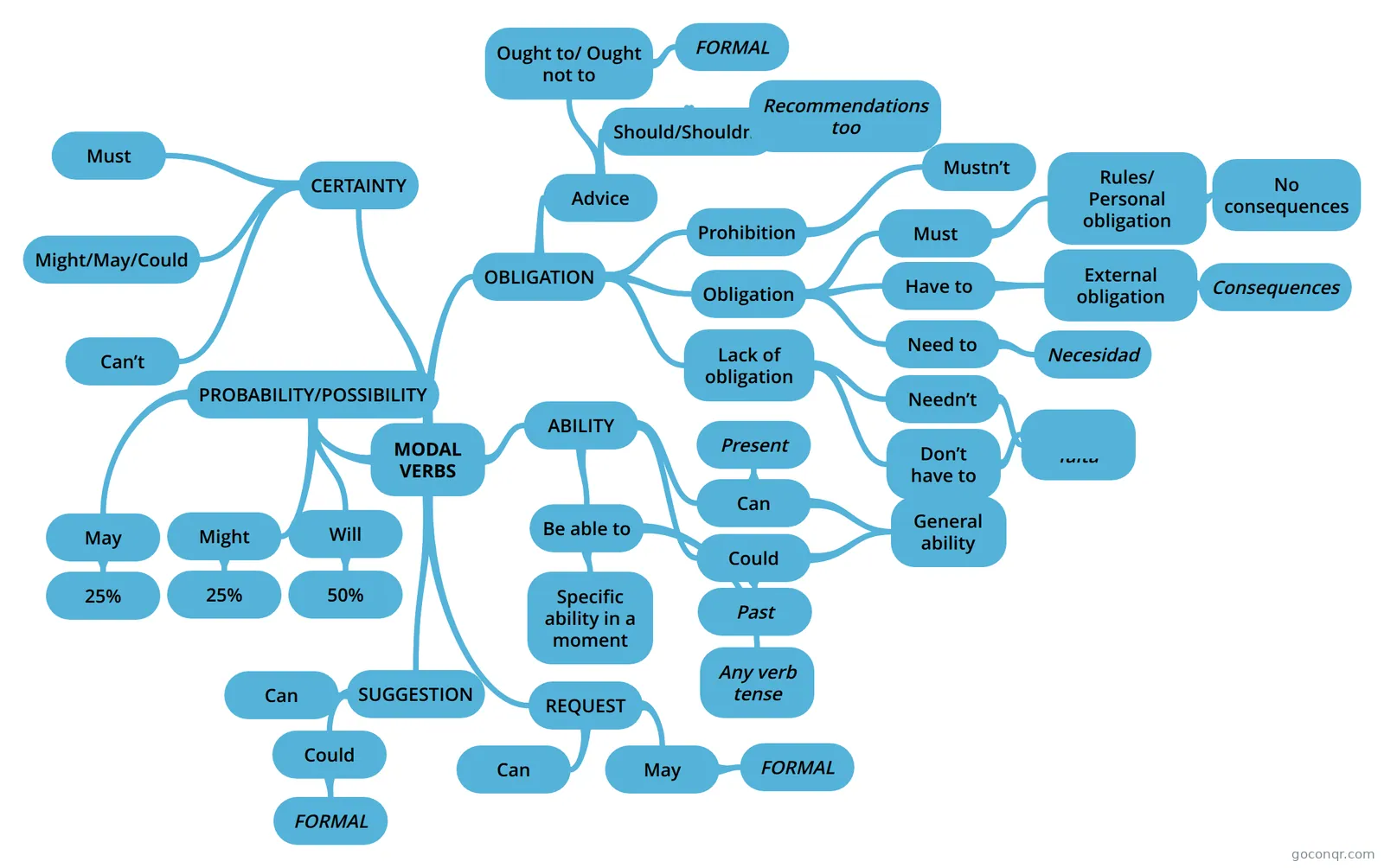 MODAL VERBS Mind Map on MODAL VERBS, created by Berta López on 11/02/2021.
-
Should / Shouldn't
-
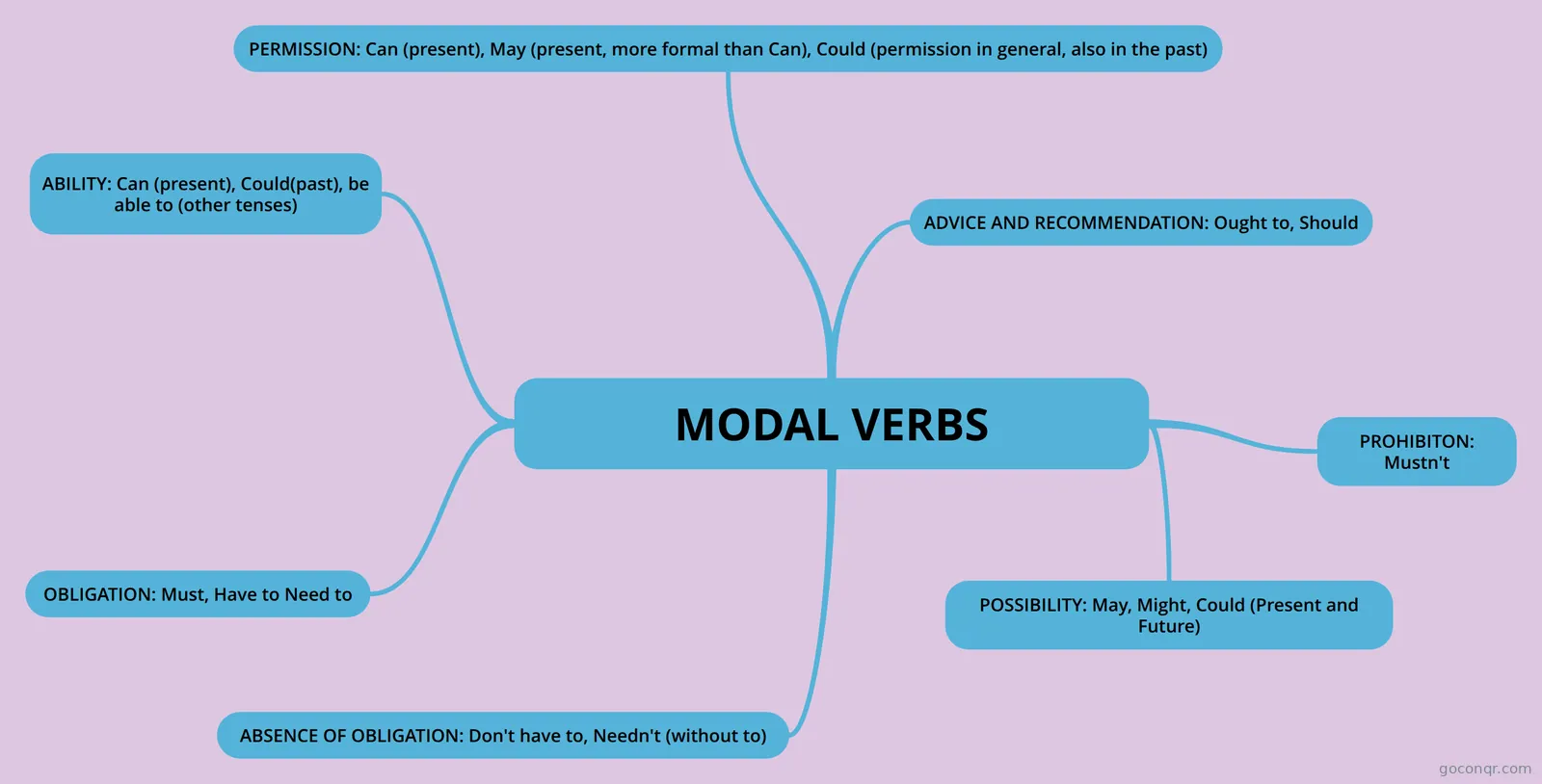 MODAL VERBS Brief summary of most important modal verbs
-
Modals of deduction1 modals of deduction
-
Has / Have to
-
OBLIGATION Mapa conceptual sobre sobre condicionales para expresar una obligacion
-
MODAL VERB SHOULD
-
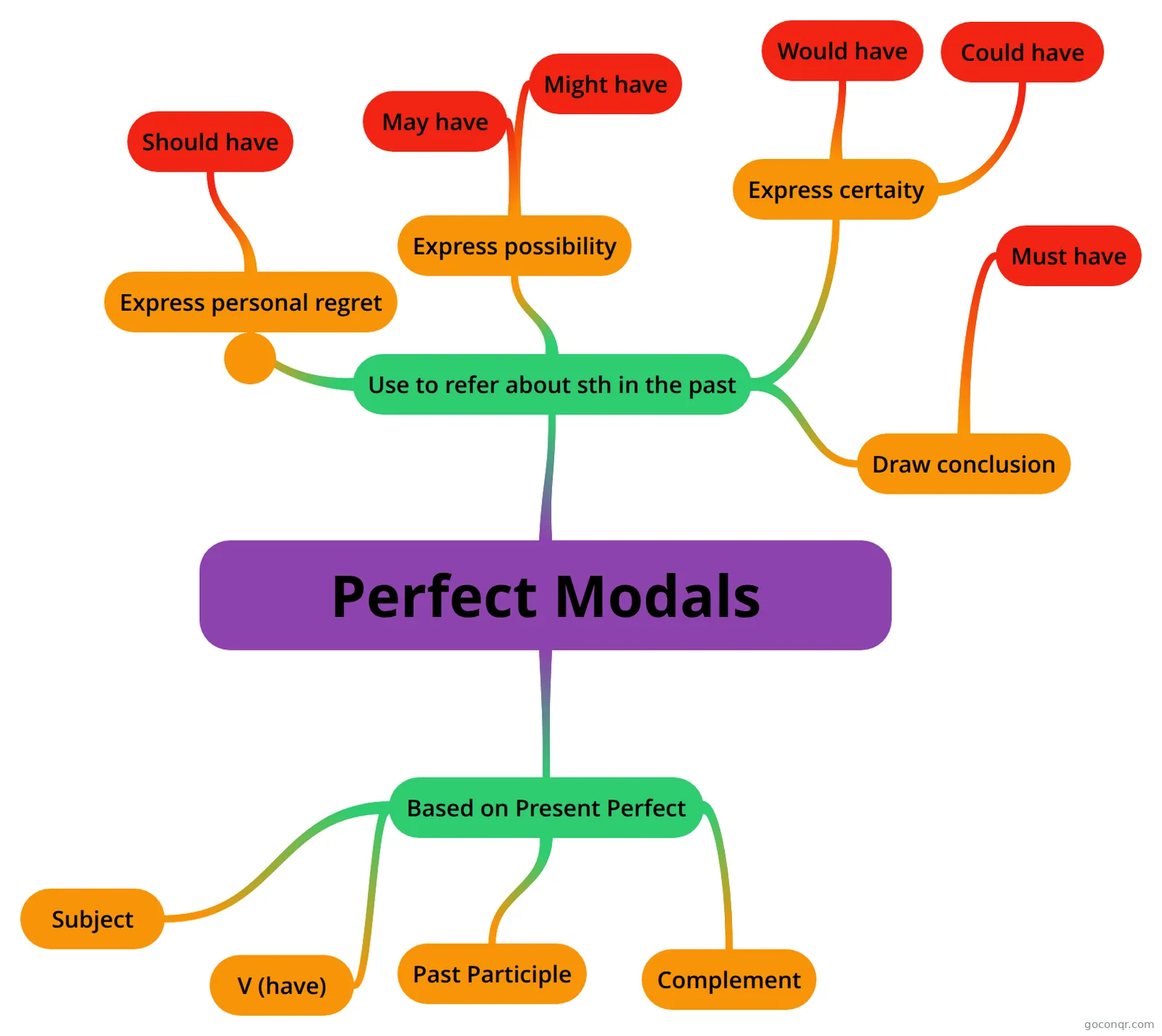 Perfect Modals
-
can - can't can as posibility
-
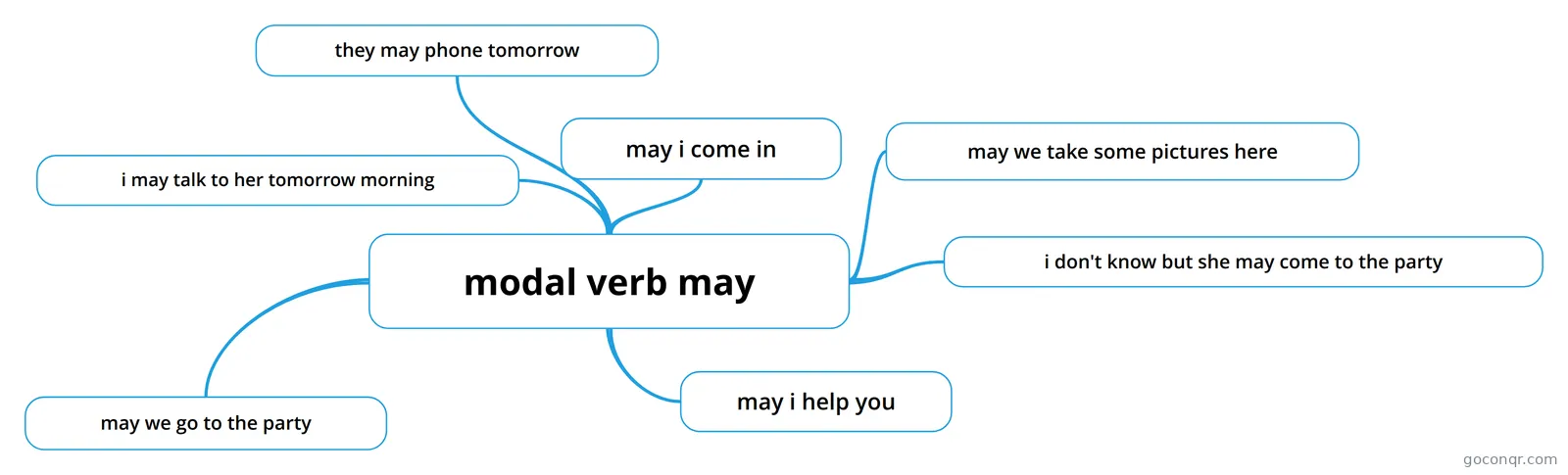 modal verb may mapa mental referente ao tema modal verb
-
Modal Verbs Modal verbs uses
-
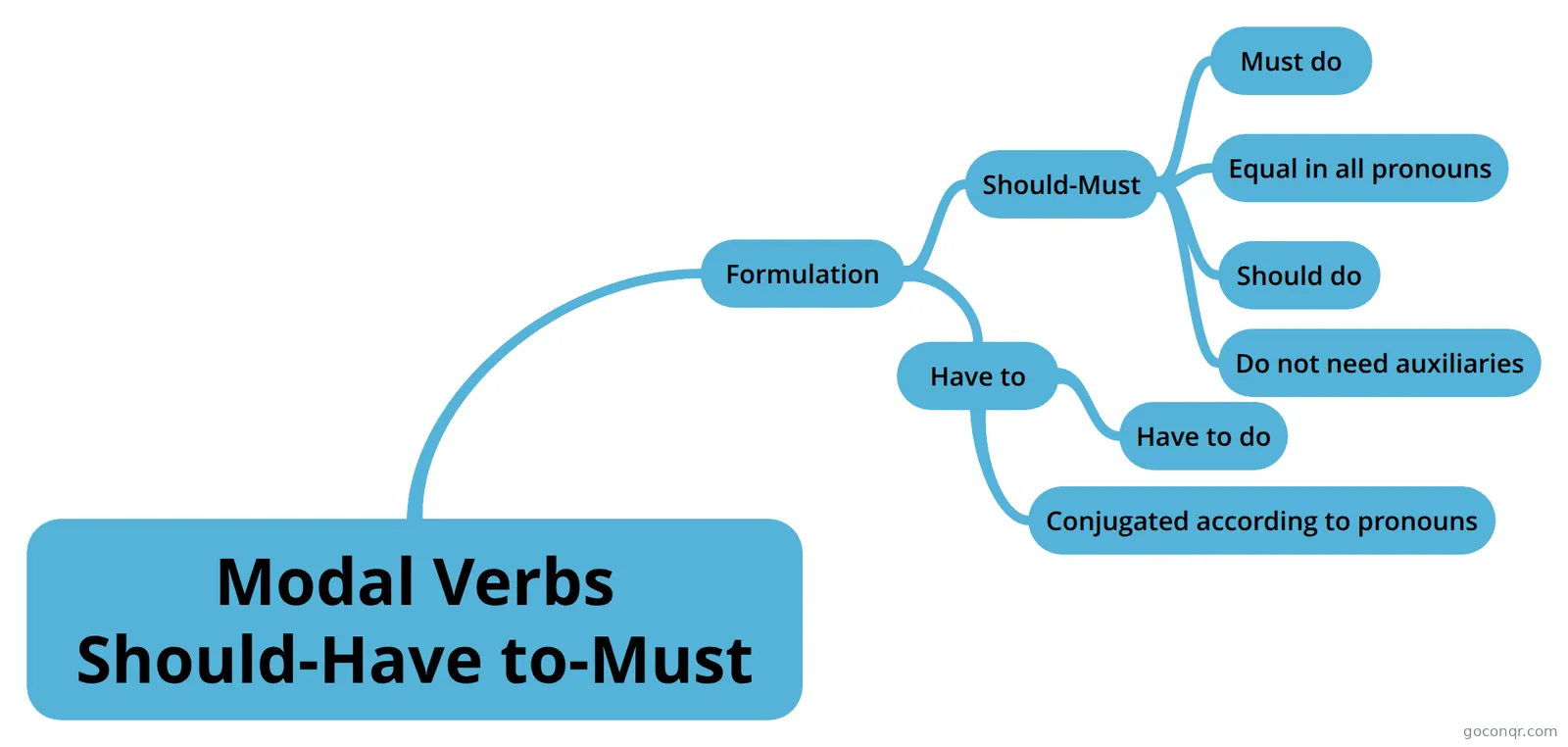 Modal Verbs Should-Have to-Must
-
mental map Modal verbs mental mapping
-
i have to
-
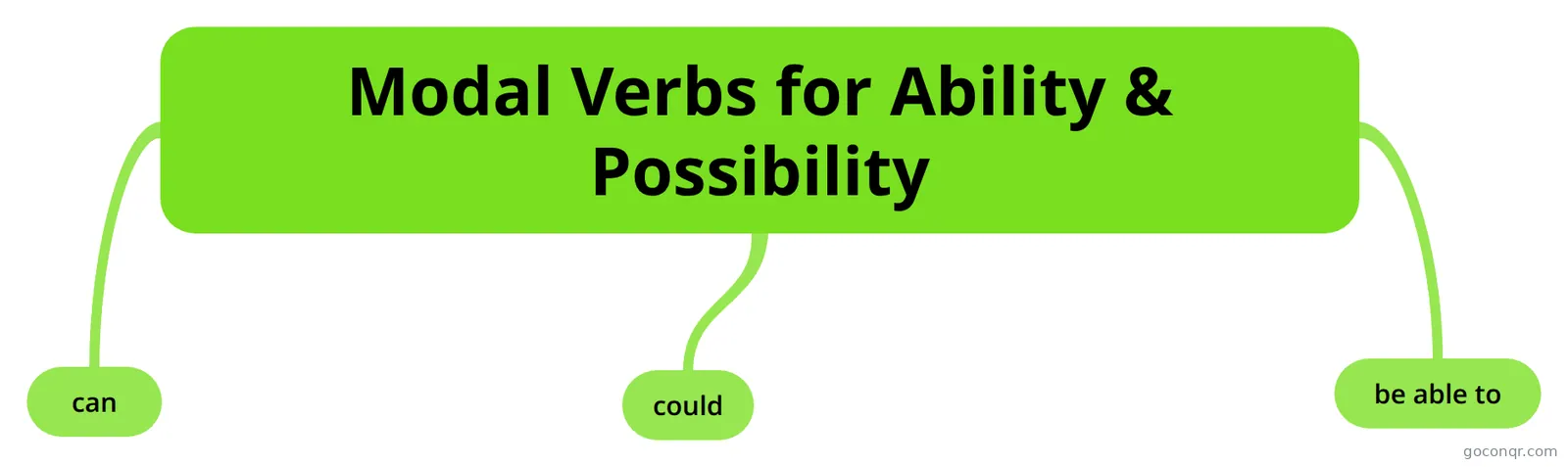 Modal Verbs for Ability & Possibility
-
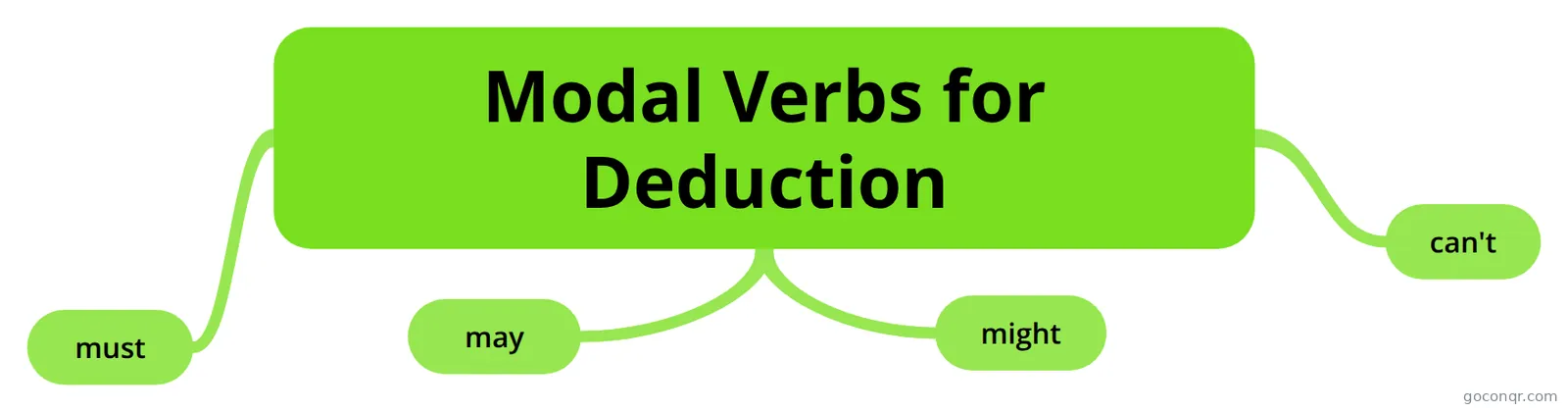 Modal Verbs for Deduction
-
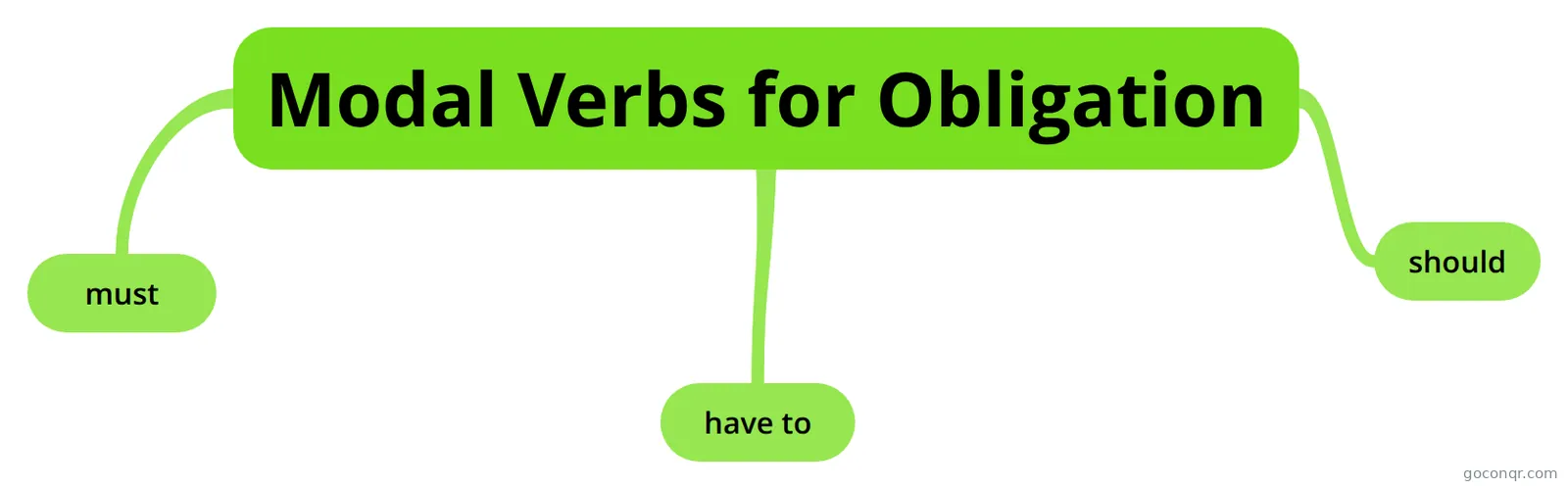 Modal Verbs for Obligation
-
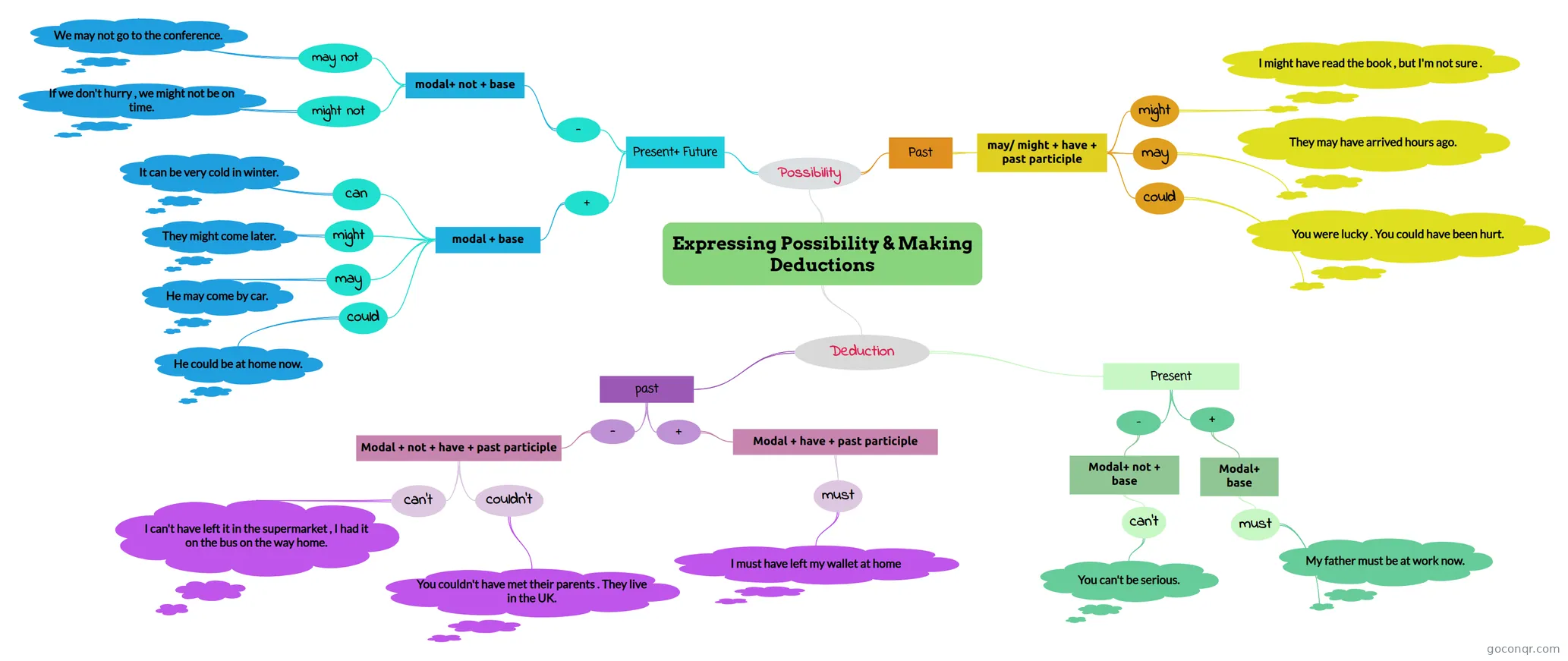 Expressing Possibility & Making Deductions modals
-
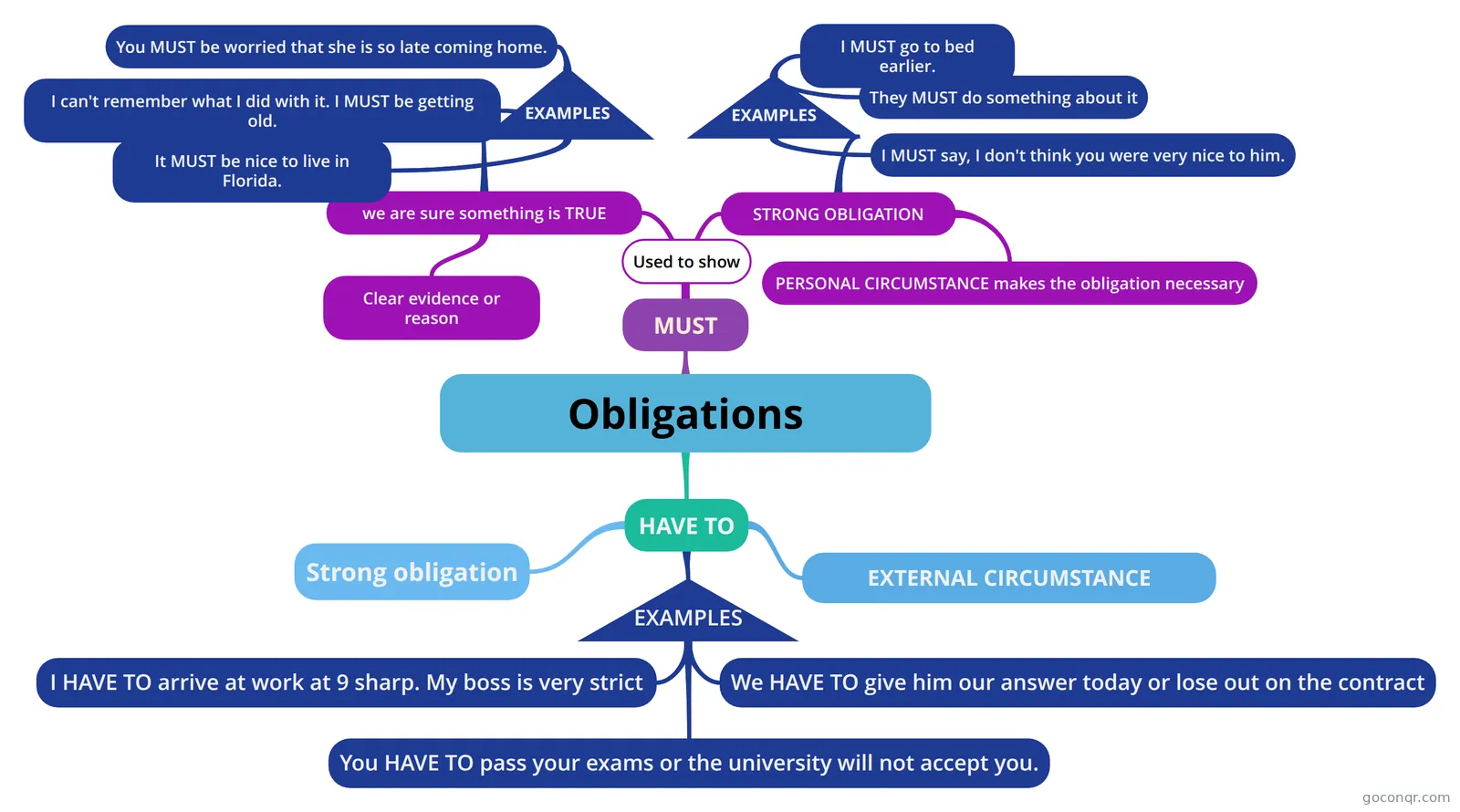 Obligations Comparing must and have to.
-
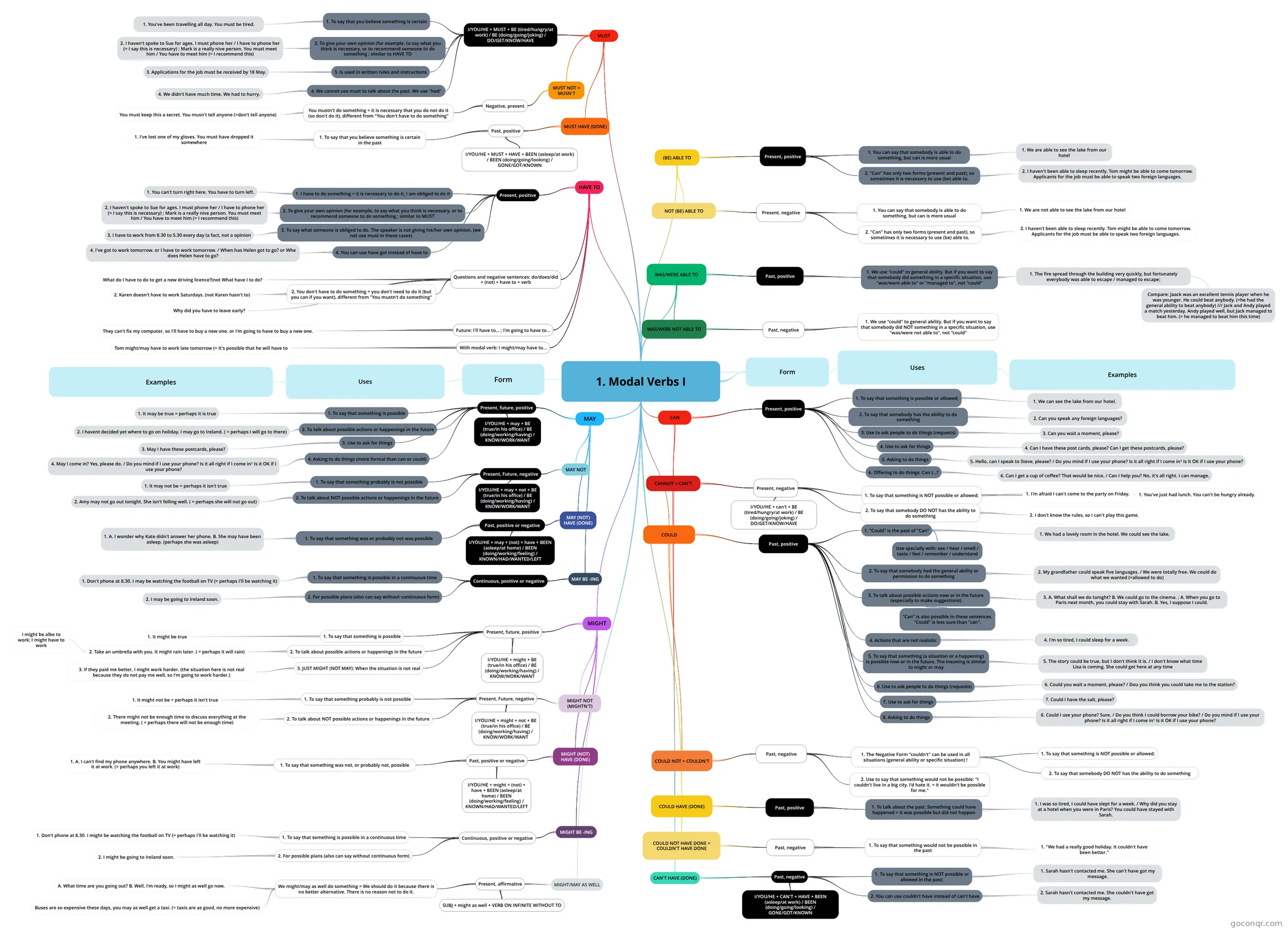 1. Modal Verbs I
-
Modal Verbs
-
MODALS
-
MODALS
-
2. Modal Verbs II
-
5° semester
-
Modal verbs
-
Modals
-
Modal Verbs
More Modal Verbs resources
About modal verbs mind maps
GoConqr OriginalChoosing modal verbs mind maps
Start with Modal Verbs for an introduction to ability and sentence structure. Its branches bring together can, could and be able to, with an example of how a modal fits into a sentence.
For a focused topic, try Must - Have to - Need, which groups forms used for obligation. Should / Shouldn't brings together advice, suggestions and situations considered likely. The map Modals & semi-modals includes permission, requests and examples.
Revise with a map
Read one branch at a time and use its examples to recall how the form is used. Then compare it with a map on a related topic. For instance, the maps titled Modals of deduction cover different degrees of certainty, and some distinguish present and past contexts.
When you want a different way to practise, switch to another format on the Modal Verbs unit page. Choose a map and begin with the branch you want to review.
Frequently asked questions
Which mind map is a good place to start?
The map titled Modal Verbs is a useful starting point. It introduces ability with can, could and be able to, and shows a sentence pattern with an example. For a narrower focus, can - can't looks at ability and possibility.
Do these maps cover deduction and obligation?
Yes. Several maps titled Modals of deduction look at how sure a speaker is, including the use of must, might, may and could. Must - Have to - Need covers obligation, while other maps include prohibition and the absence of obligation.
Are the mind maps free to use?
Yes. Every resource listed here is free to open and study, and you do not need an account to use it. The maps were made by GoConqr users, so you can explore different ways people have organised examples and explanations.