
Present Tense and Verb Conjugation
87 resources created by 73 users
This Present Tense and Verb Conjugation page on GoConqr gathers community-made quizzes, mind maps, flashcards and notes, from regular -er, -ir and -re verbs to irregular favourites like avoir, être, aller and faire. It's built for school students revising conjugations and teachers after ready-made material. There are over 350 resources here, including more than 50 quizzes, over 50 mind maps and over 220 flashcards, mostly at secondary level and including GCSE French. Pick a verb, try a quiz to find your gaps, then make your own set.
Top Present Tense and Verb Conjugation resources
-
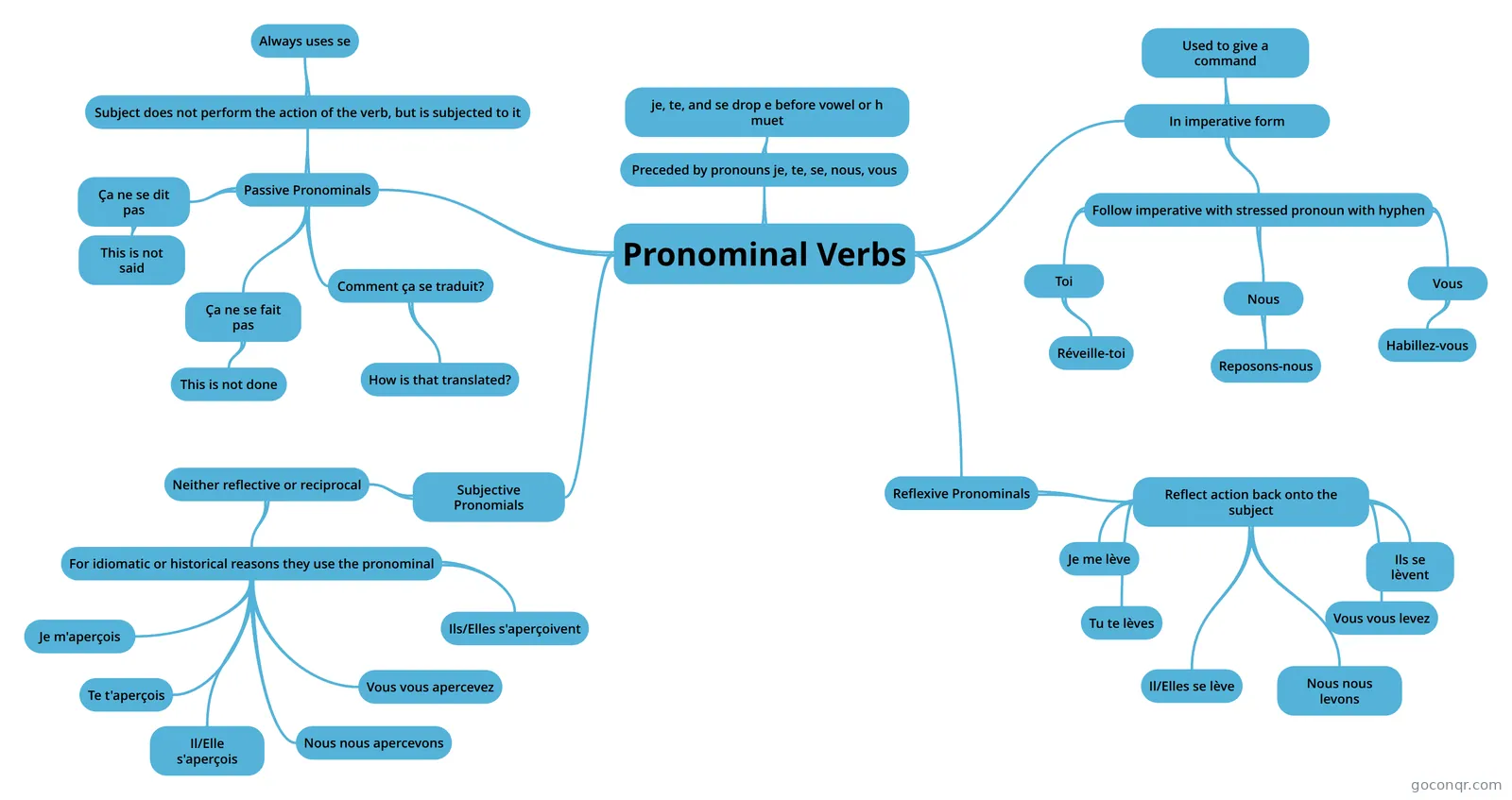 Mind map Pronominal Verbs
-
24 questionsVerbs Translate 'you are' into French
-
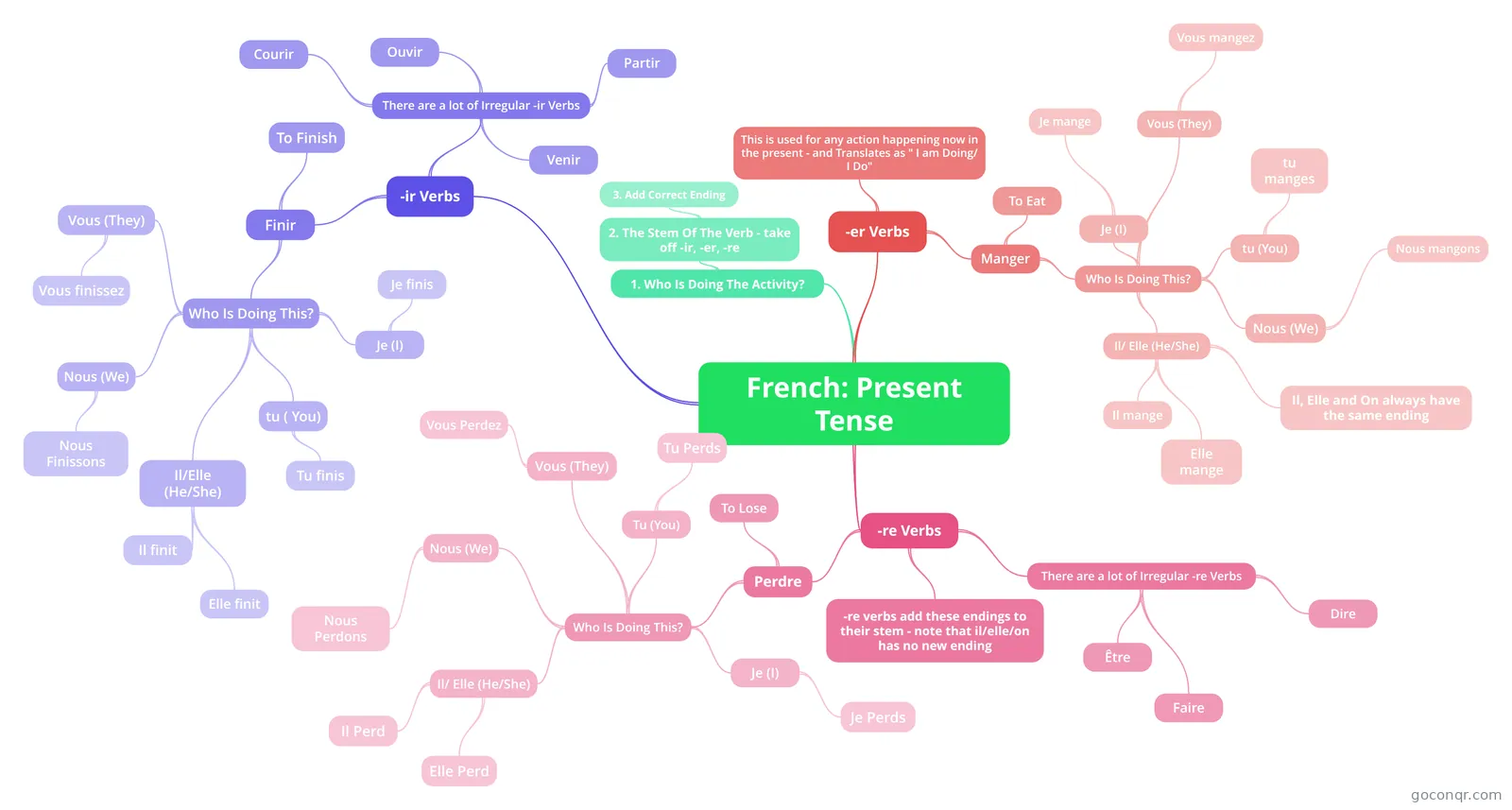 Mind map French: Present Tense
-
8 cardsFrench verb endings Present tense -ER endings
-
6 questionsFrench Verb Mettre Conjugation Quiz on French Irregular Verb Conjugation, created by zizzyfizzy on 05/19/2016.
-
8 cardsPrendre verb conjugation Conjugation of prendre French verb - to take
-
10 cardsBasic French Verbs This flashcard deck has some basic French verbs you can use to get started learning the language.
-
6 cardsFrench- Regular-re Verbs
Quizzes
See all 18 quizzes-
24 questionsVerbs Translate 'you are' into French
-
6 questionsFrench Verb Mettre Conjugation Quiz on French Irregular Verb Conjugation, created by zizzyfizzy on 05/19/2016.
-
9 questionsHardest Subjects French test the knowledge on how to conjugate certain verbs in both past participle, passe composse, present as we...
-
10 questionsAvoir - Lesson 1 True or false, 'avoir' means 'to eat'.
-
10 questionsRegular Verbs - Lesson 3 (RE Verbs) Select 'I don't want to wait'.
-
7 questionsFrench Final (conjugating verbs) Simple testing of the conjugation of french verbs. Verbs conjugated are Avoir, etre, faire, aller, and verb...
-
12 questionsFrench I er verbs
-
10 questionsBasics 2 - Lesson 1 Select 'je lis'.
Mind maps
See all 10 mind maps-
Pronominal Verbs
-
French: Present Tense
-
Le passe compose Verbs, endings and understanding of Passe composse
-
French
-
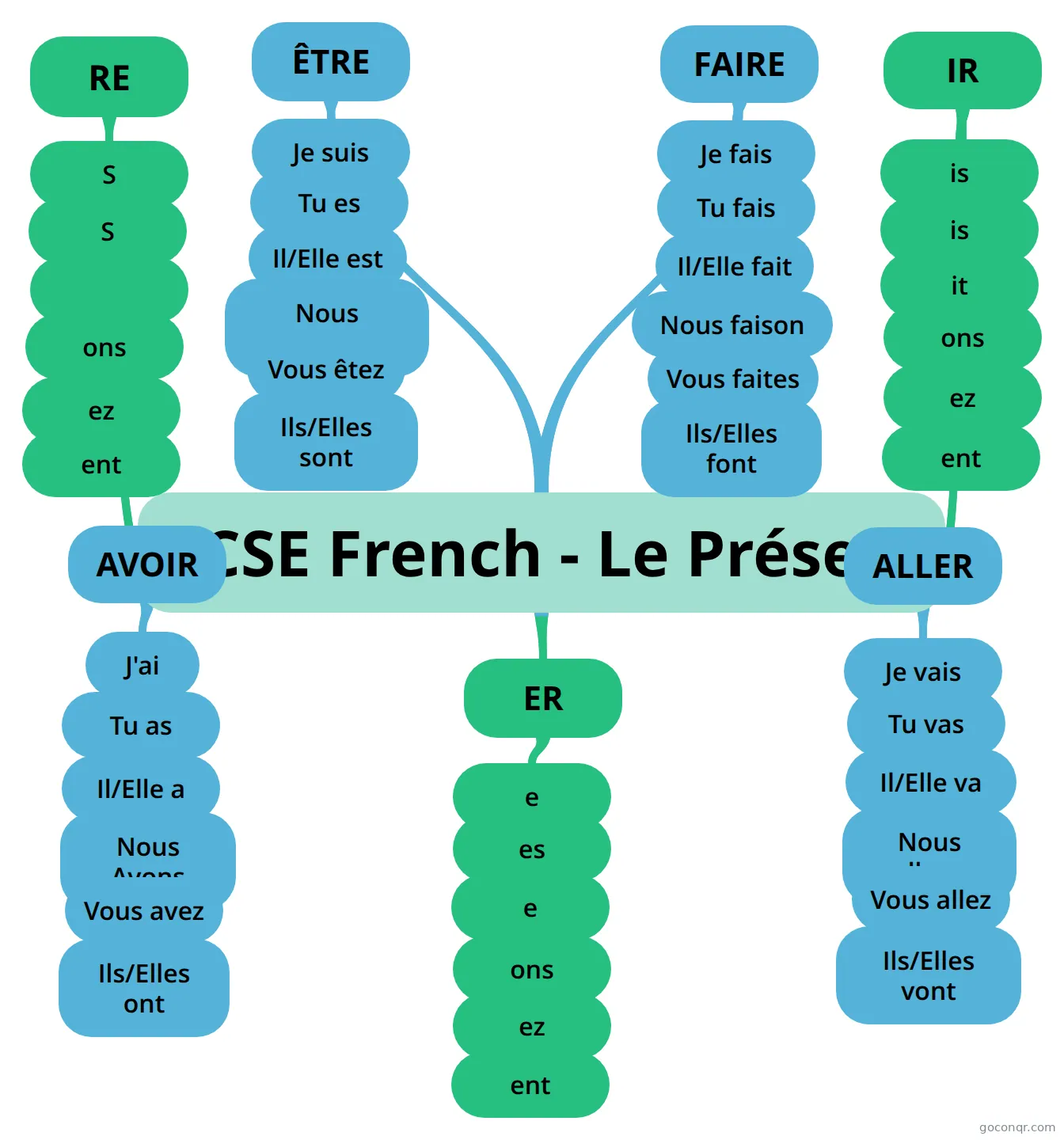 GCSE French - Le Présent Mindmap of both regular and irregular verbs in the present tense
-
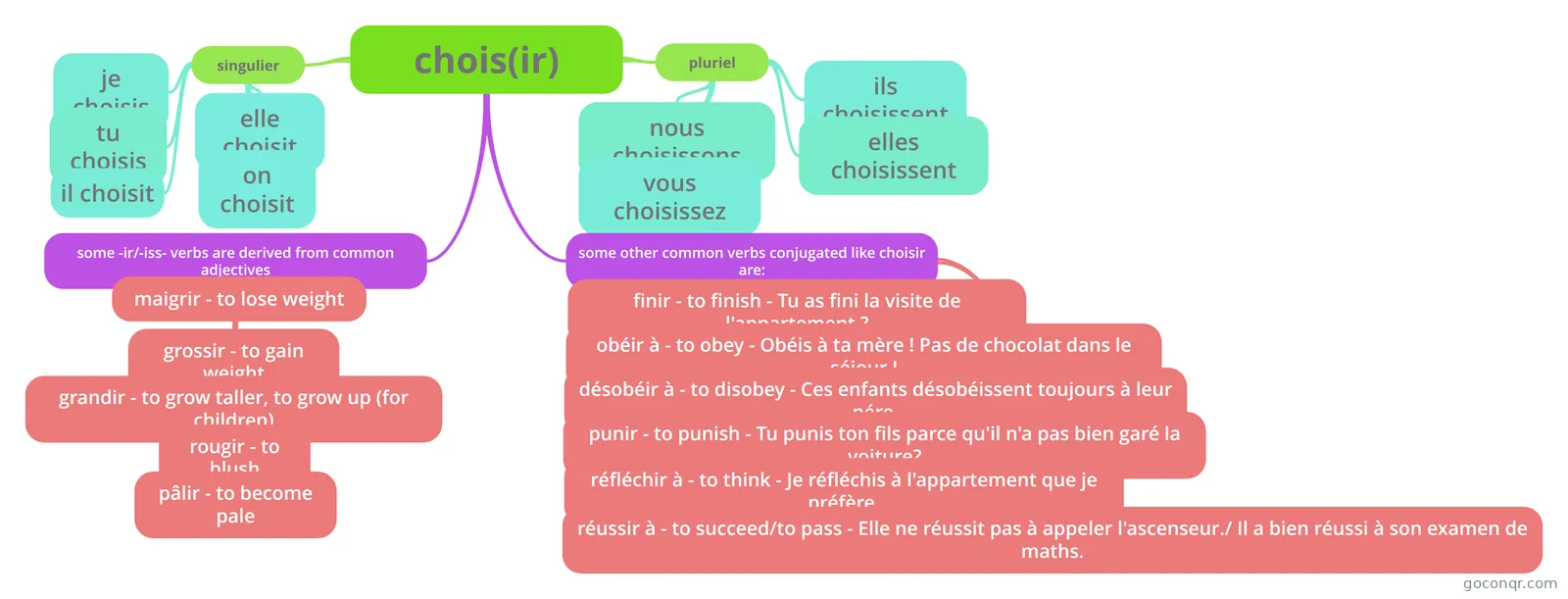 chois(ir) Les verbes en -ir comme choisir
-
French An easy to follow, simple and colourful mind-map to help you learn a few of the verb patterns.
-
FrEnCh description
Flashcards
See all 51 flashcards-
8 cardsFrench verb endings Present tense -ER endings
-
8 cardsPrendre verb conjugation Conjugation of prendre French verb - to take
-
10 cardsBasic French Verbs This flashcard deck has some basic French verbs you can use to get started learning the language.
-
6 cardsFrench- Regular-re Verbs
-
11 cardsFrench Chores Aider a La Maison
-
111 cardsGCSE French Edexcel High Frequency Verbs: Second Set High frequency verbs in the French Edexcel GCSE
-
36 cardsPRACTICE _ VERBS SEE to SHUT French meaning of to SEE
-
14 cardsFrench 1: Unit 8 What is the conjugation of "vouloir"?
Flowcharts
Notes
-
Tu me plais- I like you "Tu me plais"Translation: I have a crush on you/ I like you In other words: "plaire" is "to please" and not "to be pleased". The subject and object are switched compared to the English phrases (e.g. "I like you").Ther...
-
Irregular verbs Irregular verbs Etre - "to be" Aller - "to go" Je suis Nous sommes Je vais Nous allonsTu es Vous etes Tu vas Vous allezIl est Ils sont Il va Ils vontElle est elles sont Elle va Elles Vont Avoir - "to have "Faire - "to...
-
The verbs suivre and ouvrir 1) The verb suivre (to follow) is irregular. You can use suivre to say what courses you are taking. Suivre (past participle: suivi) Je suis Tu suisIl/Elle/On suit
-
Jouer + Faire (en) Using ‘jouer’ and ‘faire’ In french you use the verb ‘jouer’ when you are talking about instruments and sports which require a ball, and ‘faire’ for other sports In front of sports use au/ a la/ a l’ accordi...
-
Verbs Irreguliers etre = to beje suistu esil estelle estnouse sommesvous etesils sontelles sontavoir = to havej'ai tu asil aelle anous avonsvous avezils ontelles ontfaire = to doje faistu faisil faitelle faitnous faisonsvous faitesils ...
-
Verb Etre - French Verb "to be" : etre, present I am = Je suis You are = Tu es ( Informal ) He is = Il est She is = Elle est We are = Nous sommes You are = Vous êtes ( Formal ) ...
-
French irregular verbs Use this song to remember the verb endings it should fit quite nicely.
More French language topics
About Present Tense and Verb Conjugation
GoConqr OriginalWhat the page covers
This unit sits in the Verbs and Tenses strand of French language. It is all about the present tense: how to build it, and how to remember the verbs that break the rules.
- Regular verbs: the mind map French: Present Tense sets out -er, -ir and -re verbs and shows that the tense translates as "I am doing" or "I do". Flashcard decks such as French- Regular-re Verbs list rendre, descendre, attendre, entendre, vendre and perdre.
- Irregular verbs: there are quizzes on mettre, prendre, pouvoir, faire, voir and boire, plus decks on avoir, être, aller and faire.
- Reflexive verbs: the Pronominal Verbs mind map explains how je, te and se drop the e before a vowel or h muet, as in je me lève.
Where to start
Begin with French: Present Tense to see the three regular patterns on one screen. Then open the French verb endings flashcards, which cover -er, -ir with and without -ss, -re, and the present of avoir, être, aller and faire.
Using quizzes and maps together
Read a mind map first, then test yourself straight away. After the Pronominal Verbs map, try the quiz French: Reflexive or not?. After the regular-verb maps, try Regular IR. Wrong answers show you which endings to go back to on the map.
- Read a map or note.
- Go through a flashcard deck on the same verbs.
- Take a conjugation quiz, such as French Verb Mettre Conjugation.
- Return to the map for anything you missed.
Tricky corners
The note Tu me plais- I like you shows why plaire works differently from English, because the subject and object swap places. GCSE French - Le Présent is a handy map for exam-year students, and the deck GCSE French Edexcel High Frequency Verbs: Second Set gives extra practice.
Next step
Choose one verb you keep getting wrong and work through a map, a deck and a quiz on it. Teachers can pick a set to share with a class.
Frequently asked questions
Which resource should I open first?
Start with the mind map French: Present Tense. It shows the -er, -ir and -re patterns and how the tense is translated. Then move to the French verb endings flashcards, which also include avoir, être, aller and faire, before trying a quiz.
Which irregular verbs have their own quizzes?
There are separate conjugation quizzes for mettre, prendre, pouvoir, faire, voir, boire and avoir. You will also find quizzes on vouloir, devoir, être and a mixed test on aller, avoir and être, so you can drill one verb at a time.
What do the mind maps cover?
They cover regular -er, -ir and -re verbs, spelling-change and -yer verbs, and pronominal verbs. Others focus on single verbs such as faire and avoir. There is also a GCSE French map called GCSE French - Le Présent.
Are these resources suitable for GCSE French?
Yes, many are. Most of the resources on this page are at secondary level, and some mention GCSE French directly, including a deck of Edexcel high frequency verbs. Check each resource's content against your own course.
Do I need to pay or sign up to use them?
Every resource listed here is free to open, study and take, with no account. A free account lets you save quiz scores and make your own quizzes, mind maps, flashcards and notes.
Who made these resources?
They were made by GoConqr users, not by GoConqr itself. That is why styles differ, from short flashcard lists to full mind maps. If a verb is missing, you can make your own set.