
Religious Language mind maps
117 mind maps by 74 users · Page 1 of 3
This Religious Language page gathers mind maps on verification, falsification, analogy and related questions. School students, university students and professional candidates can practise comparing ideas, while teachers can find ready-made material. Browse over 100 mind maps spanning school to university level, and choose one to begin.
Mind maps
-
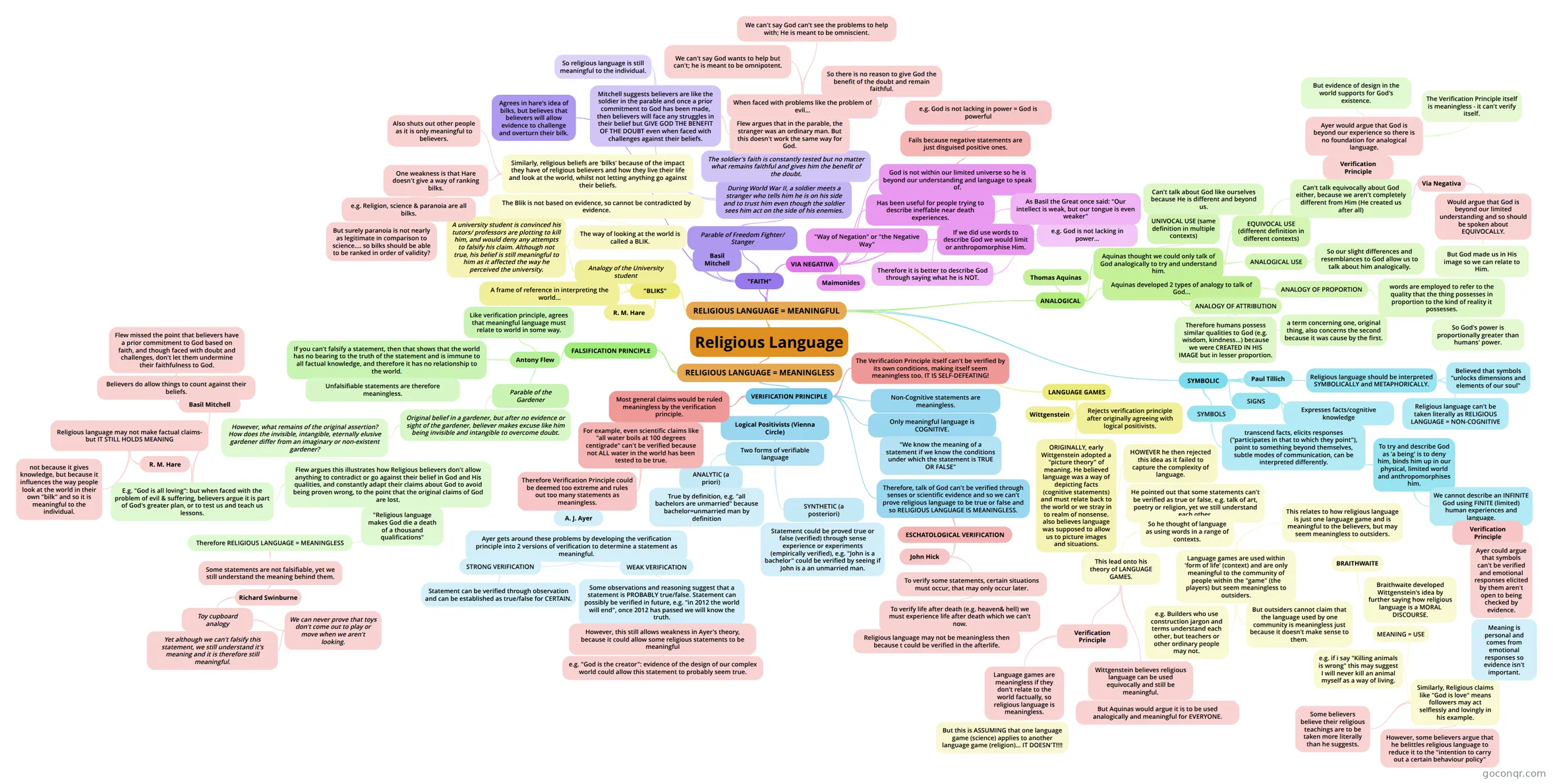 Religious Language A2 philosophy on 'Religious Language' (AQA)
-
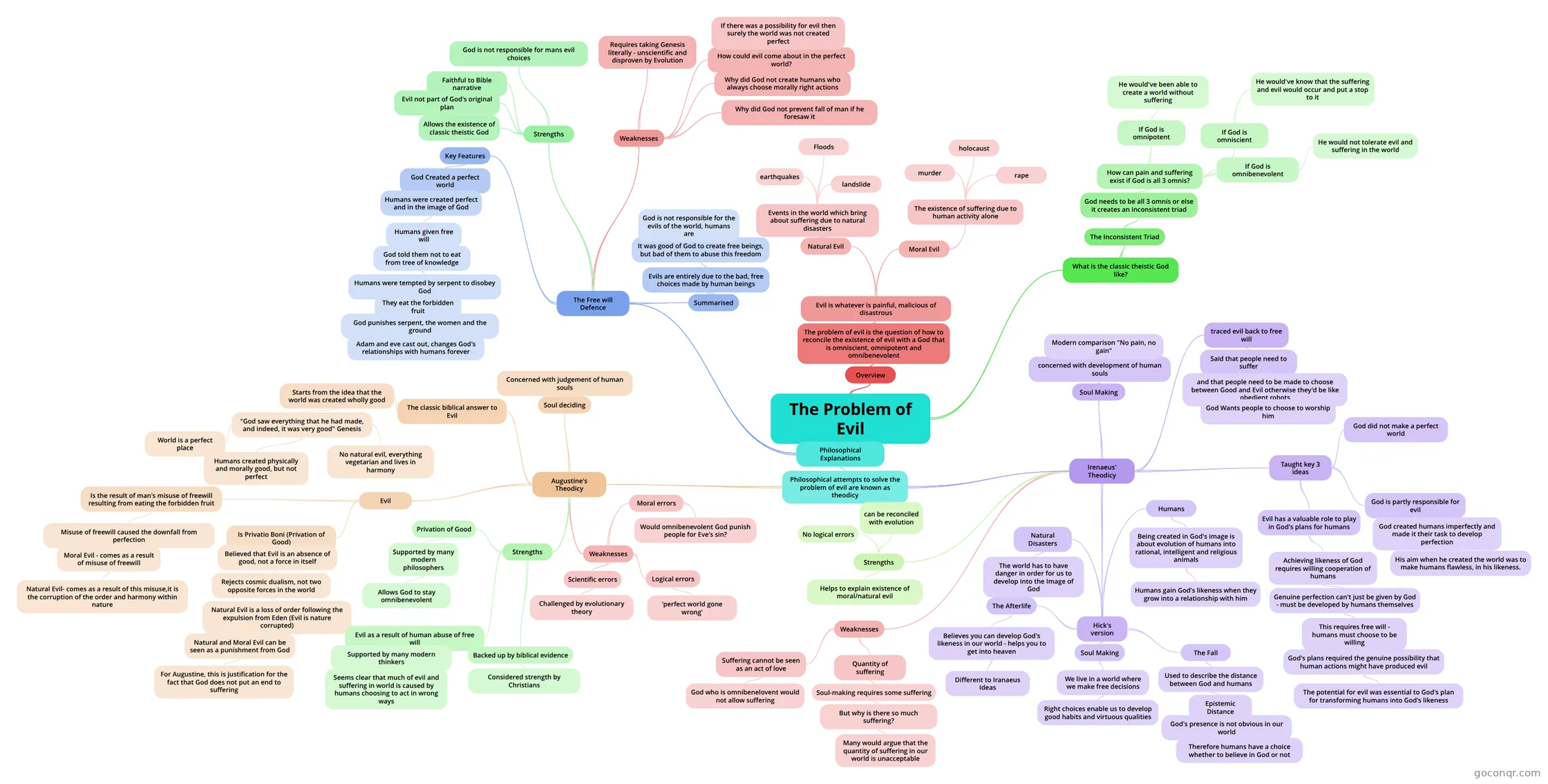 The Problem of Evil
-
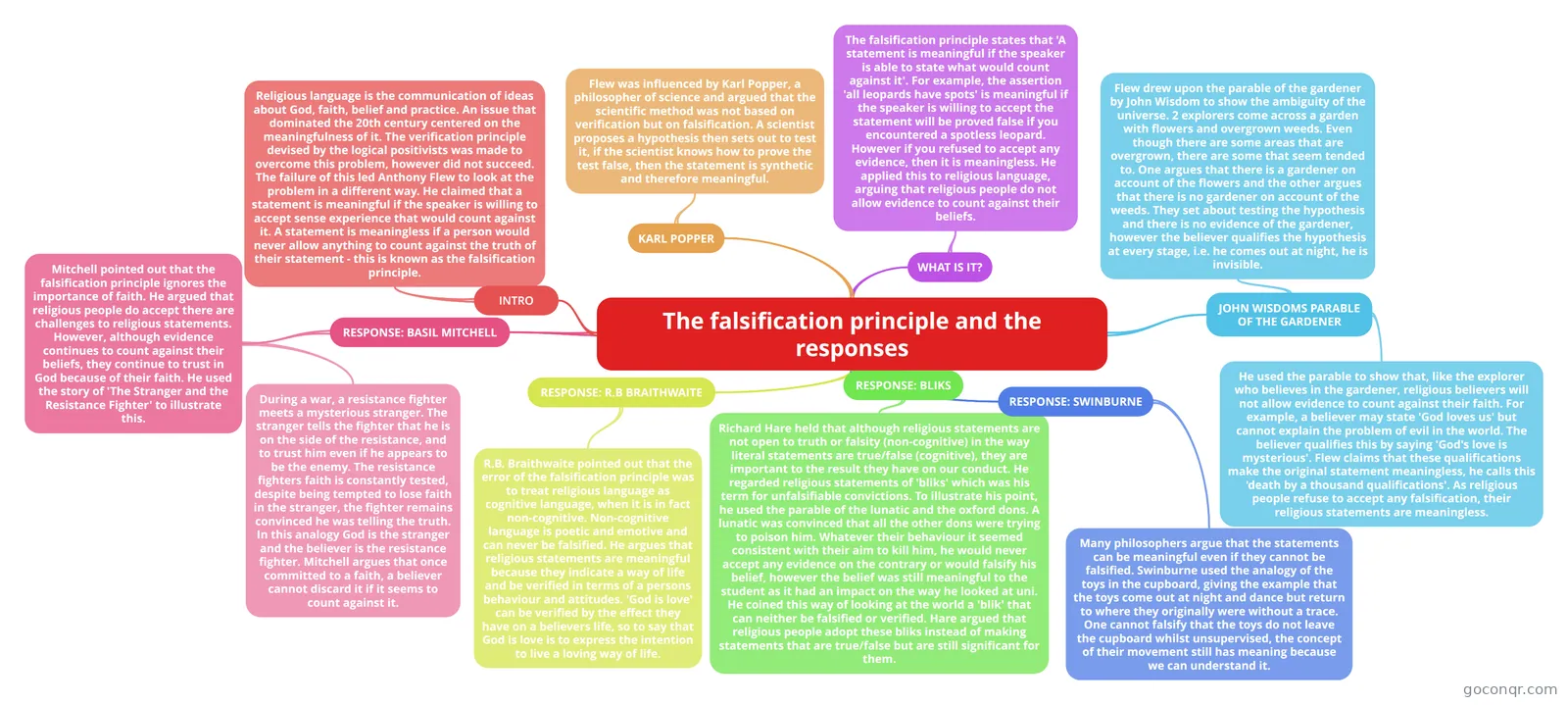 The falsification principle and the responses
-
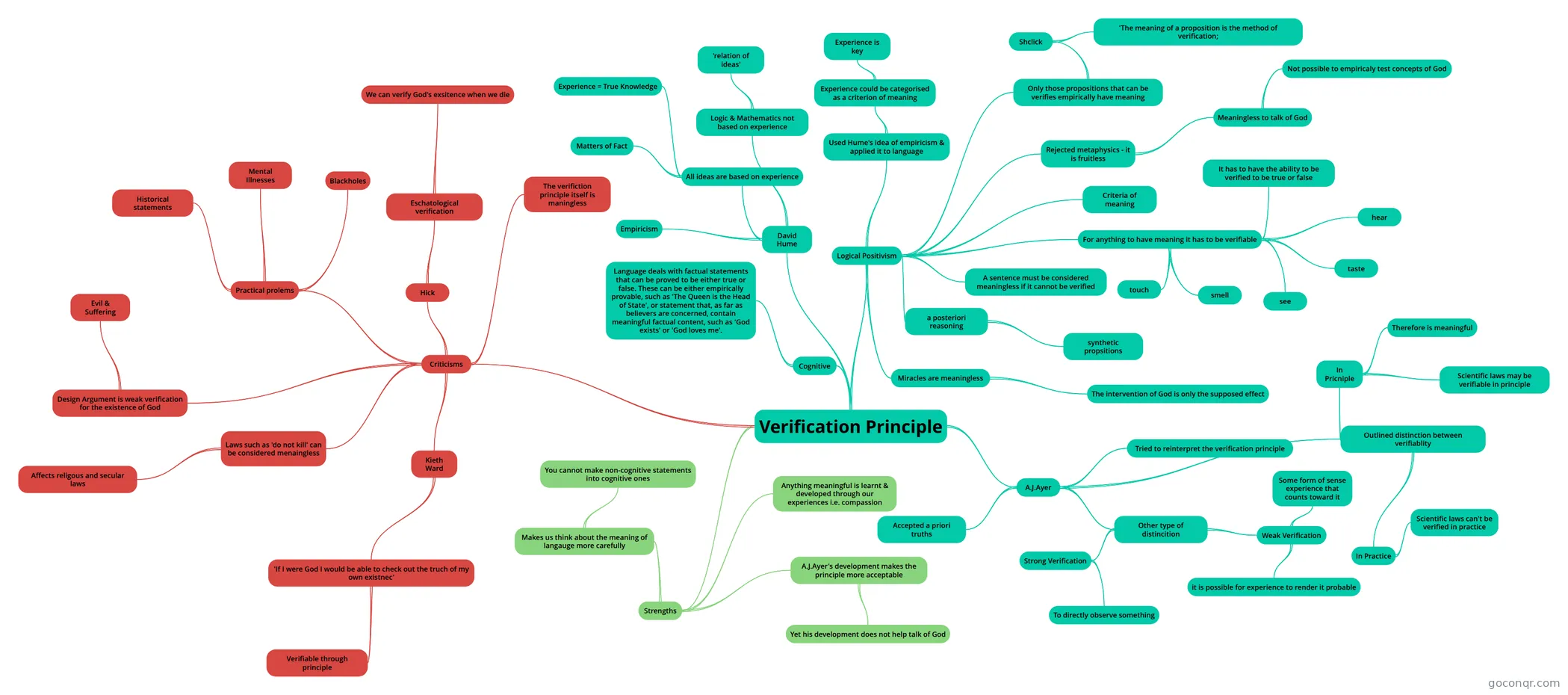 Verification Principle
-
Miracles AQA understandings of miracle: realist and anti-realist views comparison of Hume's and Wiles' argument
-
Religious language
-
Analogy and Aquinas
-
FALSIFICATION
-
The Nature of God
-
Verification Principle
-
Religious Language
-
Religious Language
-
5-6. Religious Language
-
Religious Language
-
Verification
-
Religious Language part 1
-
Falsification
-
Verification Principle
-
Religious Language
-
Wittgenstein
-
VERIFICATIONISM / FALSIFICATION PRINCIPLE
-
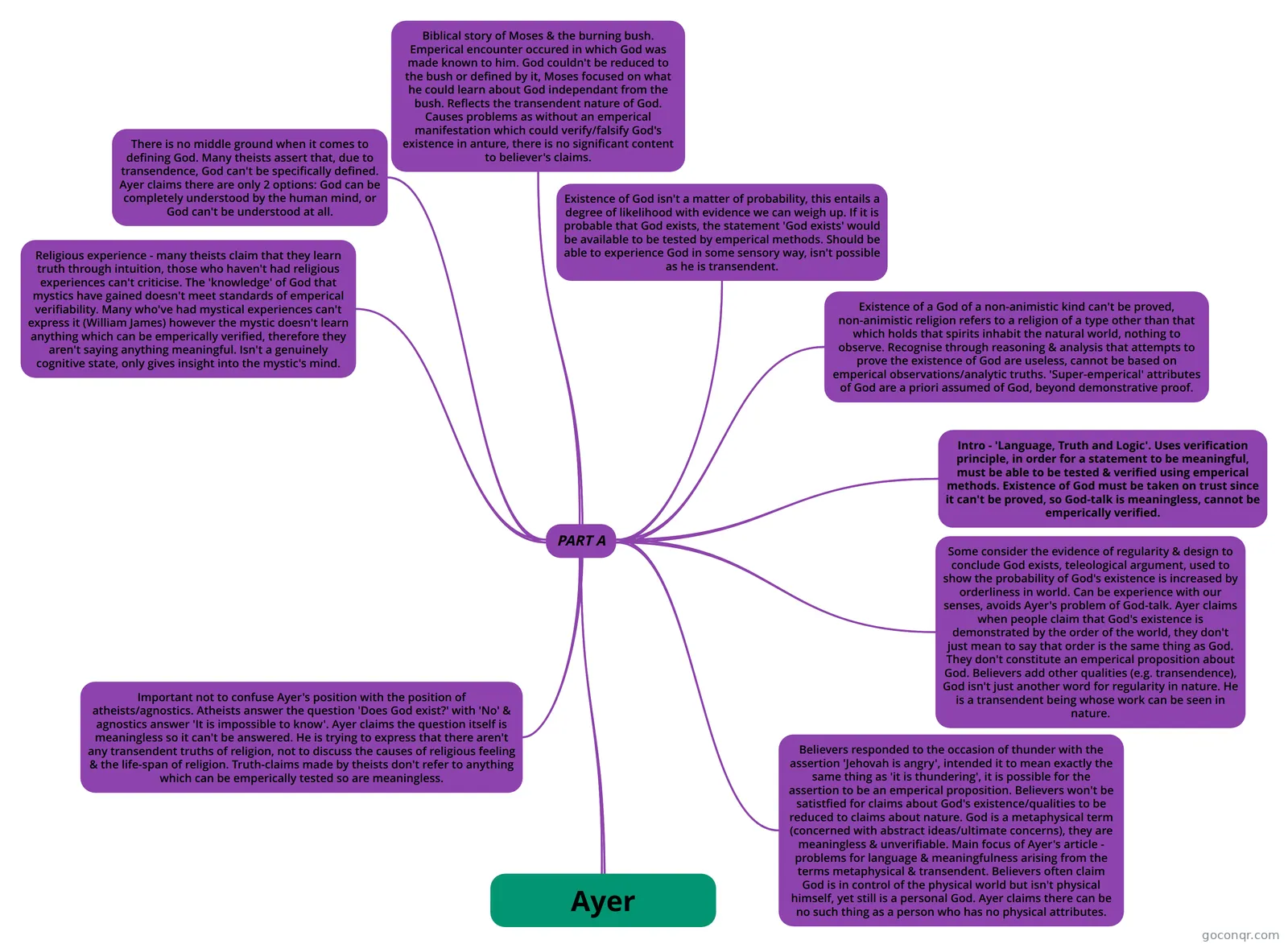 Ayer
-
Theology and Falsification: A Symposium
-
RELIGIOUS LANGUAGE
-
 A2 PHILOSOPHY: RELIGIOUS LANGUAGE: SYMBOL, MYTH, ANALOGY
-
Falsification
-
The Via Negativa
-
Is religious language meaningful?
-
Religious Language - Twentieth century perspectives Mindmap of Religious Language A2 Philosophy
-
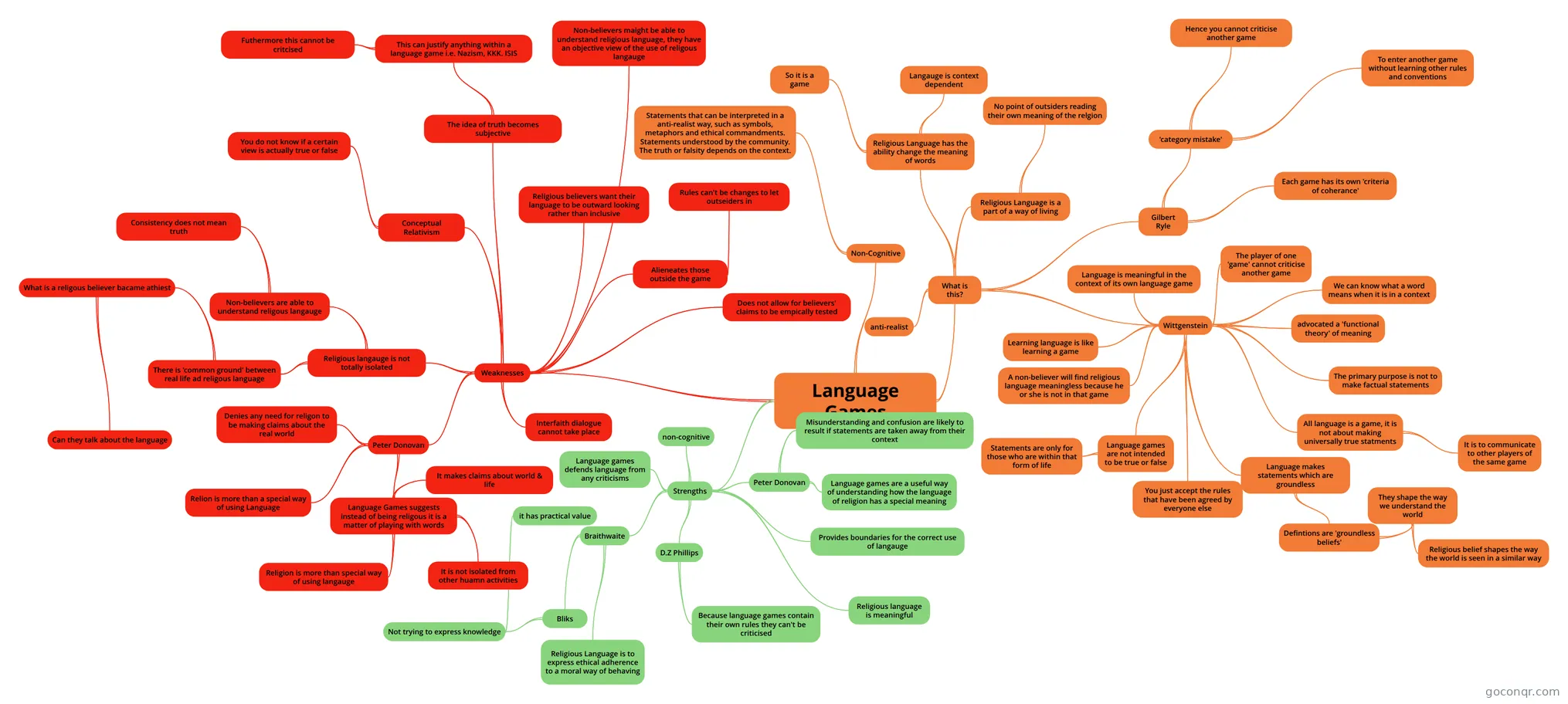 Language Games
-
Religious Language
-
The cataphatic way- via positiva
-
Untitled
-
Religious Language
-
If God is transcendent and ineffable, how can we talk about God in any meaningful way?
-
Religious Language
-
A miracle as a violation of Natural Law
-
VERIFICATIONISM
-
Examine ways in which religious language expresses ideas about God/Ultimate Reality (45 marks)
-
Analogy
More Religious Language resources
About religious language mind maps
GoConqr OriginalReligious Language mind maps
These maps offer different routes through the unit. Religious Language introduces the verification principle and cognitive language, while The falsification principle and the responses focuses on another approach to meaningful statements. Other maps cover analogy and Aquinas, the Via Negativa and language games.
For a focused starting point, try Verification Principle. Its branches distinguish factual statements from other kinds of language. Read a branch at a time, then use its structure to explain the distinction in your own words.
Revise with maps
Compare branches across maps to see how approaches and responses relate. The page also includes maps on the problem of evil and the nature of God for related questions. If you want to check your recall, switch to a quiz on the unit page; for a fuller written explanation, use notes. Pick a map and follow its branches at your own pace.
Frequently asked questions
Which mind map could I start with?
Start with Religious Language if you want an overview that includes the verification principle and cognitive language. For a narrower focus, Verification Principle separates factual statements from other kinds of language. You can then compare it with the map on the falsification principle and its responses.
Are these mind maps free to use?
Yes. Every mind map listed here is free to open and study without an account. The resources were made by GoConqr users. A free account also lets you save quiz scores and make your own quizzes, mind maps, flashcards and notes.
Which levels do the maps suit?
The collection includes school and university-level resources, with most at school level. Some resources mention A-level Religious Studies, A-level Philosophy or IB. Check each map against the topic you are studying: the collection includes verification, falsification, analogy and language games as well as related questions.