
The Orchestra
207 resources created by 169 users
This Music page on GoConqr gathers community-made quizzes, mind maps, flashcards and notes on The Orchestra, from the four instrument families to individual instruments such as the oboe, tuba and double bass. It's built for school students revising the topic, and for teachers after ready-made material, with a few primary pupils among the contributors' audience too. There are over 170 resources here, including more than 10 quizzes, more than 110 mind maps and more than 30 flashcard decks. Try a quiz to find your gaps, then revise from the maps.
Top The Orchestra resources
-
7 questionsInstruments of the Orchestra quiz What are the four instrument families called?
-
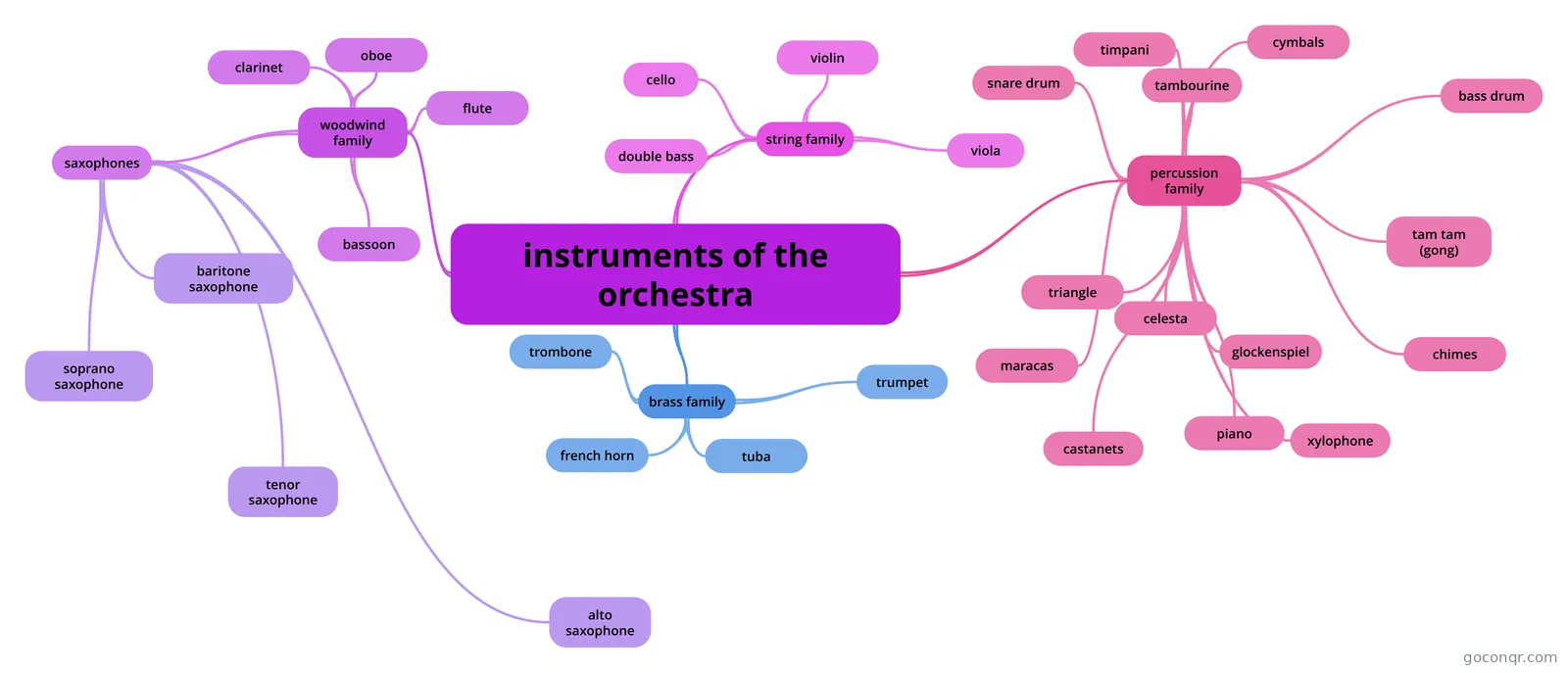 Mind map instruments of the orchestra
-
10 questionsInstruments of the Orchestra Which brass instrument uses a slide?
-
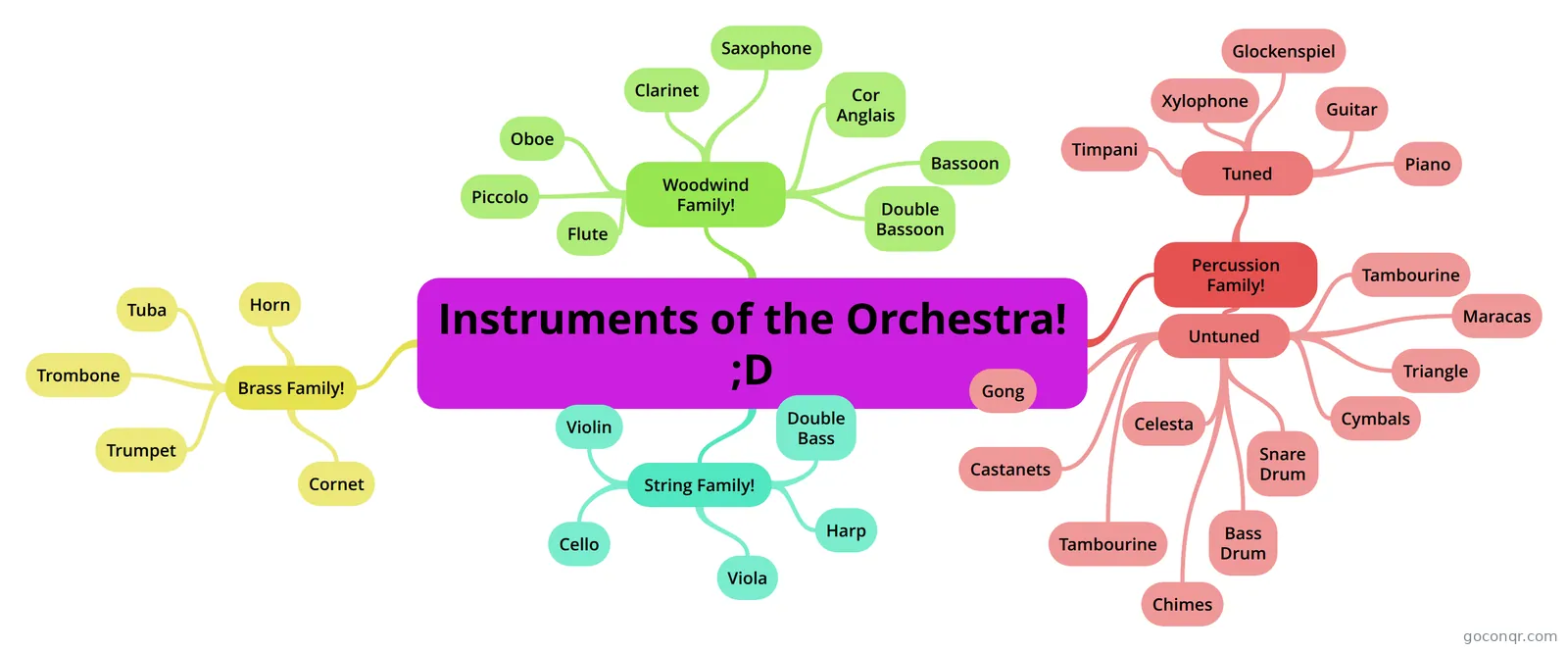 Mind map Instruments of the Orchestra! ;D
-
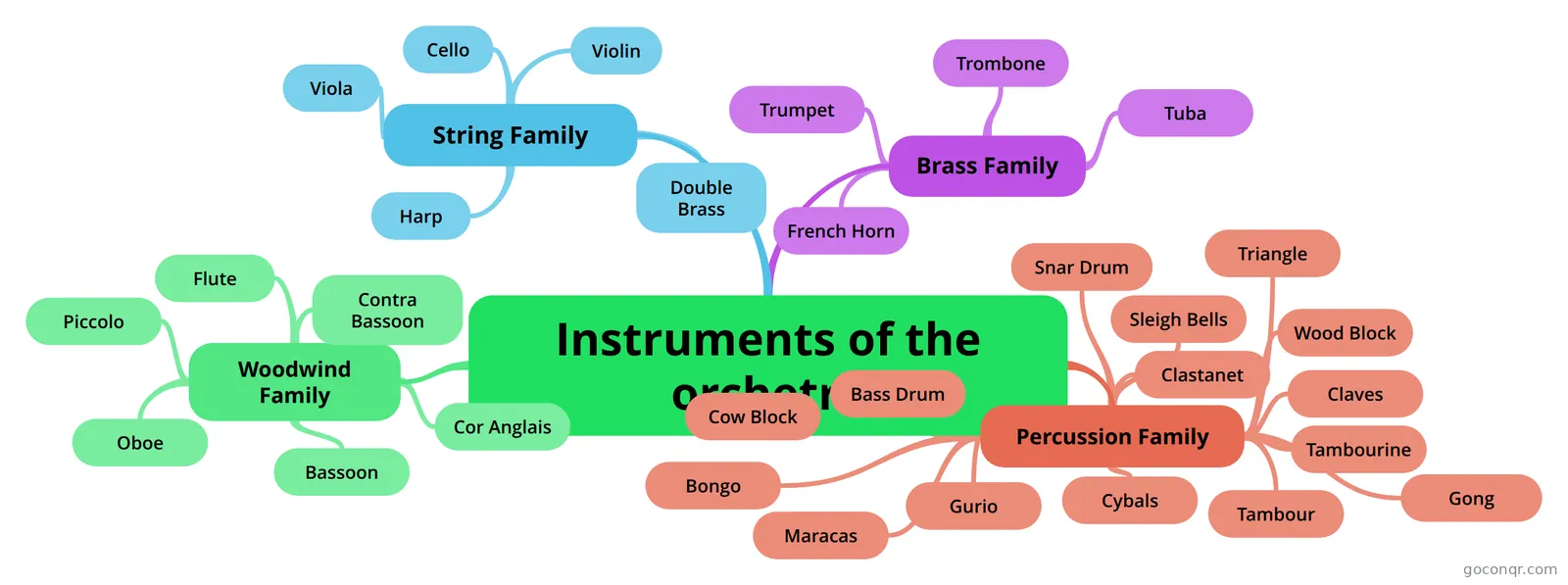 Mind map Instruments of the orchetra
-
Mind map Instrument of the Orchestra
-
Mind map Orchestral Family
-
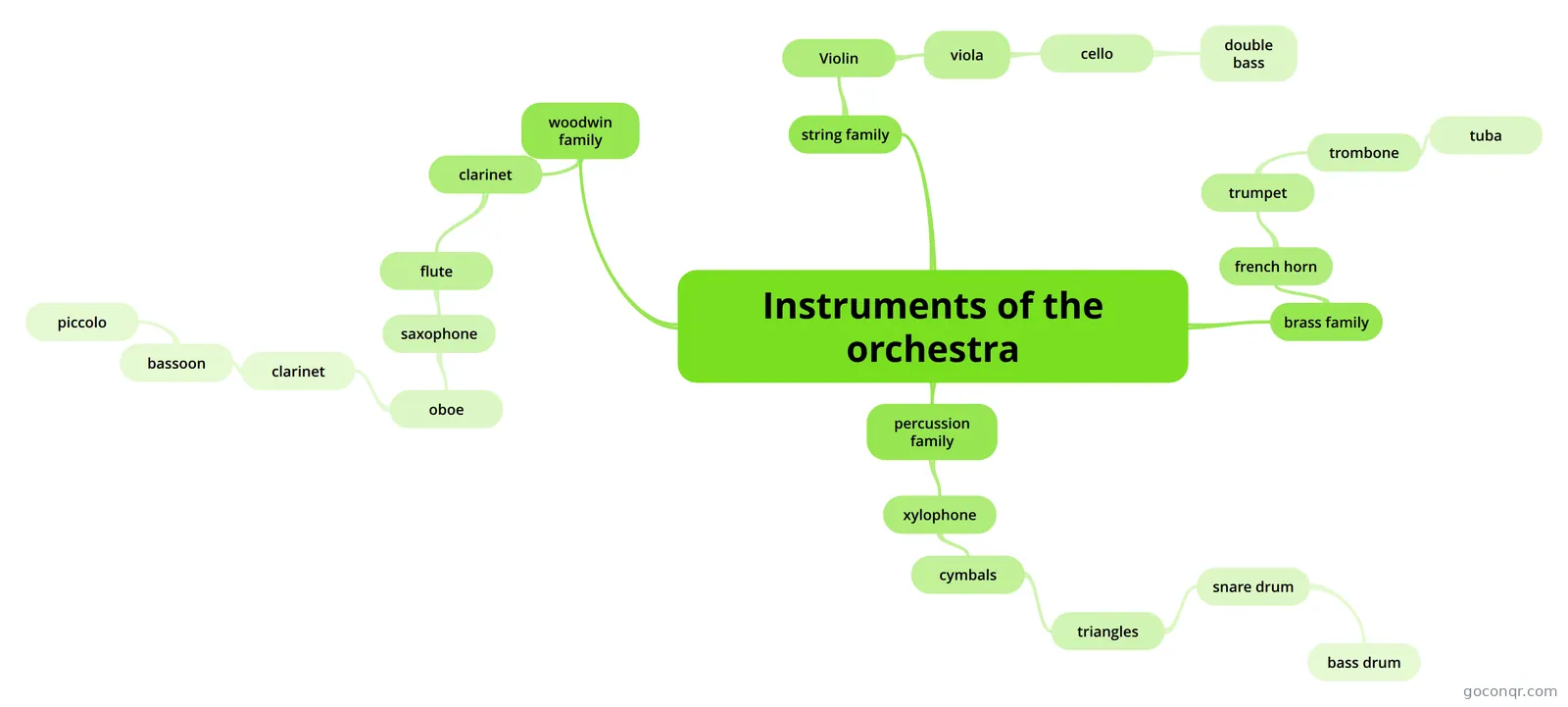 Mind map Instruments of the orchestra
Quizzes
See all 21 quizzes-
7 questionsInstruments of the Orchestra quiz What are the four instrument families called?
-
10 questionsInstruments of the Orchestra Which brass instrument uses a slide?
-
17 questionsUntitled how many beats does a dot add to a note ?
-
20 questionsmusic quiz Which of the following is NOT a way to make sound from a instrument?
-
17 questionsinstruments of the orchestra quiz Which instrument listed below is in the tuned percussion family
-
20 questionsInstruments of the Orchestra What is duration?
-
15 questionsInstruments of the Orchestra What Is Definite Pitch?
-
15 questionsInstuments! Which brass instrument has a slide?
Mind maps
See all 124 mind mapsFlashcards
See all 57 flashcards-
18 cardsinstruments of the orchestra
-
28 cardsChamber Music-Texture Overall tonality-Mendelssohn Modulations?
-
24 cardsInstruments and how they are played
-
20 cardsUntitled Name 4 Brass instuments
-
16 cardsThe Orchestra Families The Orchestra Families
-
7 cardsInstruments of the orchestra A Violin is the highest pitched instrument in the string family. It has 4 strings and a bow made of horse h...
-
17 cardsMusic What is duration?
-
33 cardsInstruments of the Orchestra Pictures
Flowcharts
Notes
-
Instruments of the Orchestra! ;D - created from Mind Map String Family! Includes Viola, Violin, Cello, Double Bass, Harp, and the Guitar. String instruments are in a family together because they are made from similar materials and make a similar sound in a similar way...
-
The String Family The String FamilyThe string family is made up of four well know instruments: the violin, the viola, the violoncello (cello) and the double bass. Other string instrumer such as the harp, piano and guitar are regul...
-
Instruments of the orchestra, four families,accidentals, notes and rests. instruments of the orchestraFAMILIES OF THE ORCHESTRASTRINGS E.G. GUITAR AND VIOLIN AND VIOLA BRASS E.G. TRUMPET AND TUBA WOODWIND E.G. CLARINET , SAXOPHONE PERCUSSION E.G. TAMBOURINE ,DJEMBE AND SHAKERS THE PERSON WH...
-
The Violin The violin is the smallest instrument in the string family. It is also the highest pitched instrument in the string family. New Page
Topics in The Orchestra
More Music topics
About The Orchestra
GoConqr OriginalWhat this unit covers
The unit is about The Orchestra in the Instruments and Voice strand of Music. Most of the resources focus on the four families: strings, woodwind, brass and percussion. The mind maps break each family into its instruments, from violin, viola, cello and double bass to flute, piccolo, oboe, clarinet and bassoon, then trumpet, french horn, trombone and tuba. Some maps also split percussion into tuned and untuned.
Where to start
Begin with a mind map to see the whole picture. The map called instruments of the orchestra lays out the four families and their instruments in one view. The map Orchestral Family adds extras such as the contrabassoon, bass clarinet and English horn.
Then move to a quiz. The Instruments of the Orchestra quiz asks you to name the four families and spot the odd one out, for example that the flute is woodwind, not brass. Another quiz with the same title goes deeper, asking about double stopping, the clef used for the double bass and what changes the pitch of a brass instrument.
Using quizzes and maps together
- Read a map and cover the instrument names.
- Take a quiz and note what you missed.
- Go back to the map for those families only.
- Try a flashcard deck such as Identify Instruments, which pairs instruments with their families.
Beyond the families
A few flashcard decks stretch into chamber music, texture, structure and form, and the development of instrumentation. Some resources mention GCSE Music and A-level Music, so older students can use them as extra practice alongside their course. Teachers can pick a map or quiz to use with a class as it is.
Where it sits
This unit belongs to the Instruments and Voice strand of the Music subject. Pick a resource that suits you, and when you are ready, make your own maps and flashcards to match your lessons.
Frequently asked questions
Which resource should I open first?
Start with the mind map called instruments of the orchestra. It shows the four families and their instruments in one place. After that, try the Instruments of the Orchestra quiz, which asks you to name the families and pick out the instrument that does not belong.
What do the mind maps cover?
They sort orchestral instruments into strings, woodwind, brass and percussion. Some stay with the main instruments, while others add the piccolo, cor anglais, contrabassoon, bass clarinet, harp and saxophone. A few also divide percussion into tuned and untuned instruments.
Are the resources free to use?
Yes. Every resource listed here is free to open, study and take, with no account needed. They were made by GoConqr users, not by GoConqr itself. A free account also saves your quiz scores and lets you make your own quizzes, mind maps, flashcards and notes.
Which levels and exams do they suit?
Most resources are aimed at secondary school students, and a few at primary pupils. Some mention GCSE Music and A-level Music. Teachers can use the quizzes and maps as ready-made material for lessons or revision.
Is there anything beyond naming instruments?
Yes. Some quizzes ask about double stopping, the clef for the double bass and what causes pitch in brass instruments. There are also flashcard decks on chamber music texture, structure and form, and the development of instrumentation.
What if I cannot find what I need?
Try a different resource with a similar title, as many cover the same families in different ways. If your topic is missing, you can build your own mind map, quiz or flashcards and shape them around your own lessons.