
Pitch, Melody and Harmony
262 resources created by 188 users
This Pitch, Melody and Harmony page on GoConqr gathers community-made quizzes, mind maps, flashcards and notes on intervals, chords, cadences, melody and Bach chorale rules. It's built for school students revising a topic and for teachers after ready-made material, with a few resources that suit university students or professional candidates too. There are over 230 resources here, including more than 20 quizzes, over 70 mind maps and over 120 flashcard decks, mostly at secondary level. Pick a quiz to find your gaps, then explore the maps.
Top Pitch, Melody and Harmony resources
-
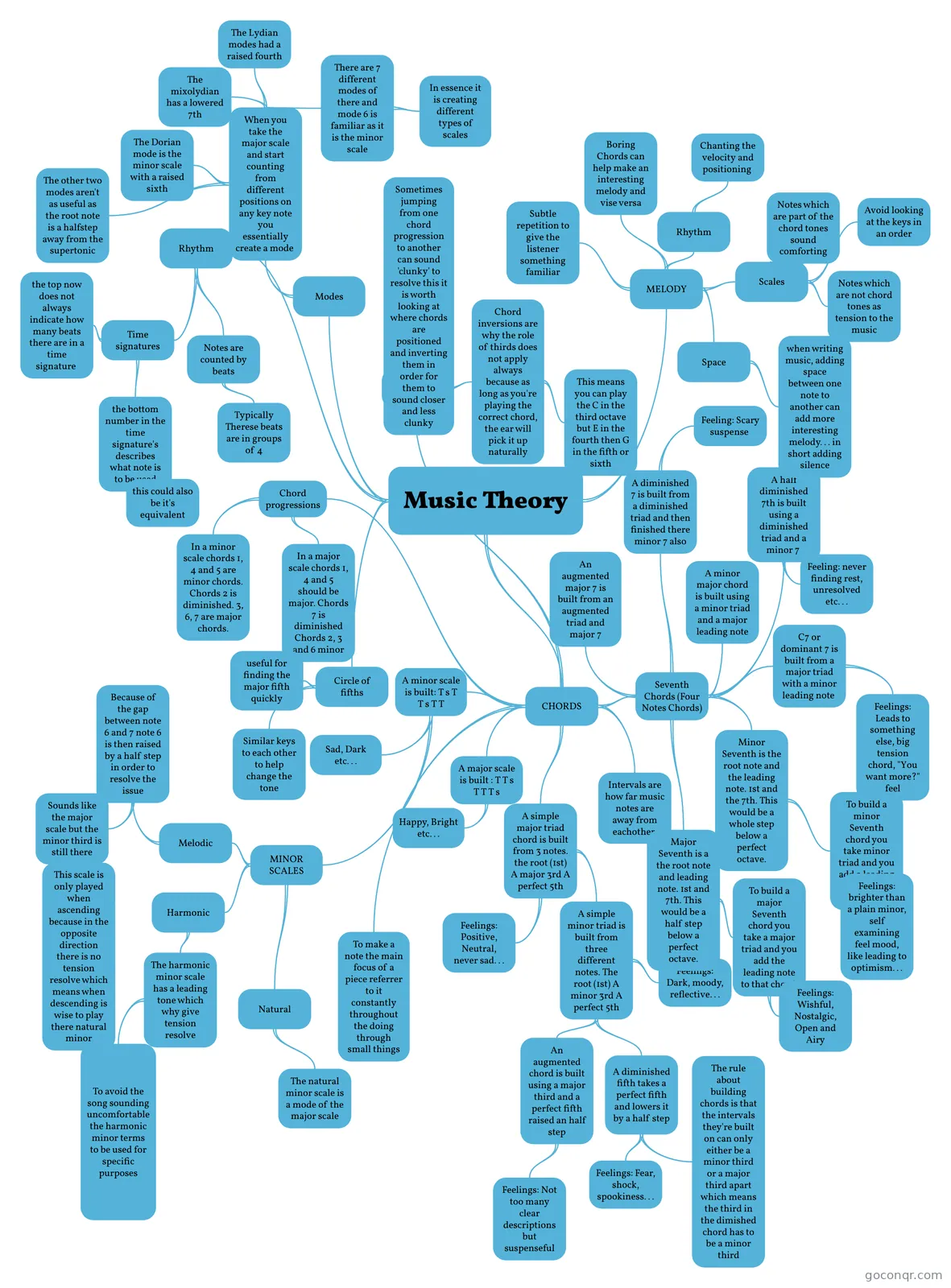 Mind map Music Theory All the basic and general music knowledge
-
84 questionsDiatonic Chords (Major Keys) What is the I chord in C?
-
20 questionsDiatonic intervals Which interval is this?
-
15 questionsBach Chorale Rules The classic perfect cadence is ii7b V I
-
12 questionsPerfect or Plagal? Is this a perfect or plagal cadence?
-
7 cardsCadences Normal Perfect Cadences: V - I
-
6 questionsGrade 8 Music Theory (Chord Analysis) Analyse the chord marked *.
-
27 questionsIdentify the Cadence Identify the cadence at the end of this phrase
Quizzes
See all 27 quizzes-
84 questionsDiatonic Chords (Major Keys) What is the I chord in C?
-
20 questionsDiatonic intervals Which interval is this?
-
15 questionsBach Chorale Rules The classic perfect cadence is ii7b V I
-
12 questionsPerfect or Plagal? Is this a perfect or plagal cadence?
-
6 questionsGrade 8 Music Theory (Chord Analysis) Analyse the chord marked *.
-
27 questionsIdentify the Cadence Identify the cadence at the end of this phrase
-
10 questionsSteps Skips Unit Quiz After learning the difference between skips and steps, as well as half and whole steps, take this quiz to c...
-
17 questionsMajor or Minor? Is this interval major or minor?
Mind maps
See all 77 mind maps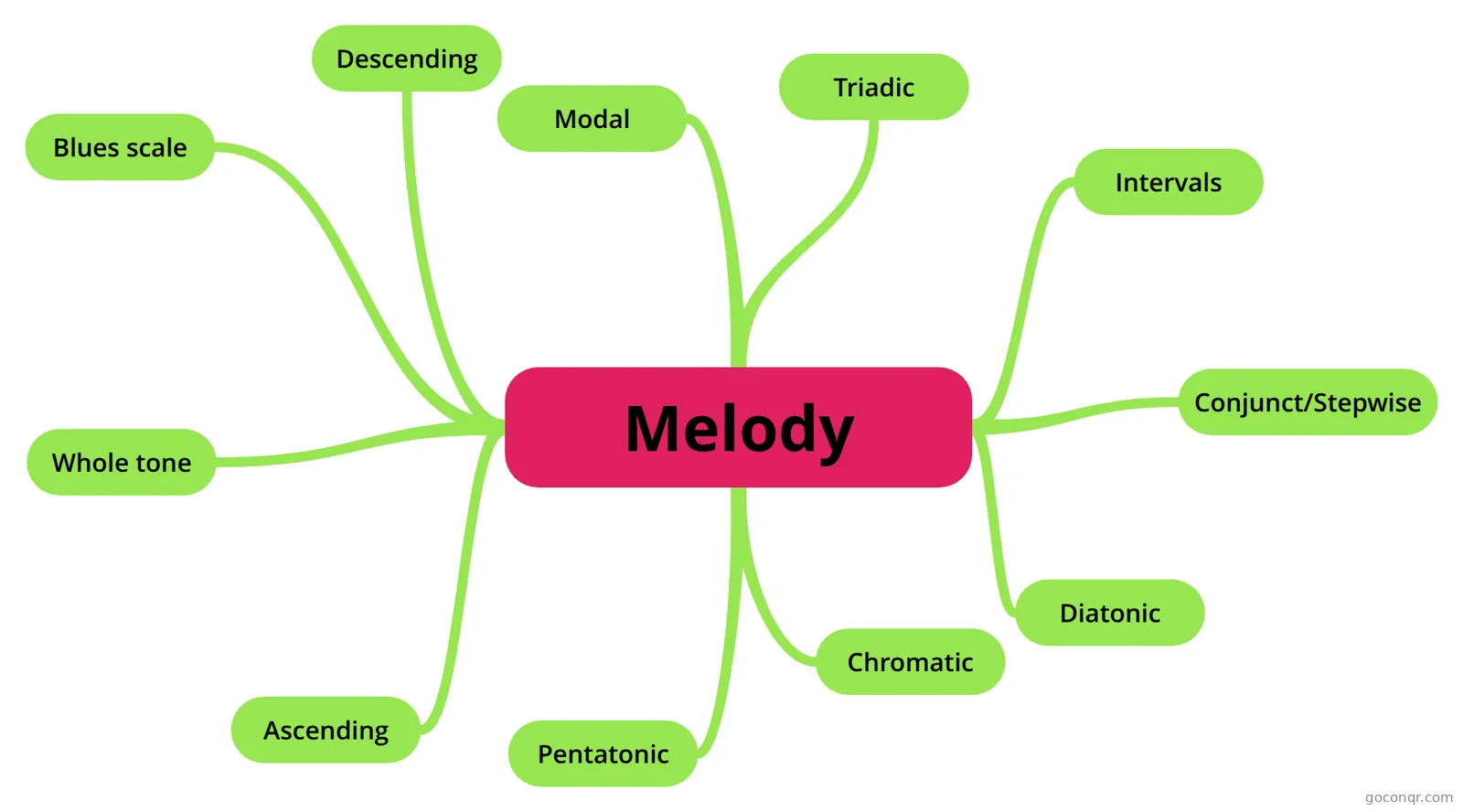
Flashcards
See all 150 flashcards-
7 cardsCadences Normal Perfect Cadences: V - I
-
4 cardsPiano Key of C Chord Family Piano chord images - testing out, trying to find a two-sided PRINTABLE format to use for these online. I ha...
-
49 cardsFigured Bass Flashcards Test on chords using figures.
-
12 cardsKey Signatures A test to remember key signatures
-
16 cardsMajor Intervals Flashcards This is a beginning interval training to help us identify major intervals by sight and sound. I am aware th...
-
7 cardsTonic - Words ay b0ss
-
6 cardsMusic melody stuff
-
13 cardsIntervals unison to octave
More Music topics
About Pitch, Melody and Harmony
GoConqr OriginalWhat this unit covers
This unit page brings together the building blocks of pitch, melody and harmony. The resources were made by GoConqr users, and many mention GCSE Music, A-level Music, ABRSM Grade 5 or ABRSM Grade 1.
- Intervals: the Diatonic intervals quiz asks you to name each interval, while Major or Minor? tests whether an interval is major or minor.
- Chords: the Music Theory mind map explains that a simple major triad is built from a root, a major 3rd and a perfect 5th.
- Cadences: Perfect or Plagal? and Identify the Cadence ask you to name cadences, and the Cadences flashcards list perfect, imperfect and interrupted types.
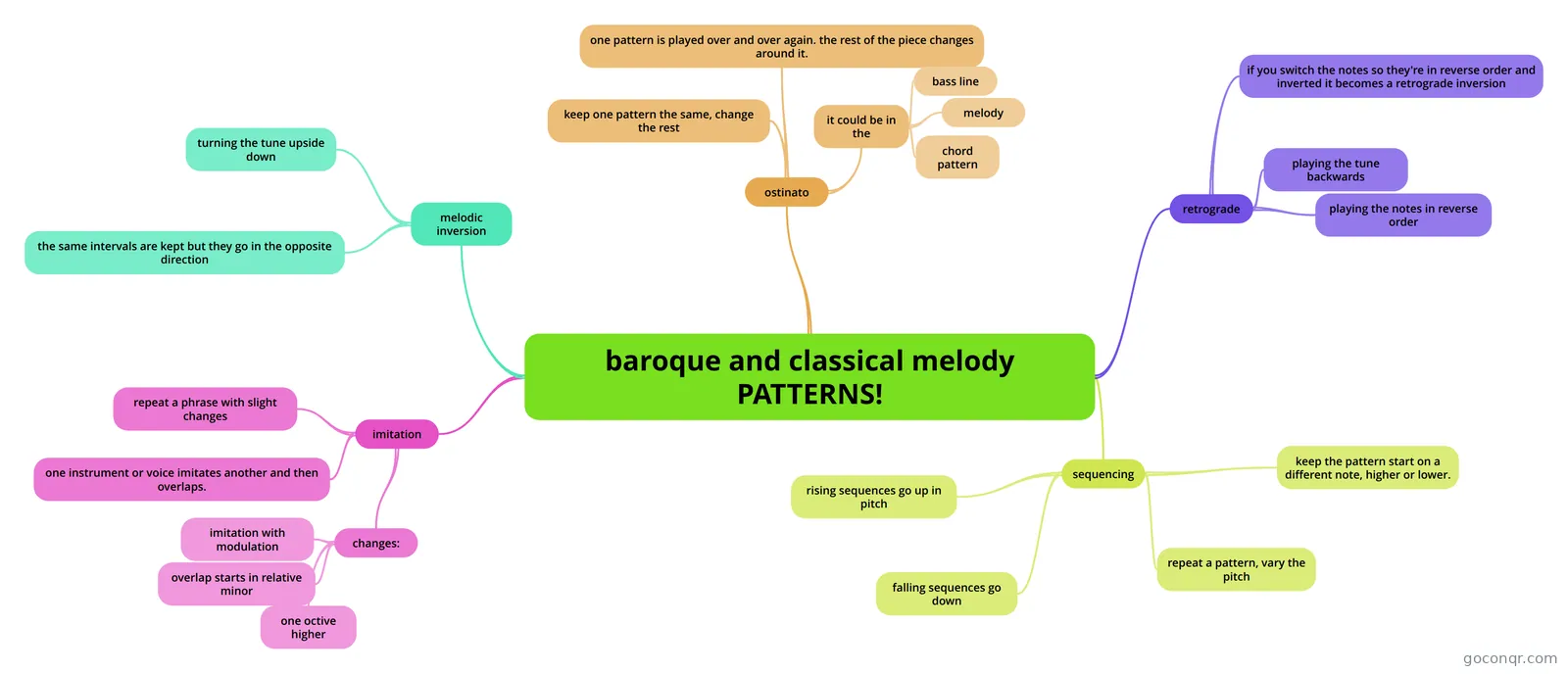
- Melody and counterpoint: mind maps on melody, counterpoint and baroque and classical melody patterns.
Where to start
Begin with intervals, since chords and cadences are built from them. Try the Diatonic intervals quiz, then Diatonic Chords (Major Keys), which asks for the I, ii, iii, IV, V and vi chords in C. After that, move on to the cadence quizzes.
Using quizzes and maps together
Open a mind map first to see the whole topic on one page. Then take a quiz and note what you got wrong. Go back to the map or to a flashcard deck, such as Harmony: Voice Leading, to fix those gaps. Repeat until the answers feel familiar.
Going further
When the basics feel steady, try the Bach Chorale Rules quiz and the Grade 8 Music Theory (Chord Analysis) quiz, which asks you to analyse a marked chord in a given key. Teachers can use the shorter quizzes as warm-ups or the maps as discussion starters.
Where it sits
This unit belongs to the Foundations of Music strand in Music. Choose one resource today and see how far it takes you.
Frequently asked questions
Which quiz should I try first?
Start with Diatonic intervals, which asks you to name intervals one after another. Once those feel comfortable, move to Diatonic Chords (Major Keys) and then Perfect or Plagal? to practise cadences. This order builds from single notes to chords and then to phrase endings.
What do the mind maps cover?
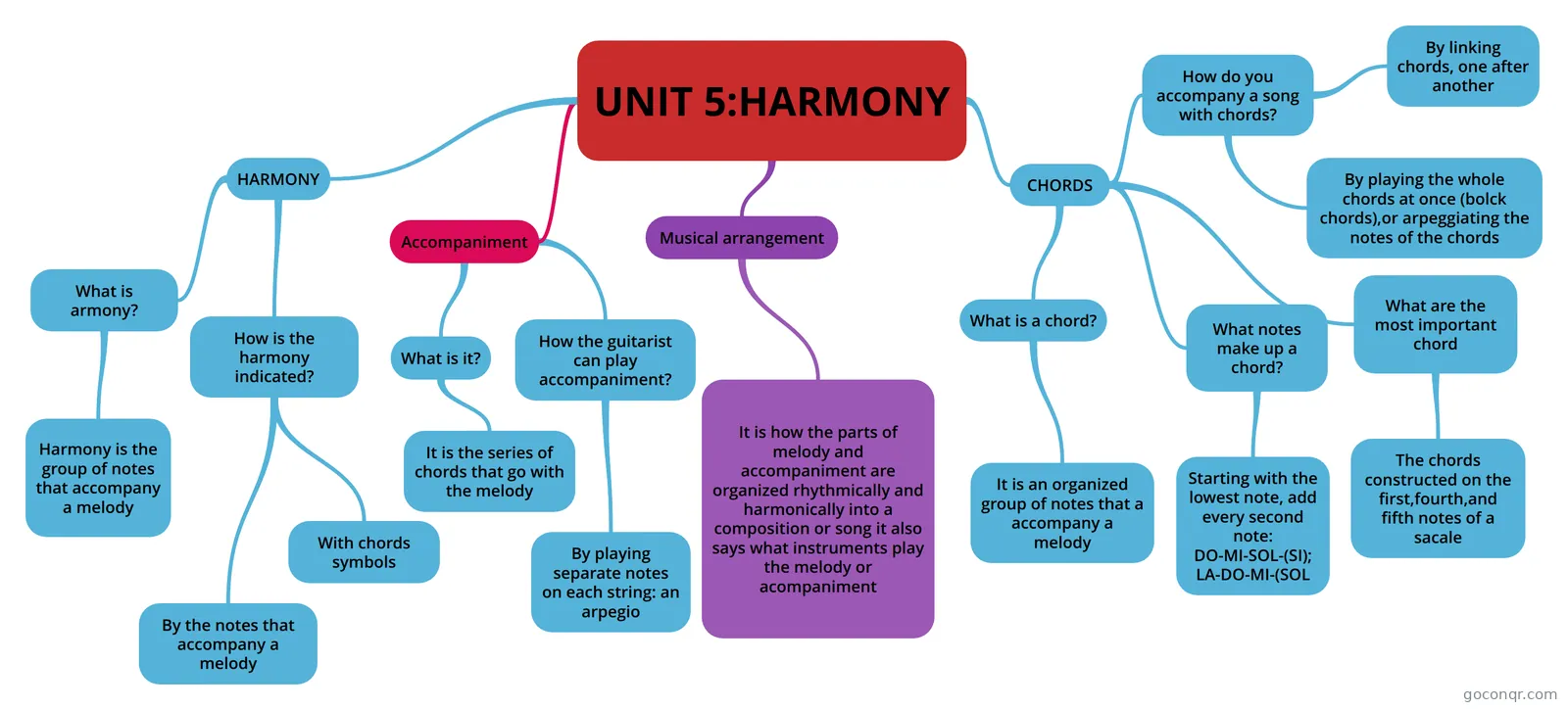
The maps range from a general Music Theory overview, covering intervals and triads, to topics such as melody, counterpoint, tonality, harmonic progressions and secondary dominants. There are also maps on Bach chorale rules and GCSE Music AQA key words for melody and tonality.
Are the resources free to use?
Yes. Every resource listed here is free to open, study and take, with no account needed. They were made by GoConqr users, not by GoConqr itself. A free account also saves your quiz scores and lets you make your own quizzes, mind maps, flashcards and notes.
Which levels and exams do these suit?
Most resources are at secondary level, so they suit school students most of all. Some mention GCSE Music, A-level Music, ABRSM Grade 5 or ABRSM Grade 1. Teachers can pick quizzes and maps to match what their class is studying.
Can I revise cadences here?
Yes. There are quizzes such as Perfect or Plagal?, Identify the Cadence and Cadence quiz, plus a Cadences flashcard deck listing perfect, imperfect and interrupted types. A mind map called Cadences and Chords and a note created from a mind map give extra support.
What if I can't find what I need?
Try a nearby topic, such as chords, intervals or melody, as the resources overlap. You can also make your own quiz, mind map, flashcards or notes on the missing topic, and use the existing maps as a model.