
Apuntes
Memory notes
Contenido del apunte (9)
Página 1
Short and Long-term memory
Capacity:
George Miller - Magic number 7 +/- 2
People remember about 7 items and 7 chunks.
Joseph Jacobs - digit span 9.3 for digits, 7.3 for letters
+Simon - Larger chunks means fewer recall
- Jacobs - 19-year olds have a longer digit span than 8-year olds
Duration:
Peterson and Peterson - used consonant syllables, prevented verbal rehearsal. ST lasted 18 seconds
Bahrick et al - after 48 years pp were 70% accurate in face recognition of classmates and 30% for names
- consonant syllables not meaningful but some memory activities do involve such stimuli
+Nairne et al - duration for STM lasted 96 seconds
Coding:
Baddeley - difficulty remembering acoustically similar words in STM but not in LTM, reverse for semantically similar words
-In study, LTM was tested by waiting 20 mins - not really LTM
+Nelson and Rothbart - acoustic coding in LTM
Página 2
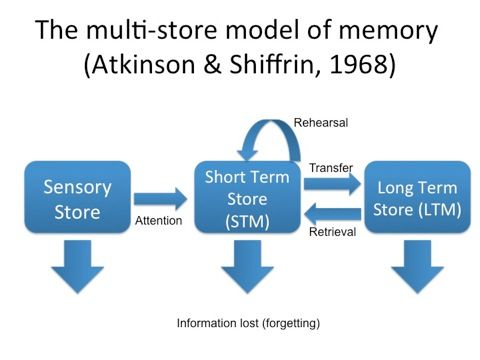
The multi-store model of memory
- Sensory register - Large capacity, short duration
- Attention - transfers information from sensory register to STM
- STM - Limited capacity, information decays, limited duration unless reversed
- Maintenance rehearsal - eventually created LTM
- LTM - potentially unlimited capacity + duration, forgetting may be due to lack of accessibility
- Retrieval from LTM goes through STM
+ Lab studies - Jacobs, Miller, Peterson and Peterson
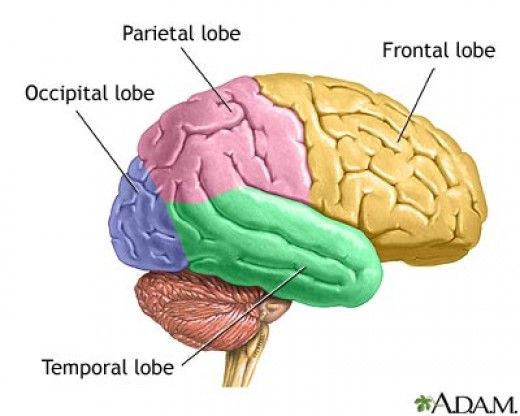
+ Brain scans - Beardsley (linked STM to prefrontal cortex) Squire et al (linked LTM to Hippocampus)
+ Case study of HM - Scoville and Milner (linked information of new LTMs to hippocampus)
- MSM too simple - STM and LTM are not unitary stores
- LTM involves elaborative rather than just maintenance rehearsal
Página 3
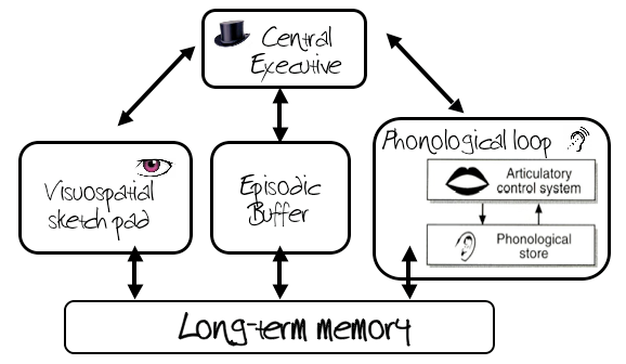
The working memory model
- Central executive - Acts as 'attention', allocates task to slave system, no store
- Visio-Spatial sketchpad - used for planning and processing visual, spatial task.
- Episodic buffer - records events as they happen, links to LTM
- Phonological loop - preserves order of auditory information
+ Hitch and Baddeley - pp slower when doing dual tasks, shows CE
+ Shallice and Warrington - damage to PL, problems with words not sounds
+ Trojano and Grossi - damage to PL, unable to learn words in pairs presented out loud
+ Farah et al - damage to spatial system
- Slinger and Damasio - CE doesn't explain anything and more complex than currently represented
- Brain damage evidence unreliable because trauma may cause problems
Página 4
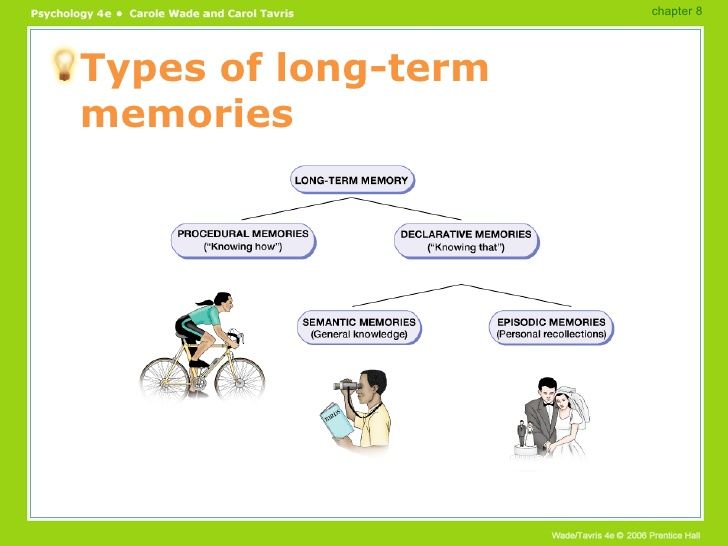
Types of Long-term memory
- Episodic memories - Personal memories of events. Three elements: specific detail of event, the context, the emotion
- Semantic memory - shared memory of facts and knowledge, begins as episodic.
- Procedural memory - memory for how to do things, concerned with skills
+ Irish et al - research from Alzheimers' patients who have reverse, poor semantic memory but generally intact episodic memories, may be the gateway to semantic memories, but it is impossible for semantic memories to form
- Brain damage evidence unreliable because can't be certain that causal part of brain identified
Página 5
Explanations for forgetting: Interference
- Retroactive interference (RI) - old interferes with new
- Muller and Pilzecker - recall was les good if there was an intervening task (describing paintings)
- Proactive interference (PI) - new interferes with old
- Underwood - analysed many studies, the more lists learned the lower percentage recall.
If pp memories 10 + list, then after 24 hr, they remembered 20%
If pp memories one list recall, it was over 70%
- Baddeley and Hitch - rugby players who played fewer games had better recall of teams played against (less interference)
+ Danaher et al - Real-wold application, competing advertisements reduce their effect because of interference, better to show three in one day
- Kane and Eagel - Individual differences, people with greater working memory span less susceptible to proactive interference
Página 6
Explanation for forgetting: Retrieval failure
- Tulving and Thomson - proposed memory is most effective if material present is present at retrieval
- Category + words learned. Free recall was 40%, cued recall was 60%
- Some cues are not meaningfully linked at ending but also act as cues
- Abernathy - recall best with same instructor in same room
- Baddeley and Godden - recall best when initial context matched recall environment
-Goodwin et al - recall best when initial state matched state recall
+ High validity - wealth of supporting research evidence both in lab and natural environments
+ Real world application - to revising and the cognitive interview
- Retrieval failure can explain interference effects and this is the more important explanation of forgetting
Página 7
Accuracy of eyewitness testimony: Misleading Information
- Leading question suggest desirable answers
- Loftus and Palmer - critical questions containing hit, smashed, collided, bumped or contracted, speed estimates highest with verb smashed
- The verb altered the actual memory of the event; pp more likely to report broken glass
- Post-event discussion may contaminate eyewitness memory of an event
- Gabbert et al - Conformity effect, pp recollections influenced by discussion with others
- LeRooy et al - Repeat interviewing, especially problematic with child witnesses
Braun et al, misleading informations altered pp recall
Foster et al - film of supposed robbery, high accuracy
Wells and Olson - real world application, mistaken EWT largest factor is conviction of innocent people
Página 8
Accuracy of Eyewitness testimony: Anxiety
- Stress reduces performance on complicated cognitive tasks
- Johnson and Scott, weapon focus effect reduces accuracy of false identification
- Loftus et al - montionered eye movements during weapon exposure, focus was on a weapon
+ It is adaptive to remember stress induced events
- Christianson and Hubinette - high-anxiety victims remember most accurately (real bank robbery)
- Deffenbacher et al - Yerkes-Dodson effect explains high accuracy at moderate levels of anxiety and low accuracy when anxiety is high
- Pickel - weapon focus effect due to surprise not anxiety
- Deffenbacher et al - real life studies show even less accuracy then lab studies, so lab findings actually underestimate the effect of anxiety
- Christianson and Hubinette conceded a violent real-life crime. Many other studies don't involve violence
Página 9
Accuracy of eyewitness testimony: Cognitive interview
1. Mental reinstatement of original context - psychical and psychological, cued recall
2. Report everything - even seemingly insignificant details, may cue recall
3. Change order - reduces effect of schemas
4. Change perspective - disrupts schemas, supported by Anderson and Pitchert's study
+ Milne and Bull - effectiveness may be most due to 'report everything' and 'mental reinstatement'
- Kohnken et al - Quality may suffer, 81% increase in correct recall but 61% false positive
- Police dislike CI, time consuming and inadequate training
Información
- Descripción
- • Short and Long term memory • The multi-store model of memory • The working memory model • Explanations for forgetting: Interference • Explanations for forgetting: Retrieval failure • Accuracy of eyewitness testimony: Misleading information • Accuracy of eyewitness testimony: Anxiety • Improving the accuracy of eyewitness testimony: The cognitive interview
- Creado por
- Pip Mooney
- Visitas
- 101
- Etiquetas
- Valoración