
Fichas
S294 Open University Revision
Fichas del conjunto (95)
- 1What are the energy sources and carbon sources of chemoautotrophs?Energy Source - Inorganic Molecules or Ions
Carbon Source - Carbon Dioxide
Example - Some prokaryotes such as sulfolobus and methanogen - 2What are myosins?Motor proteins that interact with actin filaments and couple hydrolysis of ATP to conformational changes. This results in the movement of myosin and an actin filament relative to each other.
Best known for their roles in muscle contraction - 3What does ubiquitin do?It 'labels' proteins for degrading by covalently attaching to it.
The protein is then broken down by proteasomes. - 4What are microtubules made of?A dimer of tubulin with one α-subunit and one β-subunit. ie they are heterodimers.
- 5Define growth factorsGeneral term for molecules that bind to appropriate receptors and ultimately alter gene expression to stimulate growth, survival or division of the cell.
- 6Name the 3 main types of cell surface receptors and give an example of a ligand involved in their interaction.1. Ion channel-linked receptor (Ligand - Acetylcholine)
2. G protein-coupled receptor (GPCR) (Ligand - Adrenalin/Noradrenalin)
3. Enzyme-linked receptor (Ligand - Cytokines and growth factors) - 7Define aneuploidyWhen cells have an abnormal number of chromosomes.
This occurs when the kinetochore attaches to the wrong microtubule before anaphase. - 8What are the 4 key features of cell communication?1. Signal
2. Reception
3. Transduction
4. Response - 9What are the energy sources and carbon sources of photoautotrophs?Energy source - Light
Carbon source - Carbon dioxide
Example - Photosynthetic prokaryotes such as cyanobacteria ; Plants ; Algae - 10Why would protons cross the inner mitochondrial membrane via an uncoupler rather than via ATP synthase?Movement via the uncoupler is more energetically favourable as it doesn't entail synthesis of ATP.
- 11What are dyneins?A type of motor protein.
Move toward the minus end of microtubule.
Moves in the opposite direction of kinesin.
Important in vesicle trafficking and localisation of Golgi Apparatus - 12What is an allosteric effector?A ligand that binds to a specific site on a protein and thereby induces a conformational change in the protein at a different site.
- 13What are the proteins that attach the extracellular matrix to the cell membrane?Integrins
- 14Name the 3 muscle cell types and their functionSmooth muscle of internal organs eg intestines (Function - Peristalsis)
Cardiac muscles (Function- Heart contraction)
Skeletal muscles (Function - Movement of limbs) - 15What is Rho-family GTPase?A subgroup of the GTPase family.
Its activation leads to reorganisation of the cytoskeleton and affects cell adhesion. eg By influencing interactions between integrins and the actin network - 16What do chaperones do?Help large proteins to fold.
Prevent inappropriate interactions.
Helps fix misfolds.
Stops polypeptide mixing with other molecules. - 17What are mitogens?A specific class of cell signals that trigger cell division. They stimulate the transcription of the G1 cyclins.
- 18How do retinoblastoma act as a break in the cell cycle?It binds to and inactivates the transcription factors which promote expression of the genes that encode proteins needed for cell division.
- 19What is an example and function of an adipocyte? What is the main component of its cytoplasm?Adipose tissue around organs and under the skin.
Function - energy storage. Protection.
Has cytoplasm made mostly of lipid. - 20What is meant by amphipathic?A molecule that has both hydrophilic and hydrophobic parts.
- 21What is the microtubule organising centre (MTOC)?Region of cytoplasm from which microtubules radiate.
The MTOC determines the pattern and number of microtubules.
Animal cells usually have one called the centrosome located near the nucleus. - 22Phosphorylation is catalysed by the enzyme ___________. Dephosphorylation is catalysed by the enzyme __________.1. Kinase
2. Phosphatase - 23If an energetically unfavourable reaction is coupled to an energetically favourable, the change in free energy (∆G) of the overall process must be _________ for it to occur.Negative
- 24What is chemotaxis and chemotropism?Chemotaxis: Movement directed by chemical gradients
Chemotropism: Growth directed by chemical gradients. - 25What is RME?Receptor-mediated endocytosis.
It is a way macromolecules and macromolecular complexes can transport across membranes.
Specific cell surface receptors bind to the ligand, a pit is then formed which is then pinched off into the cytosol. - 26What are the 3 major roles of general transcription factors?1. Positioning the RNA polymerase correctly at the promotor.
2. Separation of the 2 strands of DNA to allow transcription to begin.
3. Release of RNA polymerase from the initiation complex to start transcription. - 27Polypeptides are synthesised in which direction?From the amino (-NH2) or N-terminus, towards the carboxyl (-COOH) or C-terminus.
- 28What is the energy source and carbon source of photoheterotrophs?Energy source - Light
Carbon source - Organic compounds in the diet
Example - Some prokaryotes such as rhodobacter - 29Can ions be moved against their concentration gradient?Yes, by using active transport and transporter proteins.
- 30What is the difference between competitive and non-competitive inhibitors?Competitive inhibitors compete with the substrate for the active site on the enzyme.
Non-competitive inhibitors don't bind to the active site. Instead they bind to another area and changes the conformation of the active site. - 31What organelle packages and tags proteins for proper distribution in the cell?The Golgi Apparatus
- 32What is feedback inhibition?It is a cellular control mechanism
where the product of a pathway inhibits an enzyme that caused a reaction earlier in the pathway, therefore regulating how much end product is produced. - 33Define what is meant by a metabolic pathway.A linked series of chemical reactions within the cell in which the product of one reaction becomes the substrate for another.
- 34What are integrins?Transmembrane receptors that facilitate cell-cell and cell-extracellular matrix adhesion.
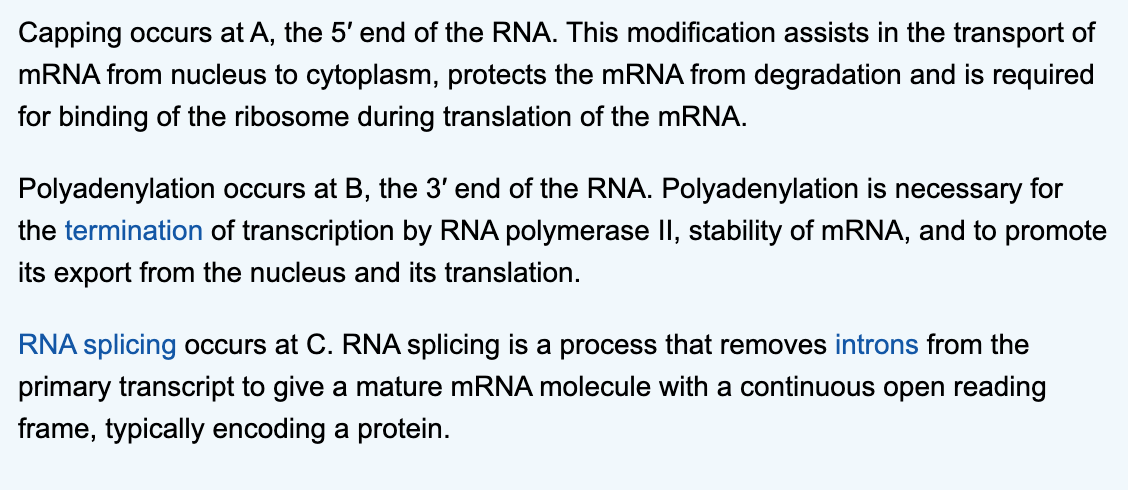
- 35What happens to the 5' and 3' ends of mature mRNA during post-transcriptional modification?Capping occurs at the 5' end.
Polyadenylation occurs at the 3' end. - 36What do proteasomes do?Proteasomes are protein complexes which degrade unneeded or damaged proteins by proteolysis, a chemical reaction that breaks peptide bonds. Enzymes that help such reactions are called proteases.
Helps regulate protein levels and levels of gene transcription/translation. - 37What is the energy source and carbon source of chemoheterotrophs?Energy source - Organic compounds
Carbon source - Organic compounds in the diet
Example - Animals; fungi; protists and many prokaryotes - 38Synthesis of the RNA transcript occurs in which direction?5' to 3'
- 39What are the 2 forms of cell division carried out by complex eukaryotes?Mitosis - generates 2 daughter cells with the same number of chromosomes as the parent.
Meiosis - produces haploid gametes with half as many chromosomes as the parent. - 40What is a motor protein?A protein that binds to something else and uses energy from ATP hydrolysis to travel along a microtubule or microfilament, taking the cargo with them.
- 41Are potassium levels higher inside or outside an animal cell? And is the membrane potential of a non-excited cell positive, negative or neutral?In an animal cell potassium levels are much higher inside the cell.
The membrane potential is negative (-70mV) in a non-excited cell. - 42What are sense strands and antisense strands?Sense strands are the non-template strands used in transcription.
Antisense strands are the template DNA strands. - 43What is the function of red blood cells? Name 2 features of red blood cells.Function - Oxygen transport
Features - RBCs have haemoglobin which binds to oxygen.
Mammalian RBCs lose their nucleus when mature. - 44The sum of catabolism and anabolism is __________.Metabolism
- 45MCPs that bind a repellant are ________ while those that bind an attractant are __________.1. Activated
2. Inactivated
(MCPs - Methyl-accepting chemotaxis proteins) - 46What are kinesins?A type of motor protein.
Involved in cytokinesis and in the trafficking of vesicles and organelles within the cell.
Moves toward the plus end of the microtubule.
Runs in the opposite direction of dyneins. - 47Give examples of support cells (connective tissue cells). What is their function?Examples - Bone cells (osteoblasts / osteoclasts), cartilage, fibroblasts.
Function - Provides support and organises tissue structure. - 48What is a fibroblast?A fibroblast is a type of cell that synthesises the extracellular matrix and collagen, produces the structural framework (stroma) for animal tissues, and plays a critical role in wound healing. Fibroblasts are the most common cells of connective tissue in animals.
- 49Define transcription factorsProteins that bind to specific DNA sequences promoting (activators) or inhibiting (repressors) the recruitment of RNA polymerase to specific gene promotors, thereby controlling the transcription of genes.
- 50RNA polymerase reads the base sequence of the template strand in which direction?3' to 5'
- 51What are the stages (in order) of meiosis?Prophase I, Metaphase I, Anaphase I, Telophase I, Cytokinesis
Prophase II, Metaphase II, Anaphase II, Telophase II, Cytokinesis - 52What are the 2 main ways in which an enzyme can be controlled in metabolism?1. Regulating the amount of enzyme present by limiting its expression or rate of degradation.
2. Through allosteric regulation. - 53Name some examples of coenzymes and describe their function and key features .Examples - ATP, Acetyl CoA, NAHD, FAD
Small, organic energy carriers.
Can be inactivated (low energy) or activated (high energy).
Activated coenzymes stores energy and releases it for endergonic reactions. This happens by coupling the reaction with the conversion of the activated coenzyme into its inactive state.
Some coenzymes are a source of chemical groups needed for reactions eg phosphate group from ATP. - 54What is an endergonic reaction?An endergonic reaction (such as photosynthesis) is a reaction that requires energy to be driven.
Endergonic reactions are nonspontaneous. The change of Gibbs free energy (ΔG) during an endergonic reaction is a positive value because energy is gained. - 55What is the difference between a nucleolus and a nucleoid?Nucleolus - is found inside the nucleus of eukaryotes. Is made of RNA and proteins. It is best known as the site of ribosome biogenesis.
Nucleoid - is only found in prokaryotes. Irregularly shaped region that houses genetic material. Is not surrounded by a nuclear membrane. - 56What are MCPs and what domains do they have?Methyl-accepting chemotaxis proteins.
Receptors involved in chemotactic regulation of flagellar movement in bacteria.
Has a periplasmic domain which binds the ligand (attractant or repellant), a transmembrane domain and a cytosolic domain which interacts with a series of downstream signalling proteins called Che proteins. - 57What are the stages of mitosis in order?Interphase
Prophase
Metaphase
Anaphase
Telophase
(Cytokinesis happens after mitosis is complete) - 58What are the cells of the immune system?Lymphocytes (T-cells, B-cells), neutrophils, and macrophages. These are all types of white blood cells. The major proteins of the immune system are predominantly signaling proteins (often called cytokines), antibodies, and complement proteins.
- 59Where would you find epithelial cells and what is their function?The epidermis; lining of the intestines, blood vessels and lungs; cells of glands
Function - protection, barrier, absorption, secretion. - 60Examples, function and features of nerve cells (neurons).Examples - Brain neurons and spinal cord neurons; small groups of neurons (gnaglia) in the body
Function - Quick and specific communication
Features - Polarised cells with long processes; Specialised membrane to allow electrical signalling - 61Examples, function and features of endocrine cells.Example - Pancreas; adrenal glands.
Function - Widespread communication.
Feature - Produce and secrete chemical messengers into circulation. - 62What is endocytosis and exocytosis?Endocytosis - A general term for uptake of minerals into the cell by invagination. If foreign particles are taken up it is referred to as phagocytosis.
Exocytosis - The release of materials enclosed in a vesicle from the interior of the cell to the exterior. - 63What biomolecules are required for in vitro DNA synthesis in the polymerase chain reaction (PCR)?A double-stranded template DNA
DNA polymerase (to catalyse the addition of nucleotides to a new DNA strand)
The four dNTPs (dATP, dTTP, dCTP, dGTP)
Two oligonucleotides to act as primers (one for each strand) - 64What are oligonucleotides?Short lengths of single-stranded DNA generally around 20 nucleotides long. Used in PCR as primers.
- 65Why does DNA synthesis require oligonucleotides to act as primers in PCR?DNA polymerase cannot initiate the synthesis of a DNA strand. Instead, polymerisation begins by addition of nucleotides to an existing short nucleic acid primer annealed to the template strand.
- 66What are the 3 phases of each round of PCR and what temperatures do they occur?1. Denaturation (94°C)
2. Primer annealing (55-58°C)
3. Elongation (74°C) - 67What DNA polymerase is commonly used in PCR?Taq DNA polymerase
Derived from the bacterium Thermus aquaticus - 68What are restriction endonucleases?Enzymes that catalyse the cleavage of isolated DNA molecules at specific sequences in vitro.
- 69What processes in living cells require DNA ligase?Joining Okazaki fragments during lagging-strand DNA synthesis, and several of the mechanisms that repair DNA
- 70What is the link reaction and where does it take place?The second stage in glucose oxidation by aerobic respiration is the
link reaction, so-called because it links glycolysis and the tricarboxylic
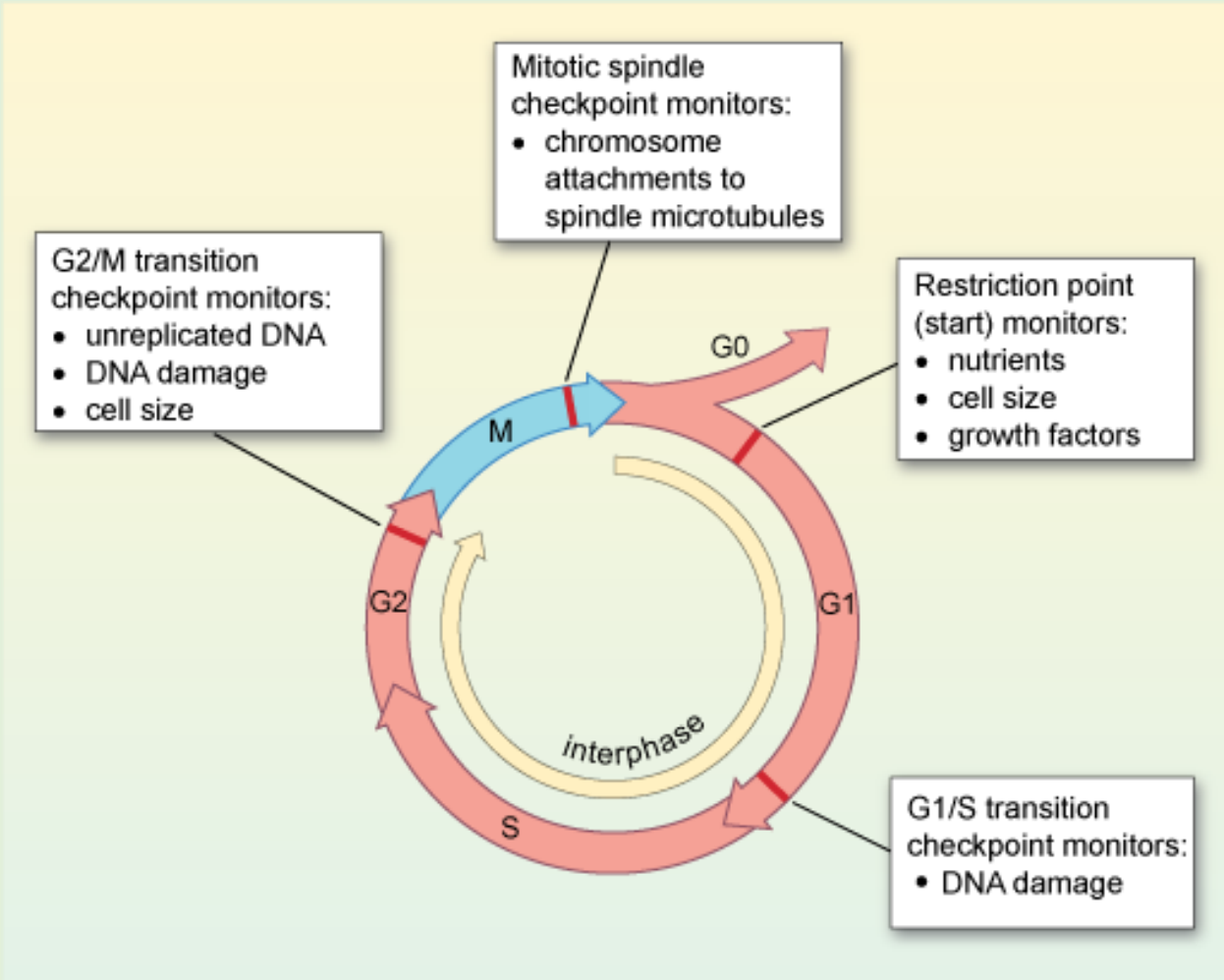
acid (TCA) cycle. It takes place in the mitochondrial matrix. - 71What are the names of these cell cycle checkpoints and what is monitored at each one?
- 72What is the role of p53 in the cell cycle?p53 is a transcription factor that is activated by damage to the DNA. It halts progression through the cell cycle by, among other things, promoting the transcription of the cyclin-Cdk inhibitor p21
- 73What is peptidoglycan?Major component of bacterial cell walls. It is a polymer of high
molecular mass, composed of two complex monosaccharides derived
from glucose, which are linked together by amino acids, including
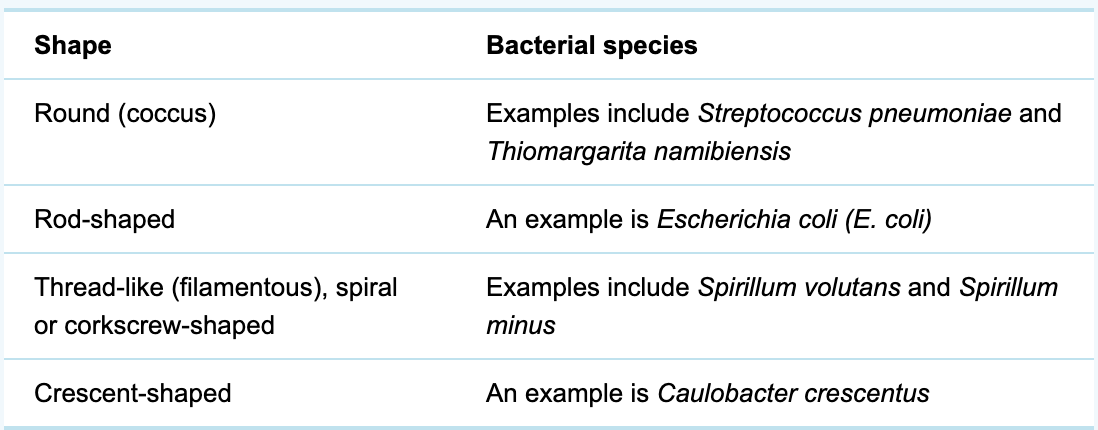
three amino acids that are not found naturally in proteins. - 74Give three examples of the shapes exhibited by different bacterial species, and name one species of bacterium that exhibits each shape.
- 75Name the three main types of tissue in flowering plants and state the functions of each of these types of tissue.Ground tissue -packing and support, energy storage, photosynthesis
Vascular tissue - transport of water and nutrients
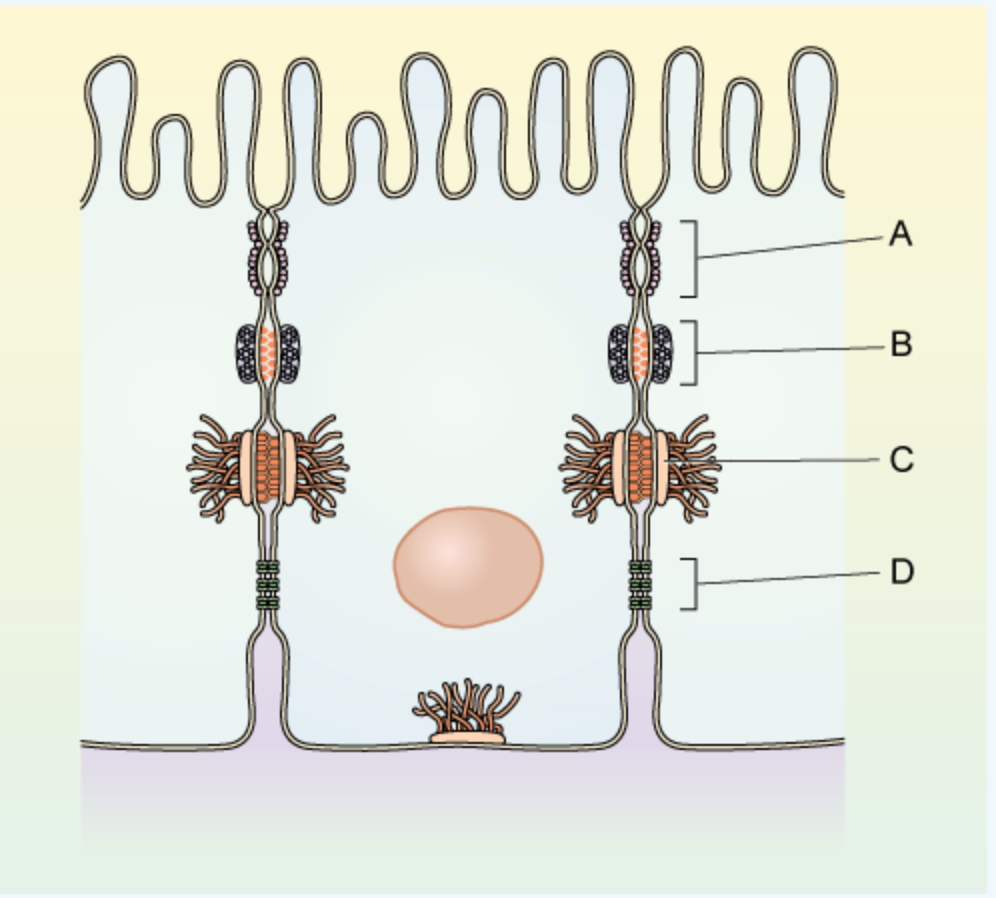
Dermal tissue - protection, control of uptake of water, nutrients and gases - 76Name the structures labelled A, B, C and D and state their functions.
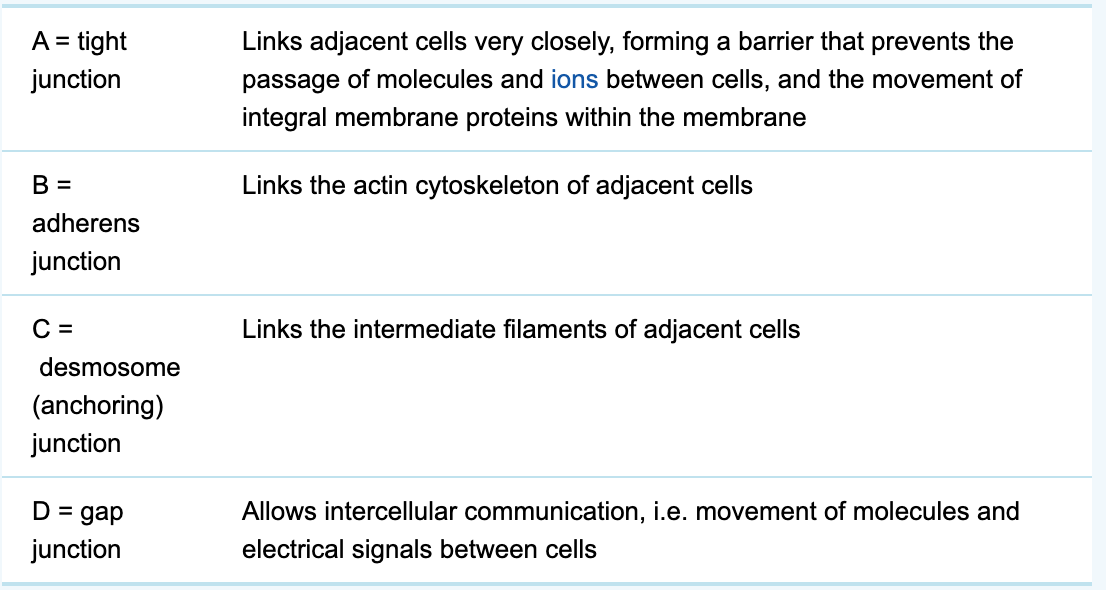
- 77What is a nonsense mutation?A mutation which introduces a stop codon into the middle of an open-reading frame.
- 78What is a null mutation?A mutation which results in a complete loss of function of the mutated gene.
- 79What happens in a transition mutation?One purine is replaced with another purine or one pyrimidine is replaced with another pyrimidine
- 80What happens in a transversion mutation?A purine is replaced with a pyrimidine or vice versa
- 81What is a frameshift mutation?A mutation that arises by deletions or insertions of nucleotides and changes the frame in which triplet codons are first transcribed into RNA and then translated into polypeptides
- 82What are the different types of non-coding DNA found in the human genome?Non-coding DNA includes: introns, gene regulatory sequences, repetitive DNA (including transposable elements and short repeats), and also unique (i.e. non-repetitive) non-coding sequences. Together these constitute about 99% of the human genome.
- 83In eukaryotes there are two main groups of transcription factors. What are they? Give a specific example of each type.In eukaryotes there are general transcription factors (required for RNA polymerase binding) and specific transcription factors (that regulate patterns of genes expression in a particular cell). TFIID is an example of a general transcription factor (TFIIA, TFIIB, TFIIE, TFIIF, TFIIH, TFIIJ are others); MyoD1 is a sequence-specific transcription factor (also GATA-1, Sp 1, Oct-1, heat shock factor, etc.).
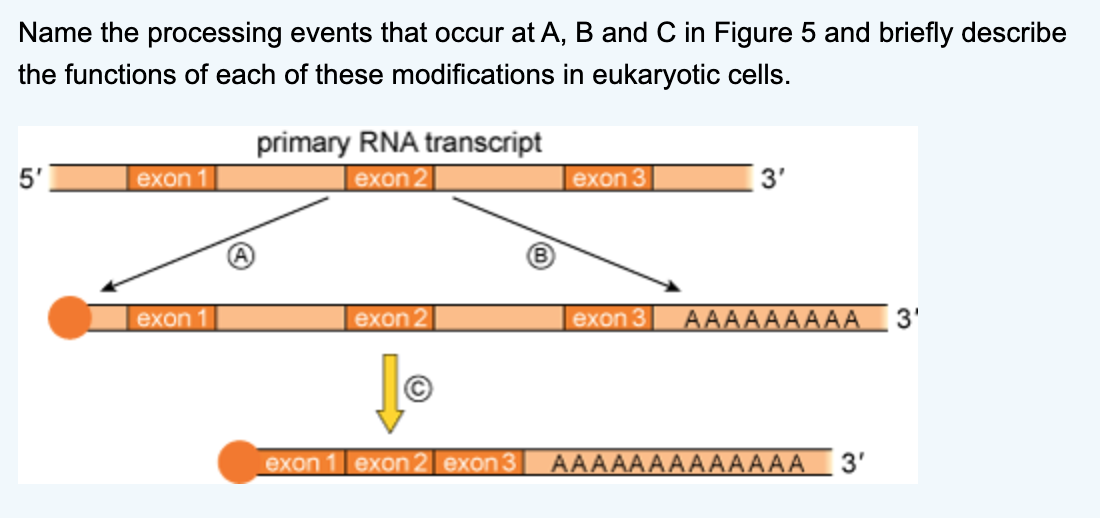
- 84—
- 85Some proteins are synthesised as inactive precursors known as ________.Zymogens.
Zymogen activation involves the hydrolysis of specific peptide bonds by proteases, and can involve removal of a length of polypeptide chain. - 86What is the lipid raft hypothesis?According to this hypothesis, membranes contain microdomains (rafts) which are highly ordered. Their particular lipid composition means that lipid rafts are more cohesive and less fluid than the rest of the membrane. Thus lipid rafts can be envisaged as ‘islands’ in a sea of fluid membrane.
- 87What is the Tm of a cell membrane?Transition temperature (Tm): temperature at which a membrane changes between the fluid and gelled state.
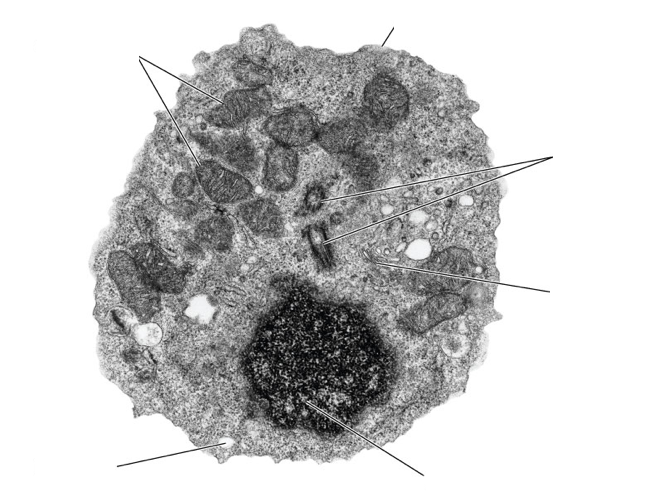
- 88—
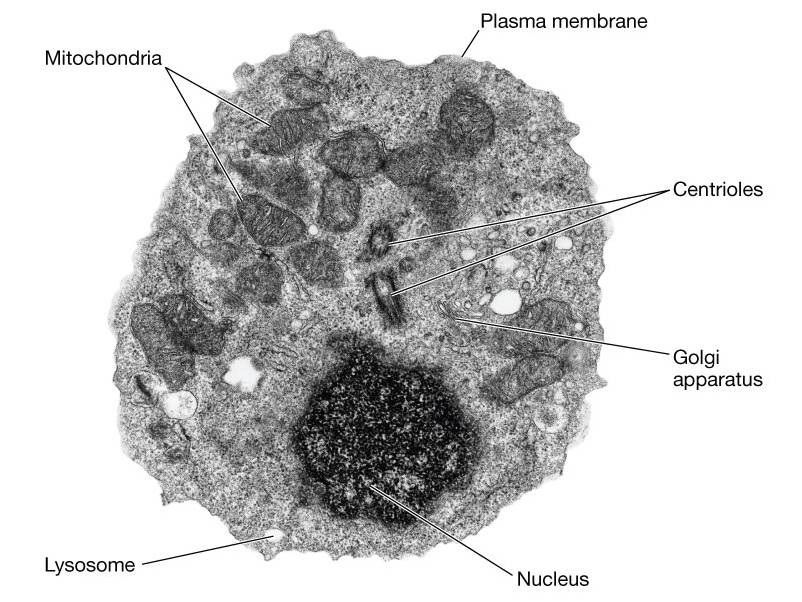
- 89List at least five features of microtubulesMicrotubules are hollow tubes (25 nm diameter)
Unit is a dimer of the protein tubulin: one α-tubulin subunit and one β-tubulin subunit (hence these are heterodimers)
Dimers are all orientated in the same direction
Microtubule assembly favoured when subunits are bound to GTP
Microtubules have polarity: the end with α-tubulin exposed is the minus (−) end and the end with β-tubulin exposed is the (+) end
Microtubules originate at the microtubule organising centre (MTOC)
In animal cells the MTOC is usually a single centrosome in which the microtubules are tethered by the minus (−) pole. - 90How is motor protein activity rendered essentially irreversible?Activity is made essentially irreversible by the large free energy release on hydrolysis of the ATP, i.e. a high energy barrier is presented for the reverse reaction.
- 91What are transposons?Small genetic elements that can move, or transpose, from one position to another in a genome; usually by copying itself and inserting into a second site, but sometimes by splicing out of the original site and inserting in a new location.
- 92What are the three types of protein filament that make up the cytoskeleton? What are their component proteins and what are their main functions?
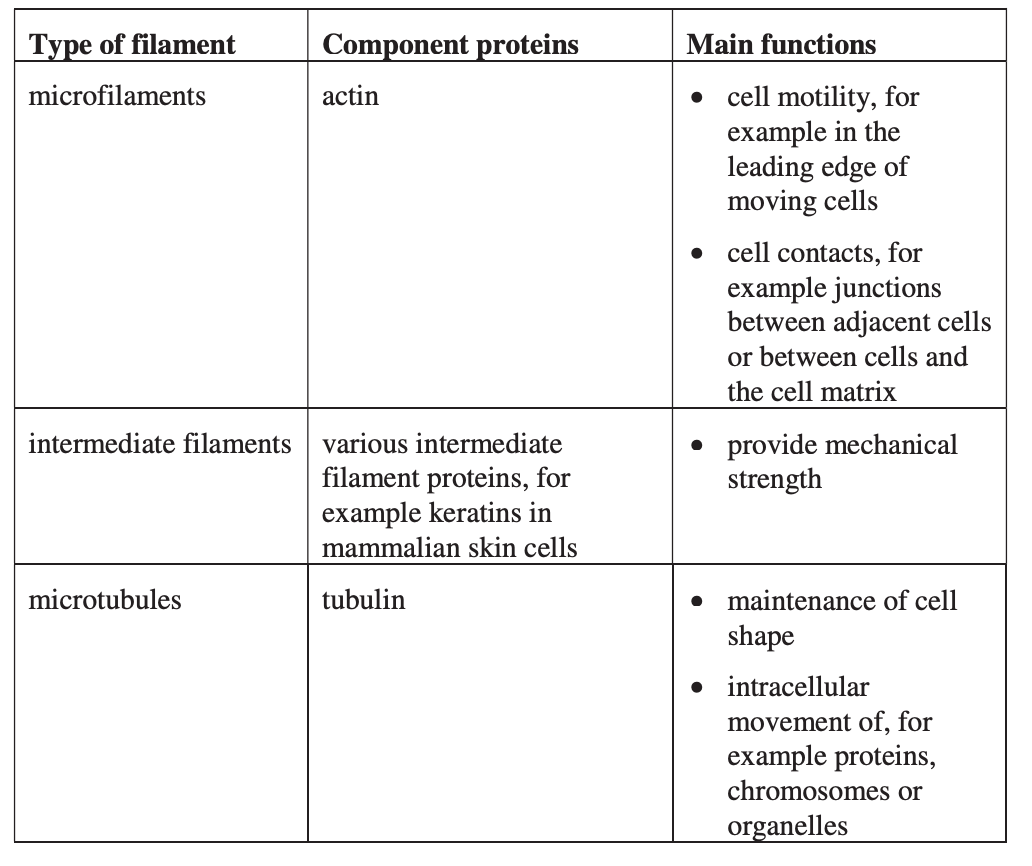
- 93What are telomeres?Regions at the ends of eukaryote chromosomes consisting of short non-coding nucleotide repeats. Their presence avoids the loss of coding regions during DNA replication (the 3' end of the lagging strand cannot be replicated all the way to its end).
- 94What is the difference between immunocytochemistry and immunohistochemistry?Immunohistochemistry is a staining technique that uses entire sections of tissue.
Immunocytochemistry is a staining technique that stains individual layers of cells. - 95—
Información
- Descripción
- Revision for Open University S294 Module.
- Creado por
- Glen Rooney · may 2021
- Actualizado
- 3 jun 2021
- Visitas
- 357
- Etiquetas
- Valoración