
Fichas
Brain and Behaviour
Fichas del conjunto (128)
- 1The brain's outer layer of neural tissueCerebral Cortex
- 2Largest lobe in the brainFrontal lobe
- 3Section of frontal lobe which plays large role in speech and languageLeft frontal lobe
- 4What may damage to the frontal lobe affect? (name 3)Any 3 of: emotions, memory, language, impulse control, social or sexual behaviour
- 5Functions of the frontal lobe which are particularly vulnerable (name 2)Any 2 of: capacities for future planning, abstract thinking, controlling impulse
- 6The section of the brain integrates sensory info from various parts of the bodyParietal lobe
- 7Where are the parietal lobes located?Behind the frontal lobe
- 8Contain primary sensory cortexParietal lobe
- 9The efferent lobe specialise in...Sending and receiving info from the brain
- 10Damage to which lobe may affect ability to locate and recognise body parts?Parietal lobe
- 11The cortex below the temporal lobeInsula
- 12The lobe responsible for understanding speech and complex visual perceptionOccipital
- 13Explain cortical blindnessInability to see, not due to eye damage but through damage to the temporal lobe
- 14The role of afferent neurons is...to keep the nervous system informed about the external world by carrying info in the CNS
- 15Interneurons are an example of what type of neuron?Afferent neuron
- 16The role of interneurons is...To make local connections within the CNS
- 17True or false: Interneurons have either very short axons or none at allTrue
- 18True or false: Efferent neurons carry info towards the CNSFalse, they carry info outwards from the CNS
- 19The main processors of the nervous systemNeurons
- 20The motor cortex...Directly controls movements
- 21The sensory cortex is also known as...The somatosensory cortex
- 22What occurs as a result of damage to the prefrontal lobe?Difficulty with memory
- 23The band of white fatty matter connecting the left and right cerebral halfsCorpus callosum
- 24The brain stem the interface between...The brain and the spinal cord
- 25The folds the the cerebral cortexSulci
- 26The bumps in the cerebral cortexGyri
- 27The front of the brain is the____and the back the____1. anterior
2. posterior - 28The top of the brain is the____and the bottom the____1. dorsal
2. ventral - 29The nervous system in cased in boneCentral nervous system (CNS)
- 30The main function of the peripheral nervous systemTo connect the CNS to the limbs and organs, allowing for communication
- 31The peripheral nervous system is made up of...Motor and sensory nerves
- 32Spatial abilityThe ability to perceive the construction of an object in both two and three dimensions
- 33True or false: Someone with neglect syndrome has difficulties with spatial perceptionTrue
- 34Inability to process/perceive stimuli on one side of the body not due to a lack of sensationHemispatial neglect
- 35Golgi's method of stainingSilver staining technique used to visualize nervous tissue under a microscope
- 36The concept that the nervous system is made up of discrete individual cells is...Neuron doctrine
- 37Grey matterWhere neurons and glia cells are found
- 38An alternative name for cell bodySoma
- 39Commonly found at the end of an axonTerminal buttons
- 40The white fat which coats axons in called...Myelin sheath
- 41What is an oligodendrocyte?A type of glia cell which provide myelin to axons
- 42The junction between 2 neuronsSynapse
- 43GliomaType of tumor that starts in the brain or spine, arising from glial cells
- 44Anything inside the neuron is referred to as...Intercellular
- 45ExtracellularAnything outside the neuron
- 46The primary chemical in the nervous systemSodium (Na+)
- 47The millivolts of a neuron at its resting potential-70 mV
- 48Neuron doctrineThe concept that the nervous system is made up of discrete individual cells
- 49What did Golgi believe?That the cerebral cortex was made up of one connected neuron
- 50Where in the brain are neurons and glia cells found?In the grey matter
- 51Where neurons receive inputsDendrites
- 52At the terminal buttons_____are releasedNeurotransmitters
- 53Primary cell found in the cerebral cortexPyramidal cell
- 54What would a block in neuron sodium channels result in?Paralysation
- 55Without action potential...We can't breathe or move
- 56The vagus nerve is attached to which organ?The heart
- 57Who gave the first demonstration of neurotransmission?Loewi
- 58Neuron releasing the neurotransmitter is called the____neuronPre-synaptic
- 59Neuron receiving the neurotransmitter is called the____neuronPost-synaptic
- 60DepolarisationCells become less negative
- 61True or false: excitatory neurons cause the postsynaptic neuron to be less positiveFalse, it causes it to be less negative
- 62Inhibitory neurotransmitters makes postsynaptic neuron less likely to____Fire
- 63Neurotransmitters work as____messengers, changing neuron voltagePrimary
- 64Secondary messengers cause more____term changes than____messengers1. long
2. primary - 65Methylphenidate is a type ofCognitive enhancer
- 66Name a neurotransmitterAcetycholine
- 67What neurotransmitter causes your muscles to contractAcetycholine
- 68The main inhibitory neurotransmitter in the brainGABA
- 69The main excitatory neurotransmitter in the brainGlutamate
- 70Extracellular has a____charge and intracellular a____.1. positive
2. negative - 71How can the differences in electrical charge inside and outside the neuron be measured?With a voltmeter
- 72True or false: Sodium diffuses into the cell and potassium outTrue
- 73The primary chemical in action potential (extracellular)Sodium
- 74Neurons naturally have a____charge.Negative
- 75Diffusion pressureWhen its more concentrated inside the cell
- 76How is it possible for sodium to reach the neuron?Through sodium channels
- 77When at resting potential, sodium channels are____.Closed
- 78When the neuron receives inputs from other neurons...The sodium channels open
- 79True or false: During action potential, sodium channels all open at onceFalse, they open in stages
- 80DepolarisationWhen neurons become less negative resulting in discharge
- 81PolarizationHow far away you are from 0
(an electrical difference across the cell membrane) - 82True or False: voltage change becomes less apparent further down the sodium channelsFalse, change in voltage remain consistent across the channels
- 83How is the concentration of chemicals inside and outside the neuron balanced?After sodium goes into neuron, potassium diffuses out
- 84When stimulated, vagus nerve releases a chemical which causes the heart to____ ____.1. slow down
- 85What is a neurotransmitter?The broad term for chemicals used by neurons to communicate
- 86Cognitive enhancersBoost brain power and alertness
- 87Name a primary messengerNicotinic receptors
- 88Name a kind of secondary messengerMuscarinic receptor
- 89What was acetylcholine previously known as?Vagusstoff
- 90What may an antagonist receptor cause? Why?Paralysis, as it blocks receptors
- 91Which drugs work through stimulating GABA receptorsDrugs for anxiety
- 92Nicotine is an____and curare is an____.1. agonist
2. antagonist - 93Neurotransmitters often activated by drugs of abuseCatecholamines
- 94What is the most common form of diabetes?Type 2
- 95Two contributing factors to type 2 diabetes1. lack of exercise
2. being overweight/overeating - 96The 3 main nutrients in foodCarbs, protein and fat
- 97What are carbs made fromComplicated sugars
- 98What is in proteinAmino acids
- 99Carbs are converted into glucose by...Enzymes breaking them down
- 100There is a close relationship between diabetes and____Obesity
- 101Hormone used to store glucoseInsulin
- 102The stored form of glucoseGlycogen
- 103What converts glycogen into glucose to be used as energy?Glucagon
- 104The____sends signals to the brain to start eating when blood sugar level is____.1. liver
2. low - 105True or false: Fat cells in our gut produce hormones with long term control over eatingTrue
- 106The size of your fat cells depend on...How many calories you consume and burn off
- 107Regulates energy intake and expenditureLeptin
- 108Damage to the lateral hypothalamus causes...Starvation
- 109Ventromedial hypothalamus damage causes you to...Continue to eat and never feel full
- 110Where in the hypothalamus is the satiety area found?The ventromedial hypothalamus
- 111Metabolic homeostasisState in which food intake equals energy expenditure
- 112Metabolic syndromeConsuming more than the body needs for energy
- 113Carbs become____when you have too much of them.Fat
- 114Using fat rather the carbs produces____ ____instead of glucose.Ketone bodies
- 115The Atkins diet involves...Dramatically cutting out carbs so fat cells are burned instead
- 116True or false: Those suffering from Alzheimers have larger gyri and sulciTrue
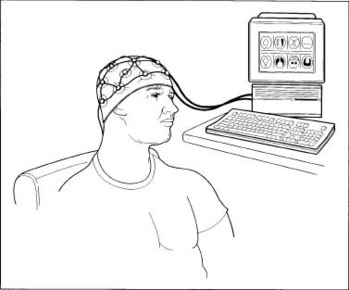
- 117—EEG
electroencephalogram - 118State of sleep associated with dreamingREM sleep
- 119Capacity to sleep____through age.Decreases
- 120How does the EEG monitor look in deep sleepThe waves are longer
- 121True or false: When sleeping, you go through each sleep stage in turnFalse, you cycle between stages
- 1222 factors which may affect sleeping patternSome types of sleeping pills, alcohol
- 123What is the optimum duration of sleep?7 hours
- 124Where is our body clock located?The suprachiasmatic nucleus or SCN
(in the hypothalamus) - 125Why is sleep disrupted in the winter?There is less light
- 126Primary hormone associated with the SCNMelatonin
- 127True or false: Alzheimer's affects your circadian activityTrue
- 128What is circadian rhythm?Daily rhythmic activity cycle based on 24-hour intervals
Información
- Descripción
- Undergraduate (Brain and Behaviour ) Psychology Fichas sobre Brain and Behaviour, creado por Grace Feakes el 16/11/2013.
- Creado por
- Grace Feakes
- Visitas
- 87
- Etiquetas
- Valoración