
Fichas
Psychopathology w4-6
Fichas del conjunto (57)
- 1Separation Anxiety DisorderDevelopmentally inappropriate and excessive fear or anxiety concerning separation from attachment figure.
- 2What is the link between Childhood Separation anxiety disorder and Panic Attacks?Both disorders are associated with heightened sensitivity to inhaled CO(2) and can be influenced by childhood parental loss
- 3What is panic?an abrupt experience of intense fear or acute discomfort,
- 4What is the Biology of panic?
- 5Risk factors for panic?Genetics;
An abnormally sensitive fear network;
Major life stressors;
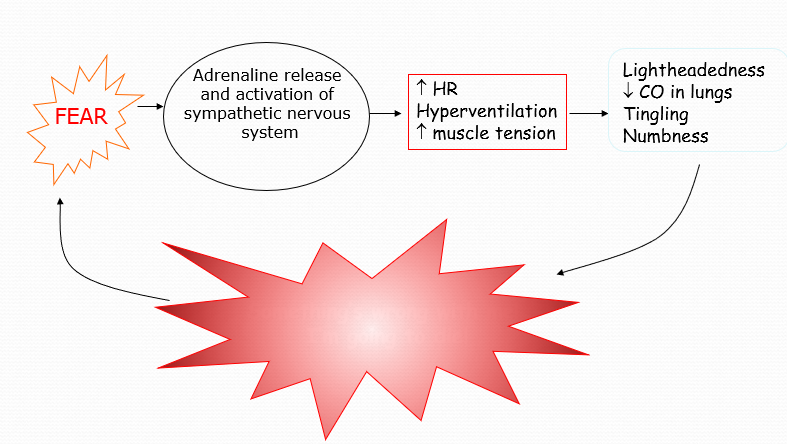
A history of sexual or physical abuse in childhood; - 6Cognitive model of panic?Panic Attacks result from ‘catastrophic misinterpretation’ of bodily or mental events;
Events misinterpreted as signs of impending disaster- i.e. a heart attack or going crazy;
A vicious cycle of events is triggered- associated with rising levels of anxiety and panic.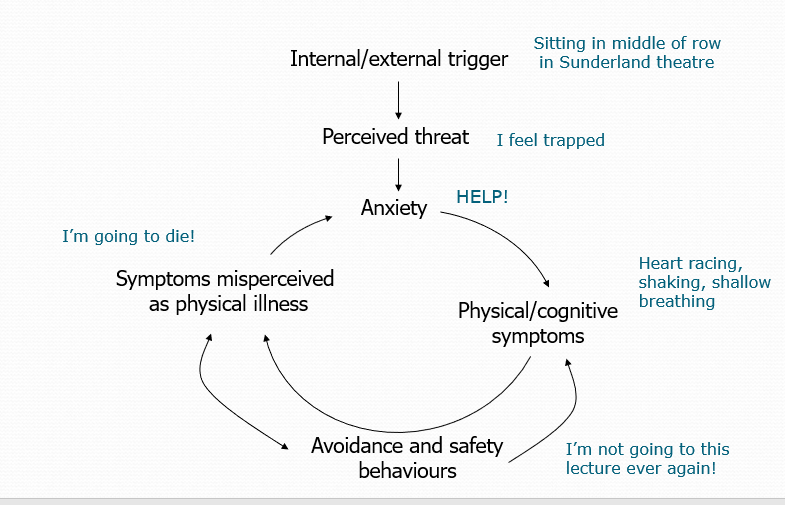
- 7Panic attacks- subtypes?Situationally-bound/cued;
Unexpected/uncued;
Situationally predisposed - 8Anxiety versus fearANXIETY
-anxious apprehension and worry that is a more general reaction that is out of proportion to threats in environment
-future oriented
-can be adaptive if not excessive
FEAR
-Experienced when a person is faced with real and immediate danger.
-Present-oriented
-Can be adaptive - 9Specific Phobias DSM - 5Irrational fear of a specific object or situation;
Markedly interferes with individual’s ability to function;
Individual recognises fear is excessive or unreasonable;
Exposure to phobic stimulus results in anxiety response;
Phobic situation is avoided or endured with intense anxiety/distress;
Typically lasting 6 months or more. - 10Specific phobia: DSM subtypesEnvironments – heights, water, storms
Situations- aeroplanes, elevators, enclosed places;
Animal- spider, cat
Blood, injections, injuries
Other- vomiting, choking, illnesses, people in costumes - 11Specific phobia- aetiologyPsychodynamic theory
Stems from Freud’s case study of Little Hans ("Analysis of a Phobia in a Five-year-old Boy“ 1909);
Castration anxiety and Oedipus complex;
Freud theorized that phobias were actually displaced fears or conflicts
Conditioning theory of fear acquisition
Watson & Little Albert
Individual learns to associate a threatening stimulus with a non-threatening stimulus so that the latter by itself can trigger anxiety
Fear is then maintained by avoidance- individual does not get the chance for ‘reality testing’ and new learning
Problem:
Many phobias have no obvious environmental cause- direct or indirect. “She has always been fearful of cats”
Why are some phobias more common than others, even though few encounters with the feared object (i.e. snakes)
Social learning
Fear may be learnt via observation of trauma in others;
Fear may be learnt by hearing of experiences of others;
Fear may be modeled or ‘instructed’
Evolutionary perspective
Ohman and Mineka (2001)- organisms which learned to fear environmental threats faster
had a survival and reproductive advantage - 12Social Anxiety DisorderMarked fear about 1 or more social situations
Individual fears that they will act in a way or show anxiety symptoms that will be negatively evaluated
Social situations almost always provoke fear or anxiety
Social situations are avoided or endured with intense fear or anxiety. - 13Social Anxiety Disorder -Risk factorsIndividual factors
Genetics- specific or general heritability of emotional disorders?
Cognitive factors- negative appraisal of social interactions- stem from adverse social interaction?
Social skills deficits- “chicken or egg”?
Temperament- shyness - 14What is Agoraphobia?Marked fear or anxiety
2 or more of : using public transport, being in open spaces, being in enclosed places, standing in line or being in a crowd, being outside of the home alone.
Fears that escape might be difficult or help unavailable - 15Overview of treatment for anxiety disordersMedication
Psychological treatment- esp Cognitive behavioural therapy
The importance of exposure
Other
ABC
Cross-sectional formulation of problem;
Assists in describing CBT model to patient - 16ABCTime-limited, problem focused approach based on the cognitive model;
Relies on collaborative empiricism: scientist-practitioner model;
Continuous measurement and evaluation of patient problems- used to test hypotheses concerning problem maintenance and to assess treatment efficacy;
Homework- integral part of treatment;
Socratic dialogue – important technique to enable transfer of information, and collaborative and supportive environment.
Dearousal techniques
Slow breathing
Progressive muscle relaxation
Meditation
Mental grounding
Exposure
Imaginal
Real
Graded - 17Describe the continuum of healthy eating, disordered eating, and eating disorders
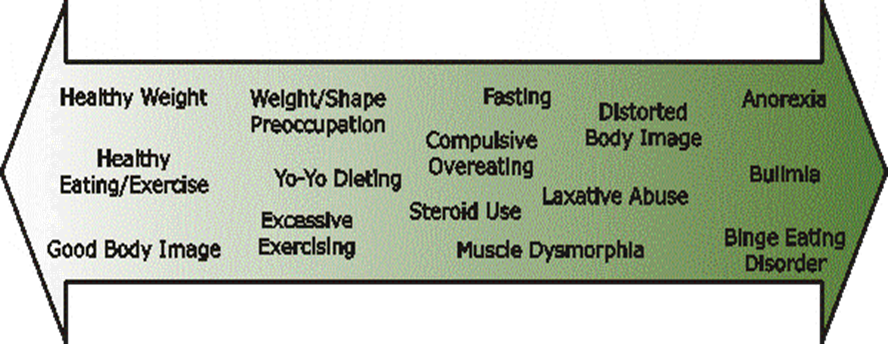
- 18Anorexia Nervosa (AN)Mean age at onset is in the teens early twenties
More recently late onset cases are being seen (Bueno et al., 2013)
Comorbidity: 60% depression & 33% anxiety disorders (Puccio et al., 2017)
Course and outcome are highly variable (Steinhausen, 2009)
recover after a single episode
fluctuation pattern of weight gain followed by relapse
chronic deteriorating course of the illness over many years - 19Anorexia Nervosa Disordered Eating can involve:Food rituals
Cuts food in small pieces
Rearranges food on plate
Eliminates foods gradually
300-600 calories a day
Diet pop, sugarless gum
Preoccupation with food
Cooks for others
Hungry, but refuses to eat - 20Anorexia Nervosa Psychological FeaturesPerfectionism
Harm avoidance
Feelings of ineffectiveness
Inflexible thinking
Overly restrained emotional expression - 21Bulimia NervosaGenerally occurs later than AN, late-early adulthood
Frequently begins during or after an episode of dieting
Course may be chronic or intermittent
For a high percentage the disorder persists for at least several years
Periods of remission often alternate with recurrences of binge eating
Purging may become an addiction
High levels of comorbidity with MDD and anxiety disorders - 22Binge Eating Disorder (BED)Recurrent episodes of binge eating (once/week X 3 months)
3 or more of:
eating more rapidly than normal,
eating until uncomfortably full,
eating large, amount of food when not hungry,
eating alone because of embarrassment or disgust,
depressed or guilty after overeating
Marked distress regarding binge eating
Not associated with regular use of inappropriate compensatory
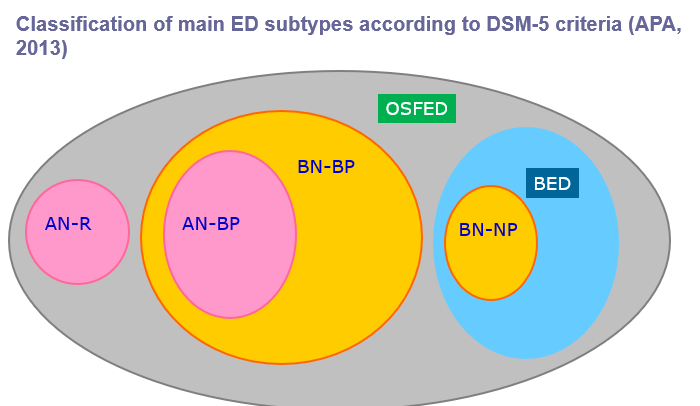
behaviours - 23OSFEDAtypical Anorexia Nervosa: All criteria are met, except despite significant weight loss, the individual’s weight is within or above the normal range.
Binge Eating Disorder: (of low frequency and/or limited duration): All of the criteria for BED are met, except at a lower frequency and/or for less than three months.
Bulimia Nervosa: (of low frequency and/or limited duration): All of the criteria for BN are met, except that the binge eating and inappropriate compensatory behaviour occurs at a lower frequency and/or for less than three months.
Purging Disorder: Recurrent purging behaviour to influence weight or shape in the absence of binge eating
Night Eating Syndrome: Recurrent episodes of night eating. Eating after awakening from sleep, or by excessive food consumption after the evening meal. - 24Unspecified Feeding and Eating Disorderbehaviours causing clinically significant distress/impairment of functioning, but do not meet the full criteria of any of the Feeding or Eating Disorder criteria.
- 25PICAPersistent eating of non-nutritive substances for a period of at least 1 month
The eating of non-nutritive substances is inappropriate to the developmental level of the individual - 26Rumination DisorderRepeated regurgitation of food for a period of at least one month Regurgitated food may be re-chewed, re-swallowed, or spit out.
The repeated regurgitation is not due to a medication condition (e.g. gastrointestinal condition).
The behaviour does not occur exclusively in the course of AN, BN, BED, or ARFID. - 27Avoidant/Restrictive Food Intake Disorder (ARFID)An Eating or Feeding disturbance as manifested by persistent failure to meet appropriate nutritional and/or energy needs associated with one (or more) of the following:
Significant loss of weight (or failure to achieve expected weight gain or faltering growth in children)
Significant nutritional deficiency - 28Risk factors for Eating Disorders
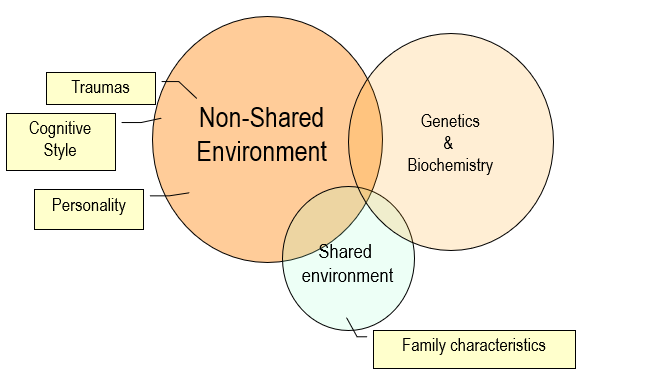
- 29Classification of EDs
- 30Summary Twin Studies in EDsTwin studies show heritability of 50-60% for broadly defined AN
Heritability for BN ~ 58 - 83%
Heritability for BED ~ 82%
Heritability for obesity in teenagers ~ 86% - 31Further Biological Factors in EDsChemical imbalances in the neuroendocrine system
imbalances control hunger, appetite, digestion, sexual function, emotions, and thinking etc.
Serotonin & norepinephrine in acutely ill AN and BN patients
representing a link between depression & EDs or a result of starvation??????
Excessive levels of cortisol in both AN & depression
caused by a problem that occurs in or near the hypothalamus
Brain Structures
Parietal cortex is overestimate their own weight, lack insight about it, but could be caused by starvation - 32EDs and cognitionGeneral intellectual ability- average to high average
AN individuals whilst acutely unwell:
Mild cog deficits in executive functioning, memory, verbal and visuospatial processing- not in recovered patients
Deficits in cognitive flexibility & central coherence seen in BN and AN
Cognitive Remediation Therapy - 33Personality in AnorexiaAN-R: obsessional, perfectionistic, socially inhibited, harm avoidance and emotionally restrained
AN-BP: impulsive & extroverted personality style, more like BN - 34Personality in BulimiaImpulsive, interpersonally sensitive, low self-esteem
Elevated rates of DSM Cluster B and Cluster C personality disorders especially BPD - 35BN Environmental Factors: Interpersonal & SocialInterpersonal Factors
troubled family and personal relationships
difficulty expressing emotions and feelings
history of being teased or ridiculed based on size or weight
High parental expectations & maladaptive parenting (cause and effect ????)
Childhood feeding difficulties
History of trauma, sexual, physical and/or mental abuse - 36BN Environmental Factors: Cultural FactorsSocial Factors (media and cultural pressures)
Cultural pressures that glorify "thinness" & place value on obtaining the "perfect body”
Narrow definitions of beauty only women & men of specific body weights and shapes
Cultural norms: value people on the basis of physical appearance NOT inner qualities & strengths
People pursing professions or activities that emphasize thinness are more susceptible
i.e. Modeling, dancing, gymnastics, wresting, long distance running - 37Specific ED risk factors for malesDieting is a less common risk factor for men
Men whose job requires a particular body “look” such as models, actors or entertainers
Male athletes are at a higher risk of developing an ED (e.g. gymnasts, swimmers, jockeys, weightlifters, wrestlers and body builders as restrictive dieting, extreme exercise regimes and/or anabolic steroid abuse.
Present with more premorbid obesity and overweight. - 38Further environmental factors
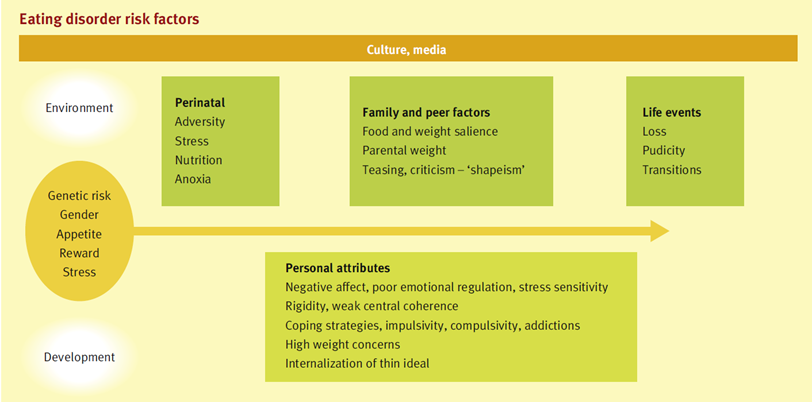
- 39An aetiological model of EDsGarner and Garfinkel (1997)
Predisposing: contribute towards a vulnerability towards EDs
Precipitating:(stressors) lead to weight loss and the gains associated with weight loss are discovered
Perpetuating: maintain weight loss, trapping the individual into an inescapable situation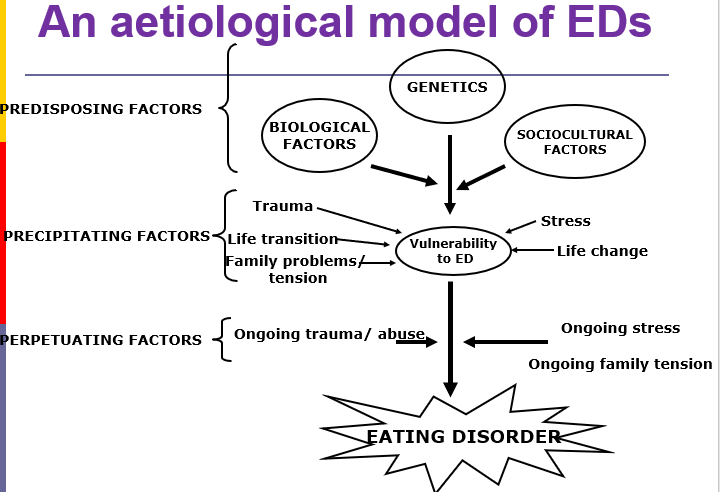
- 40Obsessive-compulsive disorder is...Obsessions and compulsions are recurrent and persistent;
Individual recognises they are excessive or unreasonable;
Obsessions/compulsions cause marked distress, are time consuming (>1 hr/day) and significantly interfere with functioning and relationships.
Persistent ideas, thoughts, impulses, or images that are experienced as intrusive and inappropriate and cause marked anxiety or distress; - 41Risk Factors• Family history with evidence of dominant or codominant mode of transmission (Jenike, 2004);
• Early childhood experiences and critical learning incidents maladaptive beliefs about responsibility and threat (Clark & O’Connor ,2005);
• Personality factors- neuroticism, psychoticism and sensitivity to punishment (Fullana et al., 2004). - 42Obsessions: Common types• Fears of contamination
• Repeated doubts (safety, scruples)
• Need to have things in a particular order
• Sexual, horrific or blasphemous imagery
• Aggressive or inappropriate impulses
• Nonsensical thoughts or images - 43Compulsions are• Repetitive behaviour (handwashing, checking) or mental acts (praying, counting, repeating words silently) the goal of which is to prevent or reduce anxiety;
• Can include rigid/stereotyped acts according to elaborate rules without any real explanation of them. - 44OCD Cognitive Factors• Intrusive thoughts might become obsessions if they are evaluated as:
o Overly important (‘if I’m thinking this way, it must be important’);
o Highly threatening (‘if I continue to think like this, something bad will happen’);
o Requiring complete control (‘I’ve got to stop thinking this way’);
o Necessitating a high degree of certainty (‘I need to be certain that nothing bad will happen’)
o Associated with a state of perfection (‘I can’t stop thinking about this until I do it perfectly’) - 45Cognitive Behavioural Model1. Begins with the premise that intrusive thoughts are normal
2. However, certain individuals place meaning on these thoughts, and thus respond to them in some way (avoid, suppress, ritualise etc).
3. These responses increase vigilance for the intrusive thoughts and protects the meaning of the intrusion. - 46Body Dysmorphic Disorder. Preoccupation with one or more perceived defects or flaws in physical appearance that are not observable or appear slight to others.
A. At some point during the course of the disorder, the individual has performed repetitive behaviors (e.g., mirror checking, excessive grooming, skin picking, reassurance seeking) or mental acts (e.g., comparing his or her appearance with that of others) in response to the appearance concerns.
B. The preoccupation causes clinically significant distress or impairment in social, occupational, or other important areas of functioning.
• Specify if:With muscle dysmorphia: The individual is preoccupied with the idea that his or her body build is too small or insufficiently muscular. This specifier is used even if the individual is preoccupied with other body areas, which is often the case. - 47Impact on functioningImpact on functioning
• Can range from moderate (e.g., avoidance of some social situations) to extreme and incapacitating (e.g., being completely housebound);
o job, academic, or role functioning (e.g., as a parent or caregiver), which is often severe (e.g., performing poorly, missing school or work, not working)
o social functioning (e.g., social activities, relationships, intimacy),
• psychiatric hospitalisation - 48BDD Veale's model
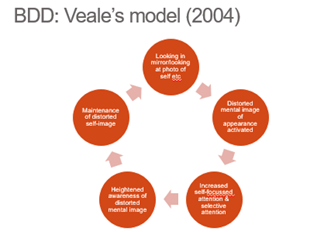
- 49Cognitive processes of BDD• Compared to healthy controls individuals with BDD:
o Evaluate appearance more negatively
o Endorse assumptions about appearance such as “If my appearance is defective then I am worthless”
o Overvalue physical appearance and attractiveness
o Experience more anxiety and discomfort after mirror gazing
o Experience more distress and self-focussed attention after mirror gazing
o Engage in ruminative thinking- such as ‘Why am I so ugly’
o Engage in repeated reviews of past-appearance related experiences - 50Hoarding Disorder isA Persistent difficulty discarding or parting with possessions, regardless of their actual value.
B This difficulty is due to a perceived need to save the items and to distress associated with discarding them.
C The difficulty discarding possessions results in the accumulation of possessions that congest and clutter active living areas and substantially compromises their intended use. If living areas are uncluttered, it is only because of the interventions of third parties (e.g., family members, cleaners, authorities).
D The hoarding causes clinically significant distress or impairment in social, occupational, or other important areas of functioning (including maintaining a safe environment for self and others). - 51Cognitive factors associated with Hoarding Behaviour• Control over possessions
• Concern about memory
• Responsibility over possessions; (After age, mood (depression and anxiety), OCD symptoms and other OCD-related cognitive variables controlled for) - 52Trichotillomania (hair pulling) isTrichotillomania (hair pulling)
A. Recurrent pulling out of one’s hair, resulting in hair loss.
B. Repeated attempts to decrease or stop hair pulling.
C. The hair pulling causes clinically significant distress or impairment in social, occupational, or other important areas of functioning.
D. The hair pulling or hair loss is not attributable to another medical condition (e.g., a dermatological condition). - 53Functional consequences of TrichotillomaniaFunctional consequences
• Social/occupational impairment
• musculoskeletal injury (e.g., carpal tunnel syndrome; back, shoulder and neck pain),
• blepharitis,
• dental damage (e.g., worn or broken teeth due to hair biting).
• Swallowing of hair (trichophagia) may lead to trichobezoars, with subsequent anemia, abdominal pain, hematemesis, nausea and vomiting, bowel obstruction, and even perforation (taken from DSM5) - 54Excoriation (skin-picking) disorder is• Recurrent skin picking resulting in skin lesions.
• Repeated attempts to decrease or stop skin picking.
• The skin picking causes clinically significant distress or impairment in social, occupational, or other important areas of functioning.
• The skin picking is not attributable to the physiological effects of a substance (e.g., cocaine) or another medical condition (e.g., scabies).
• The skin picking is not better explained by symptoms of another mental disorder (e.g., delusions or tactile hallucinations in a psychotic disorder, attempts to improve a perceived defect or flaw in appearance in body dysmorphic disorder, stereotypies in stereotypic movement disorder, or intention to harm oneself in nonsuicidal self-injury). - 55Functional consequences of Excoriation (skin-picking) disorder• Functional consequences
Social and occupational impairment
tissue damage, scarring, infection
frequently requires antibiotic treatment for infection, and on occasion it may require surgery - 56Trichotillomania and Excoriation: Psychological aspects• Motivated by stimulation of positive mood or feelings (i.e., pleasure, gratification or relief) or regulation of states of high or low arousal (i.e., anxiety or boredom);
• Approximately 1/5- 1/3 people with SPD or trich report being in a trance/feeling mesmerized/ experiencing depersonalisation while picking/ hair pulling;
• Substantial proportion of sufferers in both groups report little or no reflective awareness of the act as it occurs
• Two subtypes proposed
• “automatic pulling/picking” that occurs out of reflective awareness in sedentary situations;
• “focused pulling/picking”, happens in full awareness in response to urges or negative affective states. - 57Trichotillomania and Excoriation: Psychological Consequences• Shame, distress, embarrassment;
• BUT
• Hair pulling and scratching also reduce unpleasant emotions
Información
- Descripción
- Psychology Fichas sobre Psychopathology w4-6, creado por Taylor Carre-Riddell el 17/03/2018.
- Creado por
- Taylor Carre-Riddell
- Visitas
- 35
- Etiquetas
- Valoración