
Mapa mental
Probability
Contenido del mapa
Probability
Random Experiment
- Random experiment may result in two or more outcoms e.g. (i) tossing a coin (ii)throwing a dice
Sample space
- Set of all possible outcomes of an experiment
Event
- An outcome random experiment or an event is somthing that happen
Equally likely Events
- The different outcoms have the same as equeal chance of occurrence
Probability of any event can never be less than 0 and not more than 1
- 0<=P(E) <=1
Types
- Empirical Probability
- When probability is based on an actual experiment suppose event E is happen, when experiment is
- performed, then P(E) = No. of times event E occured / Number of times the experiment was performed
- When probability is based on an actual experiment suppose event E is happen, when experiment is
- Measurement Probability
- When repetition of an experiment can be avoided for exact probability.
- Probability = No. of favourable outcomes / No. of all possible outcomes
- When repetition of an experiment can be avoided for exact probability.
- Classical Probability
- Probability of an event denotes likelihood of its happening
- P(E) = No. of event favourable / Total number of all possible event
- Probability of an event denotes likelihood of its happening
- Empirical Probability
Probability of Events
- Sum
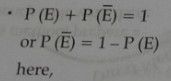
- Sum of the probability of all events is always one e.g. Suppose these are n event corresponding to a random experiment, them P(E1) + p(E2) + P(E3) +--------P(En)=1
- complementary event
- Certain event or sure event
- Probability of an event is equeal to 1
- Impossible Event
- Probability of an event is equeal to 0
- Sum
Imágenes y archivos del mapa

Información
- Descripción
- Mapa Mental sobre Probability, creado por Soumyadip Jana el 24/10/2021.
- Creado por
- Soumyadip Jana
- Visitas
- 0
- Valoración