
Mapa mental
sustaining Ecosystems
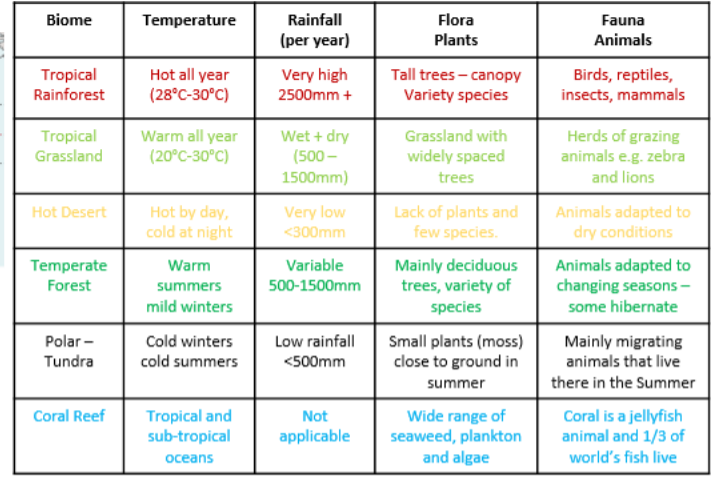
Contenido del mapa
sustaining Ecosystems
where living things and physical factors are linked and all elements are interrelated
- eg food chains and food webs
- nutrient cycle, stores and flows of nutrients in an ecosystem
adaptations of tropical rainforest
- drip tips- shed precipitation 2000mm+
- emergent, canopy, sub canopy, shrub
- large leaves in shrub layer, catch light
- waxy leaves - loose loss moisture, hot 27 deg, transpiration
- buttress roots, support tall tres
- long shallow roots, capture nutrients before washed away
- epiphytes, no roots, grow on others to reach sun
- bright flowers, pollenate/reproduce
sustainable management, tropical rainforest, Ecotourism
- Samasati Nature retreat, small scale, employs only locals, most money stays in local community improve infrastructure benefits locals, buildings between trees, none destroyed, timber from afforestation, natural light and ventilation, biodegradable soap and shampoo allowed, water from natural springs or roofs for showers/toilets, minimal impact activities, bird watching, canopy exploration, walking and meditation
management strategies
- laws and national parks
- Costa Rica GOV recognised the deforestation, established protected areas, gave Landowners financial incentive to keep land, not turn it into farms
- Agroforestry
- trees and crops grown together benefits from shelter and leaf litter nutrients. trees prevent soil erosion.
- selective logging
- felled at certain height young trees mature to maintain canopy height
- afforestation
- replanting to replace lost - secondary forest lacks biodiversity, species takes time to re-establish
- monitoring
- satellite tech to ensure no illegal activity and guidelines are stuck to
- wildlife corridor
- - Costa Rica and others. along length of central America, Mexico to Panama, reconnect patches, allow migration, no isolation
- today there are 28 national parks/nature reserves, 24% of country's land area is protected, between 1960-1990 deforestation rates reached one of highest in the world, 32,000 hectares being cut down a year, now equivalent to 0.1% loss per year.
- laws and national parks
Global management, Antarctic
- Antarctica Treaty, 1961, most successful, initially signed by 12 countries, rules that must be followed, only for peaceful purposes, encourage international research. industrial and commercial is banned, now 52 signed, 80% of worlds population decided to protect unaltered nature for benefit of all humanity and future generations, all actions assessed on environmental impact, treaty upheld for over 50 years, protocols for issues such as seal hunting, consultative party meet up to discuss issues
Local management of Antarctic
- Sustainable tourism, Union Glacier, small camp, set up each summer only allows 20 guests, live by certain rules and regulations, powered by solar energy, little impact, all waste from season taken back with camp, low impact activities on fragile environment, small walks and treks, 5m from wildlife, no plastic waste allowed, prevent it getting into food chain and causing pain and suffering, will go back with stories of the fragile place
Arctic and Antarctic climates, features of land/sea and flora/fauna
- Arctic
- Combinations of mosses, lichens, sedges, grasses, and dwarf woody shrubs dominate most Arctic tundra and Arctic desert, and miniature flowering plants dominate the polar deserts. ice-cap climate with very cold, generally extremely dry weather.
- Antarctic
- 20 species land animals , squirrel, wolf, fox, moose, caribou, reindeer, polar bear, musk ox, about six species of aquatic mammals such as the walrus, seal, and whale has land under thick ice in areas
- Arctic
Imágenes y archivos del mapa

Información
- Descripción
- Year 8 Geography Mapa Mental sobre sustaining Ecosystems, creado por Oliver wilcox el 19/12/2022.
- Creado por
- Oliver wilcox
- Visitas
- 0
- Etiquetas
- Valoración
Más sobre Rainforest Conservation and Management