
Mapa mental
nutrition
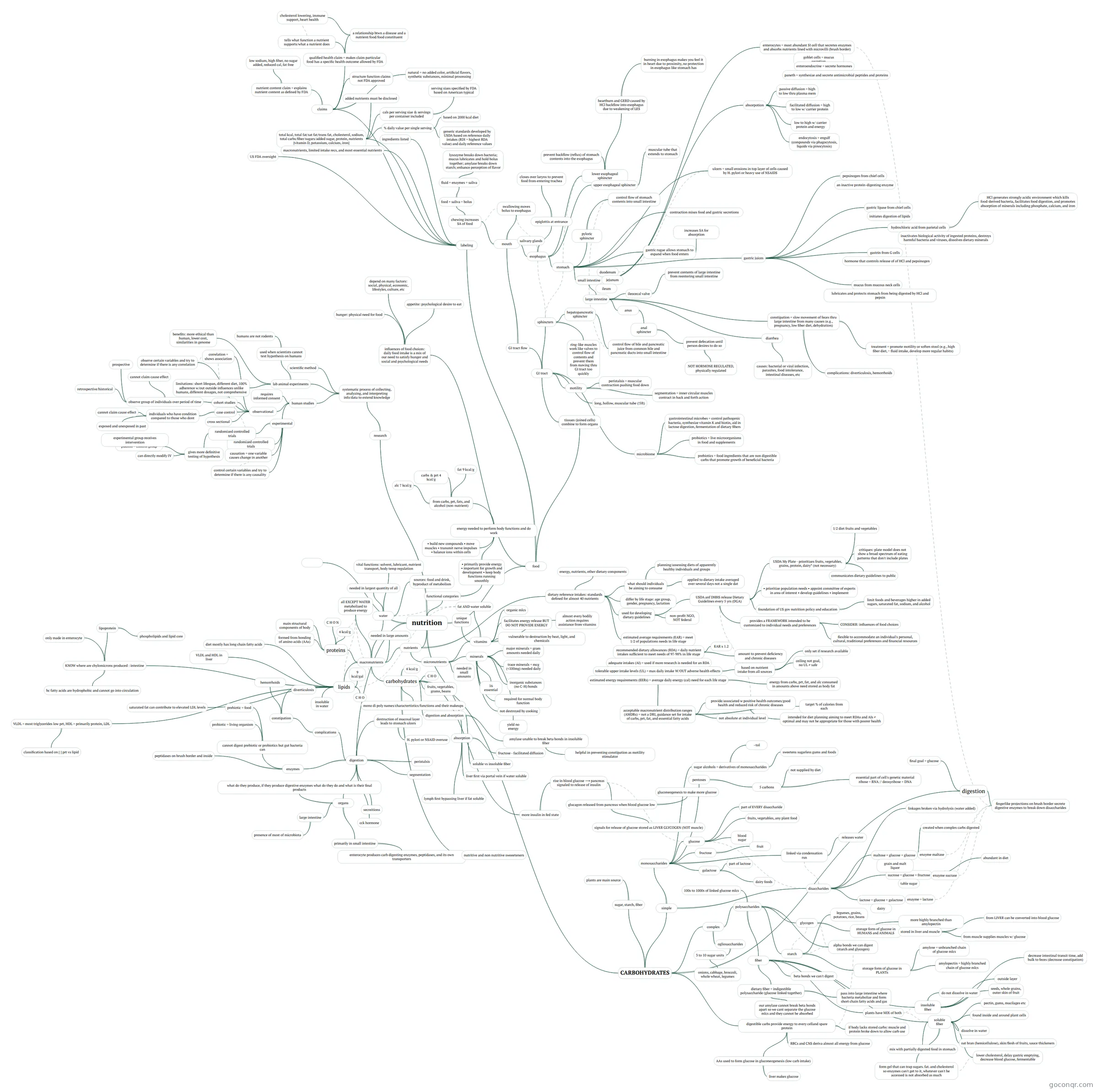
Mind map: nutrition
Contenido del mapa
nutrition
functional categories
- • primarily provide energy • important for growth and development • keep body functions running smoothly
- energy needed to perform body functions and do work
- from carbs, prt, fats, and alcohol (non-nutrient)
- alc 7 kcal/g
- carbs & prt 4 kcal/g
- fat 9 kcal/g
- • build new compounds • move muscles • transmit nerve impulses • balance ions within cells
- from carbs, prt, fats, and alcohol (non-nutrient)
- energy needed to perform body functions and do work
- • primarily provide energy • important for growth and development • keep body functions running smoothly
nutrients
- macronutrients
- needed in large amounts
- water
- needed in largest quantity of all
- vital functions: solvent, lubricant, nutrient transport, body temp regulation
- sources: food and drink, byproduct of metabolism
- proteins
- 4 kcal/g
- C H O N
- main structural components of body
- formed from bonding of amino acids (AAs)
- lipids
- 9 kcal/gal
- C H O
- insoluble in water
- KNOW where are chylomicrons produced : intestine
- bc fatty acids are hydrophobic and cannot go into circulation
- lipoprotein
- phospholipids and lipid core
- only made in enterocyte
- diet mostly has long chain fatty acids
- VLDL and HDL in liver
- saturated fat can contribute to elevated LDL levels
- VLDL = most triglycerides low prt, HDL = primarily protein, LDL
- classification based on [ ] prt vs lipid
- carbohydrates
- 4 kcal/g
- C H O
- fruits, vegetables, grams, beans
- mono di poly names/charactertistics/functions and their makeups
- digestion and absorption
- amylase unable to break beta bonds in insoluble fiber
- helpful in preventing constipation as motility stimulator
- soluble vs insoluble fiber
- amylase unable to break beta bonds in insoluble fiber
- more insulin in fed state
- rise in blood glucose ⟶ pancreas signaled to release of insulin
- glucagon released from pancreas when blood glucose low
- signals for release of glucose stored as LIVER GLYCOGEN (NOT muscle)
- gluconeogenesis to make more glucose
- glucagon released from pancreas when blood glucose low
- rise in blood glucose ⟶ pancreas signaled to release of insulin
- nutritive and non nutritive sweeeteners
- CARBOHYDRATES
- sugar, starch, fiber
- plants are main source
- simple
- monosaccharides
- glucose
- blood sugar
- part of EVERY disaccharide
- fruits, vegetables, any plant food
- fructose
- fruit
- galactose
- part of lactose
- dairy foods
- sugar alcohols = derivatives of monosaccharides
- –tol
- sweetens sugarless gums and foods
- pentoses
- 5 carbons
- not supplied by diet
- essential part of cell's genetic material ribose = RNA // deoxyribose = DNA
- 5 carbons
- linked via condensation rxn
- releases water
- glucose
- disaccharides
- sucrose = glucose + fructose
- table sugar
- enzyme sucrase
- abundant in diet
- maltose = glucose + glucose
- grain and malt liquor
- enzyme maltase
- created when complex carbs digested
- lactose = glucose + galactose
- dairy
- enzyme = lactase
- linkages broken via hydrolysis (water added)
- sucrose = glucose + fructose
- monosaccharides
- complex
- polysaccharides
- glycogen
- storage form of glucose in HUMANS and ANIMALS
- more highly branched than amylopectin
- stored in liver and muscle
- from LIVER can be converted into blood glucose
- from muscle supplies muscles w/ glucose
- storage form of glucose in HUMANS and ANIMALS
- fiber
- beta bonds we can't digest
- dietary fiber = indigestible polysaccharide (glucose linked together)
- pass into large intestine where bacteria metabolize and form short chain fatty acids and gas
- our amylase cannot break beta bonds apart so we cant separate the glucose mlcs and they cannot be absorbed
- insoluble fiber
- do not dissolve in water
- seeds, whole grains, outer skin of fruit
- outside layer
- decrease intestinal transit time, add bulk to feces (decrease constipation)
- soluble fiber
- dissolve in water
- found inside and around plant cells
- oat bran (hemicellulose), skin/flesh of fruits, sauce thickeners
- pectin, gums, mucilages etc
- lower cholesterol, delay gastric emptying, decrease blood glucose, fermentable
- mix with partially digested food in stomach
- form gel that can trap sugars. fat. and cholesterol so enzymes can't get to it, whatever can't be accessed is not absorbed as much
- plants have MIX of both
- starch
- storage form of glucose in PLANTs
- amylose = unbranched chain of glucose mlcs
- amylopectin = highly branched chain of glucose mlcs
- legumes, grains, potatoes, rice, beans
- storage form of glucose in PLANTs
- 100s to 1000s of linked glucose mlcs
- alpha bonds we can digest (starch and glycogen)
- glycogen
- ogliosaccharides
- 3 to 10 sugar units
- onions, cabbage, broccoli, whole wheat, legumes
- 3 to 10 sugar units
- polysaccharides
- digestible carbs provide energy to every celland spare protein
- RBCs and CNS deriva almost all energy from glucose
- AAs used to form glucose in gluconeogenesis (low carb intake)
- liver makes glucose
- if body lacks stored carbs: muscle and protein broke down to allow carb use
- digestion
- final goal = glucose
- fingerlike projections on brush border secrete digestive enzymes to break down disaccharides
- sugar, starch, fiber
- all EXCEPT WATER metabolized to produce energy
- micronutrients
- needed in small amounts
- vitamins
- fat AND water soluble
- unique functions
- facilitates energy release BUT DO NOT PROVIDE ENERGY
- almost every bodily action requires assistance from vitamins
- organic mlcs
- vulnerable to destruction by heat, light, and chemicals
- minerals
- trace minerals = mcg (<100mg) needed daily
- major minerals = gram amounts needed daily
- inorganic substances (no C-H) bonds
- not destroyed by cooking
- yield no energy
- required for normal body function
- 16 essential
- dietary reference intakes: standards defined for almost 40 nutrients
- energy, nutrients, other dietary components
- what should individuals be aiming to consume
- planning/assessing diets of apparently healthy individuals and groups
- applied to dietary intake averaged over several days not a single dat
- differ by life stage: age group, gender, pregnancy, lactation
- used for developing dietary guidelines
- non-profit NGO, NOT federal
- USDA anf DHHS release Dietary Guidelines every 5 yrs (DGA)
- • prioritize population needs • appoint committee of experts in area of interest • develop guidelines • implement
- stage 1 • gov't agencies involved • done by a review of research • anyone can comment stage 2 • appoint committee to look at research, data, modeling food patterns of current pop stage 3 • develop expert report from systemic review of research stage 4 • implement the guidelines
- foundation of US gov nutrition policy and education
- limit foods and beverages higher in added sugars, saturated fat, sodium, and alcohol
- provides a FRAMEWORK intended to be customized to individual needs and preferences
- CONSIDER: influences of food choices
- flexible to accommodate an individual's personal, cultural, traditional preferences and financial resources
- USDA My Plate - prioritizes fruits, vegetables, grains, protein, dairy* (not necessary)
- critiques: plate model does not show a broad spectrum of eating patterns that don't include plates
- communicates dietary guidelines to public
- 1/2 diet fruits and vegetables
- • prioritize population needs • appoint committee of experts in area of interest • develop guidelines • implement
- estimated average requirements (EAR) = meet 1/2 of populations needs in life stage
- recommended dietary allowances (RDA) = daily nutrient intakes sufficient to meet needs of 97-98% in life stage
- EAR x 1.2
- amount to prevent deficiency and chronic diseases
- adequate intakes (AI) = used if more research is needed for an RDA
- tolerable upper intake levels (UL) = max daily intake W/OUT adverse health effects
- based on nutrient intake from all sources
- ceiling not goal, no UL ≠ safe
- only set if research available
- estimated energy requirements (EERs) = average daily energy (cal) need for each life stage
- energy from carbs, prt, fat, and alc consumed in amounts above need stored as body fat
- acceptable macronutrient distribution ranges (AMDRs) = not a DRI, guidance set for intake of carbs, prt, fat, and essential fatty acids
- provide/associated w positive health outcomes/good health and reduced risk of chronic diseases
- intended for diet planning aiming to meet RDAs and AIs ≠ optimal and may not be appropriate for those with poorer health
- not absolute at individual level
- target % of calories from each
- provide/associated w positive health outcomes/good health and reduced risk of chronic diseases
- based on nutrient intake from all sources
- tolerable upper intake levels (UL) = max daily intake W/OUT adverse health effects
- recommended dietary allowances (RDA) = daily nutrient intakes sufficient to meet needs of 97-98% in life stage
- macronutrients
food
- influences of food choices: daily food intake is a mix of our need to satisfy hunger and social and psychological needs
- hunger: physical need for food
- appetite: psychological desire to eat
- depend on many factors: social, physical, economic, lifestyles, culture, etc
- labeling
- US FDA oversight
- total kcal, total fat/sat fat/trans fat, cholesterol, sodium, total carbs/fiber/sugars/added sugar, protein, nutrients [vitamin D, potassium, calcium, iron]
- cals per serving size & servings per container included
- serving sizes specified by FDA based on American typical
- % daily value per single serving
- based on 2000 kcal diet
- generic standards developed by USDA based on reference daily intakes (RDI = highest RDA value) and daily reference values
- added nutrients must be disclosed
- cals per serving size & servings per container included
- macronutrients, limited intake recs, and most essential nutrients
- ingredients listed
- claims
- nutrient content claim = explains nutrient content as defined by FDA
- low sodium, high fiber, no sugar added, reduced cal, fat free
- qualified health claim = makes claim particular food has a specific health outcome allowed by FDA
- tells what function a nutrient supports/what a nutrient does
- a relationship btwn a disease and a nutrient/food/food constituent
- cholesterol lowering, immune support, heart health
- structure function claims not FDA approved
- natural = no added color, artificial flavors, synthetic substances, minimal processing
- nutrient content claim = explains nutrient content as defined by FDA
- tissues (joined cells) combine to form organs
- GI tract
- GI tract flow
- mouth
- salivary glands
- esophagus
- stomach
- small intestine
- duodenum
- jejunum
- ileum
- large intestine
- ileocecal valve
- prevent contents of large intestine from reentering small intestine
- anus
- anal sphincter
- prevent defecation until person desires to do so
- NOT HORMONE REGULATED, physically regulated
- prevent defecation until person desires to do so
- anal sphincter
- constipation = slow movement of feces thru large intestine from many causes (e.g., pregnancy, low fiber diet, dehydration)
- treatment = promote motility or soften stool (e.g., high fiber diet, ↑ fluid intake, develop more regular habits)
- complications: diverticulosis, hemorrhoids
- diarrhea
- causes: bacterial or viral infection, parasites, food intolerance, intestinal diseases, etc
- ileocecal valve
- enterocytes = most abundant SI cell that secretes enzymes and absorbs nutrients lined with microvilli (brush border)
- goblet cells = mucus secretion
- enteroendocrine = secrete hormones
- paneth = synthesize and secrete antimicrobial peptides and proteins
- enteroendocrine = secrete hormones
- goblet cells = mucus secretion
- absorpotion
- passive diffusion = high to low thru plasma mem
- facilitated diffusion = high to low w/ carrier protein
- low to high w/ carrier protein and energy
- endocytosis = engulf (compounds via phagocytosis, liquids via pinocytosis)
- gastric rugae allows stomach to expand when food enters
- increases SA for absorption
- gastric juices
- hydrochloric acid from parietal cells
- inactivates biological activity of ingested proteins, destroys harmful bacteria and viruses, dissolves dietary minerals
- HCl generates strongly acidic environment which kills food-derived bacteria, facilitates food digestion, and promotes absorption of minerals including phosphate, calcium, and iron
- gastric lipase from chief cells
- initiates digestion of lipids
- gastrin from G cells
- hormone that controls release of of HCl and pepsinogen
- mucus from mucous neck cells
- lubricates and protects stomach from being digested by HCl and pepsin
- pepsinogen from chief cells
- an inactive protein-digesting enzyme
- hydrochloric acid from parietal cells
- contraction mixes food and gastric secretions
- pyloric sphincter
- control flow of stomach contents into small intestine
- ulcers = small erosions in top layer of cells caused by H. pylori or heavy use of NSAIDS
- small intestine
- lower esophageal sphincter
- prevent backflow (reflux) of stomach contents into the esophagus
- heartburn and GERD caused by HCl backflow into esophagus due to weakening of LES
- burning in esophagus makes you feel it in heart due to proximity, no protection in esophagus like stomach has
- epiglottis at entrance
- closes over larynx to prevent food from entering trachea
- upper esophageal sphincter
- muscular tube that extends to stomach
- stomach
- chewing increases SA of food
- food + saliva = bolus
- fluid + enzymes = saliva
- lysozyme breaks down bacteria; mucus lubricates and hold bolus together; amylase breaks down starch; enhance perception of flavor
- fluid + enzymes = saliva
- food + saliva = bolus
- swallowing moves bolus to esophagus
- mouth
- long, hollow, muscular tube (!5ft)
- sphincters
- hepatopancreatic sphincter
- control flow of bile and pancreatic juice from common bile and pancreatic ducts into small intestine
- ring-like muscles work like valves to control flow of contents and prevent them from moving thru GI tract too quickly
- hepatopancreatic sphincter
- motility
- peristalsis = muscular contraction pushing food down
- segmentation = inner circular muscles contract in back and forth action
- microbiome
- gastrointestinal microbes = control pathogenic bacteria, synthesize vitamin K and biotin, aid in lactose digestion, fermentation of dietary fibers
- probiotics = live microorganisms in food and supplements
- prebiotics = food ingredients that are non digestible carbs that promote growth of beneficial bacteria
- GI tract flow
- GI tract
- influences of food choices: daily food intake is a mix of our need to satisfy hunger and social and psychological needs
research
- systematic process of collecting, analyzing, and interpreting info/data to extend knowledge
- scientific method
- lab animal experiments
- used when scientists cannot test hypothesis on humans
- humans are not rodents
- benefits: more ethical than human, lower cost, similarities in genome
- limitations: short lifespan, different diet, 100% adherence w/out outside influences unlike humans, different dosages, not comprehensive
- used when scientists cannot test hypothesis on humans
- human studies
- requires informed consent
- observational
- cohort studies
- observe group of individuals over period of time
- cannot claim cause effect
- prospective
- researcher in present finds healthy people to see if they develop the outcome in the future based on what they reportedly are exposed to since being recorded in study reporting can have bias!
- retrospective/historical
- researcher in present looking at the past (exposures) of pts with an outcome researcher looking at people that formed a condition of interest after already being exposed or not and observing correlations/associations
- observe group of individuals over period of time
- case control
- individuals who have condition compared to those who dont
- stronger studies compare groups that are similar in multiple factors (demographics, location, etc)
- cannot claim cause effect
- exposed and unexposed in past
- individuals who have condition compared to those who dont
- cross sectional
- correlation = shows association
- observe certain variables and try to determine if there is any correlation
- cohort studies
- experimental
- randomized controlled trials
- randomized controlled trials
- gives more definitive testing of hypothesis
- placebo = control group
- experimental group receives intervention
- can directly modify IV
- placebo = control group
- gives more definitive testing of hypothesis
- causation = one variable causes change in another
- control certain variables and try to determine if there is any causality
- systematic process of collecting, analyzing, and interpreting info/data to extend knowledge
digestion
- peristalsis
- segmentation
- cck hormone
- organs
- primarily in small intestine
- enterocyte produces carb digesting enzymes, peptidases, and its own transporters
- large intestine
- presence of most of microbiota
- what do they produce, if they produce digestive enzymes what do they do and what is their final products
- primarily in small intestine
- enzymes
- cannot digest prebiotic or probiotics but gut bacteria can
- prebiotic = food
- probiotic = living organism
- peptidases on brush border and inside
- cannot digest prebiotic or probiotics but gut bacteria can
- secreitions
- destruction of mucosal layer leads to stomach ulcers
- H. pylori or NSAID overuse
- complications
- constipation
- hemorrhoids
- diverticulosis
- constipation
absorption
- fructose - facilitated diffusion
- liver first via portal vein if water soluble
- lymph first bypassing liver if fat soluble
Información
- Descripción
- Mapa Mental sobre nutrition, creado por Sydney B Jordan el 20/02/2024.
- Creado por
- Sydney B Jordan
- Visitas
- 0
- Valoración
Más sobre Nutrients and Their Functions