
Mapa mental
Factors Affecting Enzyme Activity 4.2
Contenido del mapa
Factors Affecting Enzyme Activity 4.2
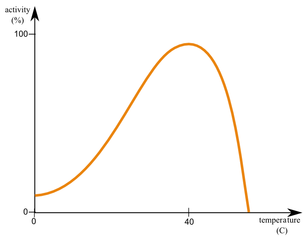
Temperature
- At low temperatures, reaction rate is slow. As temperature increases up to 37 degrees, reaction rate increases. After 37 degrees the rate of reaction decreases. At high temperatures reaction rate stops.
- Due to low kinetic energy of enzyme and substrate molecules there are therefore few succesful collisions between the substrate molecule and the enzymes active site. Then as kinetic energy of the enzymes and substrates increases, there are more succesful collisions as the molecules are moving faster. Once the optimum temperature has been hit, the rate of reaction is at its peak. After this, the enzymes begin to denature because there is too much kinetic energy causing the atom in the enzyme to vibrate more, breaking the bonds and changing the 3D structure. This causes less enzyme substrate complexes to form, decreasing reaction rate.
- Q10 = Rate at higher temperature/ Rate at lower temperature
- Temperature difference must be 10
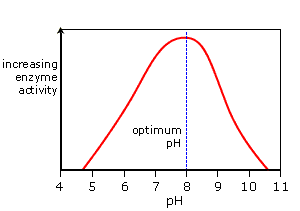
PH
- At extremely low and extremely high PH the reaction rate is slow. Then as PH increases the rate of reaction increases until it reaches the optimum PH. After, the reaction rate decreases until it stops.
- At low PH the enzymes activity is low because there is a high concentration of hydrogen ions, therefore less R groups are able to interact with eachother, therefore bonds break andthe tertiary structure of the enzyme changes meaning the active site is no lontherew are less succesful collisions.ger complimentary to the substrate, hence there are less succesful collisions. As the PH increases , the concentration of hydrogen ions decreases meaning more active sites are complimentary meaning more succesful collisions can occur meaning the reaction rate is faster. After the optimum PH is reached, the reverse occurs.
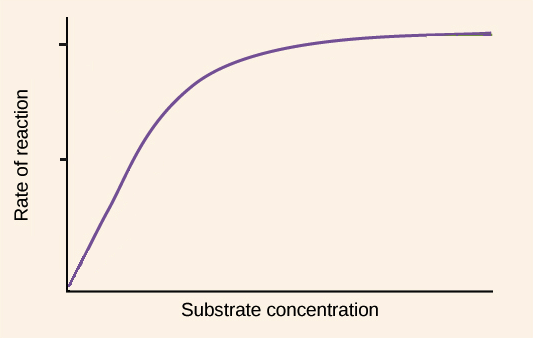
Substrate Concentration
- When the subtrate concentration is 0, the rate of reaction is 0 because there are no substrate molecules for the enzymes to bind to. Then, as the substrate concentration increases the rate of reaction increases very rapidly at first but then begins to slow down as the concentration continues to increase untill it plateuas.
- When there are 0 substrate molecules the rate of reaction is 0 becaus ethere are no substrates for the enzymes to succesfully collide with. Then, after the concentration increases the rate of reaction increases as there is a higher chance for an enzyme substrate complex to form. The graph begins to plateau when enzymes are working at there maximum rate.
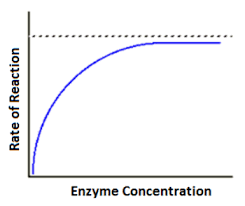
Enzyme Concentration
- When enzyme concentration is 0, the rate of reaction is low. As you increase the enzyme concentration, the rate of reaction increases. The rate then slows and the line plateaus.
- When enzyme concentration is 0, reactions are still taking place as enzymes only speed up the rate of reactions. Once the concentration increases, the rate increases as there are more succesful collisions and enzyme substrate complexes formed. The rate eventually slows and the line plateaus because all the substrtates are in use.
Imágenes y archivos del mapa
Información
- Descripción
- Biology Mapa Mental sobre Factors Affecting Enzyme Activity 4.2, creado por Harry Lovegrove el 11/05/2020.
- Creado por
- Harry Lovegrove · may 2020
- Actualizado
- 11 may 2020
- Visitas
- 8
- Valoración