
Mapa mental
Chapter 30: Great Depression
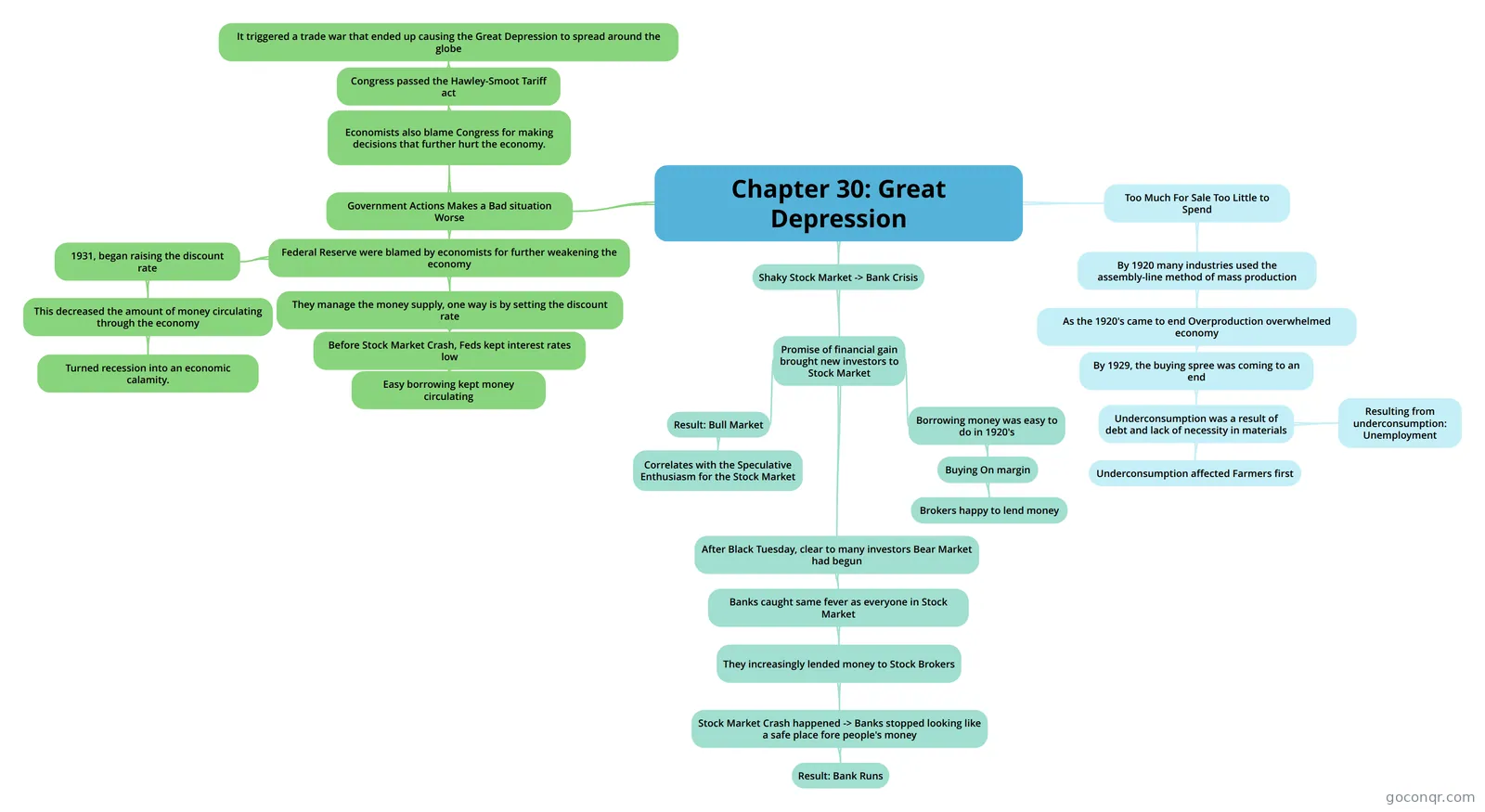
Mind map: Great Depression causes
Contenido del mapa
Chapter 30: Great Depression
Shaky Stock Market -> Bank Crisis
- Promise of financial gain brought new investors to Stock Market
- Result: Bull Market
- Correlates with the Speculative Enthusiasm for the Stock Market
- Borrowing money was easy to do in 1920's
- Buying On margin
- Brokers happy to lend money
- Buying On margin
- After Black Tuesday, clear to many investors Bear Market had begun
- Banks caught same fever as everyone in Stock Market
- They increasingly lended money to Stock Brokers
- Stock Market Crash happened -> Banks stopped looking like a safe place fore people's money
- Result: Bank Runs
- Stock Market Crash happened -> Banks stopped looking like a safe place fore people's money
- They increasingly lended money to Stock Brokers
- Banks caught same fever as everyone in Stock Market
- Result: Bull Market
- Promise of financial gain brought new investors to Stock Market
Too Much For Sale Too Little to Spend
- By 1920 many industries used the assembly-line method of mass production
- As the 1920's came to end Overproduction overwhelmed economy
- Companies overproduced because they could.
- By 1929, the buying spree was coming to an end
- Everyone had bought what they needed or already wanted by then.
- Underconsumption was a result of debt and lack of necessity in materials
- Underconsumption affected Farmers first
- After WW1 Consumptions of Products decreased and prices dropped.. Caused them to go further into debt. Number of farms and farmers began to decline.
- Resulting from underconsumption: Unemployment
- Underconsumption affected Farmers first
- As the 1920's came to end Overproduction overwhelmed economy
- By 1920 many industries used the assembly-line method of mass production
Government Actions Makes a Bad situation Worse
- Federal Reserve were blamed by economists for further weakening the economy
- They manage the money supply, one way is by setting the discount rate
- Members banks use the discount rate to determine the interest rates they will charge borrowers.
- Before Stock Market Crash, Feds kept interest rates low
- Made easy borrowing possible
- Easy borrowing kept money circulating
- 1931, began raising the discount rate
- This decreased the amount of money circulating through the economy
- Turned recession into an economic calamity.
- This decreased the amount of money circulating through the economy
- They manage the money supply, one way is by setting the discount rate
- Economists also blame Congress for making decisions that further hurt the economy.
- Congress passed the Hawley-Smoot Tariff act
- It triggered a trade war that ended up causing the Great Depression to spread around the globe
- Congress passed the Hawley-Smoot Tariff act
- Federal Reserve were blamed by economists for further weakening the economy
Información
- Descripción
- High School Diploma (Chapter 30: The Great Depression) History Mapa Mental sobre Chapter 30: Great Depression, creado por Michelle M el 08/03/2016.
- Creado por
- Michelle M
- Visitas
- 91
- Etiquetas
- Valoración