
Apuntes
The Carbon Cycle
Contenido del apunte (2)
Página 1
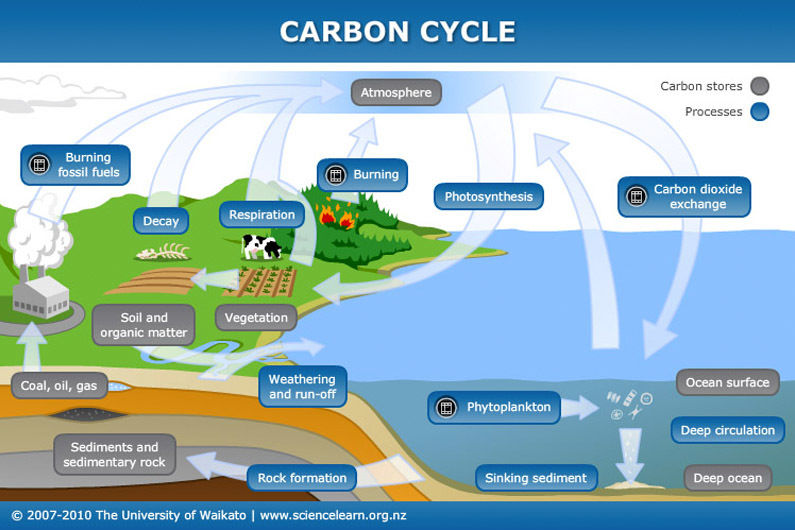
What is the CARBON CYCLE?
the cycling of carbon between its different stores (ocean, land, lithosphere, atmosphere)
- carbon is one of the most chemically versatile elements
- present in all life forms
- can be found organically (biomass) or inorganically (fossil fuels)
carbon compounds can be very important
- carbon dioxide (keeps the earth warm)
- methane (greenhouse gas)
- limestone
- hydrocarbons (fossil fuels)
- molecules (DNA)
What are the ORIGINS of carbon on Earth?
- interior of the Earth (from within the mantle - semi-molten layer)
- plate boundaries (from mantle. Moves up through due to volcanic eruptions)
- stores such as biomass and oeans
- carbon removal (atmosphere/photosynthesis/when locked up in sedimentary rocks)
Carbon Stores
LITHOSPHERE
- crust and upper mantle
- inorganic form (fossil fuels and limestone)
- also organic form in humic substances (decaying matter)
stores...
- peat
- fossil fuels
- soil
- marine sediments (sedimentary rocks)
HYDROSPHERE
- oceans - dissolved carbon dioxide
- organisms like fish and plankton and some plants
stores...
- surface level
- intermediate layer
- living organic matter
BIOSPHERE
living part
- animals
- peat
- living vegetation
- soil humus
- plant litter
ATMOSPHERE
- carbon dioxide as a gas (control's Earth's temperature)
- atmospheric carbon dioxide is increasing (Mauna Loa Curve)
- caused by human activities releasing carbon dioxide into the atmosphere
Página 2
How does carbon MOVE BETWEEN STORES?
- human processes
- geological components
- photosynthesis
- decomposition
- oceanic carbon pumps
- combustion
- volcanic activity
What is a CARBON SINK?
store that takes in more carbon than it releases
What is a CARBON STORE?
releases more carbon than it takes in
Geological components
The rock cycle
- volcanic activity
- subduction at plate boundaries
- burial
- weathering
- formation of limestone due to the formation of carbonic acid
- sedimentary rock that contains limestone. Through plate subduction, the limestone is melted and released through volcanic activity and the carbon dioxide is released into the atmosphere.
Photosynthesis
- formation of glucose by plants
- uses carbon dioxide
Respiration
- releases energy from glucose
- also produces carbon dioxide
Decomposition
- recycles carbon into soil by deceomposers
Oceanic Carbon Pumps
- to do with oceanic circulation of warmer or colder currents (deeper)
- cools when in contact with ice and sinks (denser)
- transfers carbon dioxide from warmer currents to colder currents
Combustion
- releases carbon dioxide from organic material when burnt
Volcanic eruptions
- CO2 is stored in the mantle
Human Activity
- extraction of hydrocarbons
- farming practices
- deforestation
- consumption of fossil fuels
- urban growth
Carbon Sequestration
- carbon dioxide is captured from the atmosphere and held in long term storage
- helps prevent global warming
- geological sequestration (within rocks)
- terrestial (within trees and plants)
What are the effects of the CHANGING CARBON BUDGET?
(GLOBAL WARMING)
- effects on land are unclear as it hasn't been studied for long enough
Oceans
- sea level rise
- melting sea ice
- acidification (removes carbonate ions - less alkaline - coral bleaching)
- salinity is reduced
- cloudy water - increase in phytoplankton - less sunlight reaching plants
Información
- Descripción
- A level (Water & Carbon Cycles) Geography Apunte sobre The Carbon Cycle, creado por Orlagh Bonser el 06/02/2018.
- Creado por
- Orlagh Bonser
- Visitas
- 102
- Etiquetas
- Valoración