
The Atom - Part II
Diapositivas del conjunto (4)
-
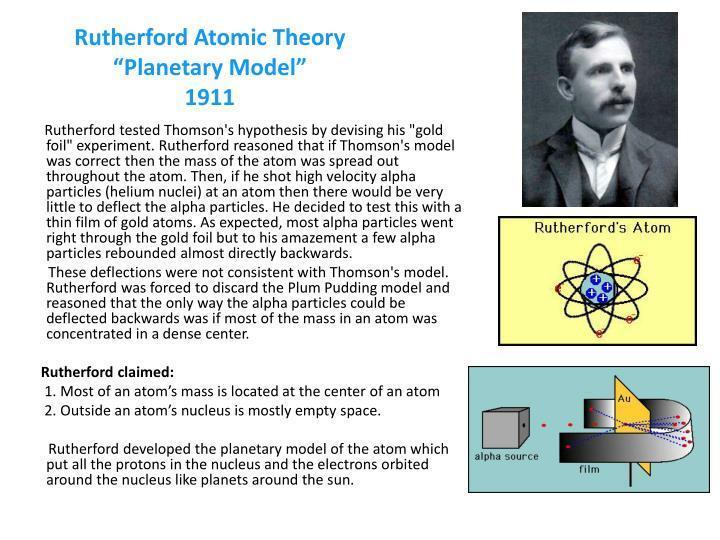
THE PLANETARY MODEL OF THE ATOM
- INTRODUCED BY :- Ernest Rutherford . According to this;
- THE ELECTRONS MOVE AROUND THE NUCLEUS
- IN A SIMILAR FASHION TO THE PLANETS WHICH
- MOVE AROUND THE SUN IN THE SOLAR SYSTEM.
- * Though (-) electrons are attracted towards the (+) nucleus ,they don't fall on to it 'cuz the electrons revolve around the nucleus really fast.
-
- * Niels Bohr further elaborated the Rutherford's model & said that the electrons move in definite paths around the nucleus.
- The paths the electrons move around the nucleus are called shells = energy levels .
- These shells are assigned different numbers or letter starting from the lowest energy level.
- Each energy level has a specific energy. When moving away from the nucleus this energy increases. But the difference between the energy levels decreases.
- ENERGY LEVELS & THE MAXIMUM No. OF ELECTRONS.
- K - 2
- L - 8
- M -18
- N -32
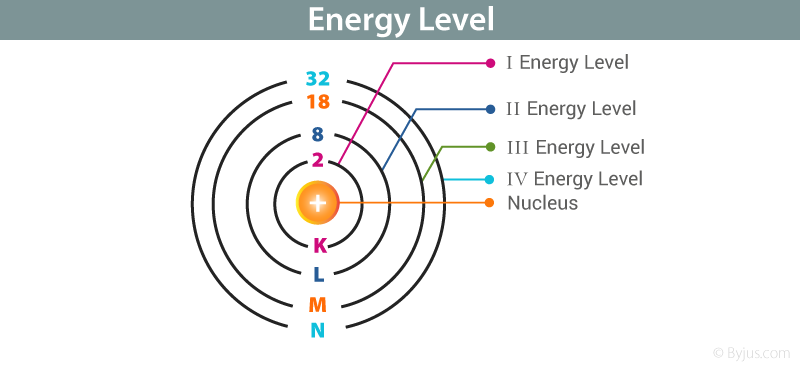
- Pie de imagen: Some energy levels have sub energy levels (like energy level M)
-
- *The atomic number is he number of protons in an atom.
- The number of protons of an atom is what defines that atom. Which means that if the number of protons (or the atomic number) of that atom changes, it can no longer be an atom of that particular element.
- eg:- The number of protons in a Carbon atom is always 6;If it changes to 7,the atom will not be Carbon anymore but Nitrogen. If it changes to 5,the atom will be a Boron atom.
- But if the number of neutrons and the number of electrons of an atom can be changed while the atom belongs to the same element. This way, the resulting atom will still belong to the same element but will be another version of it.
- eg:- Carbon 12, Carbon 14.
- So, the atomic number is a unique feature of an atom.
- *The atomic number is symbolized by Z.
- Ions
- * In neutral atoms number of electrons (-), is equal to the number of protons (+) so the total charge is 0.
- But, when a chemical reaction occurs electrons may either be lost or gained; such negatively or positively charged atoms are called ions.
- Ionic atoms with a net positive charge ( a higher number of protons than the electrons ) are called cations.
- Ionic atoms with a net negative charge ( a lower number of protons than the electrons ) are called anions.
- When a neutral atoms gains electrons to form anions , they are typically named with an -ide suffix; [EXAMPLES:-Cl- is chloride ,Br- is bromide, O2- is oxide , N3- is nitride etc.]
- Number of electrons in ions of the same element can be more, less or equal to the number of protons but the number of protons or the atomic number cannot change .
-
- Out of the subatomic particles in an atom ,the electrons have the lowest mass.
- The other two subatomic particles, protons & neutrons approximately have an equal mass.
- Mass of an electron is ~ 1/1840 of the mass of a proton.
- * So , as the mass of an electron is very small, the mass of the atom depends on the mass of the protons & the neutrons at the nucleus of the atom.
- * The mass number of an atom is symbolized by A .
- * So the difference between the mass number and the atomic number gives us the number of neutrons in the atom.
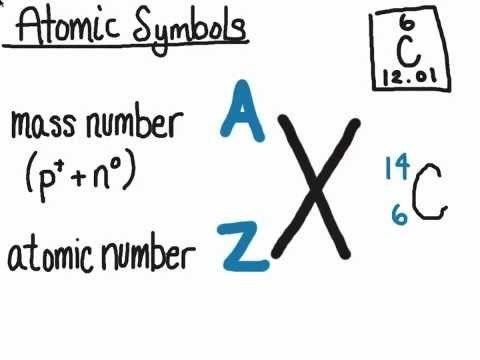
- Pie de imagen: Standard way of representing the atomic number and the mass number
Información
- Descripción
- Chemistry Diapositivas sobre The Atom - Part II, creado por kalshini dulmitha el 18/05/2020.
- Creado por
- kalshini dulmitha · may 2020
- Actualizado
- 26 may 2020
- Visitas
- 3
- Etiquetas
- Valoración