
Test
Hormonal Secretion
Este test tiene tipos de pregunta que se abren en el reproductor de siempre.
Preguntas del test (45)
1Where do endocrine cells secrete their hormones into?
- ATarget cells
- BBlood
- COut of ducts
- DGlands
2What is a neuroendocrine cell?
- AA cell that released hormones into the blood upon depolarisation
- BA cell that releases neurotransmitter into the blood upon depolarisation
- CA cell that releases hormones across the synaptic cleft upon depolarisation
- DA cell that releases hormones onto neighbouring cells upon depolarisation
3What type of chemical signalling occurs when a cell targets itself?
- AAutocrine
- BParacrine
- CEndocrine
- DNeuroendocrine
4What type of chemical signalling occurs when a cell targets a neighbouring cell?
- AParacrine
- BAutocrine
- CEndocrine
- DNeuroendocrine
5What type of signalling occurs when a cell releases a signal into the blood to be carried to its distant target cell?
- AParacrine
- BAutocrine
- CEndocrine
- DNeuroendocrine
6Which of the following hormones are secreted by neurosecretory cells?
- AProtein/peptide hormones
- BSteroid hormones
- CThyroid hormones
- DCatecholamines (adrenal hormones)
7Which of the following hormones are secreted by epithelial tissues?
- AProtein/peptide hormones
- BSteroid hormones
- CThyroid hormones
- DCatecholamines (adrenal hormones)
8What gives a hormone a long half-life?
- ABeing protein-bound in circulation
- BBeing unbound to protein in circulation
9The following questions will be about protein/peptide hormones. What must happen to preprohormones to form active prohormones?
- ACleavage by proteolytic enzymes
- BCleavage by low pH
- CPackaging into vesicles
- DRelease by exocytosis
10How are active protein/peptide hormones released?
- AExocytosis stimulated by increase in cytosolic Ca2+
- BExocytosis stimulated by increase in cytosolic K+
- CHolocrine secretion
- DApocrine secretion
11Are protein/peptide hormones protein-bound in circulation?
- AYes
- BNo
12Which is true of protein hormones in circulation?
- ALong half-life
- BShort half-life
13The following questions will be about steroid hormones. What are steroid hormones derived from?
- ACholesterol
- BProteins
- CAmines
- DDNA
14Steroid hormones are lipid soluble.
- AVerdadero
- BFalso
15Steroid hormones are stored in glands.
- AVerdadero
- BFalso
16Are steroid hormones protein-bound in circulation?
- AYes
- BNo
17Which is true of steroid hormones?
- ALong half-lives
- BShort half-lives
18The following questions will be about amine hormones. Most amine hormones are derived from...?
- ATyrosine
- BPhenylalanine
- CGlutamate
- DAspartate
19Thyroid hormones are amine hormones.
- AVerdadero
- BFalso
20Which subtype of amine hormone is lipid-soluble?
- AThyroid hormones
- BCatecholamines (adrenal hormones)
21Which subtype of amine hormone is water-soluble?
- AThyroid hormones
- BCatecholamines (adrenal hormones)
22Which subtype of amine hormone is protein-bound in circulation, thus giving it a long half-life?
- AThyroid hormones
- BCatecholamines (adrenal hormones)
23Which subtype of amine hormone is not bound to protein in circulation, giving it a short half-life?
- AThyroid hormones
- BCatecholamines (adrenal hormones)
24Which subtype of amine hormones are stored intracellulary in secretory granules?
- AThyroid hormones
- BCatecholamines (adrenal hormones)
25What are eicosanoids?
- ALocal chemical messengers
- BSteroid hormones
- CProtein hormones
- DTranscription regulators
26What are eicosanoids derived from?
- AArachidonic acid
- BDiacylglycerol
- CInositol
- DPIP2
27Which of the following is an example of an eicosanoid?
- AProstaglandin
- BCatecholamine
- CAdrenaline
- DParathyroid hormone
28Which of the following hormones have intracellular receptors that alter gene transcription?
- ASteroid hormones
- BThyroid hormones
- CProtein/peptide hormones
- DGlycoproteins
- ECatecholamines (adrenal hormones)
29Which of the following hormones have membrane-bound receptors that initiate second-messenger pathways to change enzyme activity?
- ASteroid hormones
- BThyroid hormones
- CProtein/peptide hormones
- DGlycoproteins
- ECatecholamines
30Drag and drop the correct answers to describe the mechanism of steroid hormones.
1. The steroid hormone crosses the membrane as it is [blank_start]lipid[blank_end]-soluble.
2. The steroid hormone binds to its receptor in the cytosol or [blank_start]nucleus[blank_end].
3. The receptor undergoes a [blank_start]conformational shape change[blank_end] that allows it to bind to DNA.
4. The receptor forms a [blank_start]dimer[blank_end] with another receptor unit and binds to DNA.
5. Binding alters [blank_start]transcription[blank_end] of target genes.- Alipid
- Bwater
- Cnucleus
- DGolgi apparatus
- Einterstitium
- Fconformational shape change
- Ghydrolysis reaction
- Hdimer
- Itrimer
- Jtranscription
- Ktranslation
31Which of the following can control hormone secretion?
- AChange in plasma ion concentration
- BChange in plasma nutrient concentration
- CNeurotransmitter release from neurones contacting endocrine cells
- DUpstream hormone/paracrine agents acting on endocrine cells
- EConscious effort
- FRepetitive limb movement
- GLipolysis
32Drag and drop the correct labels to describe the anatomy of the pituitary gland.
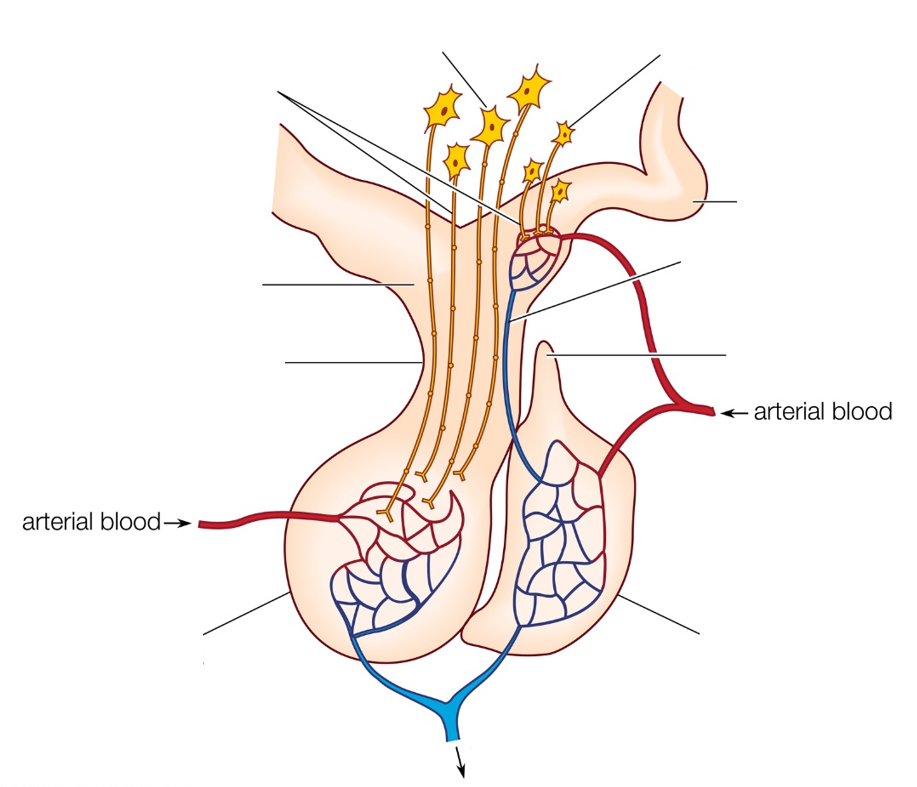
- AParaventricular nucleus
- BSupraoptic nucleus
- CNeurosecretory cells
- DOptic chiasm
- EMedian eminence
- FInfundibular stem
- GHypophyseal portal vein
- HPars tuberalis
- IPars distalis
- JPars nervosa
- KPosterior pituitary/neurohypophysis
- LAnterior pituitary/adenohypophysis
33During the development of the pituitary gland, the outpouching of what will form the posterior pituitary/neurohypophysis?
- ANeuroectoderm of the diencephalon
- BOropharynx ectoderm of the roof of the mouth
34During the development of the pituitary gland, the outpouching of what will form the anterior pituitary/adenohypophysis?
- ANeuroectoderm of the diencephalon
- BOropharynx ectoderm of the roof of the mouth
35Drag and drop the correct labels to describe the development of the pituitary gland.
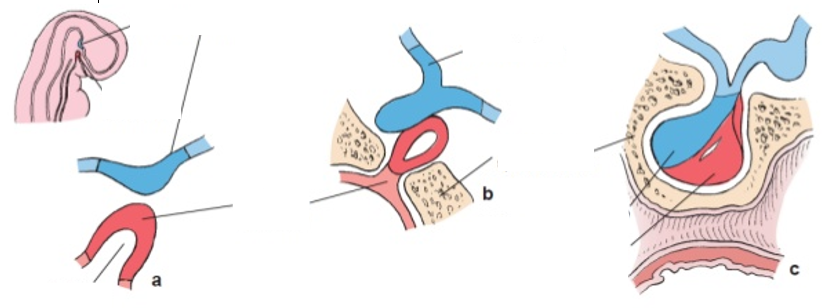
- ANeuroectoderm
- BOropharynx ectoderm
- CRathke's pouch
- DDeveloping sphenoid bone
- EPosterior pituitary/neurohypophysis
- FAnterior pituitary/adenohypophysis
36Which of the following are secreted by the posterior pituitary/neurohypophysis?
- AADH
- BOxytocin
- CFSH
- DLH
- EACTH
37Drag and drop the correct answers to describe the secretion of hormones by the posterior pituitary gland/neurohypophysis.
1. Specific neural stimuli lead to the synthesis of hormones in [blank_start]cell bodies[blank_end] of [blank_start]hypothalamic[blank_end] nuclei.
2. The hormones are transported down the [blank_start]axons[blank_end] of [blank_start]neuroendocrine[blank_end] cells.
3. The hormones are stored in [blank_start]Herring bodies[blank_end] in the nerve terminals.
4. The hormones are released directly into the [blank_start]venous blood[blank_end] of the posterior pituitary.- Acell bodies
- Bhypothalamic
- Cthalamic
- Dcortical
- Eaxons
- Fneuroendocrine
- Gendocrine
- Hparacrine
- IHerring bodies
- Jpituicytes
- Kvenous blood
- Ltissue fluid
- Msurrounding CSF
38What is the effect of ADH?
- AIncreased water resorption in the kidney
- BDecreased water resorption in the kidney
- CIncrease in uterine contractions
- DStimulation of the adrenal glands
39Oxytocin increases uterine contractions during birth as well as milk ejection during suckling.
- AVerdadero
- BFalso
40Drag and drop the correct answers to describe the mechanism of secretion of hormones from the anterior pituitary/adenohypophysis.
1. Specific neural stimuli lead to [blank_start]synthesis[blank_end] and release of [blank_start]hypothalamic[blank_end] hormones.
2. Hypothalamic hormones are released by [blank_start]neuroendocrine[blank_end] cells into blood vessels at the [blank_start]median eminence[blank_end].
3. The hypothalamic hormones travel down [blank_start]portal blood vessels[blank_end].
4. The hypothalamic hormones control release of anterior pituitary hormones.- Asynthesis
- Bhypothalamic
- Cneuroendocrine
- Dparacrine
- Eautocrine
- Fmedian eminence
- Gpars tuberalis
- Hpars distalis
- Iportal blood vessels
- Jaxons of neuroendocrine cells
41Which part of the pituitary gland receives direct supply from the hypophyseal arteries?
- APosterior pituitary/neurohypophysis
- BAnterior pituitary/adenohypophysis
42Drag and drop the correct labels to describe the vasculature of the pituitary gland.
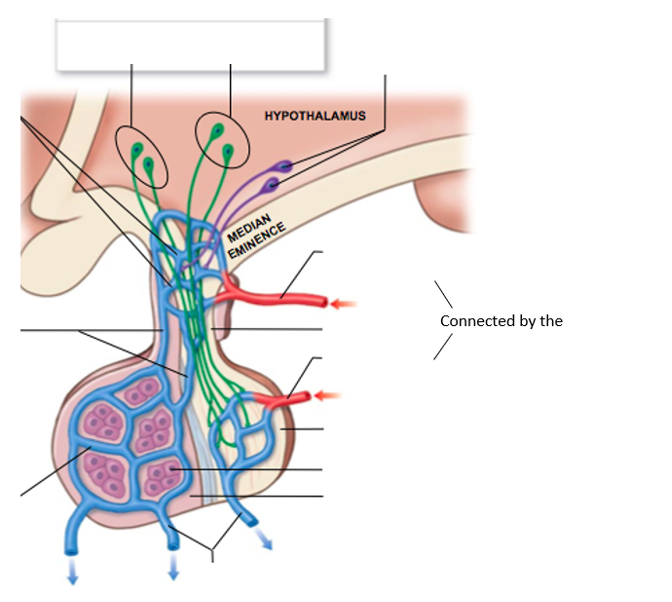
- ASupraoptic nuclei
- BParaventricular nuclei
- CSuperior hypophyseal artery
- DInfundibulum
- EInferior hypophyseal artery
- Ftrabecular artery
- GHypophyseal veins
- HEndocrine cells
- IAnterior pituitary/adenohypophysis
- JPosterior pituitary/neurohypophysis
43Which of the following are secreted by the anterior pituitary/adenohypophysis?
- ALH
- BFSH
- CACTH
- DMelanocyte-stimulating hormone
- ESomatotropin/growth hormine
- FProlactin
- GTSH
- HADH
- IOxytocin
44What do the hypothalamic hypophysiotrophic hormones do?
- AStimulate endocrine cells in the anterior pituitary/adenohypophysis to secrete hormones
- BStimulate the release of hormones from the Herring bodies in the posterior pituitary/neurohypophysis
- CIncrease body temperature
- DInitiate reproductive behaviour
45Drag and drop the correct labels to describe the effect of hypothalamic hypophysiotrophic hormones on the anterior pituitary/adenohypophysis.
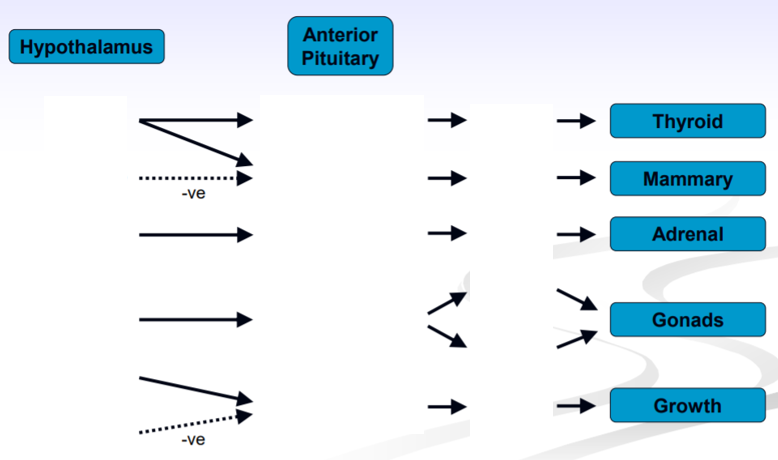
- AThyrotropin-releasing hormone
- BDopamine
- CCorticotropin-releasing hormone
- DGonadotrophin-releasing hormone
- EGrowth-hormone releasing hormone
- FSomatostatin
- GThyrotroph cells
- HLactotroph cells
- ICorticotroph cells
- JGonadotroph cells
- KSomatotroph cells
- LThyroid-stimulating hormone
- MProlactin
- NAdrenocorticotrophic hormone
- OLuteinising hormone
- PFollicle-stimulating hormone
- QGrowth hormone
Información
- Descripción
- University Functional Anatomy and Embryology Test sobre Hormonal Secretion, creado por Charlotte Jakes el 20/04/2020.
- Autor
- Charlotte Jakes
- Idioma
- English
- Visitas
- 19
- Etiquetas
- Valoración
- Aún sin valoraciones Valora este test