
Fichas
Neural communication and evolutionary biology- Lecture 3
Fichas del conjunto (17)
- 1What are the two types of neural communication?Electrical (within neurons)
Chemical (between) - 2Name 3 characteristics of a neurotransmitter-Exists in pre-synaptic axon terminals
-Pre-synaptic cells contain enzymes for synthesizing substance
-Substance released when AP reaches terminals
-Specific receptors recognize the substance
-Application of the substance produces changes in postsynaptic potential
-Blocking release of the substance prevents nerve impulses - 3is Glutamate inhibitory or excitatory?Excitatory
- 4Name some ionotropic glutamatergic receptorsAMPA, NMDA, Kainate
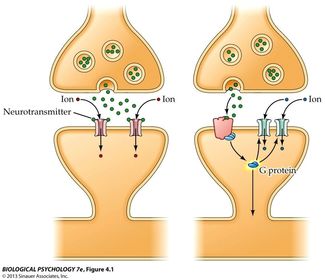
- 5Name and describe the two types of receptorsLeft: Ligand-gated receptors (ionotrpic)
FAST
Direct channel
Right: Metabotropic receptors
SLOW
Indirect control - 6GABA exists in 3 classes, are these excitatory or inhibitory?Inhibitory
- 7Describe these three classesA – ionotropic, producing fast, inhibitory effects
via Cl- channel
B – metabotropic, slow inhibitory effects
C – like A
is ionotropic with a chloride
channel - 8Name 2 drugs that influence GABAAlcohol and Valium
- 9Name the pathway of the brain: AcetylcholineCholinergic (nuclues basalis)
- 10Name the pathway of the brain: DopamineMesostriatial (Mesostriatial and meso limbo-cortical)
- 11What is Dopamine used for and what drugs effect it?Motor control and reward learning (e.g. parkinsons)
+
Cocaine and MDMA - 12Name the pathway of the brain: NoradrenalineLocus Coeruleus
4 subtypes of receptors (All metabotropic) - 13Name the pathway of the brain: Serotonin and what does it do?Raphe Nuclei
+
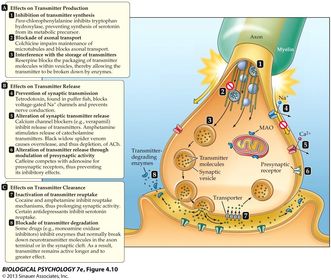
Antidepressant (effects: sleep, mood, sexual behaviour and anxiety) - 14Name some ways in which drugs effect pre synaptic mechanisms
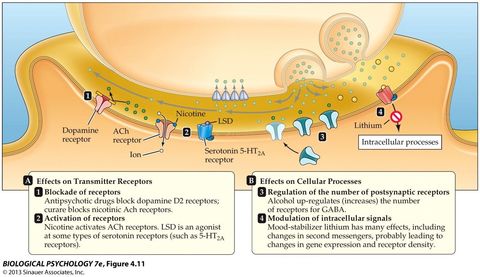
- 15Name some ways in which drugs effect post synaptic mechanisms
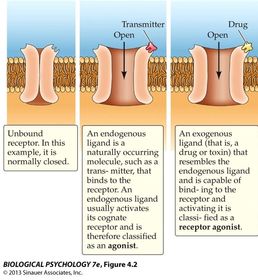
- 16Name the difference between an agonist and a receptor agonist
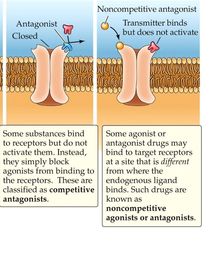
- 17Name the difference between a competitive antagonist and non-competitive antagonist
Información
- Descripción
- Bachelors Degree Psychology Fichas sobre Neural communication and evolutionary biology- Lecture 3, creado por Lee Casey el 20/04/2016.
- Creado por
- Lee Casey
- Visitas
- 24
- Valoración