
Flashcards
Atomic structure -C3

Cards in this deck (17)
- 1—The top number is the atomic mass. The lower number is the atomic number
- 2ElectronsHave a negative charge
- 3ProtonsHave a positive charge
- 4NeutronsHave a neutral charge
- 5—Electrons go around things called shells.
Protons and neutrons form the nucleus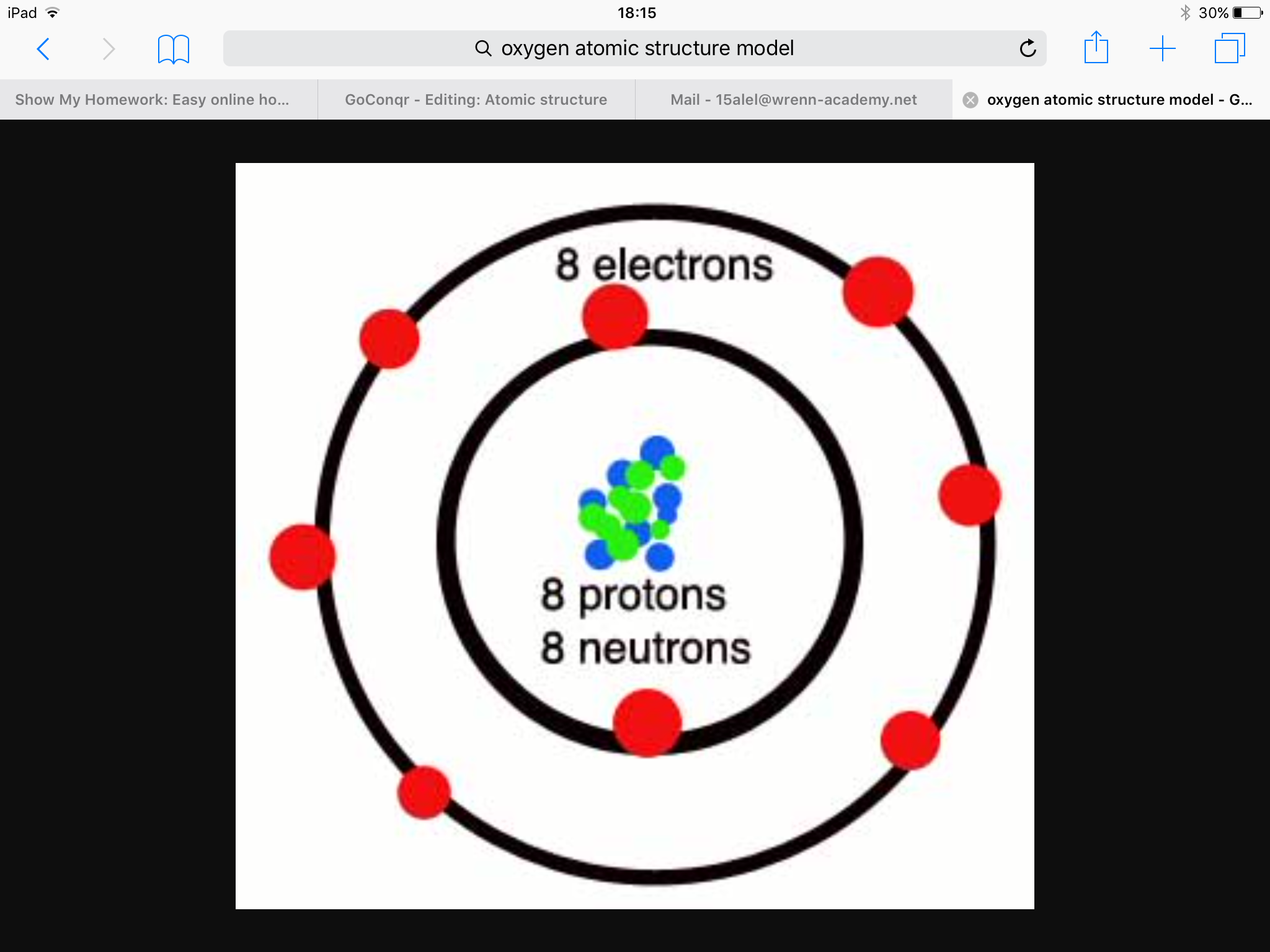
- 6Working out Protons, neutrons and electronsFor example sodium. The mass number is 23 and atomic number is 11. So ther will be 11 protons and electrons. To work out how many neutrons there are then you do 23-11
- 7Rutherford' modelRutherford's model
In Rutherford's experiment, he found out that there is a nucleus in an atom. He found this, by shooting balls with alpha particles. Most of the alpha particles went through the golden foil, but if one of the alpha particles hit the nucleus of the foil then it bounced back towards him.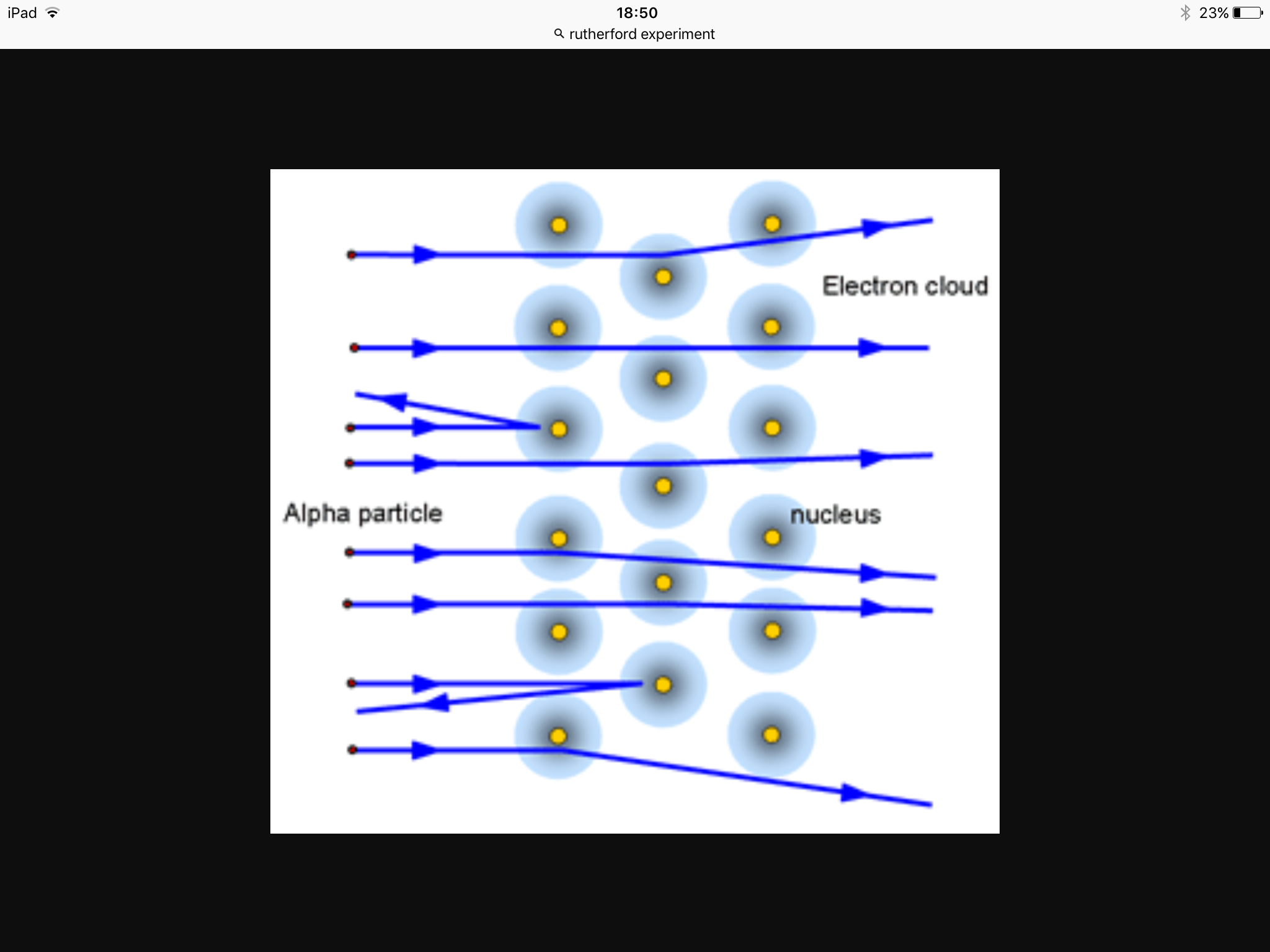
- 8First person to discover atoms: DemocritisHe claimed that matter was made up of small, hard particles that he called 'atomos'
Matter could not be divided.
Philosopher
father of modern atomic thought - 9John Dalton was the The second person on the history of the atomic theoryEnglish school teacher
Created first atomic theory
Bude atoms as tiny solid balls
He said that all matter is made up of tiny particles called atoms
Atoms are tiny hard spheres that cannot be broken into smaller part
Cannot be created or destroyed
Atoms in an element are all identical but each element has its own type of atom - 10J.J.Thomson was the third personDiscovered electrons
Proposed the existence of a positive particle
First scientist to show that the atoms was made of even smaller parts his atomic model was known as the raisin bun mode
Atoms are mostly made of a positive charge material like dough, negative charged electrons are found in the positive dough like the raisins l - 11Ernest RutherfordDiscovered protons and nucleus
Positives particles protons
Called centre of atoms the nucleus
He showed that atoms have positive particles in the centre and are mostly empty space - 12Niels BohrEvery atom has a specific number of electron shells
Proposed that electrons move around the nucleus in specific layers or shelves - 13James ChadwickNeutrons are found in the nucleus
Discovered neutrons
Working with Rutherford he discovered particles with no charge - 14The modern modelNew atomic model has electrons moving around the nucleus in a cloud
It is impossible to know where an electron is at any given time - 15Atoms in elementsAtoms in elements always have equal numbers of protons and electrons and so have no overall charge because charges cancel each other out
- 16IsotopesMore atoms of the same element they have the same atomic number ( protons) but have different mass number (neutrons)
- 17Mass numberMass number is relative atomic mass
It's the mean mass of an element compared with carbon 12
RAM (relative atomic mass) are not always whole numbers e.g. Cl 35.5, and Cu 63.5
Information
- Description
- GCSE Chemistry Flashcards on Atomic structure -C3, created by Alex Ellson on 02/11/2017.
- Created by
- Alex Ellson
- Views
- 11
- Rating