
Flashcards
Lecture 11 - Lipids and Biological Membranes
Cards in this deck (29)
- 1Concepts to understandWhat is a lipid?
Major lipid functions: cell membrane, energy, protection, signaling, storage, and transport
Recognize major lipid building blocks
Backbones of complex structures that hold these pieces together
Precursor molecules
Major types of lipids formed by combining and/or modifying our building blocks. - 2LIPIDS Lipid molecules contain relatively large ___ fragments ____: do not dissolve in water but do dissolve in non-polar solvents •Do ___ form polymers but held together by hydrophobic forceshydrocarbon
Hydrophobic
NOT - 3Lipids Major FUNCTIONS Cell membrane: -____ components -Regulation of membrane _____ - Membrane ____ (cholesterol, saturation of fatty acids) -Membrane flexibility Energy storage: Fuel RESERVES of a typical 70-kg man Triacylglycerols (adipose tissue): 100'000 kcal (30-40 days) Glycogen (liver): 600 kcal (1 day) Glucose (blood): 40 kcal Protein (muscle): 25,000 kcalStructural
permeability
fluidity
Order of fuel reserve use:
triacylglycerols -> glycogen -> glucose -> protein - 4Lipids Major FUNCTIONS Protection: -Protection of internal organs -____ insulation -Electric insulation (____ in myelin cells) -Skin oil Cell signaling: There is a wide spectrum of signal molecules (e.g., steroid hormones) Storage and transport: -Fat-soluble ___ -____ transport fats in blood plasma And it tastes good too ...Thermal
sphingolipids
vitamins
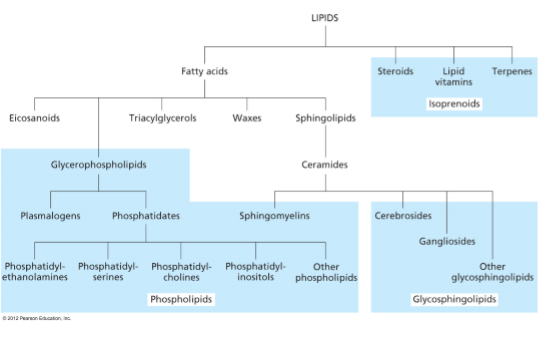
Lipoproteins - 5Overview of all types of Lipids These types are formed from a few rearranged functional units, like in a LEGO game.
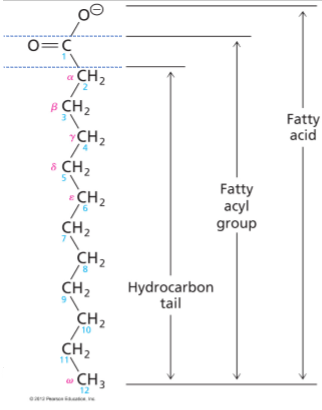
- 6Simplest building block: FATTY ACIDS (FA) FA: R-COO(-) Acyl group: RCO- Hydrocarbon tail: R >100 FAs that vary in: -Length -# of double bonds -position of double bonds -branching -Mostly hydrophobic -Polar carboxyl group --> acid
- 7SATURATED FAT -__ double bonds in the hydrocarbon tail -FAs that are saturated have the ____ number of H atoms.NO
maximum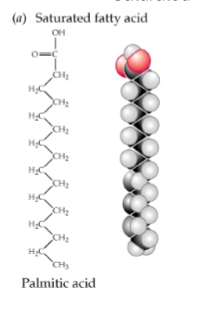
- 8UNSaturated Fat Fatty acids that have ___ ___ in their hydrocarbon tails (R) are UNsaturated. -One double bond = ____ FA -Many double bonds = _____ FAdouble bonds
monounsaturated
polyunsaturated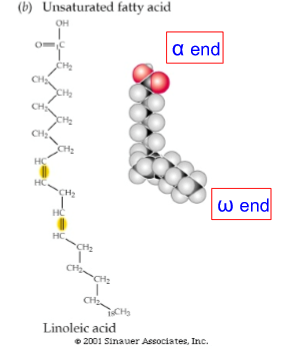
- 9Melting point = temperature at which solid fat becomes ___ Cis = 13 degrees Celsius Trans: 45 degrees Celsius Linear molecules pack ___ *This concept is important for membrane fluidity (need Cis b/c fats stay liquid under physiological conditions.)liquid
tightly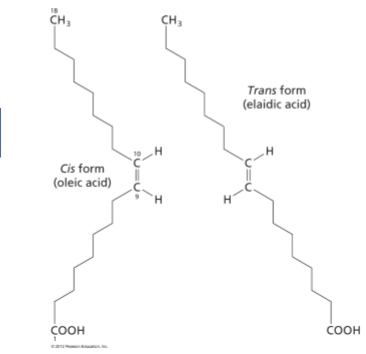
- 10Rotation is ___ around the double bond with cis and trans configurations __ conformation is prevalent in FA (even though ___ is often more stable) *Trans fat may occur at ___ concentrationsforbidden
Cis
trans
low - 11The problem of dietary trans fats: -UNsaturated fat (vegetable oil) can be ____ to become partially saturated, and therefore solid --> longer shelf life, spreadable "butter." A certain fraction of trans molecules is inevitably produced. Trans fats are known to be ____ : increase "bad" cholesterolhydrogenated
unhealthy - 12Melting Point in FA's -___ with carbon chain length -Decreases with addition if a __ ___Increases
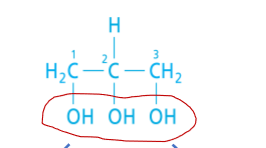
double bond - 13GLYCEROL -is the backbone of many fat molecules -The three hydroxyl groups can form up to ___ linkagesthree
- 14Glycerol + ester linkages with FAs give _______ Come from vegetable oils, milk products, meat Body-produced from ___ calories we consume. ROLE: energy depot -However, high levels may cause ___ When glucose levels are poorly controlled in diabetes, ___ levels may increase indicating the problem.Triacylglycerol (or triglyceride)
extra
disease
triglyceride
- 15—
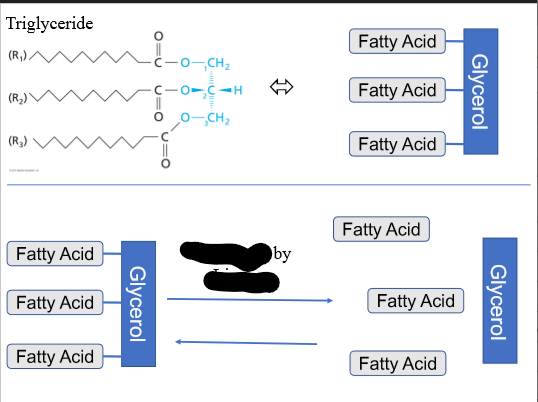
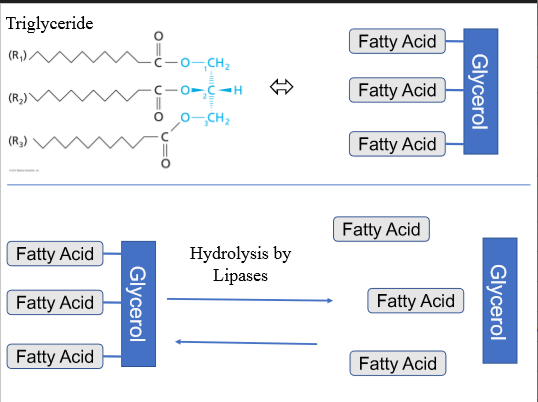
- 16—
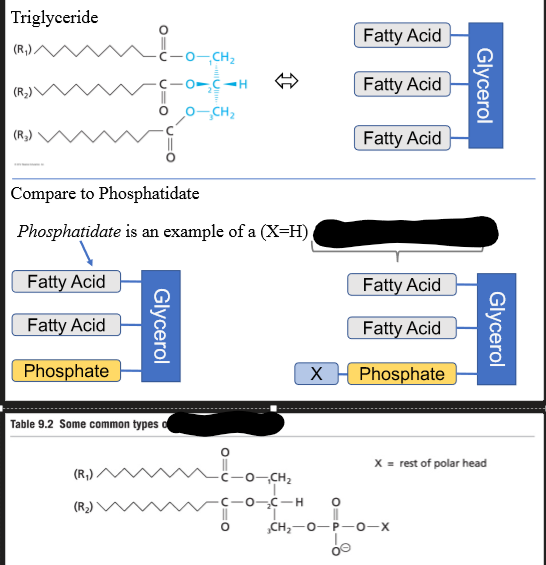
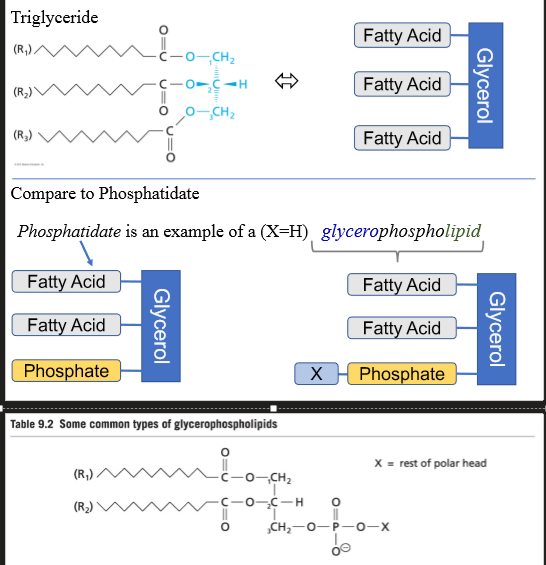
- 17Glycerophopholipids are ___ molecules They have both hydrophobic and hydrophilic groups. The lipid composition of different membranes __ throughout the cell.amphipathic
varies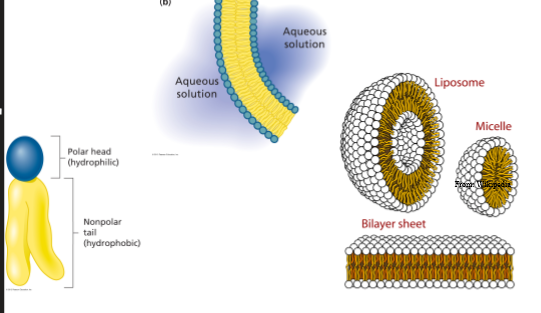
- 18—
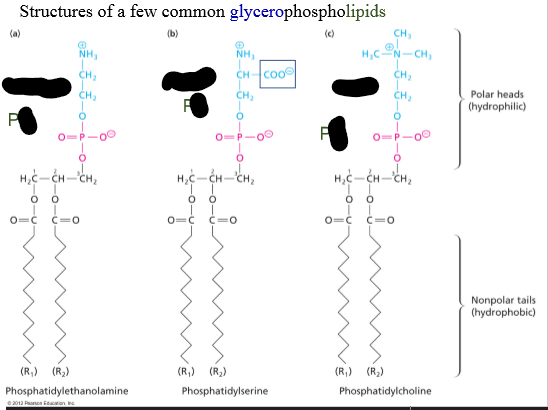
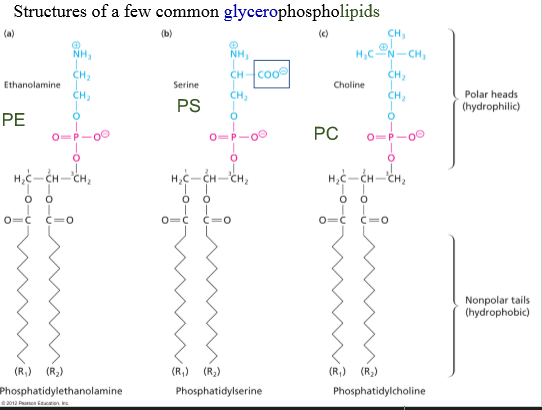
- 19Sphingosine (another backbone) -is similar in structure to glycerol but has a derivative (___ group) -However, it is a backbone for a new lipid class: ______ Sphingomyelin is abundant in the ___ ___ system.amino
Sphingolipids
central nervous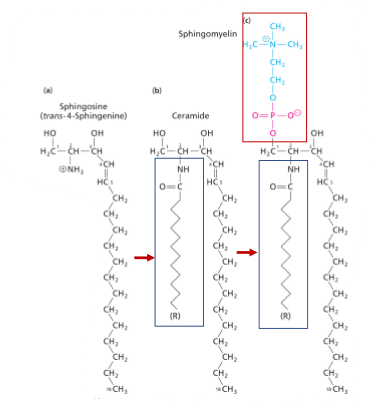
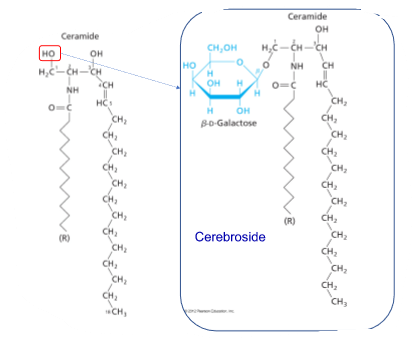
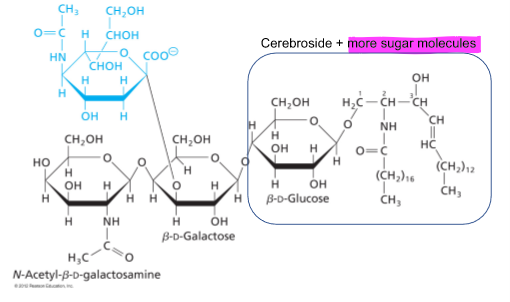
- 20______ : glycosphingolipid in which one monosaccharide residue is attached toa ceramideCerebroside
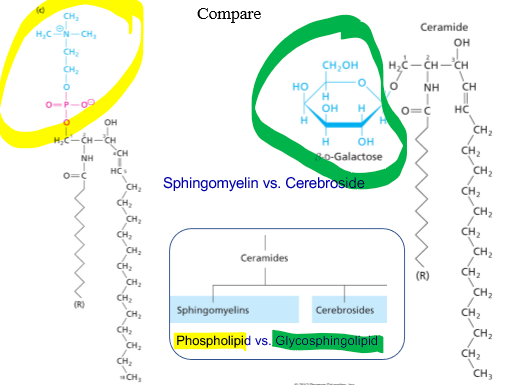
- 21Compare: Phospholipid versus Glycosphingolipid
- 22___ = oligosaccharide chain is attached to a to a cerebroside (a cerebroside + more sugars)Ganglioside
- 23Cholesterol -precursor to ___ Membrane fluidity: -At WARM temperatures cholesterol ___ movement of phospholipids -At COOL temperatures it maintains ___ by preventing tight packing -Can be both made & consumedsteroids (such as steroid hormones)
restrains
fluidity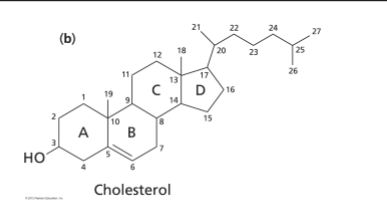
- 24Steroids are derivatives of ___ including: -Steroid ___, such as androgens (m) & estrogens (f), cortisol -Bile ___ (facilitate absorption of lipids in the intestine)cholesterol
hormones
salts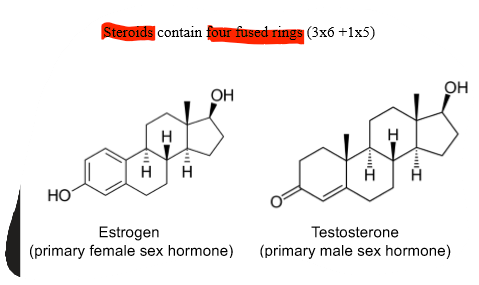
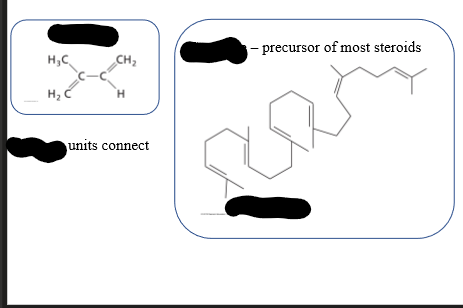
- 25Isoprenoid Class -Consists of steroids, lipid vitamins, & tr terpenes -Squalene = precursor of most steroids
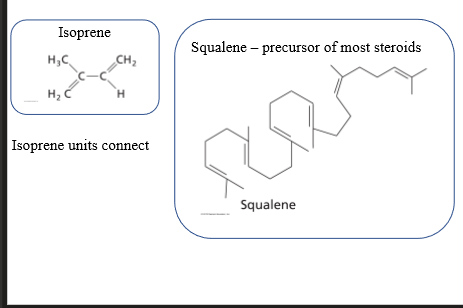
- 26Reconnecting to Lecture 10 A, D, E, and K are the lipid vitamins; contain long ___ chains. They belong to the ___ class. These fat-soluble vitamins are stored in fat tissues and the ___. Vitamin A deficiency is the leading cause of preventable childhood ___ in developing countries. Vitamin A is the precursor for a light-sensitive pigment in rhodopsin.hydrophobic
isoprenoids
liver
blindness - 27Eicosanoids are ____ molecules that play roles in inflammation, fever induction, blood pressure regulation, and clotting, & the immune response. Aspirin ___ synthesis of prostaglandin E2signal
inhibits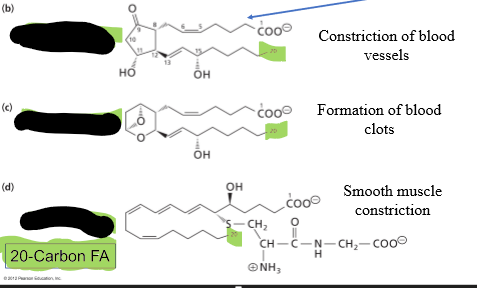
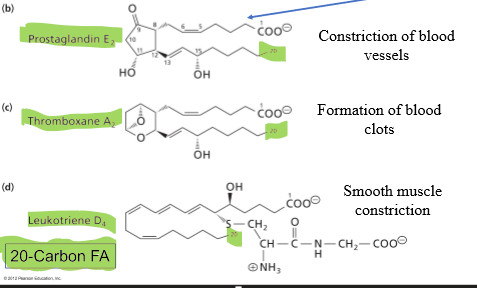
- 28___ are esters of long-chain fatty acids and long-chain alcoholsWAXES
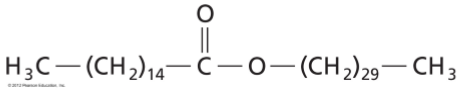
- 29Lipids summary: • Largely hydrophobic -May have a polar group => amphiphilic -3 Fatty Acids + glycerol => ____ {2 Fatty Acids + phosphate-X}+ glycerol => ______ Glycerophospholipids are major components of cell membranes Sphingolipids have a different (____, not glycerol) backbone Sphingolipids are also part of the cell membrane Steroids. Cholesterol modulates membrane ___ Terpenes Waxes Eicosanoids: signal molecules that are locally formed near membranes VitaminsTriglyceride
Glycerophospholipid
sphingosine
fluidity