
Flashcards
Chem
Cards in this deck (72)
- 1Kcat?-number of substrate molecules "turned over" by one enzyme in one second
- 2In an simple enzymatic scheme, what reaction constant represents the rate limiting step?kcat
- 3Meaning of Km?Essentially the Kd for E and S
-Measures the propensity for E and S to dissociate ~in either direction - 4Does Km effect Vmax?No! Vmax = k2(kcat)[Etotal]
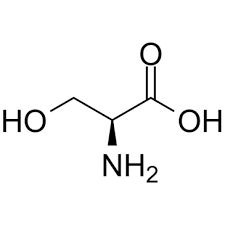
- 5Draw serine. what is its: 1 LC, 3 LC, pkA?S. SER. pkA not phys. important
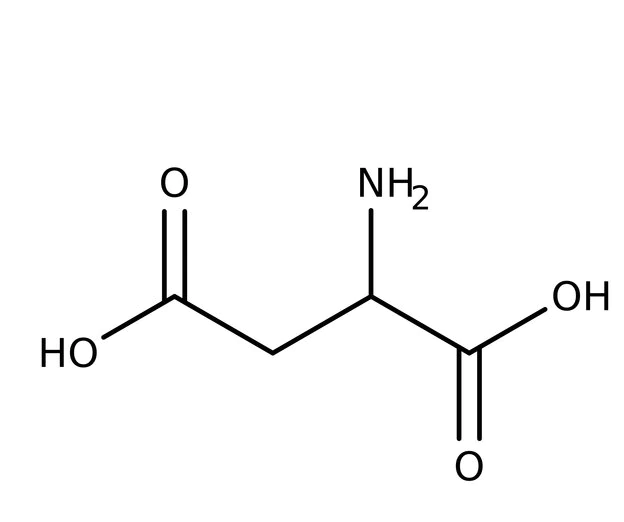
- 6Draw aspartic acid. what is its: 1 LC, 3 LC, pkA?D. asp. pka = 4
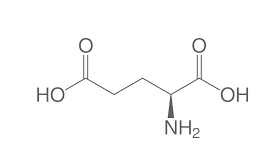
- 7Draw glutamic acid. 1, 3 LC? pkA?E. glu. pka = 4
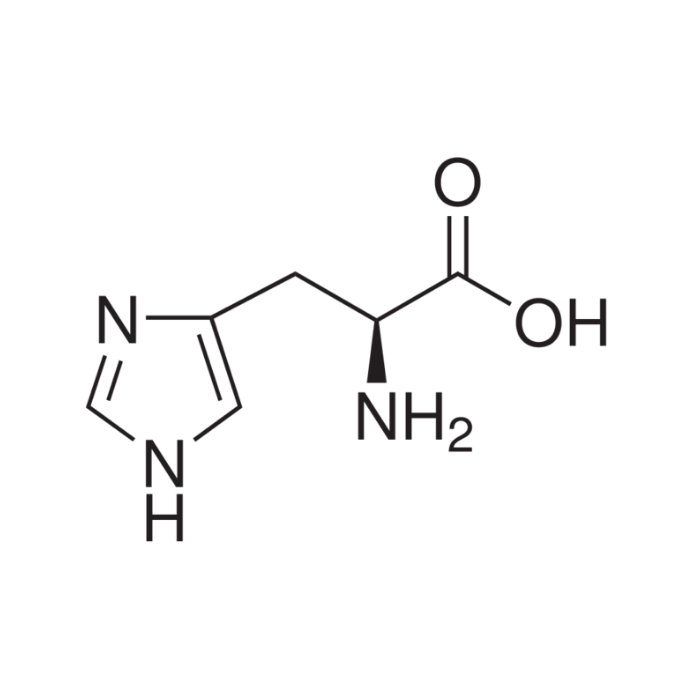
- 8Draw histidine 1, 3 LC? pkA?H, His, pka =6. think of it as very close to physiological
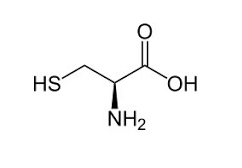
- 9Draw cystine. LC? pka?C. Cys. 8.3
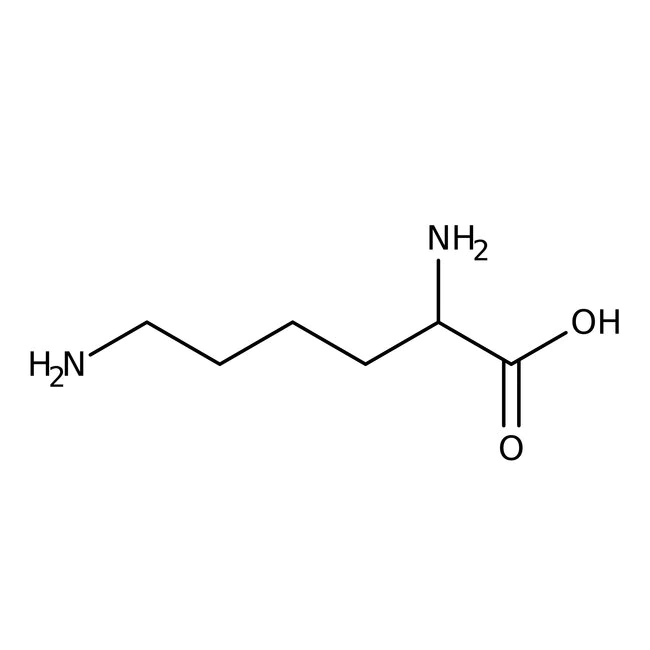
- 10Draw lysine. LC? pkA?K/ lys. 10.8
- 11If, on average, a hydrogen bond provides 1 kcal/mole of stability to a protein’s folded state, how many hydrogen bonds need to be broken to unfold the average protein?10. (proteins are only stable by 5-10kcal/mol, and H bonds are worth 1-3)
- 12What are the units for ΔGKcal/mol
- 13Consider a natural globular protein. For the UNfolding reaction of that protein, what do you think the equilibrium constant (Kunfold) would be?Between 0-1
- 14If the folding of a protein is thermodynamically favored, what will Kfold be ~?Greater than 1
- 15Easy way to relate kfold and kunfoldku = 1/kf
- 16Equations for ΔG1. ΔG = -RT * ln(Kfold)
2. ΔG = ΔH - TΔS
H = heat of rxn
S = entropy - 17Units of Kfold? Units of Keq?Kfold is unitless, Keq (or K dissociation) is in M
- 18Kd? Where is it on a plot of [Ligand] vs fraction receptor bound?the concentration of ligand where 50% of the ligand is bound to its target
kd = [p][L]/[PL] - 19Effective drugs usually have what range of Kd10-13 to 10-6 M range (aka nano/micromolar range)
- 20What is IC50concentration needed for 50% reduction in activity (is easier to measure than Kd, but less accurate)
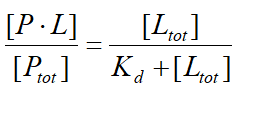
- 21When dealing with a ligand-protein interaction and ptot <<< Kd, what equation can you use to solve for stuff?Usally ptot should be 50-10 times less than Kd
- 22How would you define the velocity of an enzyme?Moles/L product generated per unit time
- 23What happens to the velocity of a reaction is enzyme conc is double?Velocity double
Vmax = k2(kcat)[Etotal] - 24measure of "catalytic efficiency?"kcat/Km
- 25What is true when [S] = Km?amount of substrate to produce 1/2 maximal velocity
- 26What does [p][l]/[pl] also meantheta, fraction of receptor bound
- 27Calculation for V? Not VmaxV = Kcat[Etot][Stot]
/ (Km + Stot) - 28what is a nucleosomestrand of DNA wrapped around one histone core octomer
- 29acetylation of histone tailsgenerally corresponds to gene activation
-reduces the positive charge of histone tails and repels it from negative backbone of dna --> opening up chromatin structure - 30methylation of histonesCorrelated to where the mark is placed
on lysine 4 on H3 - active
lysine 9 or 27 of H3 - repressed - 31What do writer proteins doplace either active or repressive marks on chromatin
- 32What DNA bases usually gets methylated and what does that mean?Cytosine (HAS to come before a G), and represses expression. Needs to be before the G, any other wont work
- 33What histone proteins make up a nucleosomeH2A, H2B, H3, H4 --> 2 of each of these make up the octomer
- 34what is the total length of DNA in a cell3m
- 35If the DNA in the cell was only packed around histones, not packed tighter than that, what would the length of it be?Pack it around histones --> 3m / 7(compaction factor of 7) --> around 40cm (into 10microns!!)
- 36Euchromatin vs heterochromatinHeterochromatin has condensed chromatin structure and is inactive for transcription, while euchromatin has loose chromatin structure and active for transcription. hetero- like straight ppl, not open to explore
- 37What moity is on the 5' end of DNA? on the 3'?5' = phosphate group
3' = hydroxyl group - 38What does HDAC enzymes do(histone deacetylaces) they are "eraser" proteins - remove acetyl groups from histone tails. Acetyl groups usually promote transcription. If you block HDACs – dna stays activated – more transcription
- 39How many possible RNA codons are formed by three base sequences?64
- 40introns vs exonsintrons are sequences of RNA that are IN the way of producing a mature mRNA molecule. Exons are snipped together to make the mature mRNA molecule.
- 41what transcription factor is necessary for binding to the TATA boxTFIID
- 42ChronotropyTerm used to describe the speed of contraction of the heart.
- 43InotropyTerm used to describe the force of contractiion of the heart
- 44DromotropyTerm used to describe the speed of electrical conduction
through the heart - 45Cortisol is what kind of hormone, and what familya steroid hormone- in the glucocorticoid class of hormones
- 46Where is cortisol producedadrenal gland
- 47What is cortisol released in response tostress and low blood glucose
- 48What effects does cortisol have (4)it functions to increase blood sugar through gluconeogenesis/ to suppress the immune system/ and to aid in the metabolism of fat/ protein/and carbohydrate. It also decreases bone formation.
- 49In general: the three main functions of cortisolanti-inflammatory/HPA suppression/Salt retention
- 50cortisol's effect on metabolism: Increase blood
glucose. Increase fat mass - 51cortisol's effect on skin and muscleThinning of skin &
Loss of muscle mass - 52cortisol's effect on bone and calciumloss of bone mass
- 53cortisol's effect on Salt, water, & Blood pressureWater retention &
increase blood pressure - 54cortisol's effect on CNS MoodIncrease sugar
intake & Reduced cognition &
Depressed mood - 55What controls thyroid hormone releaseRelease is controlled by thyroidstimulating hormone (TSH), secreted by anterior pituitary and
acts on the thyroid - 56TH effect on growth and developmentinvolved in synthesis of proteins necessary for normal
growth & development - 57TH effect on oxygen and heart rateincreases oxygen consumption:
Leads to increased cardiac output, increased ventilation - 58TH effect on energy/nutrient storageincreased food intake, and increased mobilization of carbohydrates, protein, and fat stores for production of energy.
-increased heat production
(thermogenesis) and thus
sweating and
-decreases muscle mass and
adipose tissue - 59prostagladins on blood vessels? Along with what?vasodilator, along with Nitric oxide
• Bradykinin - 60what kind of molecule is prostaglandinseicosanoids
- 61what are the two derivatives of prostaglandinsprostacyclins and thromboxanes
- 62What are prostacyclinsProstacyclins are
powerful locally acting vasodilators and inhibit the aggregation of blood
platelets. Prostacyclins are synthesized in the walls of blood vessels and
serves the physiological function of preventing needless clot formation. - 63When are FH and LH spike, and which one spikes more. What is responsible for their surge?LH spikes more, right at ovulation. estrogen responsible
- 64When does estrogen spikeright before ovulation
- 65what hormone is secreted by the corpus luteum and dominates the luteal phaseprog
- 66what happens to uterine lining (endometrium) in menstral phasebeing shed
- 67what happens to uterine lining (endometrium) in proliferative phaseendometrium is rebuilt
- 68what happens to uterine lining (endometrium) in secretory phasecoresponds to luteal phase: enrichment of blood supply and secretions of nutrients to prepare for embryo
- 69what do phosphodiesterases dodegrades cAMP
- 70What does a Gq protein activateactivates phospholipaseC --> increase IP3 and DAG --> increases Ca
- 71What is the Spinothalamic pathway and what kind of information does it carry,is a sensory pathway from the skin to the thalamus. The types of sensory information transmitted via the spinothalamic tract are described as affective sensation. This means that the sensation is accompanied by a compulsion to act. For instance- an itch is accompanied by a need to scratch-and a painful stimulus makes us want to withdraw from the pain.
- 72What is the Spinoreticular pathway and what kind of information does it carry,It is responsible for the transmission of pain, temperature, and crude touch to the somatosensory region of the thalamus.
Information
- Description
- Flashcards on Chem, created by Audrey Allen on 14/08/2020.
- Created by
- Audrey Allen
- Views
- 1
- Rating