
Protein Structure, Folding and Function
47 resources created by 34 users
This Protein Structure, Folding and Function page on GoConqr gathers community-made quizzes, mind maps, flashcards and notes, from amino acids and peptide bonds to chaperones, haemoglobin and misfolding diseases. It's built for university students and professional candidates practising protein biochemistry, and for teachers after ready-made material. There are over 380 resources here, including more than 60 quizzes, over 110 mind maps and more than 180 flashcard decks, with MCAT mentioned in some of them. Pick a quiz to find your gaps, then make your own notes.
Top Protein Structure, Folding and Function resources
-
39 questionsProteins (BIOC1001)
-
Mind map Amino Acids and Proteins A web of the basics of amino acids, protein structure, and function
-
50 questionsTheme 3 prot 3d
-
93 cardsBioChemistry Alanine , Valine , Leucine and Isoleucine interact in a special way within proteins
-
35 questionsChapter 2. Protein Composition and Structure What is the function of insulin?
-
37 questionsConstituative Chaperones Which of the following is not a role of the DNAK/Hsp70 superfamily?
-
28 questionsProtein Folding- The Basics Define Protein Folding
-
27 questionsSupersecondary Structures & Energy Changes Alpha helices are a helix-helix structure
Quizzes
See all 18 quizzes-
39 questionsProteins (BIOC1001)
-
50 questionsTheme 3 prot 3d
-
35 questionsChapter 2. Protein Composition and Structure What is the function of insulin?
-
37 questionsConstituative Chaperones Which of the following is not a role of the DNAK/Hsp70 superfamily?
-
28 questionsProtein Folding- The Basics Define Protein Folding
-
27 questionsSupersecondary Structures & Energy Changes Alpha helices are a helix-helix structure
-
45 questionsProtein section 2
-
56 questionsProtein section 4
Mind maps

Flashcards
See all 20 flashcards-
93 cardsBioChemistry Alanine , Valine , Leucine and Isoleucine interact in a special way within proteins
-
20 cardsAmino Acids Aspartic acid (asp)
-
59 cardsProteins What is the structure of proteins vital to?
-
35 cardsProteins What are some roles of proteins?
-
28 cardsLectures 1-3: Protein Basics General structure of an amino acid
-
47 cardsStructural basis of biological function 1 Francis Pearle lectures
-
56 cardsLecture 5 and 6- Proteins What are the monomers that form polypeptides?
-
23 cardsLectures 4-7: Haemoglobin & It's Variants
Flowcharts
Notes
-
Protein III: collagen Collagen is an insoluble fibrous protein and is the most common protein in mammals. 33% of bone and 50% of cartilage is made of collagen it also surrounds cells. As it is insoluble a soluble precursor tropocollagen is...
-
Notes for 9/24/2014 Chapter 5 - Function of ProteinsFunction of Globular Proteins Cellular structure Transport Storage Recognition and/or defense Muscle Contraction Catalysis Ligand Binding Ligand - a molecule or ion th...
More Biochemistry topics
About Protein Structure, Folding and Function
GoConqr OriginalWhat this unit covers
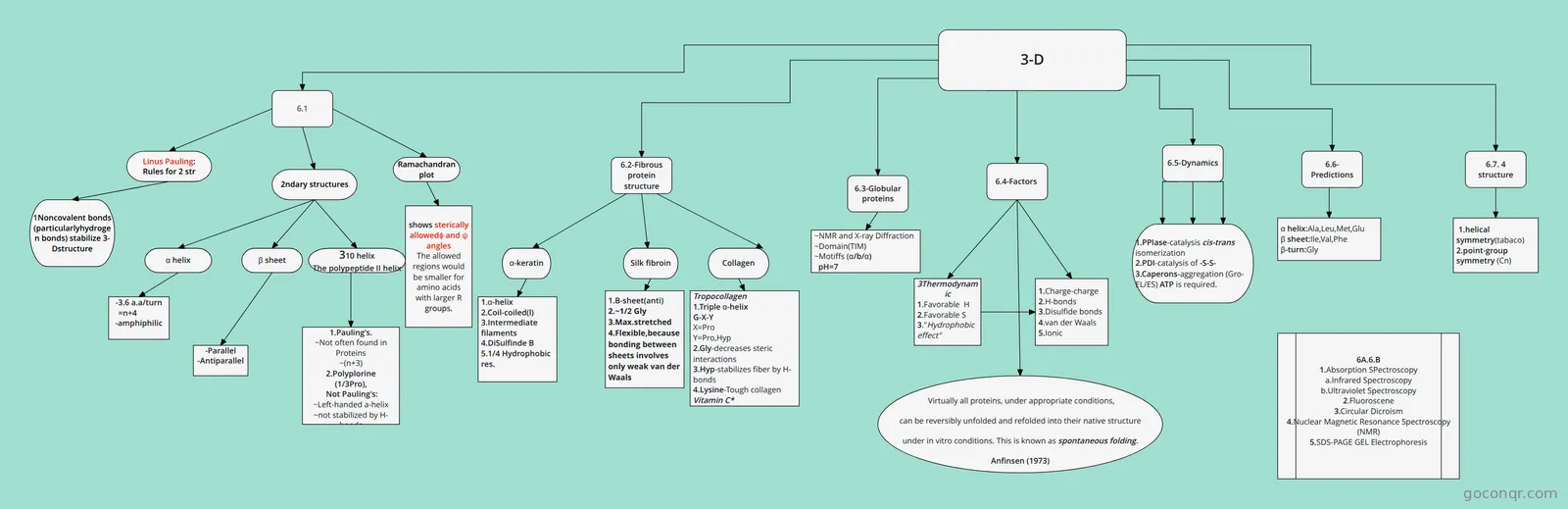
The resources follow protein biochemistry from the building blocks upwards. Early material looks at amino acids, peptide bonds and primary structure. Later items move to alpha helices, beta sheets, tertiary and quaternary structure, then to folding, chaperones and what happens when folding goes wrong.
Where to start
Begin with the mind map Amino Acids and Proteins. It sets out the peptide bond, the native fold and secondary structure in one view. Then work through the flashcard deck Amino Acids, which lists residues such as aspartic acid, glutamic acid, tyrosine and cysteine.
Next, try the quiz Proteins (BIOC1001), which covers the main functional roles of proteins, such as binding and catalysis. After that, move on to Protein Folding- The Basics and Supersecondary Structures & Energy Changes.
Folding, chaperones and function
- Read the mind map Protein folding to see how a sequence folds into a native structure that does its job.
- Take Constituative Chaperones to test your grasp of DNAK and Hsp70 and the role of Hsp40.
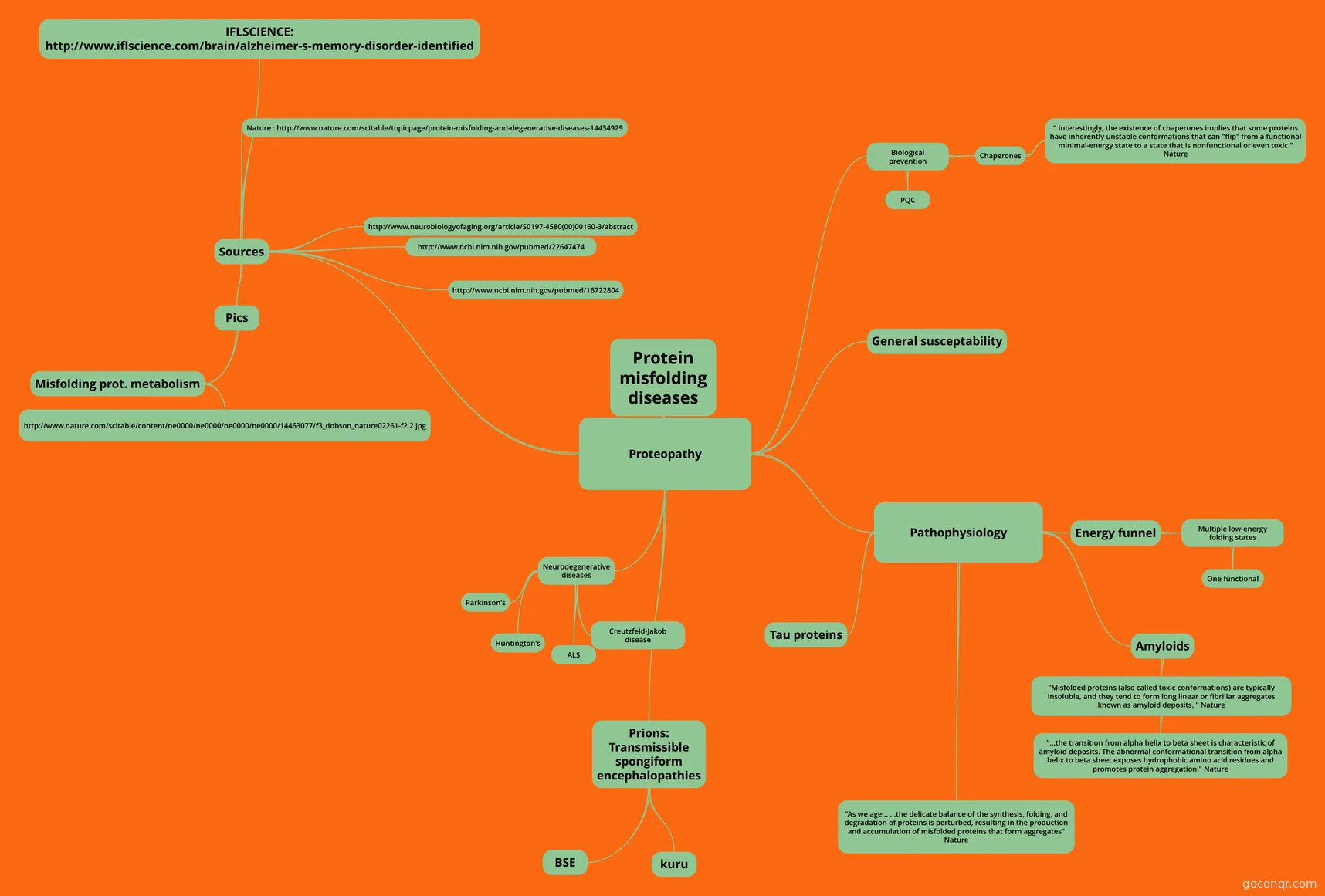
- Look at the mind maps on misfolding and the flashcards on amyloid diseases.
- Finish with the haemoglobin quizzes and mind maps, which link structure to function.
Using quizzes and maps together
Read a mind map first to get the outline. Then take a quiz on the same topic and note what you missed. Go back to the map for those branches. Flashcards suit terms, amino acid names and short definitions. Teachers can pick a map or quiz to set as a starting point for a class.
Where it fits
This unit sits in the Structure and Function of Biomolecules strand of Biochemistry. Everything listed was made by GoConqr users, and it is free to open. Choose one quiz today and see which topics need another look.
Frequently asked questions
Which resource should I open first?
Start with the mind map Amino Acids and Proteins. It gives a quick outline of peptide bonds, primary structure, the native fold and secondary structure. After that, the quiz Proteins (BIOC1001) is a good check on what proteins do, before you move on to folding.
What do the mind maps cover?
There are over 110 mind maps. They cover amino acids, peptide and non-covalent bonds, alpha helices and beta sheets, tertiary and quaternary structure, folding, misfolding, haemoglobin, protein purification, Edman degradation and nuclear magnetic resonance, among other topics.
Are the resources free to use?
Yes. Every resource listed here is free to open, study and take, with no account needed. A free account also saves your quiz scores and lets you make your own quizzes, mind maps, flashcards and notes.
Who made these resources?
They were made by GoConqr users, not by GoConqr itself. Over 250 contributors have added quizzes, maps, flashcards and notes, so the style and depth vary. Try a few and keep the ones that suit how you revise.
Is this suitable for MCAT preparation?
Some listed resources mention the MCAT. The page is made up of university-level material, so it suits university students and professional candidates practising protein structure and function. Use the quizzes to spot gaps, then revisit the matching maps.
Is there anything on chaperones and misfolding?
Yes. You will find the quizzes Constituative Chaperones and Chaperonins, a flashcard deck on heat shock proteins, and mind maps on protein misfolding and misfolding diseases. There is also a flashcard deck on amyloid diseases.