
Flashcards
Metal
Cards in this deck (33)
- 1What are the two main types of metal?Ferrous and Non-ferrous
Ferrous metals contain iron.
Non-ferrous metals do not contain iron. Both types of metals can be recycled. - 2What is an alloy?A metal made by combining two or more metallic elements, especially to give greater strength or resistance to corrosion.
- 3Mild steelFerrous
Tough, ductile, malleable, good tensile strength, poor resistance to corrosion General purpose engineering material - 4ToughToughness is the ability of a material to absorb energy and plastically deform without breaking.
(plastically deform: to bend and return to its original shape) - 5DuctileDuctility is a solid material's ability to deform under tensile stress (stretching).
- 6MalleableMalleability, is a material's ability to deform under compressive stress (squashing); this is often characterized by the material's ability to form a thin sheet by hammering or rolling
- 7Cast ironFerrous
Hard skin, softer underneath, but brittle , corrodes by rusting
Parts with complex shapes which can be made by casting
(A material is brittle if, when subjected to stress, it breaks without significant deformation) - 8Stainless SteelFerrous & Alloy
Hard and tough, resistant to wear and corrosion
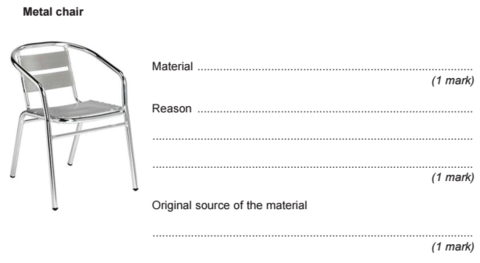
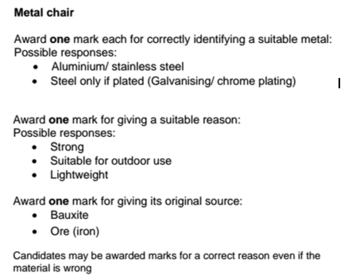
Cutlery, kitchen equipment - 9AluminiumNon-Ferrous
Good strength-to-weight ratio, light, soft, ductile, good conductor of heat and electricity
Kitchen equipment, window frames, general cast components - 10CopperNon-ferrous
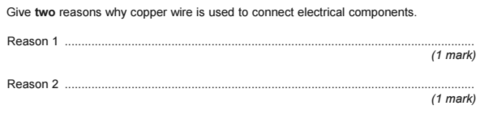
Malleable and ductile, good conductor of heat and electricity, resistant to corrosion Water pipes, electrical wire, decorative goods - 11BrassNon-Ferrous Alloy
Resistant to corrosion, fairly hard, good conductor of heat and electricity Ornaments, cast items such as water taps - 12TinNon-Ferrous
Soft, weak, malleable, ductile and resistant to corrosion
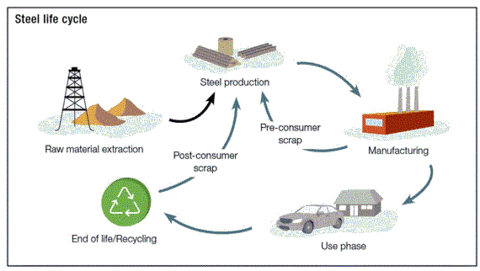
Usually used for coating steel to form tin-plate, soft solder - 13Life cycle of metal
- 14Metal forming processesCasting
Rolling
Forging
Extrusion
Drawing
Punching - 15—
- 16—
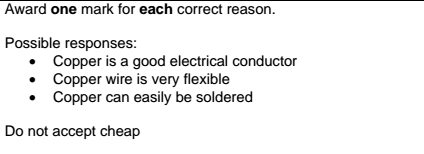
- 17—
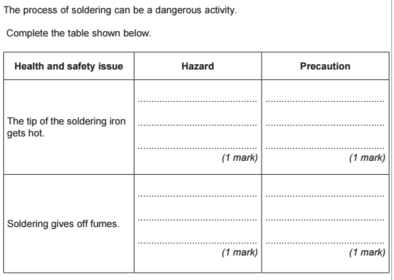
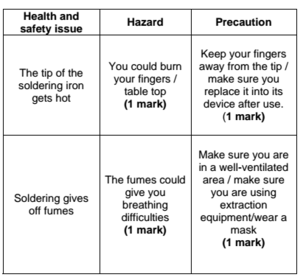
- 18—
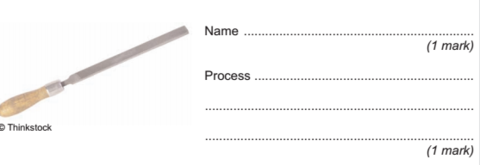
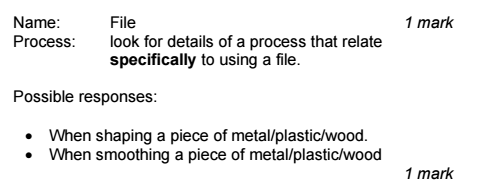
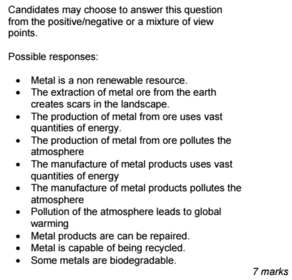
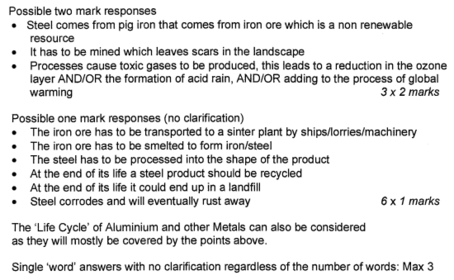
- 19Discuss the possible environmental impact of using metal to manufacture products.
- 20—
- 21—
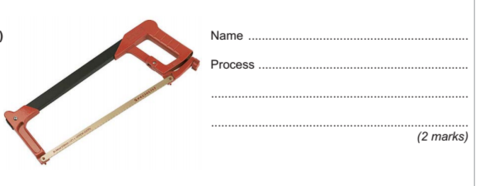
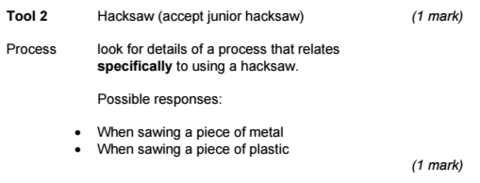
- 22—
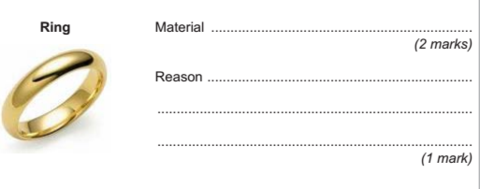
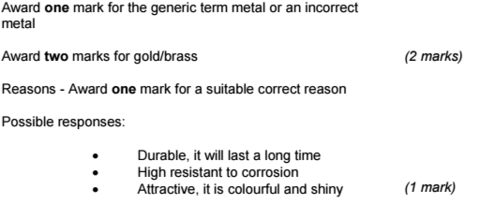
- 23—
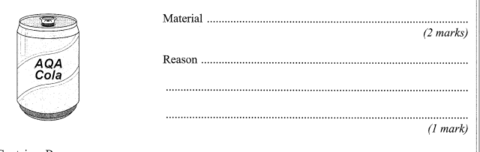
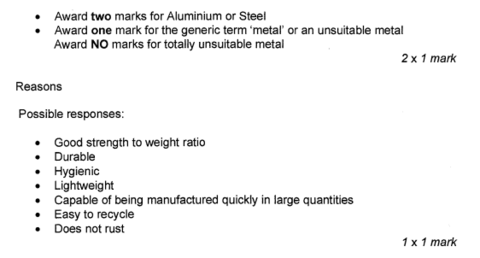
- 24—
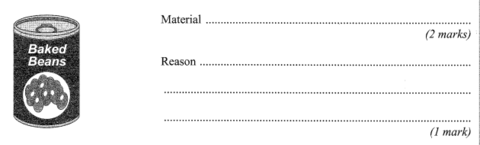
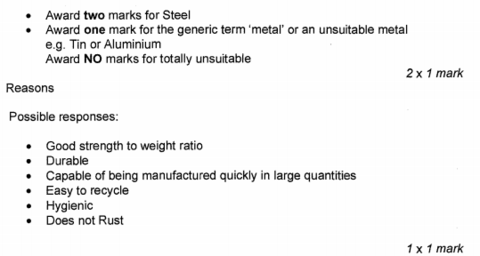
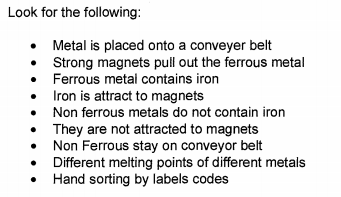
- 25Describe and explain a method of separating ferrous containers from non-ferrous containers at a recycling plant.
- 26Explain the effects that a metal-based product has upon the environment throughout its life cycle.
- 27—
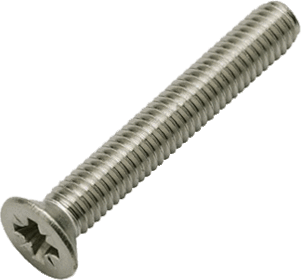
- 28Metal fixings Machine ScrewsHave a screw thread to fit into a threaded hole or a hexagonal nut. They can be used to join two or more pieces of metal or plastic.
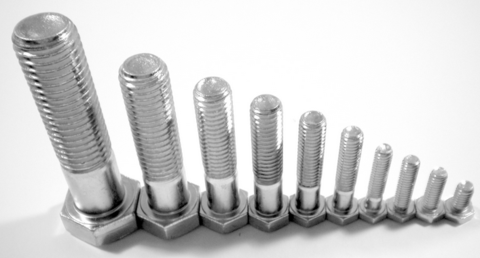
- 29Fixings BoltsBolts Have a screw thread which fits into a threaded hole or a hexagonal nut, and are normally used to join two or more pieces of metal or plastic. A bolt is only threaded for part of its length. Bolts normally have hexagonal heads.
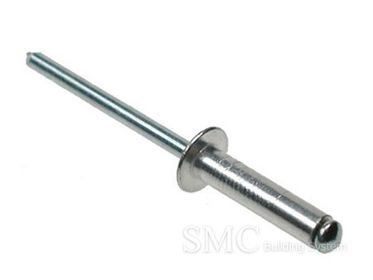
- 30Pop rivetOriginally designed for use in the aircraft industry but are now used in many different products. They are often used where there is only access to one side of the material.
- 31Metal joints BrazingBrazing is a way of bonding materials by melting a filler metal or alloy between the components. The filler metals used in brazing must have a lower melting point than that of the material being joined. Brazing forms very strong, permanent joints.
- 32Metal joints SolderingSoldering is a type of brazing which works at lower temperatures.
Soft soldering is used to make permanent joints between copper, brass, tin-plate or light steelwork, and is normally used to join components to electronic circuit boards.
Hard soldering is used for stronger joints. - 33Metal joints WeldingIn welding, two pieces of metal are melted along the joints - fusing together as they cool. No filler is used. A filler rod may be used for a really strong joint.