
Flashcards
Bio 101 Test 2 Study Help
Cards in this deck (119)
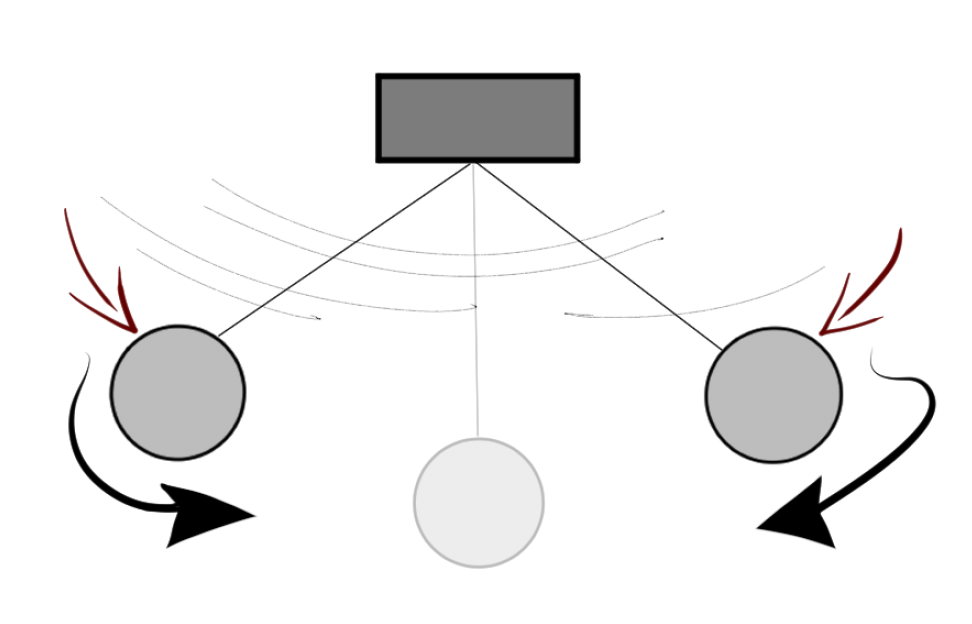
- 1Look at the pendulum diagram and the positions being highlighted by the arrows. What is being exerted here?Potential Energy
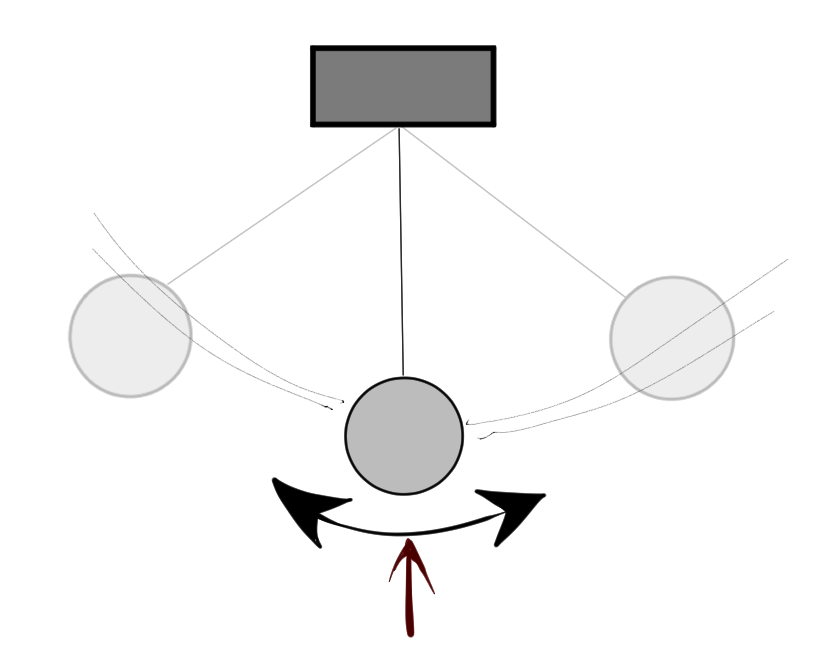
- 2Look at the pendulum diagram and the position being highlighted by the arrow. What is being exerted here?Kinetic Energy
- 3GeneticsThe science of heredity, regarding the similarities and differences of related organisms resulting from genetic and environmental interaction.
- 4Father of GeneticsGregor Mendel
- 5Mendel's Garden Pea (Pisum Sativum) Breeding Experiment - Set UpMendel cross-pollinated pea plants based on their different features. These features consisted of seven different traits: stem length, pod shape, seed shape, seed color, flower position, flower color, and pod color
- 6Mendel's Garden Pea (Pisum Sativum) Breeding Experiment - ResultsIn the first generation, all the offspring shared one feature, labeled the dominant trait. The not shared feature was the recessive trait. The second generation came from the first self-fertilizing, and they resulted in a 3:1 ratio of displaying dominant/recessive traits
- 7Laws created from Mendel's findings: The Law of SegregationOffspring acquire one hereditary factor from each parent
- 8Laws created from Mendel's findings: The Law of Independent AssortmentDifferent traits have an equal opportunity of occurring together (This was later disproved)
- 9Laws created from Mendel's findings: The Law of DominanceOffspring will inherit the dominant trait, and can only inherit the recessive trait if they inherit both the recessive factors
(Link for full synopsis of this experiment will be put in description) - 10DNA ("Billion Dollar Book")Deoxyribonucleic Acid: Self-replicating "building blocks" of life, located in the nucleus of the cell (it is also present in chromosomes) and is the carrier of genetic information
- 11GeneSpecific sequence of nucleotide base pairs, functional unit of inheritance, controls the transmission and expression of one or more traits
- 12How do genes control this expression?Genes accomplish this by specifying the structure of a protein OR controlling the functions of other genetic material
- 13TraitA feature of an organism ; Inherited (physical) features as a result of genetics
- 14AlleleOne of two or more alternative forms of a gene that is caused by mutation. They are found in the same place as other genes on a chromosome.
- 15Genotype / Phenotype DifferenceGenotypes constitute the genetic structure (Aa, AA, aa) for a physical trait, while Phenotypes ARE the observable traits (Long hair/short hair, freckles/no freckles, etc.)
- 16List of genotype labels aligned with their symbolic representationsHeterozygous - Aa
Homozygous dominant - AA
Homozygous recessive - aa
(Look out for the wording in homozygous trait descriptions, heterozygous traits are a constant symbolic result) - 17Monohybrid CrossA mating between two individuals with different genetic variations (one specific genetic trait is at interest with this.) Results in the typical Punnett Square layout and results
- 18How many chromosomes do humans have?23 pairs, or 46 total individually. Females carry XX chromosomes while males carry XY chromosomes.
- 19You're not just going to hand over your DNA/Billion Dollar Book, but that DNA is needed to create proteins, what then?A copy is made of a segment of DNA through the process of transcription, which is called RNA. RNA can then be used to create proteins, which forms traits
- 20DNA Transcription vs. TranslationTranscription is the process of DNA being copied into RNA, while translation is the process of RNA creating the proteins
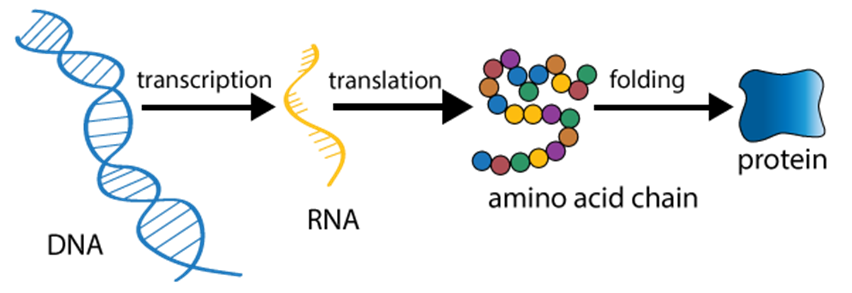
- 21Central DogmaGenetic information is coded in self-replicating DNA, which transfers to messenger RNA in transcription, which acts as a template for protein synthesis in translation
- 22Central Dogma Visualization (Taken from Slides)
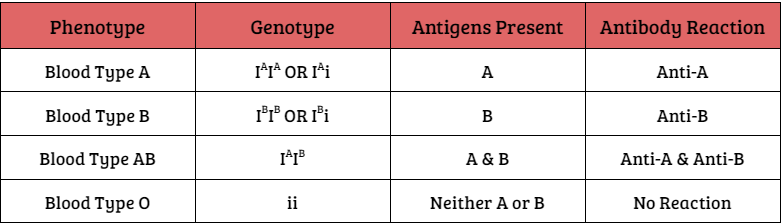
- 23Blood Type (Genotypes, Phenotypes, & Resistances) Model
- 24DNA NucleotidesCytosine (C), Guanine (G), Adenine (A), Thymine (T)
- 25RNA NucleotidesCytosine (C), Guanine (G), Adenine (A), Uracil (U)
- 26The Big 4 Elements (96%) of the human bodyCarbon, Oxygen, Hydrogen, and Nitrogen
- 27Major elements (3.5%) of the human bodyCalcium, Phosphorus, Potassium Sulfur, Sodium, Chlorine, Magnesium
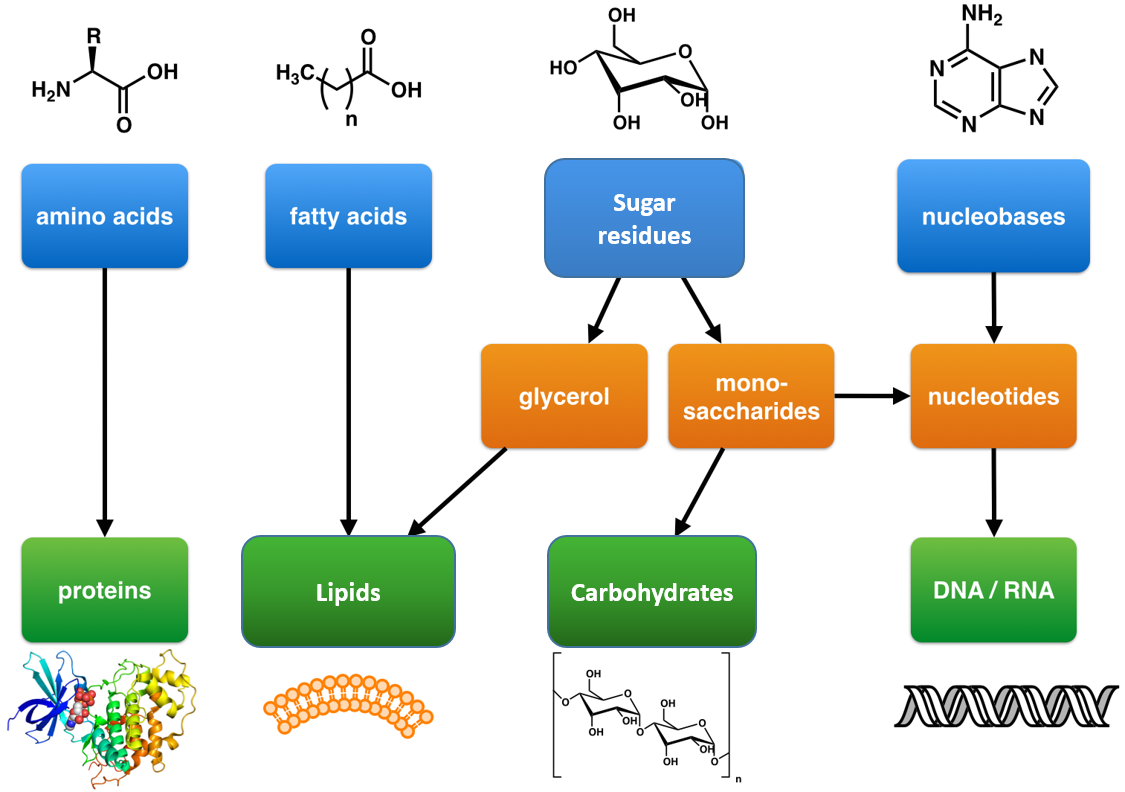
- 28Macromolecules and their Organic Compounds: CarbohydratesCarbohydrates are the main source of energy
Carbohydrates include polysaccharides
Monosaccharides → Disaccharides → Polysaccharides - 29Macromolecules and their Organic Compounds: LipidsLipids are insulators and they store fat & energy
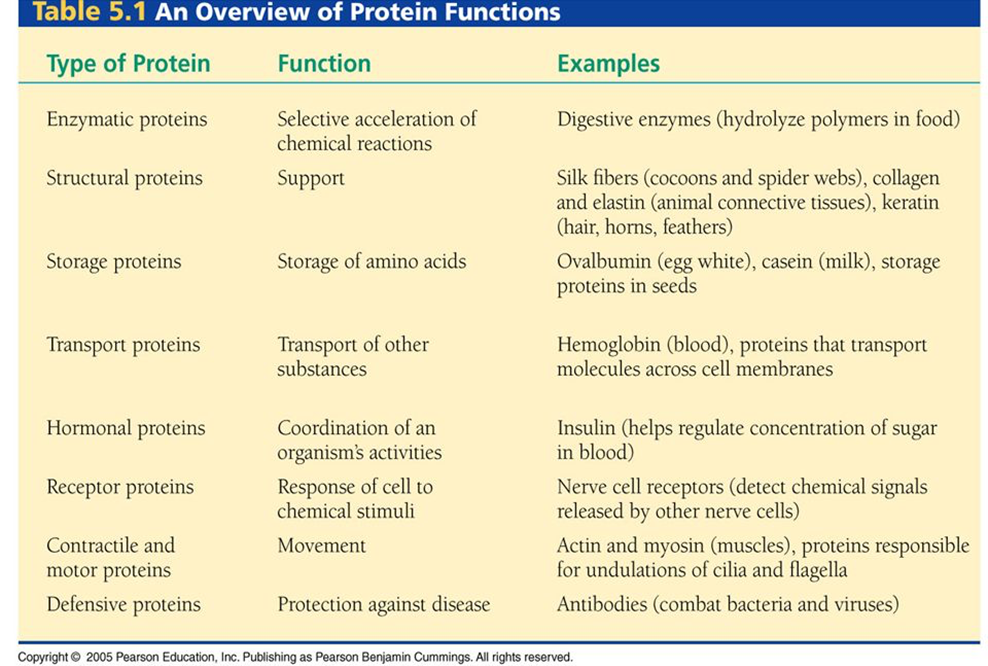
Lipids include triglycerides, which are composed of fatty acids and glycerol - 30Macromolecules and their Organic Compounds: ProteinsProteins provide structural support, transport enzymes and determines traits
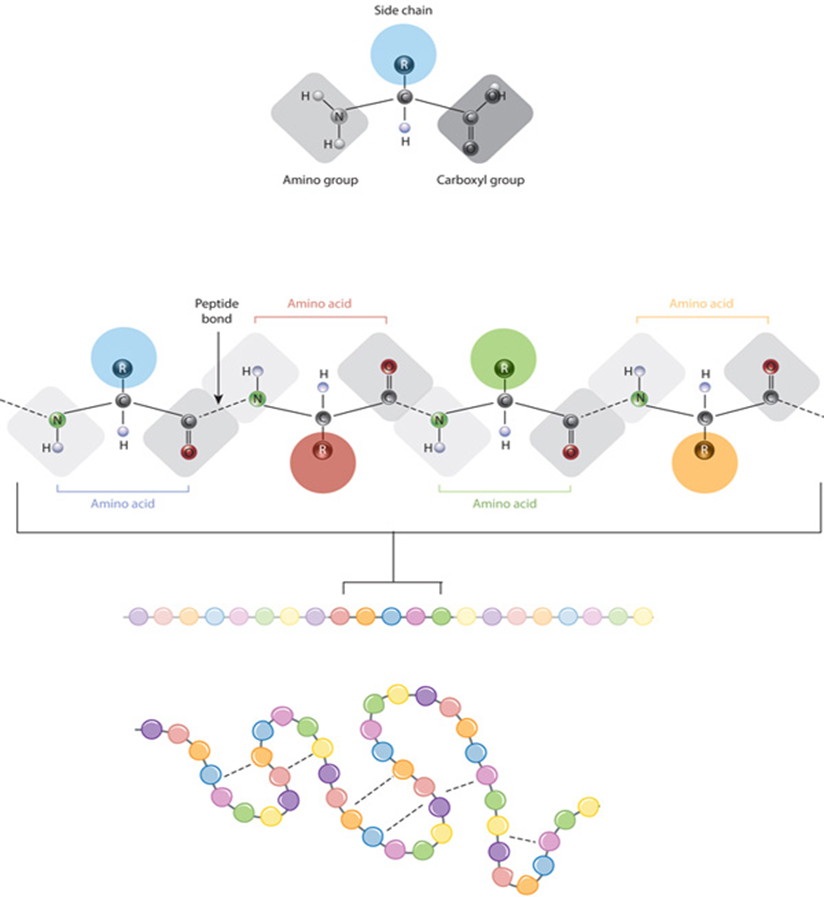
Proteins are composed of peptides, which are composed of amino acids - 31Macromolecules and their Organic Compounds: Nucleic Acids *Final note: Macromolecules are made up of their monomers + energyNucleic acids store and transfer information
Nucleic acids include DNA and RNA, with both being composed of nucleotides - 32High-Energy CompoundsHigh-energy compounds include ATP and phosphate groups, and ATP is composed of nucleotides
- 33Alternative Simplified Macromolecules Diagram for visualization
- 34Monomer and Polymer applicationExample: Nucleotides are a monomer (one molecule of many) and the DNA strand is the polymer (made up of many monomers)
- 35Protein Function Table (Taken from slides)
- 36Protein Structure Model
- 37EnzymeProteins that act as catalysts to speed up reactions. regulate cell processes' structure and functions, and are often involved in breakdown reactions. Specific terms for enzymes usually end in '-ase'
- 38EntropyRepresents the unavailability of a system's thermal energy for conversion into mechanical work. Degree of disorder or randomness. Entropy always increases with time / natural processes tend to lead towards entropy.
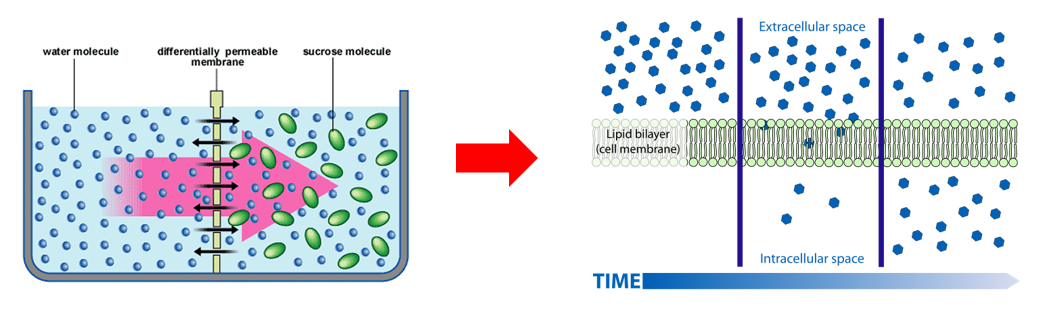
- 39OsmosisThe tendency of a fluid to pass into a solution with a higher solvent concentration, equalizing the concentration of materials on either side.
*Think of a liquified version of equilibrium - 40Osmosis Model
- 41Passive Transport: DiffusionWhen molecules flow from an area of high concentration to one of low concentration, this process happens easily (requires no energy)
- 42Active Transport: Facilitated DiffusionWhen molecules flow from an area of low concentration to one of high concentration, this process faces more resistance (requires energy)
- 43Facilitated Diffusion ExamplePeople trying to move into a crowded sidewalk while stepping off the bus
- 44If something can diffuse, it is...nonpolar
- 45The Cell'Cella' or "small room" - The basic structural, functional, and biological unit of all living beings
*The smallest unit of life that can replicate independently - 46Devices can manipulate electrical energy, cells can manipulate...chemical energy
- 47Prokaryotes v. EukaryotesProkaryotes are simple, single-celled organisms that do not have a distinct nucleus nor specialized organelles. Eukaryotes are more complicated, housing a nucleus, specialized organelles, with the nucleus surrounded by the membranes.
- 48Prokaryote Positive Aspects- They multiply fast
- They can live in unstable habitats
- They are manipulated easily
- Low energy demands - 49Prokaryote Negative Aspects- They cannot make complex organisms
- No specialization
- They have no compartments - 50Eukaryote Positive Aspects- Creates complex organisms
- Specializes
- They have compartments - 51Eukaryote Negative Aspects- High energy demands
- Stable environment needed
- Changes could cause problems - 52What is the oldest life on Earth? (3.5 billion years old)Bacteria
- 53Bacteria are R-Strategists. What does this mean?They reproduce in mass numbers with little to no care for each offspring. (K-strategists are the opposite, producing little but caring for each offspring)
- 54How do bacteria reproduce?Asexually, through the process of binary fission.
- 55Binary Fission ProcessThe cell is elongated, replicating the DNA → the cell wall and plasma membrane constrict until a wall is formed in the middle, separating the DNA copies → the cells separate. (It's basically mitosis)
The 'daughter' or resulting cells should be identical unless a mutation occurred. - 56Antibiotic TherapyMedicine that inhibits the growth of or destroys microorganisms, like bacteria.
- 57Resistance Mechanisms: Impermeable BarrierThe bacterial cell develops an impermeable barrier that blocks antibiotics.
- 58Resistance Mechanisms: Target ModificationWhen the components that are targeted by the antibiotics become modified so that the same antibiotics can no longer properly bind to the target to destroy it.
- 59Resistance Mechanisms: Antibiotic ModificationEnzymes are produced by the cell that deactivate the antibiotics before they can harm the bacteria.
- 60Resistance Mechanisms: Efflux Pump MechanismWhen the antibiotic is actively pumped out the bacteria so that it cannot harm it
(Visual representations are displayed on the slides) - 61Shapes of Bacteria- Cocci (spherical)
- Bacilli (Rods)
- Spirals - 62Specialized Organelles (Sample)Mitochondria, Golgi bodies, and lysosomes
- 63OrganellesAny organized or specialized structures within a living cell
Examples are: Golgi apparatus, smooth endoplasmic reticulum, rough endoplasmic reticulum, ribosomes. nucleus, cell membrane, lysosomes, vacuole, centriole, cytoskeleton, mitochondria - 64Cell MembraneSeparates the interior of all cells from the outside environment. Selectively allows ions and molecules to travel in and out of the cells.
- 65Functions of Organelles: Golgi ApparatusPackages proteins into membrane-bound vesicles before delivering them to their set destination. Gathers simple molecules and combines them to make more complex molecules, these are the proteins that get delivered. Also creates lysosomes
- 66Functions of Organelles: Smooth ERMobilizes glucose from glycogen, calcium storage, drug detoxification, synthesizes lipids and steroids
- 67Functions of Organelles: Rough ERProduces the proteins for the rest of the cell
- 68Functions of Organelles: RibosomesMade of RNA and proteins, site of protein synthesis. Performs translation.
- 69Functions of Organelles: NucleusContains / Protects cell's genetic material (DNA). Also houses the processes for DNA replication, transcription, and RNA processing, and houses chromosomes. The nucleus is the cell's control center.
- 70Functions of Organelles: LysosomesDigestive system of the cell, breaks down/digests macromolecules (carbohydrates, lipids, proteins, nucleic acids), repairs the cell membrane, responds against foreign substances. Creates catabolic reactions, releases energy
- 71Functions of Organelles: VacuolesStorage organelle, takes in and gets rid of waste products
- 72Functions of Organelles: CentrioleOrganizes microtubules that serve as the cell's skeletal system, assists with movement
- 73Functions of Organelles: CytoskeletonAssists with movement / provides the cell with it's shape structure
- 74Functions of Organelles: MitochondriaGenerates most of the cell's chemical energy that is needed to power the cell's biochemical reactions (powerhouse of the cell). Determines cell fate.
- 75ChromatinAssociation of protein, RNA, and DNA
- 76HistonesProteins in eukaryotic cell nuclei that package and order DNA into nucleosomes. They are the chief protein components of chromatin, plays a role in gene regulation.
- 77What is the Rough ER coated with that makes it "rough"?Ribosomes
- 78ApoptosisCell suicide (The controlled death of cells)
- 79Endosymbiotic TheoryThe idea that eukaryotes, or complex cells, may have evolved from simple cells. It is believe that they joined together and established symbiotic relationships.
- 80Electron Transport TrainA series of complexes that transfers electrons from donors to acceptors via redox (reduction and oxidation occurring simultaneously), and couples this with the transfer of proteins across the membrane
- 81GlycolysisConverts glucose into pyruvate, where the energy released during this process is used to form ATP or Adenosine Triphosphate.
- 82Adenosine Triphosphate (ATP)Often used as the "molecular unit of currency" or intracellular energy transfer. Examples of a few of these processes are ion transport, muscle contraction, nerve impulse propagation, chemical synthesis, and cellular respiration
- 83CancerAn abnormal growth of cells, originates as a single abnormal cell.
- 84Cancer cells lose normal control mechanisms, some of these include:- Expanding continuously
- Invading adjacent tissues
- Migrating to different parts of the body
- Promoting the growth of new blood vessels from which the cells derive nutrients - 85Cancerous tissue is called a...tumor
- 86If you have cancer, what state do you want to find it in?Benign state, NOT Metastasis
- 87All cells are either...G1 or G0
- 88G0 StageG0 stands for "Gap 0" in this scenario. This is a stage outside the cell cycle where the cell is "at rest," not dividing until it grows or faces favorable conditions where it can re-enter the cell cycle.
- 89Stages of the Cell Cycle: G1 StageThe G1 Stage is where the cell is preparing to divide
- 90Stages of the Cell Cycle: S-PhaseOccurs between stage G1 and stage G2 of the cell cycle. It synthesizes the chromosomes and replicates and repairs DNA in preparation of cell division.
- 91Stages of the Cell Cycle: G2 StageThe G2 Stage ensures that all of the chromosomes are copied properly. I'm sorry to remind you of Garcia and his horse but this stage is why that "interaction" is not possible.
- 92Stages of the Cell Cycle: M PhaseMitosis, the period of nuclear and cell division, where the duplicated chromosomes are divided equally between the severed cells.
- 93Cancer Types: Leukemias and LymphomasCancers of the blood and immune system cells
- 94Cancer Types: CarcinomasCancers of the skin, lungs, colon, breast, stomach, and prostate. These types of cancers occur more often in older individuals
- 95Cancer Types: SarcomasCancers of mesodermal cells (muscle and bones). These type of cancers occur more often in younger individuals
- 96Cancer Terminology: AggressivenessThe degree or speed at which a tumor (cancerous cells) grow and spread
- 97Cancer Terminology: BenignNoncancerous. A benign tumor is unable to spread or metastasize, though it may grow and spread if left untreated / not caught early enough. This is the ideal time for a cancerous growth to be caught by professionals
- 98Cancer Terminology: CarcinogenAn agent that causes cancer. A few examples of this are UV rays, exhaust, smoke from a cigarette, or radiation.
- 99Cancer Terminology: CureA complete elimination of the cancer with the result that the specific cancer will not return. There is no complete cure, but there are successful treatments that doctors refer to as "complete remission." Cancers can still recur in this state.
- 100Cancer Terminology: InvasionThe capacity of a cancer to infiltrate and destroy surrounding tissue.
- 101Cancer Terminology: MalignantCancerous
- 102Cancer Terminology: MetastasisCancerous cells that have spread completely to a new location. This is where cancer becomes fatal/at its worst and hard to treat.
- 103Gene mutations that cause cancer may result from...- Chemicals and drugs
- UV rays / Sunlight
- Viruses
- Inherited abnormal genes - 104OncogenesMutated or amplified forms of genes that can become overactive and allow cells to multiply in a rapid manner, causing cancer.
- 105Tumor Suppressor GenesGenes that normally suppress the development of cancer by coding for proteins that suppress growth and repair DNA. The same DNA damage, however, can impact the performance and effectiveness of the tumor suppressor genes, and this is when cancer becomes more likely.
- 106Typically, cancer occurs in...people of older age, with few exceptions. For example, sarcomas occur in a greater rate with children, like retinoblastoma and neuroblastoma, which result from suppressor gene mutations.
- 107Diet Concerns for CancerHigh saturated fats (colon, breast, prostate), alcohol (head, neck, esophageal), smoked/red meats (stomach), obesity (breast, colon, uterine, kidney)
- 108Drug Risks for CancerEstrogens in oral contraceptives, Diethylstilbestrol - DES (Breast cancer in women), testosterone therapies (liver), Tamoxifen (endometrial)
- 109Human Papilloma Virus (HPV)Most common STI, shows itself in warts. associated with 70% of cervical cases, 50% of men are carriers, approx. 1/2 of US adults are infected
- 110Cancer ProgressionNormal Cell → Hyper-proliferation → Benign tumorization → Angiogenesis → Malignant tumorization → Metastasis
- 111AngiogenesisThe formation of new blood vessels. This plays a role in cancer by stimulating more blood vessels to carry oxygen and nutrients to the tumor.
- 112Eventually, 80% of men are affected by...prostate cancer
- 113Cancer Stages: Stage 0Stage where the cancer is in situ or "in place". This cancer stays where it originally formed and has not spread to new areas. Highly curable by removing the entire tumor through surgery.
- 114Cancer Stages: Stage 1Early stage tumor which has not rooted deeply into surrounding tissue, nor has it spread to lymph nodes or other parts of the body. Early-stage cancer.
- 115Cancer Stages: Stage 2 and 3Indicates larger cancers or tumors that have rooted deeper into nearby tissues and may have spread to other parts of the body.
- 116Cancer Stages: Stage 4Metastatic cancer that has spread to other parts of the body, highly aggressive and difficult to treat.
- 117Generalized Indications of CancerFatigue, weight loss, fever, night sweats, cough, hemoptysis (coughing up blood), hematemesis (vomiting blood), hematochezia ("bloody diarrhea"), changes in bowel habits, and constant or persistent pain
- 118Foods that help prevent cancer- High fiber grains
- Fruits
- Vegetables - 119Habits that help prevent cancerCardio - At least 30-60 mins a day (Running, jogging, elliptical, bicycling, swimming, sports)
Information
- Description
- Study help for BIOL 101 concepts from slide sets 5-8. This set focuses on application, examples, and definitions. This is best viewed in company with the original slides, as it summarizes, expands on, and connects back to that content. Mendel's Pea Experiment Full Overview: https://www.michigan.gov/explorelabscience/-/media/Project/Websites/explorelabscience/pdf/Lab-Teens-pdf/Gregor_Mendel_Pea_Experiment.pdf?rev=a9d1df30f6b8461b963948b367bf2d99&hash=C1217C490A1F4C8F7AB6284B1251AD03
- Created by
- Keira Brennan
- Views
- 24
- Rating